
Blue Morpho Breeding in Captivity: Easy Guide

Have you ever seen a butterfly with wings that shine like the sky? That might be a Blue Morpho! These butterflies are famous for their bright blue color. But did you know people can raise them? {Blue Morpho breeding in captivity} is a special job. It helps us learn about these cool creatures. It also helps to keep them safe.
Key Takeaways
- {Blue Morpho breeding in captivity} helps conserve these amazing butterflies for future generations.
- Creating the right habitat is key for successful Blue Morpho butterfly breeding.
- Caterpillars need special food to grow into healthy Blue Morphos.
- Breeders must protect butterflies from diseases and predators.
- Learning about the Blue Morpho life cycle is important for breeding.
Understanding Blue Morpho Habitats for Breeding
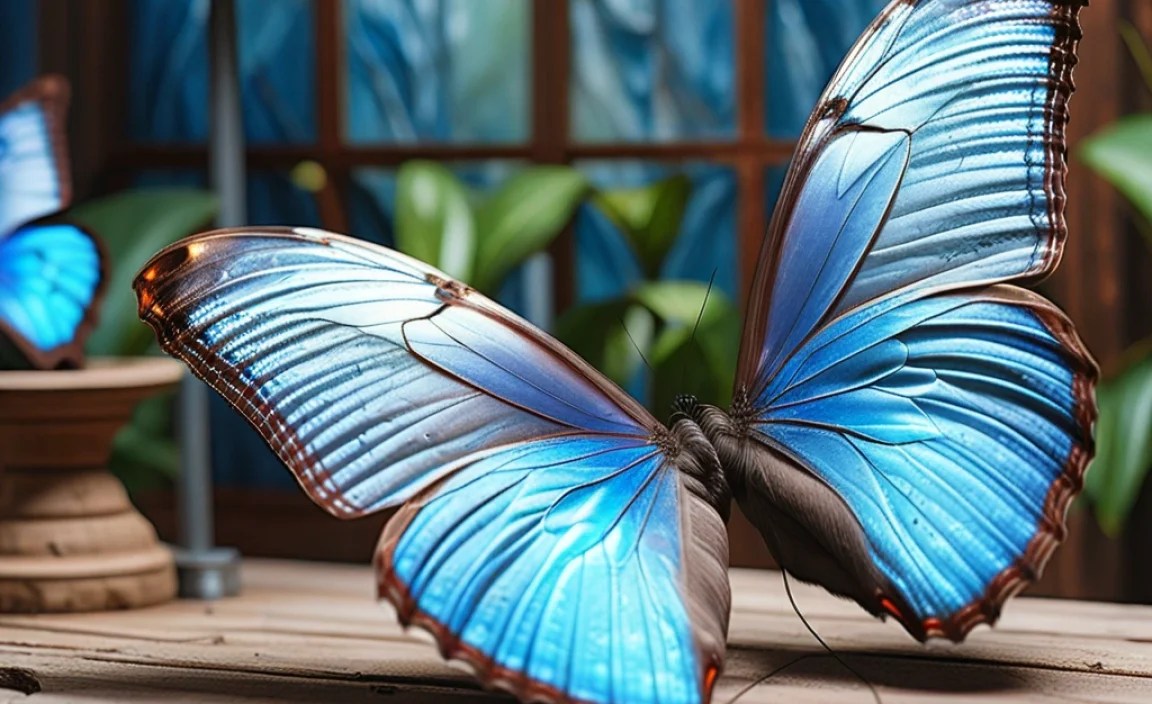
The Blue Morpho is a very special butterfly. They live in rainforests. These rainforests are usually in Central and South America. To breed these butterflies, we need to make a place like their home. The place needs to be warm and humid. Humid means there is a lot of water in the air. We also need to give them the right plants. These plants give the caterpillars food. The butterflies also need places to lay their eggs. If we make a good home for them, they will be happy. Happy butterflies lay more eggs. More eggs mean more butterflies! This is how {Blue Morpho breeding in captivity} works best.
- Rainforests are warm and wet.
- Caterpillars eat special plants.
- Butterflies need water to drink.
- They like to fly in sunny spots.
- A safe space is free from predators.
It is important to keep the habitat clean. Clean habitats keep the butterflies healthy. We need to check for pests. Pests are little bugs that can hurt the butterflies. We also need to make sure the air is fresh. Good air helps them breathe easily. We can use special lights to make it like the sun. The butterflies need sunlight to be healthy. Making the right home is hard work. But it is worth it to see these beautiful butterflies! {Blue Morpho breeding in captivity} relies on replicating their natural environment as closely as possible, so they feel comfortable enough to reproduce. This means paying attention to temperature, humidity, and light.
What Temperature Do Blue Morphos Need?
Imagine you are a butterfly. Would you like to be too cold or too hot? Probably just right! Blue Morphos like it warm. They need a temperature between 80 and 85 degrees Fahrenheit. That is like a warm summer day. If it gets too cold, they will not fly. They might even get sick. If it gets too hot, they will also get sick. So, we need to keep the temperature just right. We can use heaters to make it warmer. We can use fans to make it cooler. Keeping the temperature steady is very important for Blue Morpho breeding in captivity. Temperature fluctuations can stress the butterflies. Stressed butterflies are less likely to lay eggs. So, a stable temperature is key for successful breeding.
How Humid Should the Habitat Be?
Have you ever been in a rainforest? It feels wet, right? That is because it is very humid. Humidity means there is a lot of water in the air. Blue Morphos like humidity. They need it to stay healthy. The humidity should be between 75% and 85%. We can use special machines to make the air more humid. These machines spray tiny drops of water into the air. If the air is too dry, the butterflies can dry out. This can hurt them. So, we need to make sure the air is humid enough. {Blue Morpho breeding in captivity} requires careful monitoring of humidity levels. Too little moisture can be detrimental to the butterflies’ health and breeding success.
What Kind of Lighting Is Best?
Think about a sunny day. Butterflies love sunshine! They use the sun to warm up. They also use it to find their way. Blue Morphos need light too. But they do not need too much. Too much light can hurt their eyes. We can use special lights that are like the sun. These lights help them stay healthy. The lights also help the plants grow. The caterpillars need the plants to eat. So, the right lighting is very important. If you want to encourage {Blue Morpho breeding in captivity}, consider using full-spectrum lights that mimic natural sunlight. These lights provide the butterflies with the energy they need to thrive and reproduce.
Fun Fact or Stat: Blue Morpho butterflies can only see red, green, and blue!
Feeding Blue Morpho Caterpillars in Captivity
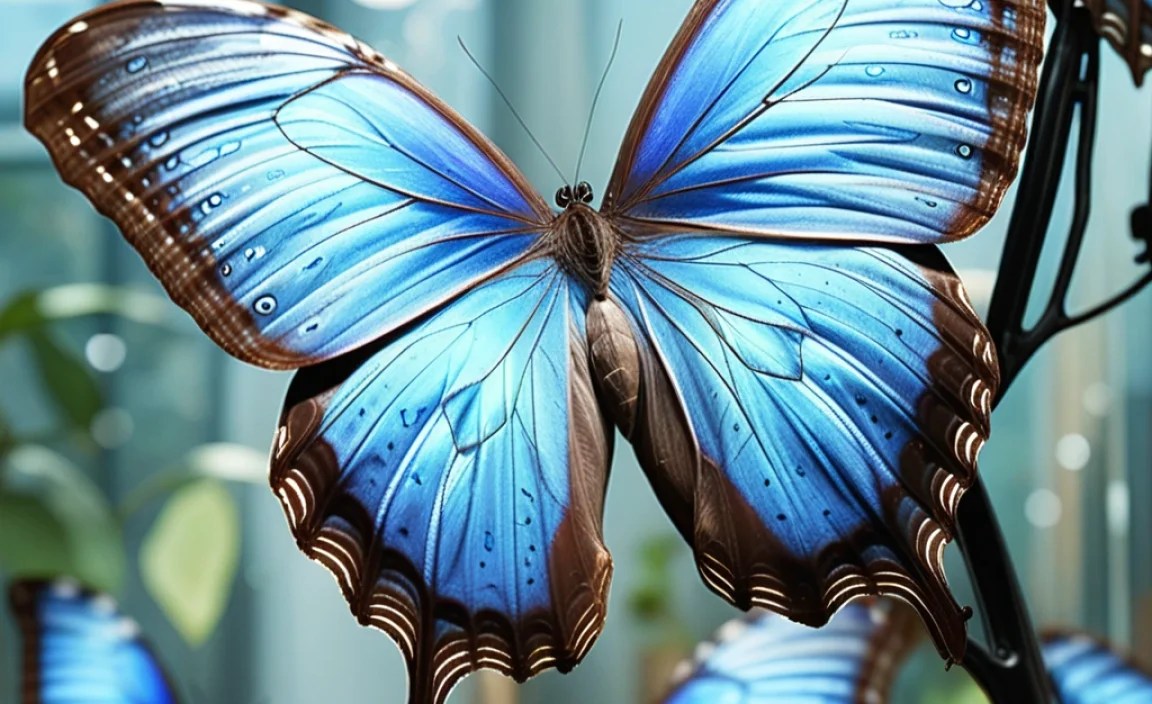
Imagine you are a caterpillar. You are always hungry! Blue Morpho caterpillars are the same. They need to eat a lot to grow big. These caterpillars eat special leaves. These leaves come from special plants. Some of these plants are called Pea plants and Legume plants. Breeders need to give these plants to the caterpillars. The caterpillars will eat and eat. They will grow bigger and bigger. If the caterpillars do not get enough food, they will not grow. They might even die. So, feeding them the right food is very important. {Blue Morpho breeding in captivity} depends on providing the caterpillars with a consistent and nutritious diet. This ensures they develop into healthy butterflies.
- Caterpillars need fresh leaves every day.
- Some caterpillars eat a lot!
- Breeders must grow the right plants.
- Clean leaves are important for health.
- Water helps keep leaves fresh.
Breeders need to make sure the leaves are clean. Dirty leaves can make the caterpillars sick. They also need to make sure the leaves are fresh. Old leaves do not have as many nutrients. Nutrients are like vitamins for the caterpillars. These vitamins help them grow strong. Sometimes, breeders will give the caterpillars special food. This food helps them get all the nutrients they need. Feeding the caterpillars is a lot of work. But it is important for {Blue Morpho breeding in captivity}. Without enough food, the caterpillars cannot transform into the beautiful butterflies we all admire. The effort is worth it when you see the vibrant colors of a newly emerged Blue Morpho.
What Kind of Leaves Do They Eat?
Blue Morpho caterpillars are picky eaters. They only eat certain kinds of leaves. Some of their favorite leaves come from Pea plants and Legume plants. These plants grow in warm places. Breeders need to find these plants and grow them. They need to make sure the plants are healthy. Healthy plants make healthy caterpillars. If the plants are sick, the caterpillars can get sick too. So, finding the right plants is very important. {Blue Morpho breeding in captivity} often involves cultivating these specific host plants. This can be a challenge, as the plants themselves require specific conditions to thrive.
How Much Do They Eat Each Day?
Imagine eating all day long! That is what Blue Morpho caterpillars do. They eat a lot! They need to eat to grow big. Some caterpillars can eat their own weight in leaves every day. That is like you eating your whole body weight in food! Breeders need to give them a lot of leaves. They need to check the leaves often. If the leaves are gone, they need to give them more. Feeding caterpillars is a full-time job! The amount of food a caterpillar consumes directly impacts its growth rate and overall health, critical factors in {Blue Morpho breeding in captivity}. Ensuring a constant supply of fresh leaves is crucial for successful breeding programs.
How Do You Keep the Leaves Fresh?
No one likes eating old, wilted lettuce, right? Caterpillars feel the same way about their leaves. They want them fresh and crisp. Breeders need to keep the leaves fresh. They can do this by putting the leaves in water. The water keeps the leaves from drying out. They can also spray the leaves with water. This makes them look fresh. Fresh leaves have more nutrients. The caterpillars need these nutrients to grow. Keeping the leaves fresh is important for {Blue Morpho breeding in captivity}. It ensures the caterpillars get the nutrition they need to develop into healthy butterflies. Fresh leaves also reduce the risk of caterpillars consuming contaminated or decaying food.
Fun Fact or Stat: Blue Morpho caterpillars grow about 3,000 times their original size!
Creating a Safe Space for Blue Morpho Breeding

Butterflies are delicate. They can get hurt easily. Breeders need to make a safe space for them. This space needs to be free from dangers. These dangers can be other bugs or animals. They can also be diseases. Diseases are like sicknesses for butterflies. Breeders need to check the butterflies often. They need to look for signs of sickness. If they see a sick butterfly, they need to take care of it. A safe space is very important for {Blue Morpho breeding in captivity}. It helps the butterflies stay healthy and happy. Healthy and happy butterflies will produce more eggs.
- Nets keep out unwanted bugs.
- Clean cages prevent diseases.
- Regular checks find problems early.
- Sick butterflies need special care.
- Good air flow keeps them healthy.
It is also important to keep the space clean. Clean spaces have fewer diseases. Breeders need to clean the cages often. They need to remove any dead leaves or bugs. They also need to make sure the air is fresh. Fresh air helps the butterflies breathe easily. A safe and clean space is important for {Blue Morpho breeding in captivity}. It helps the butterflies thrive and produce healthy offspring. Breeding butterflies is a delicate process, and maintaining a safe environment is crucial for success. The effort is well worth it when you see a new generation of Blue Morphos take flight.
How Do You Protect Them From Predators?
Imagine being a small, tasty caterpillar. Lots of animals would want to eat you! Birds, spiders, and other bugs can all be predators. Predators are animals that eat other animals. Breeders need to protect the caterpillars from predators. They can do this by putting them in cages. The cages keep the predators out. They can also check the cages often. They need to look for any predators that might have gotten in. Protecting the caterpillars is important for {Blue Morpho breeding in captivity}. Without protection, many caterpillars would be eaten before they could become butterflies.
How Do You Prevent Diseases?
Just like people, butterflies can get sick. Diseases can hurt them. They can even kill them. Breeders need to prevent diseases. They can do this by keeping the cages clean. They can also make sure the butterflies have fresh food and water. If a butterfly gets sick, they need to take care of it. They might need to give it medicine. Preventing diseases is very important for {Blue Morpho breeding in captivity}. Healthy butterflies are more likely to reproduce. Disease outbreaks can wipe out entire populations of butterflies in captivity.
What Are the Signs of a Healthy Butterfly?
How can you tell if a butterfly is healthy? Healthy butterflies are active. They fly around and explore their cage. They also eat a lot. They have bright colors on their wings. If a butterfly is not healthy, it might be still. It might not eat. Its wings might look dull. Breeders need to watch for these signs. If they see a butterfly that is not healthy, they need to take care of it. Recognizing the signs of a healthy butterfly is crucial for successful {Blue Morpho breeding in captivity}. Early detection of health problems can prevent widespread illness among the butterfly population.
Fun Fact or Stat: Some butterfly diseases can spread quickly and kill all the butterflies in a breeding program!
Understanding the Blue Morpho Life Cycle for Breeding

Butterflies go through big changes. These changes are called a life cycle. The life cycle has four parts. First, there is the egg. Then, there is the caterpillar. Next, there is the pupa. Finally, there is the butterfly. Breeders need to know about the life cycle. This helps them take care of the butterflies. They need to know what to feed the caterpillars. They need to know when the pupa will turn into a butterfly. Understanding the life cycle is important for {Blue Morpho breeding in captivity}. It helps breeders to raise healthy and happy butterflies. Knowing each stage allows for proper care and intervention if needed.
- Eggs are tiny and fragile.
- Caterpillars eat and grow a lot.
- Pupas change inside their chrysalis.
- Butterflies emerge with wet wings.
- Each stage needs special care.
The life cycle starts with the egg. The egg is very small. It is usually laid on a leaf. The caterpillar hatches from the egg. The caterpillar eats and grows. It sheds its skin many times. Then, it turns into a pupa. The pupa is also called a chrysalis. Inside the pupa, the caterpillar changes. It turns into a butterfly. The butterfly emerges from the pupa. Its wings are wet. The butterfly waits for its wings to dry. Then, it flies away. Understanding this process is key to {Blue Morpho breeding in captivity}. Each stage presents unique challenges and requires specific care to ensure the butterfly’s survival.
How Long Does Each Stage Last?
Imagine waiting for something exciting. It feels like forever, right? Each stage of the Blue Morpho life cycle takes a different amount of time. The egg stage lasts about 10 days. The caterpillar stage lasts about 6 weeks. The pupa stage lasts about 2 weeks. The butterfly stage lasts about 1 month. Knowing how long each stage lasts helps breeders plan. They know when to expect the caterpillars to hatch. They know when to expect the butterflies to emerge. This information is crucial for successful {Blue Morpho breeding in captivity}, allowing breeders to anticipate and prepare for each stage of the butterfly’s development.
What Happens Inside the Chrysalis?
The chrysalis looks still. But a lot is happening inside! The caterpillar is changing into a butterfly. It is like magic! The caterpillar’s body breaks down. Then, it rebuilds itself. It grows wings and antennae. It changes color. It becomes a beautiful butterfly. This is an amazing process. Breeders need to be careful with the chrysalis. They should not touch it. They should keep it safe. Understanding the metamorphosis inside the chrysalis is fascinating. It highlights the incredible transformation that occurs during the Blue Morpho’s life cycle, making {Blue Morpho breeding in captivity} a truly rewarding experience.
How Do You Help the Butterfly Emerge?
The butterfly is ready to come out of the chrysalis. It needs help. Breeders can spray the chrysalis with water. This makes it easier for the butterfly to emerge. They also need to make sure there is space for the butterfly to hang. The butterfly needs to hang upside down to dry its wings. If the butterfly cannot hang, its wings might not form correctly. Helping the butterfly emerge is a delicate process. It requires patience and care. Successful emergence is a key milestone in {Blue Morpho breeding in captivity}, marking the culmination of months of effort.
Fun Fact or Stat: The Blue Morpho butterfly completely transforms inside its chrysalis in just two weeks!
Setting Up a Blue Morpho Breeding Enclosure
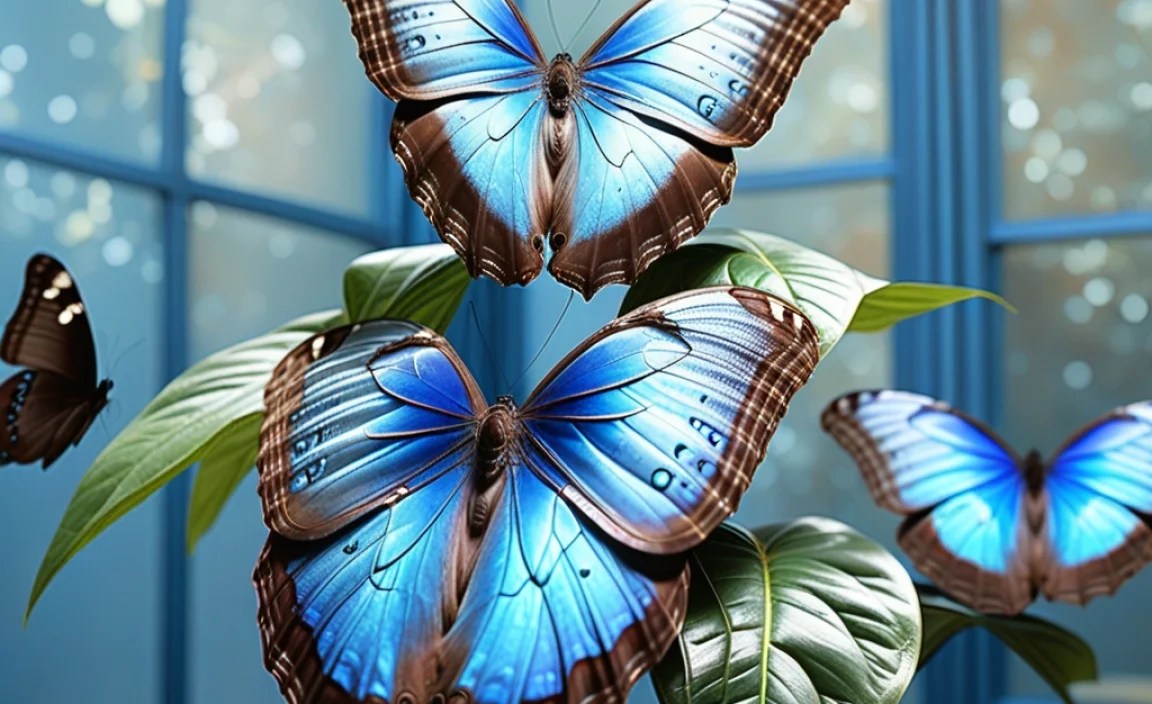
Think of a butterfly’s home like your own room. It needs to be comfy and safe. To set up a good home, or enclosure, you need a few things. First, you need a big cage. The cage should be big enough for the butterflies to fly. Next, you need plants. The plants give the caterpillars food. You also need a water source. Butterflies drink water. Finally, you need a way to control the temperature and humidity. {Blue Morpho breeding in captivity} requires a carefully designed enclosure to mimic their natural habitat. This ensures the butterflies are comfortable and able to reproduce.
- Large cages allow for flight.
- Host plants provide food.
- Water sources prevent dehydration.
- Temperature controls ensure warmth.
- Humidity controls maintain moisture.
Setting up the enclosure takes time and effort. But it is worth it. A good enclosure helps the butterflies thrive. Thriving butterflies are more likely to breed. When setting up the enclosure, consider the butterfly’s needs. They need sunlight. But they also need shade. They need places to hide. They need places to lay their eggs. A well-designed enclosure is essential for {Blue Morpho breeding in captivity}. It provides the butterflies with everything they need to live a happy and healthy life. Observing the butterflies in their enclosure can also provide valuable insights into their behavior and preferences.
What Size Cage Is Needed?
Imagine trying to fly in a small room. It would be hard, right? Butterflies need space to fly. The cage needs to be big enough for them to stretch their wings. A good size for a Blue Morpho breeding cage is at least 6 feet tall, 6 feet wide, and 6 feet long. This gives the butterflies plenty of room to fly around. It also allows you to put in plants and other decorations. A large cage is essential for {Blue Morpho breeding in captivity}. It allows the butterflies to exhibit natural behaviors, such as flying and foraging, which are important for their overall health and well-being.
What Kind of Plants Should Be Included?
Think of plants as the butterfly’s dinner table. They need the right plants to eat. Blue Morpho caterpillars eat specific plants. These plants are called host plants. Some good host plants for Blue Morphos are Pea plants and Legume plants. You should include these plants in the enclosure. Make sure the plants are healthy and well-watered. Healthy plants provide the caterpillars with the nutrients they need to grow. Selecting the right host plants is crucial for successful {Blue Morpho breeding in captivity}. It ensures the caterpillars have a consistent and reliable source of food.
How Should Temperature and Humidity Be Controlled?
Imagine being too hot or too cold all the time. It would be uncomfortable, right? Butterflies need the right temperature and humidity. The temperature should be around 80-85 degrees Fahrenheit. The humidity should be around 75-85%. You can use heaters and humidifiers to control the temperature and humidity. Make sure to monitor the temperature and humidity regularly. Use a thermometer and hygrometer. Maintaining the correct temperature and humidity is essential for {Blue Morpho breeding in captivity}. It creates a comfortable and stable environment that promotes the butterflies’ health and reproduction.
Fun Fact or Stat: The ideal enclosure for Blue Morpho breeding mimics a small section of their natural rainforest habitat!
Record Keeping and Data Collection in Blue Morpho Breeding
Keeping track of things is important. It’s like being a scientist! Breeders need to keep records. These records help them understand the butterflies. They need to record when the eggs are laid. They need to record when the caterpillars hatch. They need to record when the butterflies emerge. This information helps them improve their breeding methods. Good record-keeping is important for {Blue Morpho breeding in captivity}. It allows breeders to track the butterflies’ progress and identify any problems. Accurate data collection can lead to more successful breeding outcomes.
- Record egg-laying dates.
- Track caterpillar growth.
- Note pupation times.
- Document butterfly emergence.
- Analyze data to improve methods.
Breeders can use a notebook or a computer to keep records. They should write down everything they observe. They should note any changes in the butterflies’ behavior. They should also note any problems that arise. By keeping good records, breeders can learn from their mistakes. They can also share their knowledge with other breeders. This helps to improve {Blue Morpho breeding in captivity} overall. Sharing data and insights can help advance our understanding of these amazing creatures and contribute to their conservation.
Why Is Record Keeping Important?
Imagine trying to bake a cake without a recipe. It would be hard to get it right, right? Record keeping is like a recipe for breeding butterflies. It helps you remember what you did. It helps you track your progress. It helps you identify problems. Without records, you might make the same mistakes again. Good record keeping is essential for {Blue Morpho breeding in captivity}. It allows you to learn from your experiences and improve your breeding methods over time. Accurate records can also help you troubleshoot any issues that arise during the breeding process.
What Kind of Data Should Be Collected?
Think of data as clues. The more clues you have, the better you understand the mystery. Breeders should collect as much data as possible. They should record the date the eggs are laid. They should record the date the caterpillars hatch. They should record the date the butterflies emerge. They should also record the temperature and humidity. They should record the type of food the caterpillars eat. All this data can help them understand the butterflies better. Comprehensive data collection is crucial for {Blue Morpho breeding in captivity}. It provides valuable insights into the butterflies’ life cycle and allows breeders to optimize their care and breeding practices.
How Can Data Be Used to Improve Breeding Methods?
Imagine being a detective. You use clues to solve crimes. Breeders can use data to solve breeding problems. If the caterpillars are not growing well, they can look at the data. They can see if the temperature is too low. They can see if the humidity is too high. They can see if the caterpillars are not eating enough. By analyzing the data, they can find the problem and fix it. Data analysis is a powerful tool for improving {Blue Morpho breeding in captivity}. It allows breeders to identify and address any issues that may be hindering their success.
Fun Fact or Stat: Detailed records can help breeders trace the lineage of their butterflies and identify desirable traits for future breeding!
Ethical Considerations in Blue Morpho Breeding Programs
It’s important to be kind to animals. Even butterflies! Ethical breeding means treating the butterflies well. Breeders should make sure the butterflies have a good home. They should make sure they have enough food and water. They should also make sure they are protected from diseases. Ethical breeding also means not taking too many butterflies from the wild. Wild butterflies are important for the environment. Ethical considerations are important for {Blue Morpho breeding in captivity}. It ensures the butterflies are treated with respect and that their welfare is prioritized.
- Provide good living conditions.
- Ensure adequate food and water.
- Protect from diseases.
- Minimize impact on wild populations.
- Prioritize butterfly welfare.
Breeders should also be responsible. They should not release butterflies into areas where they do not belong. This can harm the environment. They should also educate others about butterflies. They can teach people about their importance. They can also teach people how to protect them. Ethical {Blue Morpho breeding in captivity} involves responsible practices that benefit both the butterflies and the environment. By prioritizing ethical considerations, breeders can contribute to the conservation of these amazing creatures.
Here’s a table showcasing some ethical considerations in Blue Morpho breeding:
| Ethical Consideration | Description | Why It’s Important |
|---|---|---|
| Habitat Quality | Providing a spacious and enriching environment. | Reduces stress and promotes natural behaviors. |
| Nutrition | Ensuring access to high-quality food sources. | Supports healthy growth and reproduction. |
| Disease Prevention | Implementing strict hygiene protocols. | Minimizes the risk of outbreaks and suffering. |
| Wild Population Impact | Reducing reliance on wild-caught butterflies. | Protects natural populations from over-collection. |
| Responsible Release | Avoiding the introduction of butterflies to new areas. | Prevents ecological imbalances. |
Why Is Ethical Breeding Important?
Imagine being treated badly. It would not feel good, right? Butterflies deserve to be treated well. Ethical breeding is important because it ensures the butterflies are treated with respect. It also helps to protect wild butterfly populations. By breeding butterflies responsibly, we can help to conserve these amazing creatures for future generations. Ethical {Blue Morpho breeding in captivity} is a reflection of our respect for nature and our commitment to responsible stewardship.
How Can Breeders Minimize Impact on Wild Populations?
Think of wild butterflies as a precious resource. We need to protect them. Breeders can minimize their impact on wild populations by sourcing butterflies responsibly. They should try to breed butterflies from captive populations. They should also avoid taking too many butterflies from the wild. By reducing their reliance on wild-caught butterflies, breeders can help to protect these important creatures. Sustainable practices are key to ethical {Blue Morpho breeding in captivity}. They ensure that breeding programs do not negatively impact wild populations.
What Are the Responsibilities of a Butterfly Breeder?
Imagine being a caretaker for something special. You would want to do your best, right? Butterfly breeders have a responsibility to care for their butterflies. They should provide them with a good home. They should make sure they have enough food and water. They should also protect them from diseases. Breeders also have a responsibility to educate others about butterflies. They can teach people about their importance. They can also teach people how to protect them. Being a responsible breeder is essential for ethical {Blue Morpho breeding in captivity}. It demonstrates a commitment to the welfare of the butterflies and the conservation of their species.
Fun Fact or Stat: Ethical breeding programs can help to reintroduce Blue Morpho butterflies to areas where they have disappeared!
Summary
{Blue Morpho breeding in captivity} is a special way to help these beautiful butterflies. It involves creating a safe and comfortable home for them. Breeders need to understand their life cycle. They need to feed them the right food. They also need to protect them from diseases and predators. Record keeping and data collection are important for improving breeding methods. Ethical considerations ensure the butterflies are treated well and that wild populations are protected. With careful planning and dedication, anyone can successfully breed Blue Morpho butterflies.
The process requires patience and attention to detail. It is important to create a habitat that closely mimics their natural environment. This includes maintaining the correct temperature, humidity, and lighting. By providing the butterflies with the resources they need, breeders can help to ensure their survival. The ultimate goal is to increase the population of Blue Morpho butterflies and to educate others about their importance.
Conclusion
Breeding Blue Morpho butterflies is a rewarding experience. It allows us to learn about these amazing creatures. It also helps us protect them. By creating a safe and comfortable home for them, we can help them thrive. {Blue Morpho breeding in captivity} requires dedication and attention to detail. However, the results are well worth the effort. Seeing these beautiful butterflies flutter around is a truly magical experience. It is a reminder of the importance of protecting our planet’s biodiversity.
Frequently Asked Questions
Question No 1: Why is {Blue Morpho breeding in captivity} important?
Answer: {Blue Morpho breeding in captivity} helps protect these butterflies. Their natural homes are disappearing. Breeding programs can increase their numbers. They also help us learn more about them. This knowledge can help us protect them in the wild. These captive breeding programs can help to ensure that future generations are able to appreciate the beauty and wonder of the Blue Morpho butterfly, a truly remarkable creature of the rainforest.
Question No 2: What do Blue Morpho caterpillars eat?
Answer: Blue Morpho caterpillars are picky eaters. They only eat certain kinds of leaves. Some of their favorite leaves come from Pea plants and Legume plants. Breeders need to find these plants and grow them. They need to make sure the plants are healthy. Healthy plants make healthy caterpillars. So, finding the right plants is very important for the caterpillars to survive and eventually morph into stunning, blue-winged butterflies. This dietary requirement is a key factor in successful {Blue Morpho breeding in captivity}.
Question No 3: How can I create a good habitat for Blue Morphos?
Answer: To create a good habitat, you need a big cage. The cage should be big enough for the butterflies to fly. Next, you need plants. The plants give the caterpillars food. You also need a water source. Butterflies drink water. Finally, you need a way to control the temperature and humidity. The temperature should be around 80-85 degrees Fahrenheit. The humidity should be around 75-85%. These conditions mimic their rainforest home, which helps with {Blue Morpho breeding in captivity}.
Question No 4: How long does it take for a Blue Morpho to become a butterfly?
Answer: The Blue Morpho life cycle has four stages. The egg stage lasts about 10 days. The caterpillar stage lasts about 6 weeks. The pupa stage lasts about 2 weeks. The butterfly stage lasts about 1 month. So, it takes about 2 months for a Blue Morpho to go from egg to butterfly. Understanding these stages is crucial for successful {Blue Morpho breeding in captivity}. It allows breeders to provide the appropriate care at each stage of development.
Question No 5: What are some ethical considerations in butterfly breeding?
Answer: Ethical breeding means treating the butterflies well. Breeders should make sure the butterflies have a good home. They should make sure they have enough food and water. They should also make sure they are protected from diseases. Ethical breeding also means not taking too many butterflies from the wild. Wild butterflies are important for the environment. These considerations ensure that {Blue Morpho breeding in captivity} contributes to conservation efforts, not harm them.
Question No 6: How can I learn more about Blue Morpho butterflies?
Answer: There are many ways to learn more about Blue Morpho butterflies. You can read books about them. You can watch documentaries about them. You can visit a butterfly garden or a zoo. You can also search for information online. Look for reliable sources. Learning about these butterflies can help you appreciate their beauty. It can also help you understand the importance of protecting them and it improve your success in {Blue Morpho breeding in captivity}.


