
Black & White Butterfly Identification: Easy Guide

Identifying black and white butterflies involves observing key features like size, wing patterns, and geographic location. Common examples include the Mourning Cloak with its distinctive yellow border, the striking Black Swallowtail, and the delicate Checkered White. Noticing the specific details on the wings, such as spots, stripes, or tails, along with the butterfly’s habitat, will help you accurately identify these beautiful insects.
Have you ever been captivated by a butterfly with elegant black and white wings fluttering through your garden? Many people find it tricky to tell these butterflies apart. It’s common to wonder, “What kind of butterfly is that?” or “Are they all the same?” Don’t worry! This guide will walk you through easy steps to identify black and white butterflies.
Together, we’ll explore the unique characteristics of several black and white butterfly species. You’ll learn how to spot the subtle differences that set them apart. Get ready to become a butterfly identification expert!
Why Identify Black and White Butterflies?

Identifying black and white butterflies is more than just a fun activity; it enriches our understanding of nature. Here’s why:
- Appreciation of Biodiversity: Recognizing different species highlights the incredible variety of life around us.
- Ecological Awareness: Butterflies are important pollinators, and knowing which species are present can indicate the health of an ecosystem.
- Conservation Efforts: Identifying butterflies helps track populations and monitor the impact of environmental changes, aiding conservation efforts.
- Personal Enrichment: Learning about butterflies connects us to the natural world, fostering curiosity and a sense of wonder.
Key Characteristics to Observe
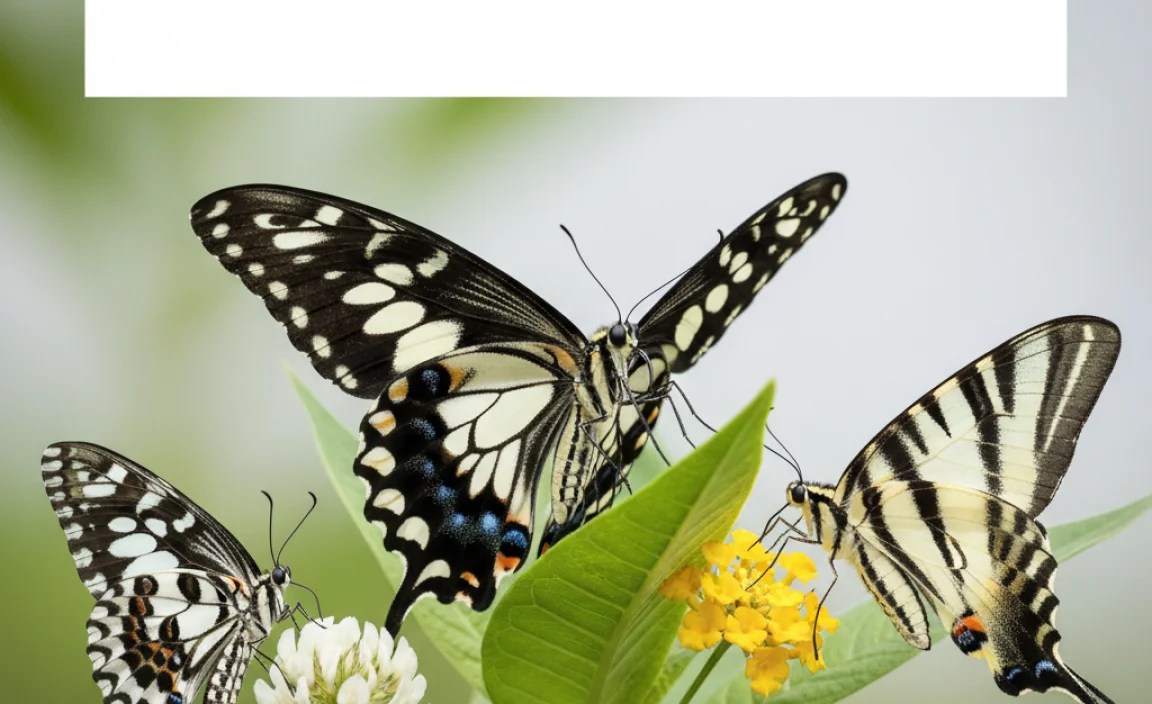
When trying to identify a black and white butterfly, pay close attention to these features:
- Size: Is it small, medium, or large?
- Wing Shape: Are the wings rounded or angular? Do they have tails?
- Wing Patterns: Note the arrangement of black and white markings – spots, stripes, bands, or borders.
- Color Variations: Look for subtle colors like yellow, red, or blue that may be present.
- Location: Where did you see the butterfly? Different species are found in different geographic regions.
- Behavior: How does it fly? What plants does it visit?
Common Black and White Butterflies: A Detailed Guide

Let’s explore some of the most common black and white butterflies you might encounter.
1. Mourning Cloak (Nymphalis antiopa)
The Mourning Cloak is one of the first butterflies to emerge in the spring and is known for its long lifespan. It can be found in a variety of habitats, including forests, parks, and urban areas.
- Appearance: Dark brown to black wings with a distinct yellow border and blue spots along the inner edge of the border.
- Size: Large, with a wingspan of 2.5 to 4 inches.
- Habitat: Woodlands, parks, and gardens.
- Range: Throughout North America, Europe, and Asia.
- Distinguishing Features: The yellow border is the most recognizable trait.
Fun Fact: Mourning Cloaks can survive the winter as adults by hibernating under loose bark or in other sheltered spots.
2. Black Swallowtail (Papilio polyxenes)
The Black Swallowtail is a striking butterfly often seen in gardens and open fields. Females have more blue markings than males.
- Appearance: Black wings with yellow spots along the edges. Females have iridescent blue scales between the spots.
- Size: Large, with a wingspan of 3.2 to 4.5 inches.
- Habitat: Open fields, gardens, and meadows.
- Range: Eastern North America.
- Distinguishing Features: The “tail” on each hindwing and the bright yellow spots.
Fun Fact: Black Swallowtail caterpillars feed on plants in the parsley family, like dill, fennel, and parsley itself.
3. Checkered White (Pontia protodice)
The Checkered White is a small, common butterfly found in open areas. It’s known for its rapid flight and can be seen throughout the year in warmer climates.
- Appearance: White wings with a checkered pattern of black spots. The pattern can vary, with females often having more extensive markings.
- Size: Small, with a wingspan of 1.5 to 2 inches.
- Habitat: Open fields, roadsides, and disturbed areas.
- Range: Throughout North America.
- Distinguishing Features: The distinct checkered pattern on its wings.
Fun Fact: Checkered Whites are highly adaptable and can thrive in a variety of environments, including urban areas.
4. White Admiral (Limenitis arthemis)
The White Admiral is a beautiful butterfly found in deciduous forests. It often glides through the air, showcasing its elegant markings.
- Appearance: Black wings with a broad white band across both forewings and hindwings. Some individuals have red spots on the underside.
- Size: Medium, with a wingspan of 2.5 to 3.5 inches.
- Habitat: Deciduous forests and woodlands.
- Range: Northern North America.
- Distinguishing Features: The prominent white band across its wings.
Fun Fact: The White Admiral often mimics the poisonous Pipevine Swallowtail for protection from predators.
5. Zebra Swallowtail (Eurytides marcellus)
The Zebra Swallowtail is a unique butterfly with long, slender wings resembling the stripes of a zebra. It is closely associated with pawpaw trees, which its caterpillars feed on.
- Appearance: White wings with black stripes running lengthwise. Long, slender wings with “tails.”
- Size: Medium, with a wingspan of 2.5 to 4 inches.
- Habitat: Woodlands and forests with pawpaw trees.
- Range: Eastern United States.
- Distinguishing Features: The zebra-like stripes and long tails.
Fun Fact: Zebra Swallowtails are the only swallowtail butterfly species that feed exclusively on pawpaw trees.
6. Mustard White (Pontia occidentalis)
The Mustard White is a delicate butterfly found in western North America. It is closely related to the Checkered White but has more subtle markings.
- Appearance: White wings with light gray or greenish markings. The markings are more pronounced in females.
- Size: Small, with a wingspan of 1.5 to 2 inches.
- Habitat: Open woodlands, meadows, and hillsides.
- Range: Western North America.
- Distinguishing Features: The subtle gray or greenish markings on its wings.
Fun Fact: Mustard White butterflies are often found near mustard plants, which their caterpillars feed on.
Comparing Black and White Butterflies
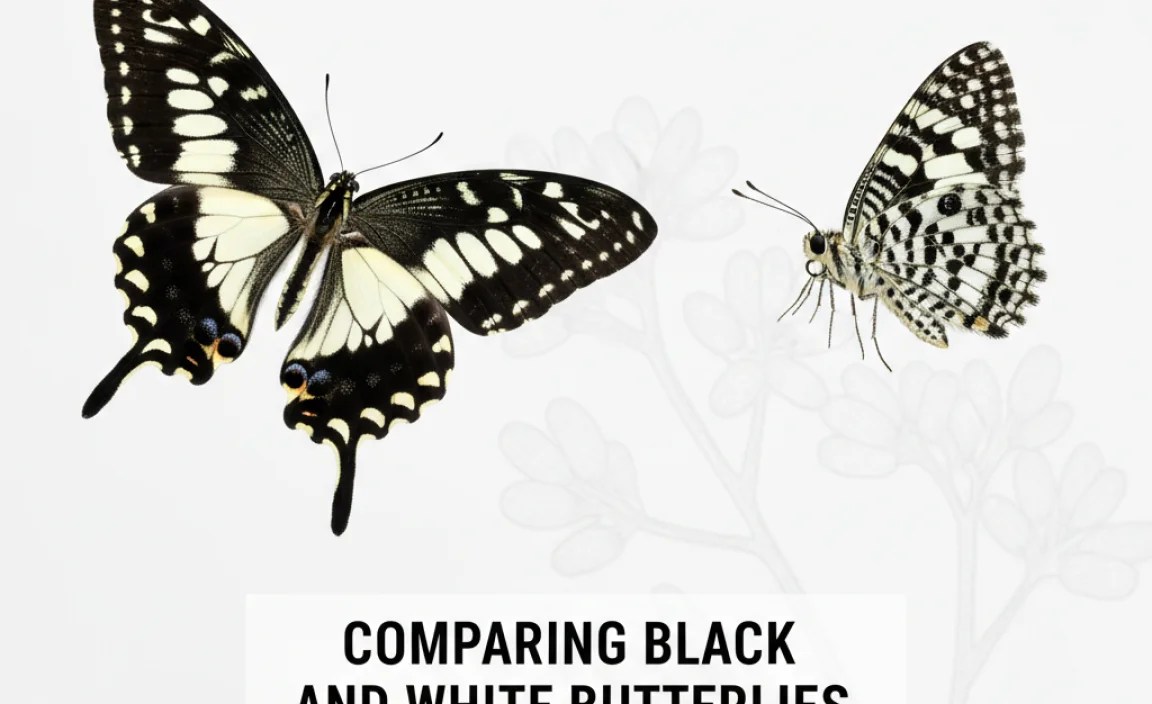
Here’s a table to help you compare the key characteristics of these butterflies:
| Butterfly | Size | Wing Pattern | Habitat | Range | Distinguishing Features |
|---|---|---|---|---|---|
| Mourning Cloak | Large | Dark with yellow border and blue spots | Woodlands, parks | North America, Europe, Asia | Yellow border |
| Black Swallowtail | Large | Black with yellow spots, blue scales (females) | Open fields, gardens | Eastern North America | “Tails” on hindwings |
| Checkered White | Small | White with checkered black spots | Open fields, roadsides | North America | Checkered pattern |
| White Admiral | Medium | Black with white band | Deciduous forests | Northern North America | White band across wings |
| Zebra Swallowtail | Medium | White with black stripes, long tails | Woodlands with pawpaw trees | Eastern United States | Zebra-like stripes, long tails |
| Mustard White | Small | White with light gray/green markings | Open woodlands, meadows | Western North America | Subtle gray/green markings |
Step-by-Step Identification Guide
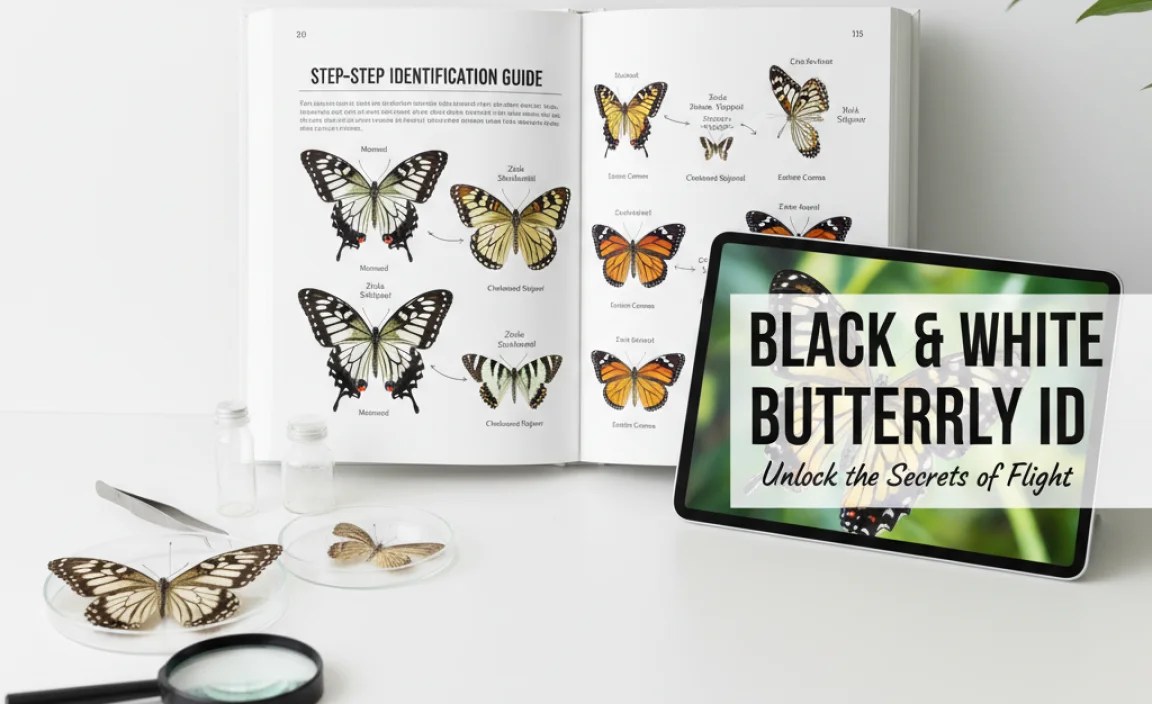
Follow these steps to identify black and white butterflies:
Step 1: Observe the Butterfly
- Take Note: Before it flies away, quickly observe the butterfly’s size, wing shape, and general color pattern.
- Photograph: If possible, take a photo. This will help you examine the details later.
Step 2: Check the Size
- Small: Less than 2 inches (Checkered White, Mustard White)
- Medium: 2 to 3.5 inches (White Admiral, Zebra Swallowtail)
- Large: Over 3.5 inches (Mourning Cloak, Black Swallowtail)
Step 3: Examine the Wing Patterns
- Spots: Are there spots on the wings? If so, what color are they and how are they arranged? (Black Swallowtail, Checkered White)
- Stripes: Are there stripes running across the wings? (Zebra Swallowtail)
- Bands: Is there a distinct band of color across the wings? (White Admiral)
- Borders: Is there a colored border along the edge of the wings? (Mourning Cloak)
Step 4: Consider the Location
- Range Maps: Use online resources like the Butterflies and Moths of North America to check the geographic range of different species.
- Habitat: Think about the habitat where you saw the butterfly. Was it in a forest, a garden, or an open field?
Step 5: Use Field Guides and Apps
- Field Guides: Invest in a good butterfly field guide for your region. These guides provide detailed descriptions and illustrations.
- Butterfly Identification Apps: Download a butterfly identification app on your smartphone. These apps can often identify butterflies from photos.
Attracting Black and White Butterflies to Your Garden
Want to see more of these beautiful butterflies in your backyard? Here’s how:
1. Plant Host Plants
Host plants are essential for butterfly caterpillars. Some examples include:
- Black Swallowtail: Parsley, dill, fennel
- Zebra Swallowtail: Pawpaw trees
- Checkered White & Mustard White: Mustard plants
2. Provide Nectar Sources
Butterflies need nectar for energy. Plant flowers that provide a good source of nectar, such as:
- Asters
- Black-Eyed Susans
- Coneflowers
- Zinnias
3. Create a Butterfly-Friendly Habitat
- Sunlight: Butterflies need sunlight to warm their bodies.
- Shelter: Provide shrubs and trees for shelter from wind and rain.
- Water: Offer a shallow dish of water with pebbles for butterflies to land on.
- Avoid Pesticides: Pesticides can harm or kill butterflies and other beneficial insects.
The Symbolic Meaning of Black and White Butterflies
Butterflies, in general, symbolize transformation, hope, and new beginnings. Black and white butterflies carry their own unique symbolism:
- Balance: Black and white represent the balance between light and darkness, good and evil, and positive and negative aspects of life.
- Transformation: Like all butterflies, they symbolize transformation, but with an emphasis on overcoming challenges and finding harmony.
- Clarity: The contrasting colors can represent clarity of thought and vision.
- Spirituality: In some cultures, black and white butterflies are seen as messengers from the spirit world.
Reference: Learn more about butterfly symbolism from trusted sources like WorldBirds.com.
Resources for Further Learning
Here are some excellent resources for learning more about butterflies:
- Butterflies and Moths of North America: A comprehensive website with information on butterfly identification, life cycles, and distribution maps. Butterflies and Moths of North America
- The Xerces Society: A non-profit organization dedicated to invertebrate conservation. The Xerces Society
- National Geographic: Offers articles and videos about butterflies and other wildlife. National Geographic
FAQ: Black and White Butterfly Identification
1. What is the most common black and white butterfly?
The Checkered White is one of the most common black and white butterflies in North America, often seen in open fields and gardens.
2. How can I tell the difference between a male and female Black Swallowtail?
Female Black Swallowtails have more iridescent blue scales between the yellow spots on their wings compared to males.
3. What do Black Swallowtail caterpillars eat?
Black Swallowtail caterpillars primarily feed on plants in the parsley family, such as dill, fennel, and parsley.
4. Are black and white butterflies poisonous?
Some black and white butterflies, like the White Admiral, mimic poisonous species for protection, but they are not inherently poisonous themselves.
5. How can I attract more black and white butterflies to my garden?
Plant host plants for their caterpillars and nectar-rich flowers for the adults. Provide sunlight, shelter, and a water source, and avoid using pesticides.
6. What is the lifespan of a Mourning Cloak butterfly?
Mourning Cloak butterflies can live for up to 10-11 months, which is longer than many other butterfly species. They overwinter as adults.
7. Where can I find Zebra Swallowtail butterflies?
Zebra Swallowtail butterflies are primarily found in the eastern United States, especially in areas with pawpaw trees, which their caterpillars feed on.
Conclusion
Identifying black and white butterflies can be a rewarding experience. By observing their size, wing patterns, habitat, and behavior, you can distinguish between different species and deepen your appreciation for these fascinating creatures. Remember to consult field guides, use online resources, and create a butterfly-friendly garden to attract these beauties to your backyard. Happy butterfly watching!


