
Easy Species Identification via Camera Trap: How To

Have you ever wondered what animals do when we aren’t watching? Scientists use special tools to find out. One cool tool is a camera trap. But how do they know what animal is in the picture? That’s where species identification via camera trap comes in. It helps us name the animals we see.
These cameras take pictures of animals in the wild. Then, experts look at the photos. They figure out what kind of animal it is. This helps us learn about animals. It also helps us protect them. Species identification via camera trap is very important for understanding our world.
Key Takeaways
- Species identification via camera trap helps us learn about wild animals without disturbing them.
- Experts use fur patterns, size, and shape to identify animals in camera trap photos.
- This method is vital for conservation and understanding animal behavior.
- New technology uses computers to automatically identify species in photos.
- Careful setup of camera traps improves the quality of photos for identification.
Using Camera Traps for Species ID

Species identification via camera trap is like being a detective. Imagine you find a mysterious footprint. You would look for clues to figure out what animal made it. Similarly, scientists use camera traps to catch animal photos. They then study the photos carefully. Experts look at many things. They check the animal’s size and shape. They also look at its fur or skin patterns. Sometimes, they even look at its tracks nearby. Identifying animals helps us know what lives in an area. It also tells us how they live. This information is very important for protecting these animals. It helps us make good choices to keep them safe.
- Camera traps take photos when animals walk by.
- Experts look at the photos to name the animals.
- They check size, shape, and fur patterns.
- Tracks near the camera can help too.
- Knowing the animals helps us protect them.
Think about a forest ranger using camera traps. They want to know if there are any endangered animals in the forest. They set up camera traps in different places. After a few weeks, they collect the cameras. They look at the pictures. They see a photo of a rare tiger! This is important news. The ranger can now work to protect the tiger’s habitat. This is just one example of how species identification via camera trap helps animals. It gives us the knowledge to help them survive. It lets us see into their secret lives. It’s like having a superpower to understand nature better.
Fun Fact or Stat: Camera traps have helped discover species previously unknown to science!
What Makes a Good Photo?
Have you ever tried to take a picture of a pet that won’t sit still? It can be hard to get a good photo! The same is true for camera traps. A good photo is very important for species identification via camera trap. If the photo is blurry, it’s hard to see the animal clearly. If the photo is too dark, you can’t see the details. Scientists need clear, well-lit photos. They need to see the animal’s features. This helps them identify the species correctly. To get good photos, you need to set up the camera carefully. Think about where the sun will be. Make sure the camera has enough batteries. Check the area for branches that might move in the wind. All these things can affect the photo quality.
Why Is Location Important?
Imagine you’re trying to find your favorite candy. You wouldn’t look in the vegetable drawer, would you? You’d look where candy is usually kept. Camera trap location is similar. If you want to photograph a certain animal, you need to put the camera where that animal lives. For example, if you want to photograph deer, you might put the camera near a forest trail. If you want to photograph birds, you might put the camera near a bird feeder. The location of the camera trap is very important for getting the right pictures. This is key for species identification via camera trap. It helps you focus on the animals you want to study. It makes your work much more efficient.
How Does Weather Affect Photos?
Have you ever tried to play outside on a very rainy day? It can be difficult! Weather can also affect camera trap photos. Rain can make the photos blurry. Snow can cover the camera lens. Extreme heat can damage the camera. Scientists need to think about the weather when they set up camera traps. They might use a waterproof camera box. They might choose a location that is sheltered from the sun and rain. Understanding the weather helps them get better photos. This is important for accurate species identification via camera trap. It ensures that the data collected is reliable and useful.
The Role of Features in Animal ID
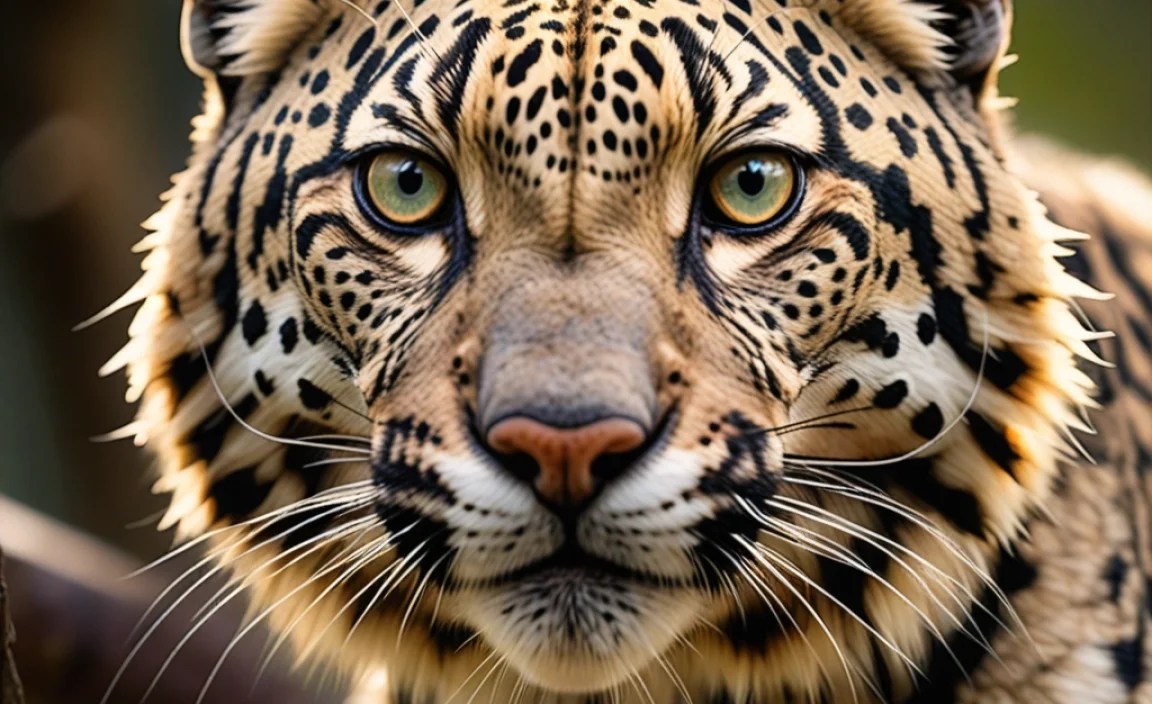
Imagine you’re trying to tell your friends apart. You might look at their hair color, their height, or the clothes they wear. These are their features. Animals also have features that help us tell them apart. For species identification via camera trap, these features are very important. Scientists look at the animal’s size. Is it big like a bear or small like a mouse? They look at the shape of its body. Is it long and slender like a snake or round and fluffy like a squirrel? They also look at its fur or skin. Does it have stripes like a zebra or spots like a leopard? These features help scientists identify the animal in the photo. They are like clues that solve the mystery of the species.
- Size helps tell big animals from small ones.
- Shape shows if an animal is long or round.
- Fur patterns like stripes are important.
- Color can also help identify species.
- Tracks near the camera can give clues too.
- Sounds in the area can sometimes help.
Think about trying to tell the difference between a red fox and a gray fox. They are both foxes, but they look different. The red fox has reddish-brown fur. The gray fox has gray fur with some red on its legs and ears. The red fox also has a white-tipped tail. The gray fox has a black-tipped tail. By looking at these features, you can tell them apart. This is how species identification via camera trap works. It’s all about noticing the small differences that make each animal unique. These differences are key to understanding the diversity of life around us.
Fun Fact or Stat: Some animals have unique markings, like fingerprints, that help identify individuals!
Why Are Patterns Important?
Have you ever noticed how zebras have stripes? Those stripes are not just for looks. They actually help the zebras hide from predators. Patterns on animals can be very important for species identification via camera trap. Some animals have spots, like leopards. Some have stripes, like tigers. Some have scales, like snakes. These patterns are unique to each species. Scientists use these patterns to identify animals in camera trap photos. The patterns are like a code that tells us what kind of animal it is. They are a key part of understanding the animal’s identity. They help us learn about the animal’s life and behavior.
How Does Size Help?
Imagine trying to tell the difference between an elephant and a mouse. One is huge, and one is tiny! Size is a very important clue for species identification via camera trap. Some animals are very large, like bears and moose. Some animals are very small, like squirrels and mice. The size of the animal can help scientists narrow down the possibilities. If the animal in the photo is very big, it can’t be a mouse. If it’s very small, it can’t be an elephant. Size is a simple but powerful tool for identifying animals. It is one of the first things scientists look at when they see a camera trap photo.
Why Is Shape a Clue?
Think about the difference between a snake and a bird. One is long and slithery, and the other has wings and feathers. The shape of an animal is another important clue for species identification via camera trap. Some animals are long and slender, like snakes and weasels. Some animals are short and stout, like badgers and groundhogs. The shape of the animal’s body can help scientists identify the species. It is another piece of the puzzle that helps them solve the mystery. It shows how animals have adapted to their environments.
Challenges in Identifying Species
Species identification via camera trap isn’t always easy. Sometimes, the photos are blurry or dark. This makes it hard to see the animal’s features. Sometimes, the animal is only partly in the picture. You might only see its tail or its leg. This also makes identification difficult. Also, some animals look very similar. For example, different types of small brown birds can be hard to tell apart. Scientists need to be very careful and use all the clues they can find. They might compare the photo to pictures in books or online. They might ask other experts for help. Even with these challenges, scientists can usually identify the species in the photo.
- Blurry photos make it hard to see details.
- Dark photos hide important features.
- Animals might only be partly in the photo.
- Some species look very similar to each other.
- Weather can affect photo quality.
Think about trying to identify a bird that is flying by very quickly. You might only get a quick glimpse of it. It would be hard to see its colors or patterns. This is similar to the challenge of identifying animals in blurry camera trap photos. The better the photo, the easier it is to identify the species. This is why it’s so important to set up the camera traps carefully. It is also why scientists are developing new technologies to improve photo quality. These technologies help make species identification via camera trap more accurate and efficient.
Fun Fact or Stat: Some animals change color depending on the season, making identification trickier!
How Does Lighting Affect ID?
Have you ever tried to read a book in the dark? It’s very difficult! Lighting is also very important for species identification via camera trap. If the photo is too dark, you can’t see the animal’s features. If the photo is too bright, the features might be washed out. Scientists need photos with good lighting. This allows them to see the details they need to identify the species. They might use cameras with infrared flash. This helps them take photos at night without disturbing the animals. Good lighting is key to getting accurate information from camera traps.
Why Is Angle Important?
Imagine trying to draw a picture of a cat. If you only see the cat from the back, you won’t know what its face looks like. The angle of the photo is important for species identification via camera trap. If the animal is facing away from the camera, it’s hard to see its face. If the animal is too far away, it’s hard to see its details. Scientists want photos where the animal is facing the camera. They also want the animal to be close enough to see its features clearly. The right angle makes identification much easier. It helps scientists get the information they need.
What About Overlapping Ranges?
Have you ever lived in a town where there were two schools very close together? It might be confusing to know which school is which! Sometimes, different animal species live in the same area. This is called overlapping ranges. This can make species identification via camera trap more difficult. For example, two similar species of deer might live in the same forest. Scientists need to look carefully at their features to tell them apart. They might use other information, like the time of year, to help them. Overlapping ranges add a challenge to the identification process. It requires careful observation and attention to detail.
Advancements in Camera Trap Technology
Camera trap technology is always getting better. New cameras can take clearer pictures. They can also take pictures faster. This means they are less likely to miss an animal. Some cameras can even send pictures to scientists automatically. This saves time and effort. One of the biggest advancements is the use of artificial intelligence (AI). AI can help identify animals in photos automatically. This makes species identification via camera trap much faster and more efficient. It also allows scientists to study more photos and learn more about animals.
| Feature | Old Camera Traps | New Camera Traps |
|---|---|---|
| Photo Quality | Lower resolution, often blurry | Higher resolution, clearer images |
| Trigger Speed | Slower, may miss animals | Faster, captures more animals |
| Data Transfer | Manual, requires visiting the site | Automatic, sends images wirelessly |
| Species ID | Manual, done by experts | Automated, uses AI |
Think about how much easier it is to find information now with computers. You can type in a question and get an answer in seconds. AI is doing the same thing for species identification via camera trap. It can quickly scan through thousands of photos and identify the animals in them. This frees up scientists to focus on other important tasks. They can analyze the data and learn more about animal behavior. They can also use the information to protect endangered species. AI is making a big difference in the world of wildlife conservation.
Fun Fact or Stat: AI can now identify some species with over 90% accuracy!
What is AI Identification?
Have you ever used a computer program that recognizes faces? AI identification is similar. It’s a computer program that has been trained to recognize animals in photos. Scientists show the program many pictures of different animals. The program learns to identify the features that make each animal unique. Then, when the program sees a new photo, it can identify the animal automatically. AI identification is making species identification via camera trap much faster and easier. It is helping scientists study animals more efficiently. It allows them to focus on other important aspects of their research.
How Does Trigger Speed Matter?
Imagine you’re trying to take a picture of a hummingbird. They fly so fast! If your camera is too slow, you’ll miss the shot. Trigger speed is how quickly a camera can take a picture after it detects movement. A fast trigger speed is very important for species identification via camera trap. If the trigger speed is slow, the animal might be gone before the camera takes a picture. New cameras have very fast trigger speeds. They can capture even the fastest-moving animals. This ensures that scientists get a picture of every animal that passes by.
Why is Remote Access Useful?
Imagine you have to walk miles into the forest every week to check your camera traps. That would take a lot of time and effort! Remote access allows scientists to check their camera traps from anywhere. Some cameras can send pictures to scientists automatically. This means they don’t have to visit the camera traps as often. This saves time and money. It also reduces the disturbance to the animals. Remote access is making species identification via camera trap more efficient and convenient. It allows scientists to focus on analyzing the data and learning about the animals.
The Impact on Conservation Efforts
Species identification via camera trap is very important for conservation. Conservation is about protecting animals and their habitats. Camera traps help us know what animals live in an area. This helps us understand what they need to survive. If we know that an endangered animal lives in a forest, we can work to protect that forest. We can also use camera traps to see if conservation efforts are working. For example, if we are trying to help a population of tigers grow, we can use camera traps to count them. This helps us see if our efforts are successful. Camera traps are a powerful tool for protecting animals and their homes.
- Camera traps show what animals live where.
- This helps us protect their habitats.
- We can count animals using camera traps.
- This shows if conservation is working.
- Camera traps help us study animal behavior.
Think about a group of scientists working to protect a rare type of frog. They use camera traps to monitor the frog population. They discover that the frog population is declining. They also see that the frog’s habitat is being destroyed by logging. The scientists use this information to convince the government to protect the frog’s habitat. They also work with local communities to promote sustainable logging practices. Thanks to the information from the camera traps, the frog population starts to recover. This is just one example of how species identification via camera trap can help save animals from extinction.
Fun Fact or Stat: Camera traps help monitor poaching and illegal wildlife trade!
How Do Camera Traps Track Populations?
Imagine you’re trying to count the number of students in your school. You could stand at the door and count them as they come in. Camera traps do something similar for animals. They take pictures of animals as they pass by. Scientists can then use these pictures to count the animals. This helps them track the population of different species. If the population is growing, that’s good news. If it’s shrinking, that’s a sign that the species might be in trouble. Tracking populations is very important for species identification via camera trap. It helps us understand how animals are doing and what we can do to help them.
Why Study Animal Behavior?
Have you ever watched animals in your backyard? They do all sorts of interesting things! Studying animal behavior helps us understand how animals live. We can learn what they eat, where they sleep, and how they interact with each other. This information is very important for conservation. If we know what an animal needs to survive, we can work to protect those things. For example, if we know that a certain bird needs a certain type of tree to nest in, we can work to protect those trees. Studying animal behavior is a key part of species identification via camera trap. It helps us understand the needs of different species.
What is Habitat Monitoring?
Imagine you’re a doctor checking on a patient. You would want to know if they are healthy and if their environment is good for them. Habitat monitoring is like being a doctor for animals’ homes. Scientists use camera traps to monitor the habitat where animals live. They can see if the habitat is healthy and if it’s providing the animals with what they need. For example, they can see if there is enough food and water. They can also see if there are any threats to the habitat, like pollution or deforestation. Habitat monitoring is essential for species identification via camera trap. It helps us understand the health of the ecosystem.
Ethical Considerations of Camera Trapping
It’s important to think about how our actions affect animals. When we use camera traps, we need to be careful not to disturb them. We should set up the cameras in a way that doesn’t scare or stress the animals. We should also avoid using bright flashes that could hurt their eyes. It’s important to respect the animals and their habitat. We should also make sure that the data we collect is used responsibly. We should use it to help protect animals and their homes. Ethical considerations are an important part of species identification via camera trap. We need to make sure that we are doing our work in a way that is good for both science and animals.
- Avoid disturbing animals with camera traps.
- Use cameras that don’t scare them.
- Don’t use bright flashes that hurt their eyes.
- Respect the animals and their habitat.
- Use the data to protect animals.
- Share your findings responsibly.
Think about walking through a forest. You would want to be quiet and respectful of the animals that live there. You wouldn’t want to make loud noises or leave trash behind. The same is true when using camera traps. We need to be mindful of the animals and their environment. We should set up the cameras carefully and check them regularly. We should also remove the cameras when we are finished with our research. This helps minimize our impact on the animals and their habitat. Species identification via camera trap should always be done in an ethical and responsible way.
Fun Fact or Stat: Some researchers involve local communities in camera trapping projects to promote conservation!
How Can We Minimize Disturbance?
Imagine you’re trying to sneak up on a friend to surprise them. You would want to be very quiet and careful not to make any noise. Minimizing disturbance is important when using camera traps. We want to avoid scaring or stressing the animals. We can do this by setting up the cameras in a quiet and unobtrusive way. We can also avoid using bright flashes that could startle them. We can also check the cameras less often. This reduces the amount of time we spend in the animals’ habitat. Minimizing disturbance is a key part of ethical species identification via camera trap.
Why Respect Animal Habitats?
Think about your own home. You would want people to respect your space and not damage your belongings. Animals also have homes, called habitats. These habitats provide them with food, water, shelter, and everything else they need to survive. It’s important to respect animal habitats. We should avoid disturbing them or damaging them. We should also work to protect them from threats like pollution and deforestation. Respecting animal habitats is a key part of conservation and ethical species identification via camera trap.
What About Data Privacy?
Have you ever shared something online and then regretted it? Data privacy is about protecting information. When we use camera traps, we collect data about animals. This data can include where they live, what they eat, and how they behave. It’s important to protect this data. We should only share it with people who need to know it. We should also make sure that the data is used responsibly. We should use it to help protect animals and their habitats. Data privacy is an important part of ethical species identification via camera trap.
Summary
Species identification via camera trap is a powerful tool. It helps us learn about animals in the wild. Scientists use camera traps to take pictures of animals. Then, they look at the photos and figure out what kind of animal it is. They look at the animal’s size, shape, and fur patterns. They also use new technologies like AI to help them. This information is very important for conservation. It helps us protect animals and their habitats. Camera traps also help us study animal behavior. We can learn what they eat and where they sleep. This helps us understand their needs.
However, it’s also important to use camera traps ethically. We need to be careful not to disturb the animals. We should respect their habitats and protect their data. By using camera traps responsibly, we can learn a lot about animals. We can also help protect them for future generations. This technology continues to evolve, offering new insights and improving conservation efforts worldwide.
Conclusion
Species identification via camera trap is important for protecting animals. It helps us understand what animals live in an area. It also helps us learn about their behavior. Scientists use camera traps to take pictures of animals. They then use these pictures to identify the species. This information is very important for conservation. We can use it to protect animals and their homes. By using camera traps responsibly, we can make a big difference. We can help protect animals for future generations. It’s like being a wildlife detective, solving mysteries and helping animals thrive.
Frequently Asked Questions
Question No 1: How do camera traps help with conservation?
Answer: Camera traps are very helpful for conservation. They let us see what animals live in a certain area. This helps scientists and conservationists understand which species need protection. With species identification via camera trap, we can also learn about animal behavior. Knowing what animals eat, where they sleep, and how they interact helps us protect their habitats better. Camera traps can also help track animal populations. This allows us to see if conservation efforts are working and adjust our plans if needed.
Question No 2: What are the main challenges in identifying species using camera traps?
Answer: There are several challenges in species identification via camera trap. Sometimes, the photos taken by camera traps are blurry or dark. This makes it hard to see the animal clearly. Also, animals may only be partly in the picture, making identification difficult. Another challenge is that some species look very similar to each other, which requires careful examination of specific features. Weather conditions can also affect the quality of the photos, adding another layer of complexity to the process.
Question No 3: How does artificial intelligence (AI) help with species identification?
Answer: Artificial intelligence (AI) is changing the way we identify species in camera trap photos. AI programs can be trained to recognize different animals. Scientists show the AI program many pictures of different animals. The program learns to identify the features that make each animal unique. Then, when the program sees a new photo, it can identify the animal automatically. This makes species identification via camera trap much faster and more accurate. AI helps us study more photos and learn more about animals.
Question No 4: What features do scientists look for when identifying animals in camera trap photos?
Answer: When scientists are doing species identification via camera trap, they look at several features. They check the animal’s size to tell big animals from small ones. The shape of the animal’s body, like whether it’s long or round, is important too. They also look at fur patterns, such as stripes or spots, which can be unique to a species. Color is another helpful feature. Sometimes, scientists look at tracks near the camera to help identify the animal.
Question No 5: How can I get involved in camera trap projects?
Answer: Getting involved in camera trap projects is a great way to help with conservation. Many organizations and universities use volunteers to help with these projects. You can look for local wildlife organizations or research groups that use camera traps. They might need help setting up cameras, collecting data, or identifying animals in photos. Your help can make a big difference in understanding and protecting wildlife. You can also learn a lot about species identification via camera trap.
Question No 6: What ethical considerations are important when using camera traps?
Answer: It’s important to be ethical when using camera traps. We must not disturb animals. Place cameras where they won’t scare animals. Don’t use bright flashes. Respect animal habitats. Use data to help animals. Share findings responsibly. Ethical species identification via camera trap means protecting animals. We should be careful and thoughtful. We want to learn without hurting them.


