
Red Butterfly Species: Discover This Powerful Beauty

The vibrant world of butterflies includes several stunning red butterfly species. These include the Red Admiral, known for its striking patterns, and various Swallowtails that display reddish hues. Spotting one of these beauties adds a splash of color to any garden or woodland.
Have you ever been captivated by a flash of red in your garden, only to realize it was a butterfly? Identifying butterflies can sometimes feel like a guessing game, especially when trying to distinguish between similar colors and patterns. But don’t worry! Understanding the key characteristics of red butterflies will make identification easier and much more rewarding.
In this guide, we’ll explore the fascinating world of red butterfly species, providing you with the knowledge to identify them with confidence. We’ll cover their unique features, habitats, and even tips on how to attract them to your own backyard. Get ready to transform your butterfly-watching experience!
What Makes a Butterfly “Red”?
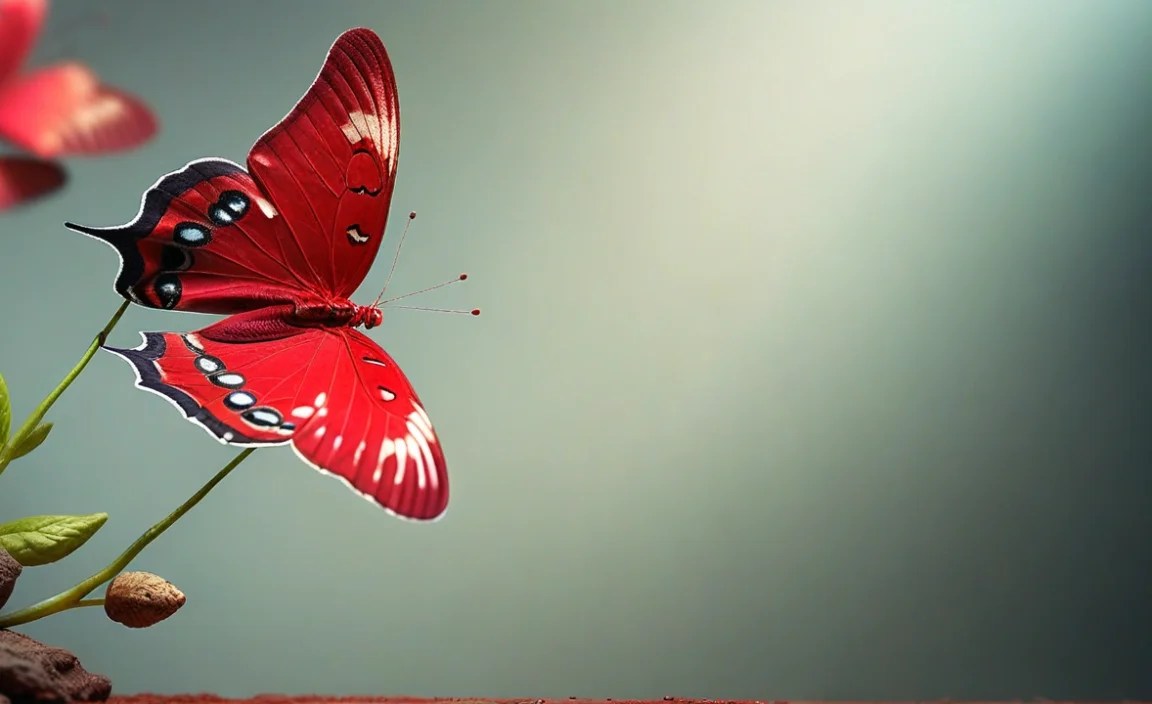
The color red in butterflies comes from pigments within their scales. These pigments absorb certain wavelengths of light and reflect red light back to our eyes. The intensity and shade of red can vary greatly between species, influenced by genetics and diet.
Red coloration often serves multiple purposes for butterflies:
- Warning Signal: Bright red can warn predators of a butterfly’s toxicity, a defense mechanism developed through evolution.
- Mate Attraction: Red can be a key factor in attracting mates, making the butterfly more visible and appealing during courtship.
- Camouflage: In certain environments, red can help butterflies blend in with flowers or foliage, providing camouflage.
It’s important to note that what we perceive as “red” can also be influenced by light conditions and individual perception. Some butterflies may appear more orange or reddish-brown depending on the angle of light.
Common Red Butterfly Species

Let’s dive into some of the most commonly seen red butterfly species. Understanding their specific characteristics will help you identify them accurately.
Red Admiral (Vanessa atalanta)
The Red Admiral is a widely recognized butterfly, known for its striking wing patterns. Its dark brown or black wings feature bright red-orange bands and white spots near the tips of the forewings.
Key Identification Features:
- Dark brown/black wings with red-orange bands
- White spots near the forewing tips
- Wingspan: 1.75 – 2.5 inches
Habitat: Red Admirals are found in a variety of habitats, including gardens, parks, woodlands, and fields. They are migratory and can be seen across North America, Europe, and Asia.
Host Plants: Their caterpillars primarily feed on nettles (Urtica dioica).
Pipevine Swallowtail (Battus philenor)
While primarily black, the Pipevine Swallowtail often displays iridescent blue and green hues, with reddish-orange spots on its hindwings. The intensity of these colors can vary.
Key Identification Features:
- Black wings with iridescent blue/green sheen
- Reddish-orange spots on the hindwings
- Wingspan: 2.5 – 4 inches
- Distinctive “tails” on the hindwings
Habitat: Pipevine Swallowtails are commonly found in open woodlands, fields, and gardens, especially where their host plant, the pipevine, grows.
Host Plants: Caterpillars feed exclusively on pipevine (Aristolochia species), which contains toxins that make the butterfly unpalatable to predators.
Eastern Tiger Swallowtail (Papilio glaucus) – Female Form
Female Eastern Tiger Swallowtails can exhibit two forms: a yellow form and a dark (melanic) form. The dark form is often black with faint tiger stripes, and may have reddish-orange spots on the hindwings.
Key Identification Features:
- Dark black wings with faint tiger stripes (in dark form females)
- Reddish-orange spots on the hindwings
- Wingspan: 3 – 5.5 inches
- Distinctive “tails” on the hindwings
Habitat: Eastern Tiger Swallowtails are found in deciduous woodlands, fields, and gardens throughout eastern North America.
Host Plants: Caterpillars feed on a variety of trees, including wild cherry, tulip poplar, and willow.
Atala Butterfly (Eumaeus atala)
The Atala butterfly is a striking species with black wings and bright red-orange patches on the abdomen and hindwings. It’s a smaller butterfly, but its vibrant colors make it hard to miss.
Key Identification Features:
- Black wings with iridescent blue-green scales.
- Bright red-orange patches on the abdomen and hindwings.
- Wingspan: 1.5 – 2 inches
Habitat: Atala butterflies are primarily found in South Florida, particularly in areas with their host plant, the coontie palm.
Host Plants: Caterpillars feed exclusively on the coontie palm (Zamia integrifolia), a native cycad.
Longwing Butterflies (Heliconius species)
Several species of Longwing butterflies, particularly those in the *Heliconius* genus, display red coloration. These butterflies are known for their long lifespans and complex behaviors.
Key Identification Features:
- Variable wing patterns, often with red, orange, yellow, and black markings.
- Long, narrow wings.
- Wingspan: Varies depending on species, typically 2-4 inches.
Habitat: Longwing butterflies are found in tropical and subtropical regions of the Americas.
Host Plants: Caterpillars feed on various species of passionflower vines (Passiflora species).
Distinguishing Red Butterflies from Similar Species

Identifying butterflies can be tricky, as many species share similar colors and patterns. Here’s how to differentiate red butterflies from their look-alikes:
- Pay attention to the specific patterns: Note the shape and placement of red markings on the wings.
- Consider the size: Butterfly size can be a helpful clue. Refer to wingspan measurements for each species.
- Observe the habitat: Certain butterflies are more common in specific regions or habitats.
- Check the host plants: Knowing the caterpillar’s food source can narrow down the possibilities.
For example, the Viceroy butterfly is often mistaken for the Monarch, but it has a distinctive black line across its hindwing. Similarly, some moths can resemble butterflies, but moths typically have thicker bodies and feathery antennae.
Attracting Red Butterflies to Your Garden

Want to see more red butterflies in your backyard? Here’s how to create a butterfly-friendly habitat:
- Plant host plants: Provide food for caterpillars by planting their preferred host plants. For Red Admirals, plant nettles; for Pipevine Swallowtails, plant pipevine.
- Offer nectar sources: Plant nectar-rich flowers that attract adult butterflies. Good choices include butterfly bush, zinnias, and milkweed.
- Provide a water source: Butterflies need water! Create a shallow puddle or place a dish of wet sand in your garden.
- Offer shelter: Plant shrubs and trees to provide shelter from wind and predators.
- Avoid pesticides: Pesticides can harm or kill butterflies and other beneficial insects. Choose organic gardening methods instead.
By creating a welcoming environment, you can attract a variety of butterflies, including the stunning red species we’ve discussed.
The Role of Red Butterflies in the Ecosystem

Butterflies, including red species, play a vital role in the ecosystem:
- Pollination: Butterflies are important pollinators, transferring pollen from flower to flower as they feed on nectar.
- Food Source: Butterflies and their caterpillars serve as food for birds, reptiles, and other animals.
- Indicators of Environmental Health: Butterfly populations can indicate the health of an ecosystem. Declines in butterfly populations can signal environmental problems.
By supporting butterfly populations, we contribute to the overall health and biodiversity of our planet.
Conservation Efforts for Red Butterfly Species

Many butterfly species face threats from habitat loss, pesticide use, and climate change. Conservation efforts are crucial to protect these beautiful creatures. Here are some ways you can help:
- Support butterfly conservation organizations: Donate to or volunteer with organizations that work to protect butterflies and their habitats, such as The Xerces Society.
- Create butterfly-friendly habitats: Plant host plants and nectar sources in your garden or community.
- Reduce pesticide use: Choose organic gardening methods and avoid using pesticides.
- Educate others: Share your knowledge about butterflies and the importance of conservation with friends, family, and neighbors.
- Advocate for conservation policies: Support policies that protect butterfly habitats and promote sustainable land management.
Even small actions can make a big difference in protecting red butterflies and other wildlife.
Red Butterfly Symbolism and Cultural Significance

Butterflies have long held symbolic and cultural significance in various societies around the world. The color red often amplifies these meanings, adding layers of passion, energy, and vitality.
Here are some common symbolic associations of red butterflies:
- Transformation and Rebirth: Like all butterflies, red butterflies symbolize transformation, rebirth, and the cyclical nature of life. The journey from caterpillar to butterfly represents personal growth and spiritual awakening.
- Passion and Love: Red is the color of passion, love, and romance. A red butterfly can symbolize intense emotions, deep connections, and the fiery spirit of the heart.
- Energy and Vitality: Red is also associated with energy, vitality, and action. A red butterfly can represent a surge of energy, a call to action, or a celebration of life’s vibrant forces.
- Good Luck and Prosperity: In some cultures, butterflies are seen as symbols of good luck, prosperity, and abundance. A red butterfly can amplify these meanings, bringing extra fortune and success.
- Warning or Omen: Depending on the context, a red butterfly can also serve as a warning or omen. It may signal a need for caution, a reminder to pay attention to your instincts, or a message from the spiritual realm.
The symbolism of a red butterfly can vary depending on your personal beliefs, cultural background, and the specific context in which you encounter it. Pay attention to your own intuition and feelings when interpreting its meaning.
Here’s a table summarizing the key aspects of different red butterfly species:
| Species | Key Features | Habitat | Host Plants |
|---|---|---|---|
| Red Admiral | Dark wings with red-orange bands, white spots | Gardens, woodlands, fields | Nettles |
| Pipevine Swallowtail | Black wings with iridescent blue/green, reddish-orange spots | Open woodlands, gardens | Pipevine |
| Eastern Tiger Swallowtail (Female) | Dark wings with faint tiger stripes, reddish-orange spots | Deciduous woodlands, gardens | Wild cherry, tulip poplar, willow |
| Atala Butterfly | Black wings with iridescent blue-green scales, red-orange patches | South Florida | Coontie palm |
| Longwing Butterflies (Heliconius) | Variable wing patterns with red, orange, yellow, and black | Tropical and subtropical Americas | Passionflower vines |
Frequently Asked Questions (FAQs)
What does it mean if I see a red butterfly?
Seeing a red butterfly can have different meanings depending on your personal beliefs. Generally, it can symbolize passion, transformation, or a message from nature.
Are red butterflies rare?
The rarity of red butterflies varies by species and location. Some, like the Red Admiral, are quite common, while others, like certain *Heliconius* species, may be more localized.
How can I attract more butterflies to my garden?
Plant host plants for caterpillars and nectar-rich flowers for adult butterflies. Provide a water source and avoid using pesticides.
What is the lifespan of a red butterfly?
The lifespan varies by species. Some butterflies live only a few weeks, while others, like certain Longwing butterflies, can live for several months.
Are red butterflies poisonous?
Some red butterflies, like the Pipevine Swallowtail, are toxic to predators because their caterpillars feed on poisonous plants. The Atala butterfly also feeds on coontie palm which makes it toxic.
What do red butterfly caterpillars eat?
Red butterfly caterpillars eat specific host plants. For example, Red Admiral caterpillars eat nettles, while Pipevine Swallowtail caterpillars eat pipevine.
Do red butterflies migrate?
Yes, some red butterflies migrate. Red Admirals are known for their long-distance migrations across North America and Europe.
Conclusion
Exploring the world of red butterfly species is a delightful journey into nature’s artistry. From the vibrant Red Admiral to the striking Atala, each species offers a unique glimpse into the beauty and complexity of the natural world. By learning to identify these butterflies, creating butterfly-friendly habitats, and supporting conservation efforts, you can play a vital role in protecting these delicate creatures for future generations. So, get outside, explore your surroundings, and embrace the magic of red butterflies!


