
Easy Species Identification of Annelids: A Smart Guide

Have you ever dug in the garden and found a worm? That wriggly creature is an annelid. Annelids are also called segmented worms. There are many different kinds of annelids. How do scientists know what kind they are? It all starts with species identification of annelids.
Annelids live in many places. They live in soil and in water. Some are tiny, and some are very big. Figuring out what species they are can be tricky. Let’s learn how scientists do it.
Species identification of annelids helps us understand our world. It helps us protect these important creatures. It also helps us learn about how they live. So, let’s dive in and explore the world of annelids!
Key Takeaways
- Species identification of annelids is key for understanding their roles in ecosystems.
- Scientists use microscopes to see tiny features for identification.
- Body segments, bristles, and head shapes are important clues.
- DNA analysis gives us even more accurate identification.
- Knowing annelid species helps protect our environment.
What is Annelid Species Identification?

Annelid species identification is how we figure out what kind of segmented worm we have. It is like being a detective. We look for clues to solve a mystery. These clues help us name the worm. Scientists use different tools and methods. They look closely at the worm’s body. They also look at where it lives. All of this helps them know the species.
- Annelids have segmented bodies.
- Some annelids live in the soil.
- Others live in oceans or lakes.
- Some have bristles called setae.
- Scientists compare worms to known species.
Think of species identification of annelids like sorting toys. You look at each toy carefully. You see its color, shape, and size. Then you put it in the right box. Annelids are sorted in a similar way. Scientists look at their body parts. They check their habitat and behavior. They use books and guides to match them. This careful work helps us understand the many kinds of annelids on Earth. It also helps us learn how to protect them and their homes.
Why is Annelid ID Important?
Have you ever wondered why knowing the name of a worm matters? It’s like knowing the name of a plant or animal. When we know what something is, we can learn more about it. We can study its habits and its role in nature. If we don’t know what kind of annelid it is, we can’t learn these things. Knowing the species identification of annelids helps us understand how they live. It also helps us protect them if they are in danger.
Tools Used for Identification
Imagine you are a detective searching for clues. What tools would you use? A magnifying glass, maybe? Scientists use special tools for species identification of annelids. They use microscopes to see tiny details. They use books with pictures and descriptions. They also use computers to compare DNA. These tools help them see things we can’t see with our eyes alone. They help them solve the mystery of what kind of annelid they have found. These tools give scientists the power to understand the tiny world of worms.
Challenges in Annelid ID
Species identification of annelids isn’t always easy. Some annelids look very similar. It can be hard to tell them apart. Some annelids are very small. This makes it hard to see their features. Also, some annelids change as they grow. This can make it tricky to identify them at different ages. But scientists are clever. They use many methods to overcome these challenges. They keep learning more about these amazing creatures.
Fun Fact or Stat: There are over 22,000 known species of annelids living in diverse habitats!
Key Features for Identifying Annelids
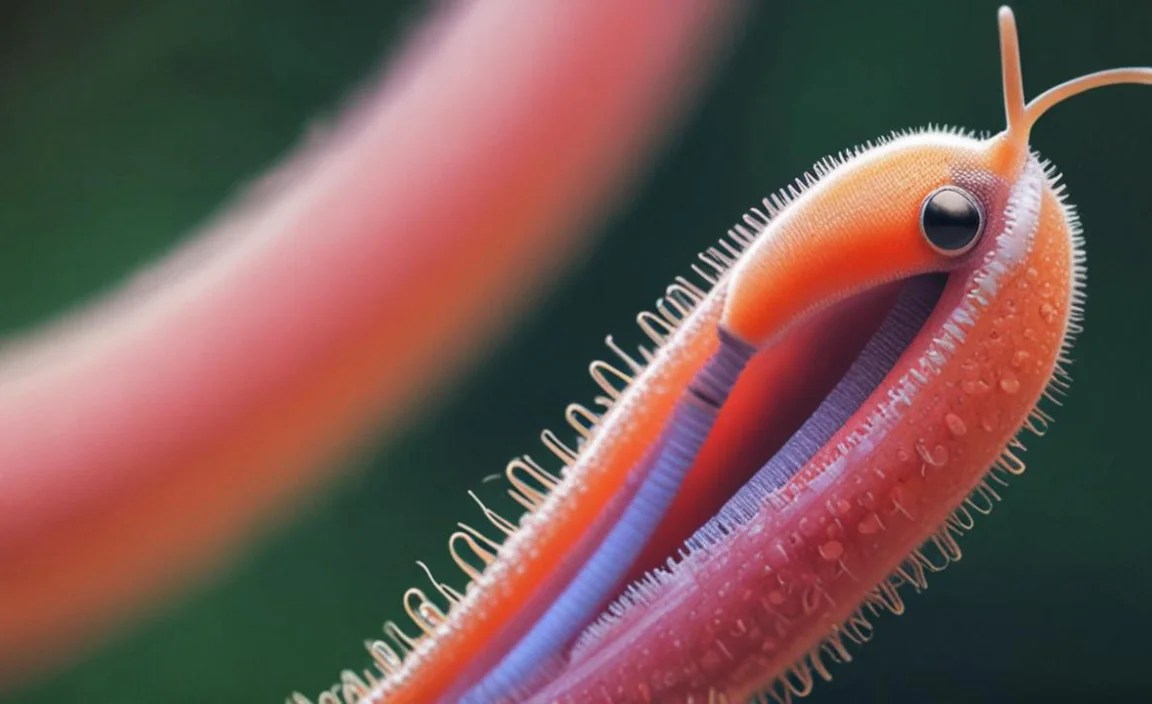
To identify annelids, scientists look at key features. The body is made of segments. These segments can be long or short. Scientists check for bristles, called setae. Some annelids have many setae. Others have few or none. The head can have eyes or feelers. The shape of the head is also important. Color and size can also give clues. All these features help identify the annelid species.
- Body segments are the main feature.
- Setae help with movement and grip.
- Head shape varies among species.
- Color can be a useful clue.
- Size can help narrow down the choices.
Imagine you are trying to tell different breeds of dogs apart. You look at their size, fur color, and ear shape. Identifying annelids is similar. Scientists look at the annelid’s body segments. They check for the presence and arrangement of setae. They examine the shape of the head. They notice the color and size of the worm. These features are like clues in a puzzle. Putting them together helps scientists figure out the species identification of annelids. It’s a bit like being a nature detective!
Segment Patterns
Have you ever noticed that some worms have rings around their bodies? These rings are called segments. The pattern of these segments can help us identify the worm. Some worms have many segments. Others have only a few. The segments can be long or short. Scientists count the segments. They also look at how the segments are arranged. These patterns are important clues for species identification of annelids.
Setae Arrangement
Imagine a tiny brush on the side of a worm. That’s a seta! Setae are bristles that help worms move. They also help them grip the soil. Some worms have many setae. Others have very few. The way the setae are arranged is also important. Some are in neat rows. Others are scattered. Scientists look closely at the setae arrangement. This helps them figure out what kind of annelid it is. Setae are like tiny clues that help us solve the worm mystery.
Head and Tail Features
The head and tail of an annelid can tell us a lot. Some annelids have a clear head. Others have a head that is hard to see. Some have eyes on their head. Others do not. The tail can also be different shapes. Some are pointy, and some are flat. Scientists look closely at the head and tail. This helps them with species identification of annelids. The head and tail are like the worm’s ID card!
Fun Fact or Stat: Some marine annelids have iridescent setae that shimmer in the light!
Microscopic Analysis in Annelid ID

Sometimes, annelids are very small. To see their features, scientists use microscopes. Microscopes make tiny things look bigger. This helps scientists see the details. They can see tiny setae. They can see small patterns on the skin. They can also see the shape of tiny body parts. Microscopic analysis is very important for species identification of annelids. It lets scientists see things they couldn’t see otherwise.
- Microscopes magnify small details.
- Setae are easier to see under a microscope.
- Skin patterns become visible.
- Internal structures can be examined.
- Microscopic analysis is crucial for tiny annelids.
Imagine you are looking at a tiny bug. You can’t see much with your eyes. But with a magnifying glass, you can see its legs and antennae. A microscope is like a super magnifying glass. It lets scientists see the smallest parts of an annelid. They can see the tiny hooks on the setae. They can see the patterns on the skin. They can even see inside the worm! This detailed view is essential for accurate species identification of annelids. It’s like having a secret window into the worm’s world.
Preparing Samples
Before scientists can look at annelids under a microscope, they need to prepare the samples. This means getting the annelid ready to be seen. They might need to clean it. They might need to put it on a special slide. Sometimes, they need to stain it with a special dye. This makes the features easier to see. Preparing samples is an important step in species identification of annelids. It helps make sure the view is clear and accurate.
Examining Setae Details
Setae are like tiny hairs on an annelid. They are very important for identification. But they are often very small. That’s why scientists use microscopes to see them clearly. They look at the shape of the setae. They look at how many there are. They also look at how they are arranged. These details help them figure out the species identification of annelids. It’s like studying the fingerprints of a worm!
Analyzing Internal Structures
Sometimes, scientists need to look inside an annelid to identify it. This is like looking inside a machine to see how it works. They might look at the gut or the blood vessels. They might look at the nervous system. These internal structures can be different in different species. By analyzing these structures, scientists can get more clues. This helps them with species identification of annelids. It’s like being a worm doctor!
Fun Fact or Stat: Some annelids have crystalline inclusions in their setae, which can only be seen under a polarized light microscope!
DNA Analysis for Annelid Identification

DNA is like a secret code inside every living thing. It tells us who we are and where we come from. Scientists can use DNA to identify annelids. They take a small piece of the worm. They extract the DNA from it. Then, they compare the DNA to other annelids. If the DNA is similar, the annelids are related. DNA analysis is a powerful tool for species identification of annelids. It can help us identify even the trickiest species.
- DNA is the genetic code of life.
- DNA analysis is very accurate.
- It can identify even closely related species.
- DNA can be extracted from small samples.
- DNA databases help compare species.
Imagine DNA as a long string of beads. Each bead is a different color. The order of the beads is like a secret code. Every living thing has its own unique code. Scientists can read this code for annelids. They compare it to the codes of other annelids. If the codes are very similar, they are the same species. This is how DNA analysis helps with species identification of annelids. It’s like having a super-accurate way to tell worms apart.
Extracting DNA
The first step in DNA analysis is to extract the DNA. This means taking the DNA out of the annelid’s cells. Scientists use special chemicals to do this. The chemicals break open the cells. Then, they separate the DNA from the other parts of the cell. Extracting DNA is like unlocking a treasure chest. The DNA is the treasure inside. This step is essential for species identification of annelids.
Comparing DNA Sequences
Once the DNA is extracted, scientists need to compare it. They compare it to the DNA of other annelids. They use computers to do this. The computers look for similarities and differences. If the DNA sequences are very similar, the annelids are likely the same species. Comparing DNA sequences is like matching fingerprints. It helps scientists make sure they have the right species identification of annelids.
Advantages of DNA Analysis
DNA analysis has many advantages. It is very accurate. It can identify even closely related species. It can also be used on small samples. This is important for tiny annelids. DNA analysis is a powerful tool for species identification of annelids. It helps us understand the relationships between different species. It’s like having a superpower for identifying worms!
Fun Fact or Stat: Some annelid species can be identified using just a tiny DNA sample from a single bristle!
Using Field Guides and Keys for ID

Field guides and keys are like instruction manuals for identifying annelids. They have pictures and descriptions of different species. They also have questions that help you narrow down the choices. You look at the annelid. Then you answer the questions in the key. This leads you to the correct identification. Field guides and keys are very helpful for species identification of annelids. They make it easier to identify worms in the field.
- Field guides have pictures and descriptions.
- Keys use questions to narrow down choices.
- They are helpful for beginners.
- They can be used in the field.
- They are a good starting point for identification.
Imagine you are trying to identify a bird. You might use a bird book. The book has pictures of different birds. It also tells you where they live and what they eat. A field guide for annelids is similar. It has pictures and descriptions of different annelid species. It also tells you where they live and what they eat. A key is like a game of “20 Questions.” You answer questions about the annelid. The answers lead you to the right identification. These tools are very helpful for species identification of annelids. They make it easier to learn about worms.
What are Field Guides?
Field guides are books that help you identify things in nature. They have pictures and descriptions of different plants and animals. They also tell you where they live and what they eat. Field guides for annelids are similar. They help you identify different species of worms. They are a great resource for anyone interested in species identification of annelids. They are like having a worm expert in your pocket!
What are Identification Keys?
Identification keys are like flowcharts. They ask you a series of questions about the annelid. Each answer leads you to another question. Eventually, you get to the name of the species. Keys are very helpful for narrowing down the choices. They are a great tool for species identification of annelids. They make the identification process easier and more organized.
Limitations of Guides and Keys
Field guides and keys are helpful, but they have limitations. They might not include all the species in your area. They might be difficult to use if the annelid is damaged. They might require some knowledge of worm anatomy. So, it’s important to use them carefully. And it’s always a good idea to consult with an expert if you are unsure. Despite these limitations, they are a valuable tool for species identification of annelids.
Fun Fact or Stat: Some field guides use color-coded keys to help you quickly identify annelids based on their appearance!
Importance of Accurate Annelid Identification
Accurate species identification of annelids is very important. It helps us understand the environment. Annelids play important roles in ecosystems. Some help break down dead leaves. Others are food for other animals. If we don’t know what species they are, we can’t understand their role. Accurate identification is also important for conservation. If a species is endangered, we need to know so we can protect it. Accurate identification helps us protect our planet.
- Annelids play key roles in ecosystems.
- Accurate ID helps us understand these roles.
- It is important for conservation efforts.
- It helps us track invasive species.
- It supports scientific research.
Imagine you are a doctor. You need to know what disease a patient has to give the right medicine. Accurate species identification of annelids is similar. We need to know what kind of worm we have to understand its role in the environment. If we identify it wrong, we might not protect it properly. We might not understand how it affects the ecosystem. Accurate identification is the first step in protecting our planet and understanding the circle of life.
Ecological Roles
Annelids play many important roles in the environment. Some are decomposers. They break down dead plants and animals. This helps recycle nutrients. Others are predators. They eat other small animals. This helps control their populations. Earthworms help aerate the soil. This makes it easier for plants to grow. Knowing the species identification of annelids helps us understand these roles. It helps us understand how ecosystems work.
Conservation Efforts
Some annelid species are endangered. This means they are at risk of disappearing. Accurate identification is important for protecting these species. If we don’t know what they are, we can’t protect them. We need to know where they live. We need to know what they need to survive. Accurate species identification of annelids helps us with conservation efforts. It helps us protect these important creatures.
Tracking Invasive Species
Sometimes, annelids are introduced to new areas. These are called invasive species. They can cause problems in their new homes. They might compete with native species. They might spread diseases. Accurate identification is important for tracking invasive species. If we know what they are, we can monitor their spread. We can also take steps to control them. Accurate species identification of annelids helps us protect our native ecosystems.
Fun Fact or Stat: Some annelid species are used as bioindicators, meaning their presence or absence can tell us about the health of an ecosystem!
Future Trends in Annelid Species ID
Species identification of annelids is always improving. Scientists are developing new tools and methods. They are using more advanced DNA analysis. They are also using computers to help identify species. These new trends will make identification faster and more accurate. This will help us understand and protect these important creatures even better.
- Advanced DNA sequencing is becoming more common.
- Machine learning can help identify species.
- Citizen science projects are increasing.
- New imaging techniques are being developed.
- Collaboration is key for future progress.
Imagine a future where we can identify annelids with a smartphone. We could take a picture of a worm. The phone would tell us what species it is. This might sound like science fiction, but it’s becoming closer to reality. Scientists are developing new tools and methods all the time. They are using computers to analyze images and DNA. They are also asking for help from ordinary people. These trends will make species identification of annelids easier and more accessible. It’s an exciting time to be a worm enthusiast!
Advancements in Technology
Technology is changing how we identify annelids. Advanced DNA sequencing can now identify species from tiny samples. Machine learning can analyze images and identify patterns. New imaging techniques can reveal internal structures. These advancements are making identification faster and more accurate. They are also opening up new possibilities for research. Technology is revolutionizing species identification of annelids.
Citizen Science Initiatives
You can help identify annelids! Citizen science projects ask for help from ordinary people. You can take pictures of worms. You can upload them to a website. Experts will help identify them. This helps scientists collect more data. It also helps educate the public. Citizen science is a great way to get involved in species identification of annelids. It’s fun, educational, and helpful!
Collaborative Research
Identifying annelids is a team effort. Scientists from all over the world work together. They share data and expertise. This helps them solve complex problems. It also helps them identify new species. Collaboration is essential for advancing species identification of annelids. By working together, we can learn more about these amazing creatures.
Fun Fact or Stat: Artificial intelligence is now being used to identify annelid species based on images with over 90% accuracy!
Summary
Species identification of annelids is how we figure out what kind of segmented worm we have. Scientists use different tools and methods to identify them. They look at their body segments, setae, and head shape. They also use microscopes and DNA analysis. Accurate identification is important for understanding their roles in ecosystems and for conservation efforts. New technologies and citizen science projects are making identification easier and more accessible. By learning about annelids, we can better protect our planet.
Conclusion
Annelids are amazing creatures that play important roles in our world. Species identification of annelids helps us understand these roles. It helps us protect these worms and their homes. By using different tools and methods, scientists can identify even the trickiest species. As technology improves, identification will become even easier. Let’s continue to learn about and protect these important animals.
Frequently Asked Questions
Question No 1: What are annelids?
Answer: Annelids are segmented worms. Their bodies are made up of repeating sections, like little rings joined together. This body plan helps them move and live in different environments. Some annelids, like earthworms, live in soil. Others, like leeches, live in water. There are over 22,000 different species of annelids! Species identification of annelids helps us understand the huge variety of these worms and their unique adaptations.
Question No 2: Why is it important to identify annelids?
Answer: Identifying annelids is important for many reasons. It helps us understand their role in the environment. Some annelids help break down dead leaves. Others are food for other animals. Knowing what kind of annelid it is helps us understand how it affects the ecosystem. It also helps us protect endangered species. If we don’t know what they are, we can’t protect them. Therefore, knowing the species identification of annelids is the first step to protecting our environment.
Question No 3: What tools do scientists use to identify annelids?
Answer: Scientists use several tools to identify annelids. They use microscopes to see tiny details. They use field guides with pictures and descriptions. They also use DNA analysis. DNA is like a secret code inside every living thing. Comparing DNA helps identify the species. All these tools help scientists with species identification of annelids, even the smallest and most similar-looking ones.
Question No 4: Can I help identify annelids?
Answer: Yes, you can! There are citizen science projects that ask for help from ordinary people. You can take pictures of worms and upload them to a website. Experts will help identify them. This helps scientists collect more data. It also helps educate the public. It’s a fun and easy way to get involved in species identification of annelids. Your observations can contribute to scientific knowledge!
Question No 5: What are setae?
Answer: Setae are tiny bristles on the body of an annelid. They help the worm move and grip the soil or other surfaces. Some annelids have many setae, while others have very few. The arrangement of the setae can also be different. Scientists use the setae to help with species identification of annelids. They look at the shape, number, and arrangement of the setae.
Question No 6: How is DNA used to identify annelids?
Answer: DNA is like a secret code inside every living thing. Scientists can use this code to identify annelids. They take a small piece of the worm and extract the DNA. Then they compare the DNA to the DNA of other annelids. If the DNA is very similar, the annelids are likely the same species. Species identification of annelids using DNA is a very accurate method, even for closely related species.


