
Butterfly Identification Using Markings: Easy Guide

Have you ever seen a butterfly up close? Butterflies are very pretty. Each one has its own special colors and patterns. These colors and patterns help us with butterfly identification using markings. It is like each butterfly has its own name tag.
Imagine you are a detective. Your job is to find out what kind of butterfly you see. The markings on their wings are clues. Let’s learn how to use these clues to identify butterflies!
Key Takeaways
- Butterfly identification using markings relies on wing patterns, colors, and shapes.
- Different butterfly families have unique markings, aiding in quick classification.
- Using field guides helps match observed markings to known butterfly species.
- Location and time of year are important clues for accurate identification.
- Practice and observation are key to becoming good at butterfly identification.
Butterfly Identification Using Wing Markings
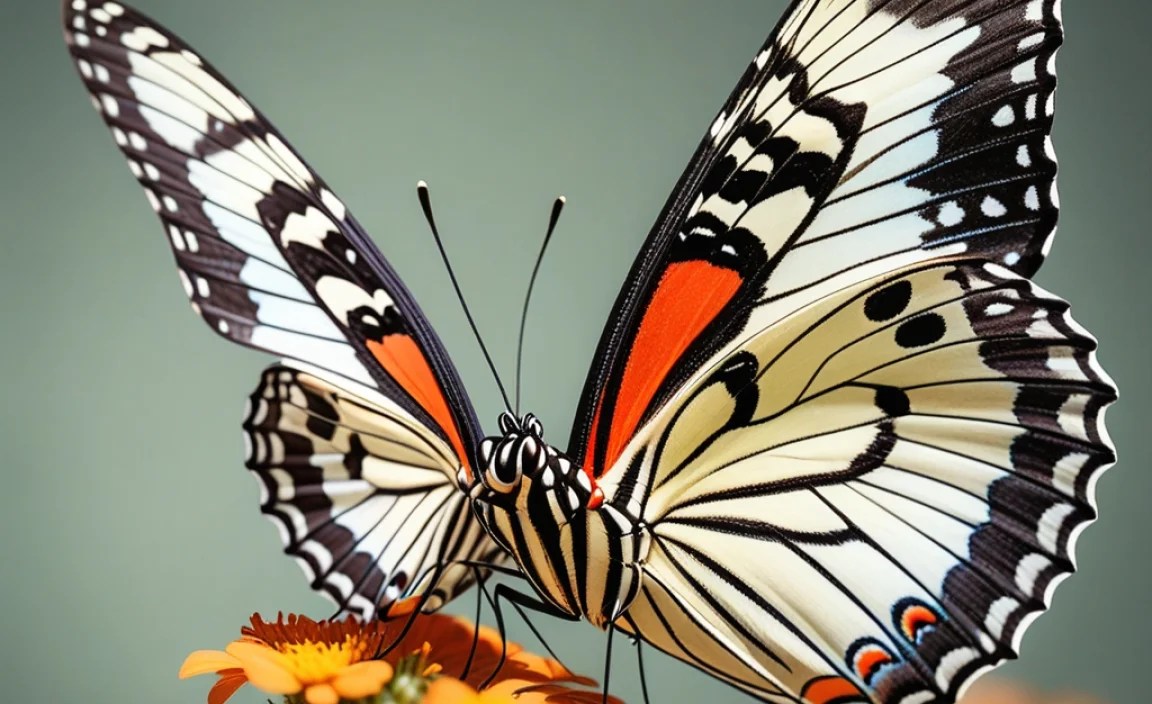
Butterfly identification using markings is like solving a puzzle. Each butterfly has a unique set of markings on its wings. These markings include spots, stripes, and different colors. The patterns can be simple or very complex. By looking closely at these markings, you can figure out what kind of butterfly it is.
One of the first things to look for is the overall color of the wings. Are they bright and colorful, or more muted and earthy? Next, notice the shapes of the markings. Are they round spots, long stripes, or wavy lines? Also, pay attention to where the markings are located on the wings. Are they near the edge, in the middle, or close to the body? All of these details can help you narrow down the possibilities and identify the butterfly correctly. It is like being a scientist and observing the world around you.
- Note the main colors on the wings.
- Look for any spots or stripes.
- Check the size of the butterfly.
- Observe the wing shape.
- See if there are tails on the wings.
Butterfly identification using markings is not just about knowing the names of butterflies. It is also about understanding their lives and their place in nature. Butterflies are important pollinators. They help flowers make seeds and fruits. By learning to identify butterflies, you can also learn about the plants they need to survive. You can help protect their habitats. This is important for the whole environment.
Fun Fact or Stat: Some butterflies have markings that look like eyes to scare away predators!
What Colors Are Most Common?
Have you ever wondered why some colors are more common on butterfly wings? Certain colors help butterflies in different ways. Bright colors like red, orange, and yellow can warn predators that the butterfly is poisonous or tastes bad. These are often seen in Monarch butterflies. Other colors, like brown and green, help butterflies blend in with their surroundings. This camouflage protects them from being seen by predators.
The colors of butterfly wings come from tiny scales. These scales reflect light in different ways. Some scales contain pigments, which are chemicals that give color. Other scales create color through the way they bend light. This is how iridescent colors, like those seen on Blue Morpho butterflies, are made. The combination of pigments and light reflection creates the amazing variety of colors we see on butterfly wings. Colors are a very important element to consider when you look into butterfly identification using markings.
How Do Spots and Stripes Help?
Spots and stripes on butterfly wings are more than just pretty decorations. They serve several important purposes. Some spots look like eyes, which can startle or confuse predators. This gives the butterfly a chance to escape. Stripes can help a butterfly blend in with its surroundings. When a butterfly is resting on a plant, the stripes can make it harder to see.
The arrangement of spots and stripes can also help butterflies recognize each other. Each species has its own unique pattern. This helps them find mates and avoid mating with the wrong species. For example, the Viceroy butterfly looks very similar to the Monarch butterfly. This is called mimicry. The Viceroy is not poisonous, but it benefits from looking like the Monarch, which is poisonous. Predators avoid eating both butterflies because they look alike.
Do Markings Change Over Time?
Yes, markings on butterflies can change over time. This can happen for a few different reasons. Sometimes, the markings change as the butterfly grows from a caterpillar to an adult. The caterpillar might have different colors and patterns than the butterfly. Also, some butterflies have different markings depending on the season. For example, some butterflies have darker colors in the winter to absorb more heat from the sun.
Environmental factors can also affect butterfly markings. Temperature, humidity, and sunlight can all play a role. In some cases, pollution can even affect the colors and patterns on butterfly wings. Scientists study these changes to learn more about how butterflies adapt to their environment. These changes can make butterfly identification using markings more challenging, but also more interesting.
Using Field Guides for Butterfly Identification

Using field guides is very helpful for butterfly identification using markings. A field guide is a book that shows pictures and descriptions of different butterflies. It can help you match the butterfly you see to a picture in the book. Most field guides are organized by region. This means they only show butterflies that live in your area. This makes it easier to narrow down the possibilities.
When using a field guide, start by looking at the overall color and size of the butterfly. Then, look for any distinctive markings, such as spots, stripes, or tails. Compare the butterfly to the pictures in the field guide. Read the descriptions to see if they match what you observe. Some field guides also include information about the butterfly’s habitat and behavior. This can help you confirm your identification.
- Buy a field guide for your region.
- Look at the butterfly’s size and color.
- Compare the markings to pictures.
- Read the descriptions carefully.
- Check the habitat information.
- Consider the time of year.
Field guides are not the only resource for butterfly identification using markings. There are also many websites and apps that can help. These resources often have more pictures and information than a field guide. Some apps even allow you to take a picture of a butterfly and identify it automatically. However, it is still important to learn how to identify butterflies on your own. This will help you develop your observation skills and learn more about nature.
Fun Fact or Stat: The Audubon Field Guide to North American Butterflies is a popular resource!
What Features Do Good Guides Have?
A good field guide should have several important features. First, it should have clear, accurate pictures of each butterfly. The pictures should show the butterfly from different angles. They also need to show both the upper and lower sides of the wings. Second, the field guide should have detailed descriptions of each butterfly. The descriptions should include information about the butterfly’s size, color, markings, and habitat.
Third, a good field guide should be easy to use. It should be organized in a logical way. It should also have a good index. This will help you find the butterfly you are looking for quickly. Finally, a good field guide should be up-to-date. New species of butterflies are discovered all the time. The field guide should include the latest information. Without a good guide, it would be much more difficult to perform butterfly identification using markings.
How Accurate Are Online Resources?
Online resources can be very helpful for butterfly identification using markings, but it is important to use them carefully. Some websites and apps are very accurate. They are created by experts and contain reliable information. However, other online resources may not be as accurate. They may contain outdated or incorrect information.
When using online resources, it is important to check the source. Is the website or app created by a reputable organization? Does it cite its sources? Also, be careful about relying too much on automatic identification tools. These tools can be helpful, but they are not always accurate. It is always best to confirm your identification by comparing the butterfly to pictures and descriptions in a field guide or other reliable source.
Can Apps Replace Field Guides?
Apps can be a convenient way to identify butterflies, but they cannot completely replace field guides. Apps have several advantages. They are portable, easy to use, and often contain a lot of information. Some apps can even identify butterflies automatically using a picture. However, apps also have some limitations. They rely on technology, which can be unreliable. Batteries can die, and internet connections can be spotty.
Field guides, on the other hand, are always available. They do not require batteries or internet connections. They also encourage you to observe butterflies more closely. When you use a field guide, you have to compare the butterfly to pictures and descriptions. This helps you develop your observation skills and learn more about nature. For successful butterfly identification using markings, a combination of both can be a great solution.
Understanding Butterfly Anatomy for Identification
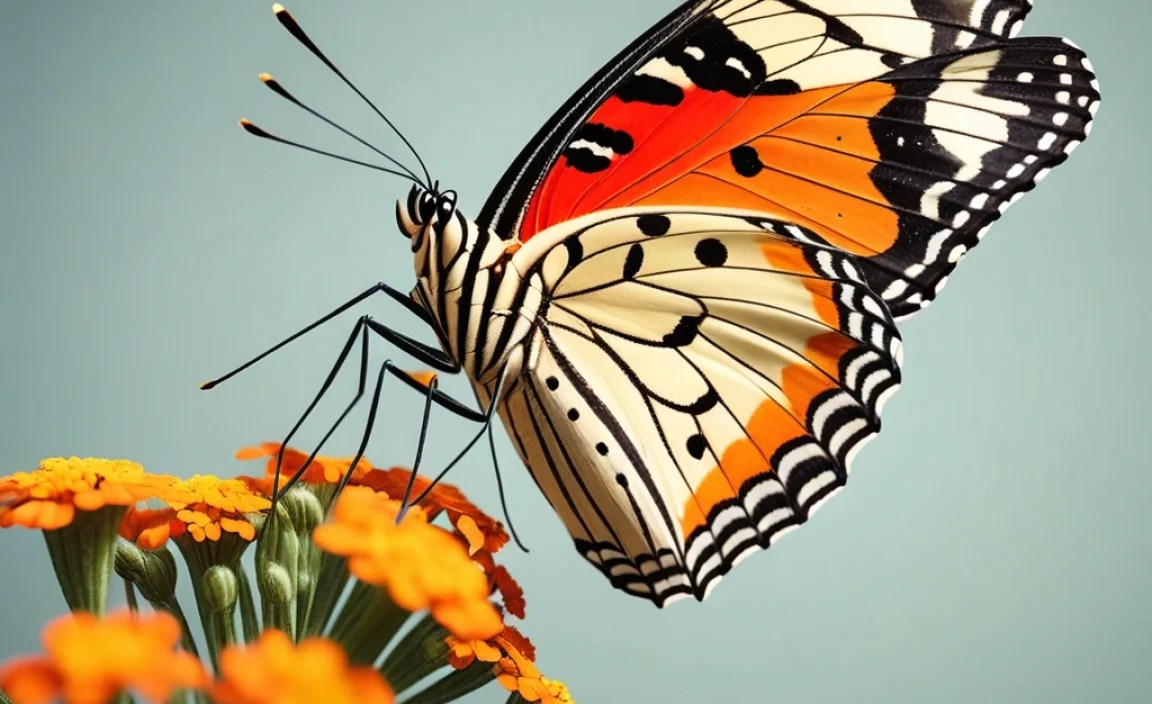
Understanding butterfly anatomy is very helpful for butterfly identification using markings. Butterflies have three main body parts: the head, the thorax, and the abdomen. The head has the butterfly’s eyes, antennae, and mouthparts. The thorax is the middle part of the body. It is where the wings and legs are attached. The abdomen is the hind part of the body. It contains the butterfly’s digestive and reproductive organs.
The wings are the most important part of the butterfly for identification. The wings are covered in tiny scales. These scales give the wings their color and pattern. The pattern of markings on the wings is unique to each species. By understanding the different parts of the wings, you can more easily identify butterflies. For example, some butterflies have tails on their hindwings. Others have eyespots near the edge of their wings.
- Learn the three main body parts.
- Study the different parts of the wings.
- Notice the shape of the antennae.
- Observe the legs.
- Look for any special features.
- Understand wing venation.
Butterfly anatomy is not just about the physical parts of the butterfly. It is also about how those parts work together. For example, the butterfly’s antennae are used to smell and taste. This helps the butterfly find food and mates. The butterfly’s legs have special sensors that allow it to taste with its feet. This helps the butterfly find the best place to lay its eggs. The better you know the butterfly anatomy, the easier butterfly identification using markings becomes.
Fun Fact or Stat: Butterflies taste with their feet!
What Are the Main Wing Parts?
The wings of a butterfly are made up of several main parts. The forewing is the front wing. The hindwing is the back wing. Each wing has a leading edge, a trailing edge, and a margin. The leading edge is the front edge of the wing. The trailing edge is the back edge of the wing. The margin is the outer edge of the wing.
The wings also have veins. Veins are like tiny tubes that support the wing. The pattern of veins on the wing is called venation. Venation is different for each species of butterfly. This can be another clue for butterfly identification using markings. By studying the different parts of the wing, you can learn a lot about the butterfly.
How Do Antennae Help with ID?
Antennae are important for butterfly identification using markings because they can vary in shape and size. Butterflies use their antennae to sense their environment. They can smell and taste with their antennae. This helps them find food, mates, and places to lay their eggs.
The shape of the antennae can also be used to identify butterflies. Most butterflies have clubbed antennae. This means that the end of the antenna is thicker than the rest. However, some butterflies have different shaped antennae. For example, skippers have hooked antennae. By looking at the shape of the antennae, you can narrow down the possibilities and identify the butterfly.
Why Is Wing Shape Important?
Wing shape is a very important characteristic to consider when dealing with butterfly identification using markings. The shape of the wings can vary greatly between different species of butterflies. Some butterflies have long, narrow wings. Others have short, broad wings. Some have rounded wings, while others have pointed wings.
The shape of the wings can tell you a lot about the butterfly’s lifestyle. For example, butterflies with long, narrow wings are often fast fliers. They can travel long distances to find food or mates. Butterflies with short, broad wings are often slower fliers. They tend to stay close to their food source. By looking at the shape of the wings, you can get a sense of how the butterfly lives.
Recognizing Butterfly Families by Markings
Recognizing butterfly families by markings is a helpful skill for butterfly identification using markings. Butterflies are divided into several different families. Each family has its own unique characteristics. By learning to recognize these characteristics, you can quickly narrow down the possibilities and identify the butterfly.
For example, the swallowtail family is known for its large size and beautiful colors. Swallowtails often have tails on their hindwings. The brush-footed butterfly family is known for its small front legs. These butterflies often have bright colors and intricate patterns. The skipper family is known for its fast, erratic flight. Skippers have hooked antennae and stout bodies.
| Family | Typical Markings | Wing Shape | Other Features |
|---|---|---|---|
| Swallowtails | Bright colors, tails | Elongated | Large size |
| Brush-foots | Bright patterns, eyespots | Varied | Small front legs |
| Skippers | Dull colors, spots | Triangular | Hooked antennae |
| Whites/Yellows | White or yellow, black spots | Rounded | Often fly in groups |
| Blues/Coppers | Blue, copper, or orange | Small, delicate | Often metallic sheen |
- Learn the main butterfly families.
- Study the characteristics of each family.
- Look for key features like tails or spots.
- Notice the size and shape of the butterfly.
- Consider the butterfly’s behavior.
- Use a field guide to confirm.
Recognizing butterfly families by markings is not always easy. Some butterflies can be difficult to identify. They may have characteristics of more than one family. In these cases, it is important to look at all of the clues. Consider the butterfly’s size, shape, color, markings, and behavior. By combining all of this information, you can usually figure out what kind of butterfly it is.
Fun Fact or Stat: There are over 20,000 species of butterflies in the world!
What Defines a Swallowtail?
Swallowtails are a family of butterflies known for their distinctive tails on their hindwings. These tails look like the tails of swallows, which is where they get their name. Swallowtails are also typically large and brightly colored. They can be found in many different parts of the world.
The markings on swallowtails can vary depending on the species. Some swallowtails have bold black and yellow stripes. Others have iridescent blue or green markings. Many swallowtails also have eyespots on their wings. These eyespots can help to startle predators and give the butterfly a chance to escape.
How Are Brush-Footed Butterflies Unique?
Brush-footed butterflies are unique because they have small, brush-like front legs. These legs are not used for walking. Instead, they are used for tasting and smelling. Brush-footed butterflies also have a distinctive flight pattern. They often flutter and glide through the air.
The markings on brush-footed butterflies can be very diverse. Some brush-foots have bright colors and intricate patterns. Others have more muted colors and simple markings. Many brush-footed butterflies have eyespots on their wings. These eyespots can help to protect them from predators.
Why Are Skippers Often Confused?
Skippers are often confused with moths because they have some characteristics of both butterflies and moths. Skippers have stout bodies and hooked antennae, like moths. However, they also have brightly colored wings, like butterflies. Skippers also have a fast, erratic flight pattern.
The markings on skippers can be quite variable. Some skippers have plain brown or gray wings. Others have bright orange or yellow markings. Many skippers have small spots or stripes on their wings. Because of their mixed characteristics, skippers can be difficult to identify. However, with practice, you can learn to recognize them.
The Role of Habitat in Butterfly Identification
The role of habitat is important in butterfly identification using markings. Butterflies are often found in specific habitats. These habitats provide them with the food and shelter they need to survive. By knowing the habitat where you found a butterfly, you can narrow down the possibilities and identify it more easily.
For example, some butterflies are only found in forests. These butterflies often feed on the leaves of trees. Other butterflies are only found in meadows. These butterflies often feed on the nectar of flowers. Some butterflies are even found in deserts. These butterflies have special adaptations that allow them to survive in harsh conditions. The habitat is an important clue in solving the puzzle of butterfly identification using markings.
- Learn the different butterfly habitats.
- Consider the plants in the area.
- Think about the climate.
- Observe the surrounding landscape.
- Check for water sources.
- Note the elevation.
The role of habitat is not just about where the butterfly lives. It is also about the relationship between the butterfly and its environment. Butterflies are important pollinators. They help plants reproduce by carrying pollen from one flower to another. Butterflies also serve as food for other animals. Birds, lizards, and spiders all eat butterflies. The habitat is a complex web of interactions.
Fun Fact or Stat: Butterflies can only live where their host plants grow!
What Are Common Butterfly Habitats?
Common butterfly habitats include forests, meadows, wetlands, and deserts. Forests provide butterflies with shelter from the wind and rain. They also provide food in the form of tree leaves and nectar from flowers. Meadows are open areas with lots of flowers. These flowers provide butterflies with nectar.
Wetlands are areas that are covered with water for at least part of the year. Wetlands provide butterflies with water and food. Deserts are dry areas with little rainfall. Some butterflies have adapted to survive in these harsh conditions. They often feed on the nectar of desert flowers. Each of these habitats plays a vital role in the lives of butterflies.
How Does Climate Affect Distribution?
Climate plays a big role in where butterflies can live. Temperature, rainfall, and sunlight all affect butterfly distribution. Butterflies are cold-blooded animals. This means that their body temperature depends on the temperature of their environment. Butterflies cannot survive in very cold temperatures. They need warm temperatures to be active.
Rainfall is also important for butterflies. Butterflies need water to survive. They also need rainfall to support the growth of their host plants. Sunlight is important for butterflies because it provides them with energy. Butterflies use sunlight to warm their bodies and to power their flight muscles. Without the right climate, butterflies cannot survive.
Do Butterflies Migrate?
Yes, some butterflies migrate. Migration is when animals move from one place to another in search of food, water, or better weather. The most famous butterfly migration is the migration of the Monarch butterfly. Monarch butterflies migrate from Canada and the United States to Mexico every year.
Monarch butterflies migrate to Mexico to escape the cold winter weather. In Mexico, they gather in large groups in oyamel fir forests. These forests provide them with shelter from the cold and rain. In the spring, the Monarch butterflies return to Canada and the United States to lay their eggs. This amazing migration is one of the most spectacular events in the natural world.
Observing Butterfly Behavior to Aid Identification
Observing butterfly behavior can aid in butterfly identification using markings. Butterflies have different behaviors. These behaviors can help you identify them. Some butterflies are very active. They fly around constantly. Others are more sedentary. They spend most of their time resting on flowers or leaves.
Some butterflies have unique feeding behaviors. For example, some butterflies only feed on the nectar of certain flowers. Others feed on tree sap or rotting fruit. Some butterflies even feed on animal dung. The way a butterfly behaves can be a clue to its identity. This can make butterfly identification using markings easier.
- Watch how the butterfly flies.
- Observe its feeding habits.
- Note where it rests.
- Look for territorial behavior.
- Check its response to threats.
- Consider its mating rituals.
Butterfly behavior is not just about what the butterfly does. It is also about why it does it. Butterflies behave in certain ways to survive. They need to find food, avoid predators, and reproduce. By understanding the reasons behind butterfly behavior, you can learn more about their lives. You can also learn to appreciate their beauty and complexity.
Fun Fact or Stat: Some butterflies bask in the sun to warm up their flight muscles!
How Do Butterflies Fly Differently?
Butterflies fly in different ways. Some butterflies are fast, powerful fliers. They can fly long distances without stopping. Others are slow, fluttering fliers. They tend to stay close to their food source. The way a butterfly flies depends on its wing shape and size. It also depends on its body weight and muscle strength.
Some butterflies have a distinctive flight pattern. For example, skippers have a fast, erratic flight. They dart around quickly, changing direction frequently. Swallowtails have a graceful, soaring flight. They glide through the air effortlessly. By observing how a butterfly flies, you can get a clue to its identity.
What Are Common Feeding Habits?
Common butterfly feeding habits include feeding on nectar, tree sap, rotting fruit, and animal dung. Nectar is a sweet liquid produced by flowers. It is a main food source for many butterflies. Tree sap is a sugary liquid that flows from trees. Some butterflies feed on tree sap, especially when flowers are scarce.
Rotting fruit is another food source for some butterflies. Rotting fruit provides butterflies with sugar and other nutrients. Animal dung is a less common food source, but some butterflies do feed on it. Animal dung provides butterflies with minerals and other nutrients. The diet of the butterfly also plays a role in butterfly identification using markings.
Where Do Butterflies Rest?
Butterflies rest in different places. Some butterflies rest on flowers. Flowers provide them with a place to feed and a place to hide from predators. Other butterflies rest on leaves. Leaves provide them with shade and shelter. Some butterflies even rest on the ground.
The place where a butterfly rests can depend on the time of day. During the day, butterflies often rest in sunny spots to warm their bodies. At night, they often rest in sheltered spots to protect themselves from the cold. By observing where a butterfly rests, you can learn more about its behavior.
Documenting and Sharing Butterfly Sightings
Documenting and sharing butterfly sightings is a great way to contribute to science. It also helps other butterfly enthusiasts. When you see a butterfly, take a picture of it. Note the date, time, and location of the sighting. Identify the butterfly, if you can. Then, share your sighting with others.
You can share your butterfly sightings in several ways. You can post them on social media. You can submit them to online databases. You can also share them with local butterfly clubs or organizations. By sharing your sightings, you can help scientists track butterfly populations. You can also help other people learn more about butterflies.
- Take clear photos of each butterfly.
- Record the date, time, and location.
- Identify the species if possible.
- Use online databases to submit data.
- Share sightings with local groups.
- Keep a personal journal of findings.
Documenting and sharing butterfly sightings is not just about collecting data. It is also about connecting with nature. When you take the time to observe butterflies, you learn to appreciate their beauty and complexity. You also learn about the importance of protecting their habitats. By documenting and sharing your sightings, you can help inspire others to do the same. This will help further butterfly identification using markings.
Fun Fact or Stat: Citizen science projects rely on public sightings to track butterfly populations!
What Details Should Be Recorded?
When documenting butterfly sightings, it is important to record as many details as possible. The more details you record, the more useful your sighting will be. Be sure to record the date, time, and location of the sighting. Also, record the species of butterfly, if you can identify it.
In addition to these basic details, you should also record any other relevant information. For example, note the habitat where you saw the butterfly. Also, note the butterfly’s behavior. Was it feeding, resting, or flying? Was it interacting with other butterflies? The more details you record, the more valuable your sighting will be.
Which Online Platforms Are Best?
There are several online platforms that are good for documenting and sharing butterfly sightings. One popular platform is iNaturalist. iNaturalist is a website and app that allows you to record your observations of nature. You can upload photos, record the date and location of your sighting, and identify the species.
Another good platform is eButterfly. eButterfly is a website that is specifically designed for documenting butterfly sightings. You can use eButterfly to track butterfly populations in your area. You can also use it to learn more about butterflies. Both of these platforms are great resources for butterfly enthusiasts. These resources are invaluable in improving your butterfly identification using markings skills.
How Does Data Help Conservation?
Data from butterfly sightings can help with conservation in several ways. First, it can help scientists track butterfly populations. By tracking butterfly populations, scientists can identify species that are in decline. They can then take steps to protect these species.
Second, data from butterfly sightings can help scientists understand the impacts of climate change. Butterflies are very sensitive to changes in temperature and rainfall. By tracking butterfly populations, scientists can see how climate change is affecting these insects. This information can then be used to inform conservation efforts.
Summary
Butterfly identification using markings is a fun and rewarding activity. By learning to recognize the different colors, patterns, and shapes on butterfly wings, you can identify different species. Field guides, online resources, and observation skills are all helpful tools. Understanding butterfly anatomy, behavior, and habitat also helps.
Documenting and sharing your butterfly sightings is a great way to contribute to science and conservation. By recording your observations and sharing them with others, you can help scientists track butterfly populations. You can also help other people learn more about these amazing insects. So, get outside, start looking for butterflies, and enjoy the beauty of nature!
Conclusion
Learning butterfly identification using markings connects us to nature. It encourages us to observe the small details around us. We can appreciate the beauty and diversity of butterflies. By using field guides, online resources, and our own observation skills, we can all become butterfly experts. Start exploring and discovering the world of butterflies today!
Frequently Asked Questions
Question No 1: What are the most important things to look for when identifying a butterfly?
Answer: When identifying a butterfly, focus on a few key things. First, notice the overall color and size of the butterfly. Next, look closely at the markings on its wings, such as spots, stripes, or bands. Also, pay attention to the shape of the wings and any unique features, like tails or eyespots. Finally, consider the butterfly’s behavior and habitat, as these can also provide clues to its identity. The more you practice, the better you will become at recognizing the different butterflies.
Question No 2: How can a field guide help with butterfly identification?
Answer: A field guide is a book that shows pictures and descriptions of different butterflies. It can be a very helpful tool for butterfly identification using markings. Most field guides are organized by region, so you can find one that includes the butterflies that live in your area. When you see a butterfly, compare it to the pictures in the field guide. Read the descriptions carefully to see if they match what you observe. Some field guides also include information about the butterfly’s habitat and behavior, which can help you confirm your identification.
Question No 3: What is the difference between a butterfly and a moth?
Answer: Butterflies and moths are both insects that belong to the same group, called Lepidoptera. However, there are some key differences between them. Butterflies are typically active during the day, while moths are typically active at night. Butterflies usually have brightly colored wings, while moths often have duller colors. Butterflies also have slender bodies and clubbed antennae, while moths have stouter bodies and feathery antennae. Butterflies usually hold their wings upright when they rest, while moths usually hold their wings flat. Some skippers can be confused with moths, so butterfly identification using markings may require a closer look at the wings and antennae.
Question No 4: Why do some butterflies have eyespots on their wings?
Answer: Some butterflies have eyespots on their wings as a form of protection. Eyespots are large, circular markings that look like eyes. When a predator approaches, the eyespots can startle or confuse it. This gives the butterfly a chance to escape. Some eyespots even have a reflective quality that makes them look more realistic. Eyespots are a great example of how butterflies use markings to survive.
Question No 5: How can I attract more butterflies to my garden?
Answer: To attract more butterflies to your garden, plant flowers that provide nectar. Butterflies need nectar to feed on. Some popular nectar flowers include butterfly bush, milkweed, and zinnias. You should also plant host plants for caterpillars. Host plants are the plants that caterpillars eat. For example, Monarch caterpillars eat milkweed. You can also provide butterflies with a water source, such as a shallow dish of water with pebbles in it. Avoid using pesticides, as these can harm butterflies. By providing butterflies with food, water, and shelter, you can create a butterfly-friendly garden.
Question No 6: How does climate change affect butterflies?
Answer: Climate change can have a significant impact on butterflies. Butterflies are sensitive to changes in temperature and rainfall. As the climate changes, butterfly habitats may become unsuitable. This can lead to a decline in butterfly populations. Climate change can also affect the timing of butterfly life cycles. For example, butterflies may emerge earlier in the spring due to warmer temperatures. This can disrupt their interactions with plants and other insects. Butterfly identification using markings can help track population changes and shifts in distribution due to climate change.


