
How to Identify Tiger Swallowtail: Easy Guide!

Have you ever seen a butterfly that looks like a tiger? It has black stripes on yellow wings! These amazing creatures are called tiger swallowtails. They are big and beautiful. Wouldn’t you like to know how to identify tiger swallowtail butterflies? It is easier than you think. Let’s learn all about these fantastic insects.
Imagine you are walking in a garden. A large, yellow butterfly flits by. It has black stripes, just like a tiger! This might be an eastern tiger swallowtail. These butterflies are common in North America. They are fun to watch and easy to spot if you know what to look for.
Spotting butterflies can be a fun hobby. Knowing how to identify tiger swallowtail will help. You can impress your friends and family. You’ll also learn more about nature. So, let’s dive in and discover the secrets of these striped wonders.
Key Takeaways
- Identifying tiger swallowtail butterflies involves looking for key wing patterns and colors.
- Female tiger swallowtails can be either yellow or black, a cool adaptation.
- These butterflies are common in gardens, parks, and woodlands across North America.
- Tiger swallowtails love nectar from flowers like milkweed and butterfly bush.
- Paying attention to size and location helps distinguish them from similar species.
How to Identify Tiger Swallowtail Markings

The first step in how to identify tiger swallowtail butterflies is to look at their markings. These butterflies have distinct patterns. Their wings are usually bright yellow with black stripes. The stripes run vertically down their wings. Some females have a dark form. This means they are mostly black or dark gray. These dark females often have blue scales on their hindwings. Both yellow and dark females have the same general shape. The males are almost always yellow. The underside of the wings also has markings. Look for orange spots and blue scales. These details help you know you have found a tiger swallowtail.
- Look for black stripes on yellow wings.
- Check for blue scales on the hindwings, especially on dark females.
- Observe the orange spots on the underside of the wings.
- Note the size; they are larger than many other butterflies.
- Consider the location; they are common in eastern North America.
Remember, practice makes perfect when learning how to identify tiger swallowtail. The more you observe these butterflies, the easier it will become. Grab a notebook and sketch the markings you see. Compare your drawings to pictures in a field guide. Soon, you will be an expert at spotting these beautiful insects. Understanding the markings is key to telling them apart from other butterflies.
What Do the Stripes Look Like?
Imagine you are an artist. You are drawing a tiger swallowtail. What would the stripes look like? They are not perfectly straight. They are a little wavy and uneven. The black stripes start at the top of the wing. They go down towards the bottom. Some stripes are thicker than others. The stripes help the butterfly blend in with trees. This makes it harder for birds to see them. The stripes are a key part of how to identify tiger swallowtail. They make these butterflies easy to recognize in your garden.
Are There Spots on the Wings Too?
Have you ever looked closely at a butterfly’s wings? Tiger swallowtails have more than just stripes. They also have spots. Look at the edge of the hindwings. You will see small, orange spots. These spots are like tiny jewels. They add to the butterfly’s beauty. The spots are another important clue in how to identify tiger swallowtail. They help you tell them apart from other yellow butterflies. The spots make each butterfly unique and special.
Do the Markings Change?
Butterflies change a lot during their lives. But the markings on tiger swallowtails stay pretty much the same. The stripes and spots are there from the moment they become adults. Sometimes, the colors might fade a little as they get older. But the basic pattern stays the same. This makes it easier to learn how to identify tiger swallowtail. You can always count on those stripes and spots being there. Knowing this helps you spot them no matter how old they are.
Fun Fact or Stat: Tiger swallowtail butterflies can have a wingspan of up to 5.5 inches, making them one of the largest butterflies in North America!
How to Identify Tiger Swallowtail Size and Shape
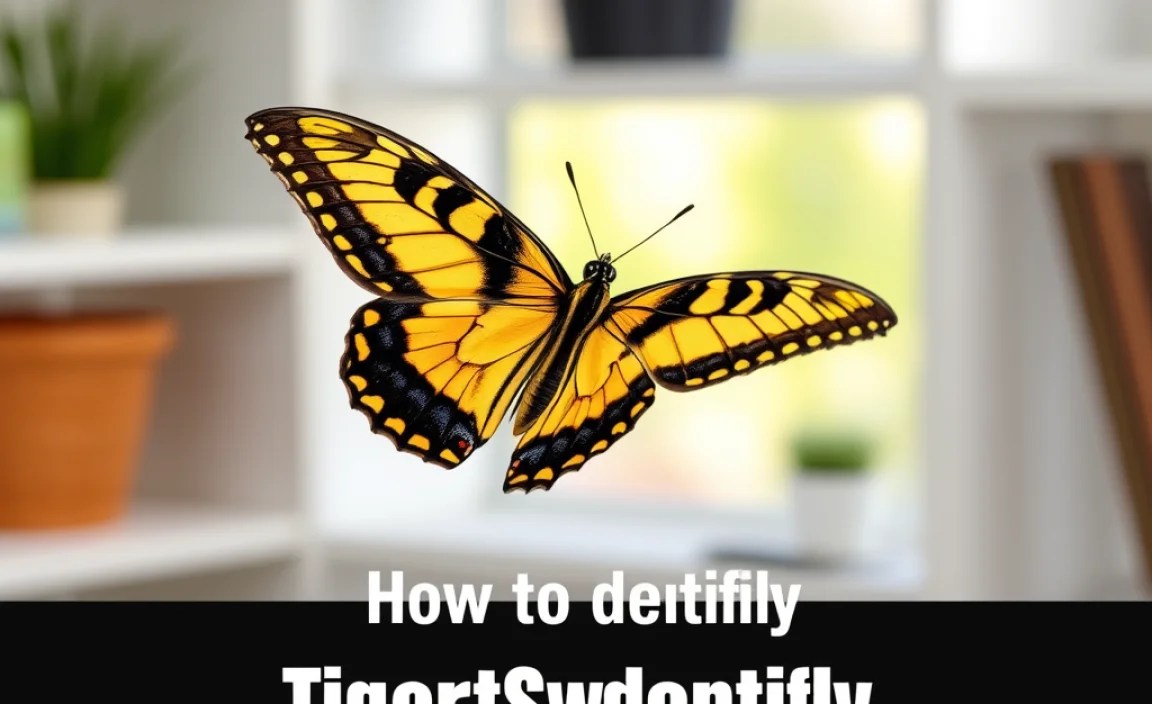
Another important way to learn how to identify tiger swallowtail is by looking at their size and shape. These butterflies are quite large. Their wingspan can be up to five and a half inches. This makes them one of the biggest butterflies you will see. The shape of their wings is also distinctive. They have long, pointed forewings. The hindwings have a “tail” that looks like a long, thin extension. This tail is what gives them the name “swallowtail”. The combination of large size and unique wing shape makes them easy to spot. Pay attention to these features when you are out butterfly watching.
- Note the large size; they are bigger than most butterflies.
- Look for the pointed forewings.
- Observe the tail on the hindwings.
- Consider the overall shape of the wings.
- Compare their size to other butterflies you see.
Size and shape can be very helpful in how to identify tiger swallowtail. If you see a large, yellow butterfly with black stripes and a tail, chances are it’s a tiger swallowtail. However, remember that there are different types of swallowtails. Some may be smaller or have slightly different wing shapes. Use all the clues together, including markings, size, and location, to be sure. Practice looking at pictures and comparing them to butterflies you see in real life. You will become a pro in no time!
Are the Males and Females Different Sizes?
Have you ever wondered if boy and girl butterflies are different sizes? For tiger swallowtails, the females are often a bit larger than the males. This is common in many types of butterflies. The bigger size helps the females lay more eggs. It also helps them carry more nectar. So, if you see a really big tiger swallowtail, it might be a female. This is just one more thing to consider when learning how to identify tiger swallowtail. Size can be a helpful clue, especially when you see them up close.
What Does the Tail Look Like?
The “tail” on a tiger swallowtail’s wing is a cool feature. It looks like a thin, pointy extension. It comes off the bottom of the hindwing. The tail can sometimes be damaged. Birds might try to grab the tail. The butterfly can still fly even if the tail is a little torn. The tail is one of the things that makes swallowtails special. It is an important part of how to identify tiger swallowtail. Look for the tail when you are trying to spot these butterflies in your garden.
How Big Are They Compared to Other Butterflies?
Imagine you are comparing butterflies. A monarch butterfly is pretty big. But a tiger swallowtail is even bigger! They can be almost twice the size. This makes them stand out. When you see a large, yellow butterfly, think “tiger swallowtail.” The size is a key part of how to identify tiger swallowtail. Keep this in mind when you are out exploring nature. It will help you spot these amazing creatures more easily. Their large size makes them hard to miss!
Fun Fact or Stat: The “tail” on the hindwing of a tiger swallowtail is thought to distract predators, giving the butterfly a better chance of escaping an attack!
Where to Find Tiger Swallowtail Butterflies

Knowing how to identify tiger swallowtail is only half the battle. You also need to know where to find them! These butterflies are common in North America. You can find them in gardens, parks, and woodlands. They love sunny spots with lots of flowers. Look for them near trees and shrubs. They often visit flowers to drink nectar. They like flowers like milkweed, butterfly bush, and clover. They are most active during the warm months of spring and summer. So, plan your butterfly-watching trips accordingly. Knowing their habitat will increase your chances of spotting one.
- Look for them in gardens and parks.
- Check woodlands and forests.
- Find sunny spots with lots of flowers.
- Look near milkweed and butterfly bush.
- Search during spring and summer.
To increase your chances of how to identify tiger swallowtail, try planting flowers they love in your garden. Milkweed, butterfly bush, and zinnias are great choices. Make sure your garden is free of pesticides. Pesticides can harm butterflies and other insects. Create a butterfly-friendly habitat. You will be rewarded with frequent visits from these beautiful creatures. Remember to be patient and observant. Butterfly watching is a relaxing and rewarding hobby.
Do They Live in Cities?
You might think butterflies only live in the country. But tiger swallowtails can also live in cities! They can be found in city parks and gardens. They need flowers and trees to survive. Even a small city garden can attract them. So, keep an eye out for them, even in urban areas. Learning how to identify tiger swallowtail in the city can be a fun challenge. It shows that nature can thrive even in busy places.
Do They Migrate?
Some butterflies, like monarchs, migrate long distances. But tiger swallowtails do not migrate. They stay in the same area year-round. They can survive the winter as pupae. The pupae are protected in their chrysalises. This means you can find them in the same spots every year. Knowing this helps you plan your butterfly-watching trips. Since they don’t migrate, you always know where to look. This makes it easier to learn how to identify tiger swallowtail in your local area.
What Kind of Habitat Do They Prefer?
Tiger swallowtails like a mix of habitats. They need open areas with flowers for nectar. They also need trees and shrubs for shelter and for laying eggs. They are often found near forests. They also like fields and meadows. A varied landscape is best for them. This means they can find food, shelter, and places to reproduce. When you are learning how to identify tiger swallowtail, think about the habitat. Are there lots of flowers and trees nearby? If so, you are more likely to spot one.
Fun Fact or Stat: Tiger swallowtail butterflies are often seen “puddling,” where they gather on wet soil or puddles to drink water and extract minerals!
Tiger Swallowtail Behavior and Habits
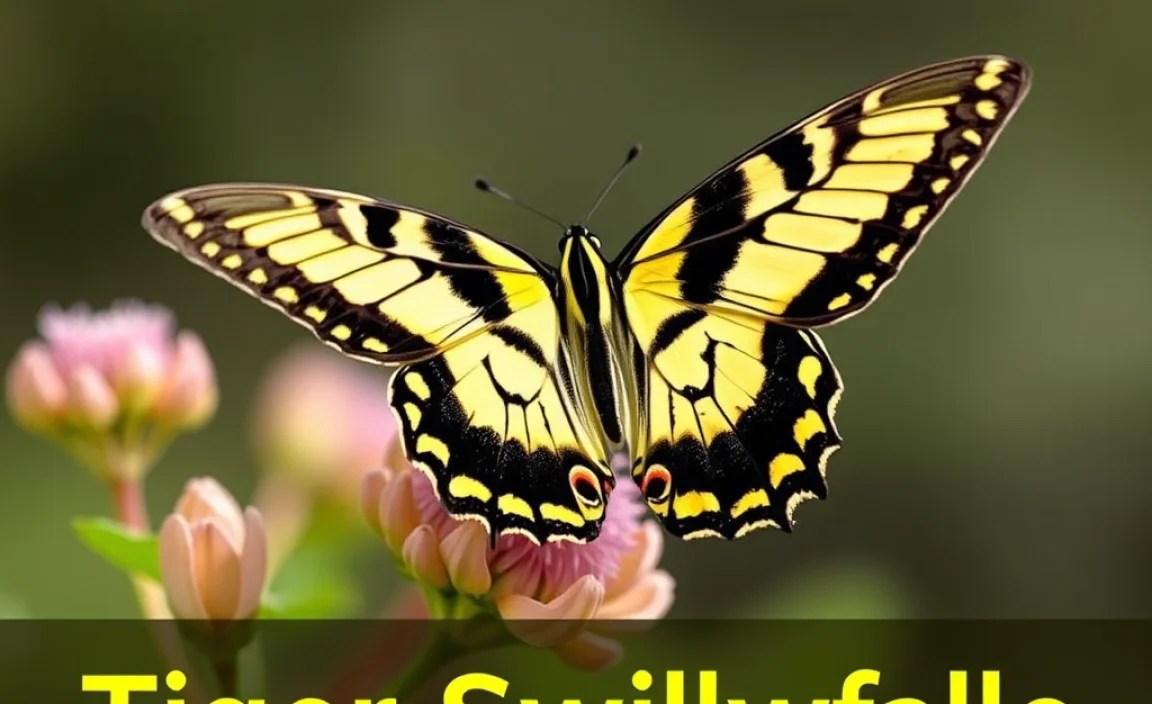
Understanding the behavior of tiger swallowtails can also help you how to identify tiger swallowtail. These butterflies are active during the day. They spend much of their time flying from flower to flower. They are looking for nectar to drink. They have a long proboscis that they use to sip nectar. They also like to bask in the sun. You might see them sitting on leaves or rocks with their wings open. This helps them warm up their bodies. They are usually solitary creatures. But you might see several of them together near a good source of nectar. Observing their behavior can be a fun way to learn more about them.
- Watch them flying from flower to flower.
- Look for them basking in the sun.
- Observe their feeding habits.
- Note their solitary nature.
- See if they are puddling on wet soil.
Learning about their behavior patterns makes how to identify tiger swallowtail even easier. For example, if you know they like to bask in the sun, you’ll know to look for them in sunny spots. If you know they like certain flowers, you can check those flowers first. Pay attention to what they are doing. Are they flying quickly, or are they slowly sipping nectar? Are they alone, or are they with other butterflies? All these clues can help you identify them with confidence.
How Do They Find Food?
Imagine you are a tiger swallowtail. How would you find food? You would use your eyes to spot bright flowers. You would smell the sweet scent of nectar. You would fly from flower to flower, tasting each one. You have special sensors on your feet that help you taste. This is how tiger swallowtails find their food. They are experts at finding the best nectar sources. This helps them stay healthy and strong. Knowing this helps you learn how to identify tiger swallowtail. Look for them near colorful, fragrant flowers.
Do They Fly Fast or Slow?
Have you ever tried to follow a butterfly in flight? Tiger swallowtails are strong fliers. They can fly quickly and gracefully. They can also hover in place while they drink nectar. Their flight pattern is distinctive. It is not as erratic as some other butterflies. This can help you identify them. Watch how they move through the air. Are they darting around, or are they flying in a straight line? Observing their flight can be another clue in how to identify tiger swallowtail.
How Do They Avoid Predators?
Butterflies have many enemies. Birds, spiders, and even other insects can try to eat them. Tiger swallowtails have several ways to protect themselves. Their stripes help them blend in with the trees. This makes it harder for predators to see them. They can also fly away quickly if they sense danger. The tails on their wings can also distract predators. If a bird grabs the tail, the butterfly can still escape. These adaptations help them survive. This is important context when considering how to identify tiger swallowtail in their natural environment.
Fun Fact or Stat: Tiger swallowtail caterpillars can release a foul odor from a gland called the osmeterium to deter predators!
Tiger Swallowtail Life Cycle Stages
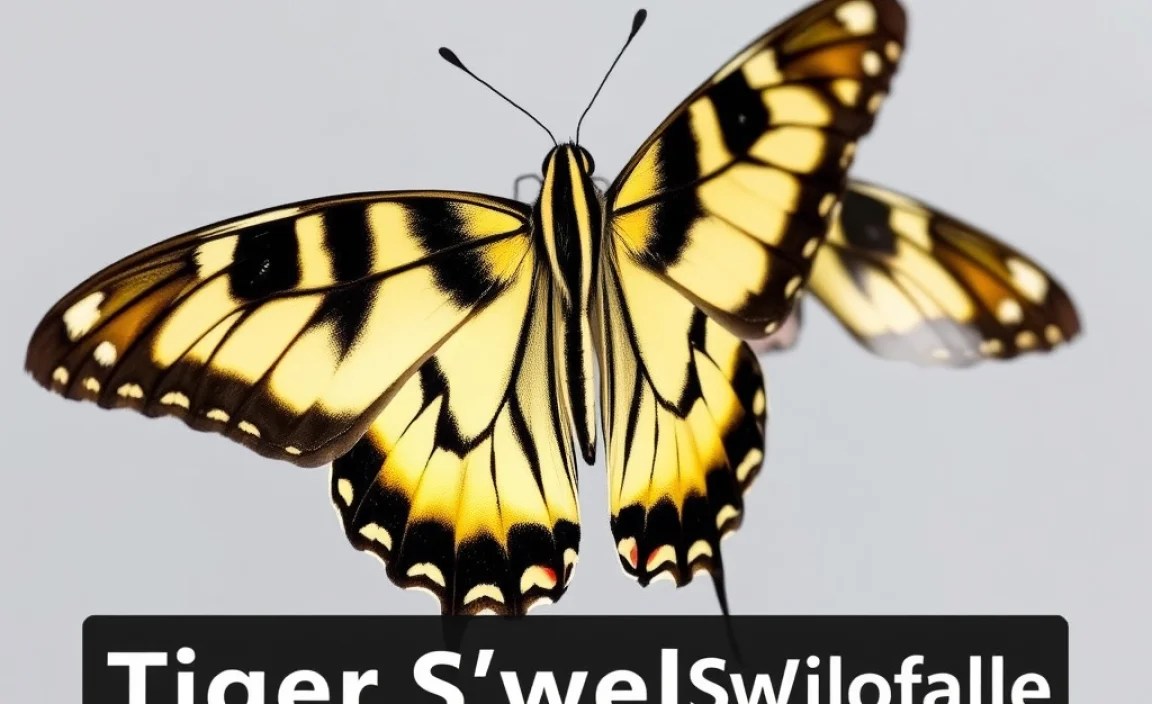
Understanding the life cycle of a tiger swallowtail can also help you how to identify tiger swallowtail. Like all butterflies, they go through four stages: egg, larva (caterpillar), pupa (chrysalis), and adult. The female lays her eggs on host plants. These are plants that the caterpillars will eat. The eggs hatch into caterpillars. The caterpillars eat a lot and grow quickly. They shed their skin several times. This is called molting. When the caterpillar is full-grown, it turns into a pupa. The pupa is protected inside a chrysalis. Inside the chrysalis, the caterpillar transforms into a butterfly. Finally, the adult butterfly emerges. It flies off to find food and reproduce. Each stage looks different, but knowing what to look for can be helpful.
| Stage | Description | Duration |
|---|---|---|
| Egg | Small, round, and laid on host plants. | 3-5 days |
| Larva (Caterpillar) | Green with eye spots; eats a lot. | 2-4 weeks |
| Pupa (Chrysalis) | Green or brown; hard shell. | 10-14 days |
| Adult | Yellow with black stripes; flies and reproduces. | 2-3 weeks |
- Learn about the egg stage.
- Observe the caterpillar stage.
- Understand the pupa stage.
- Recognize the adult butterfly stage.
- Know the host plants for the caterpillars.
By understanding the life cycle, you can learn how to identify tiger swallowtail at any stage. Look for the eggs on host plants like tulip trees and cherry trees. Watch for the caterpillars feeding on these leaves. Keep an eye out for the chrysalises hanging from branches. And, of course, look for the adult butterflies flying around. Knowing the whole story of their lives makes it even more rewarding to spot them.
What Do the Caterpillars Eat?
Imagine you are a hungry caterpillar. What would you eat? Tiger swallowtail caterpillars love to eat leaves. They are especially fond of tulip tree leaves. They also eat cherry and willow leaves. These are called host plants. The caterpillars need these plants to survive. Knowing this helps you learn how to identify tiger swallowtail. Look for the caterpillars on these specific trees. You might even find the eggs on the leaves too. The caterpillars are an important part of the butterfly’s life cycle.
What Does the Chrysalis Look Like?
The chrysalis is like a little sleeping bag for the butterfly. It is usually green or brown. It hangs from a branch or leaf. It blends in with its surroundings. This helps protect it from predators. Inside the chrysalis, something amazing is happening. The caterpillar is changing into a butterfly. This process takes about two weeks. The chrysalis is an important part of how to identify tiger swallowtail. Look for these camouflaged capsules on trees and shrubs.
How Long Does Each Stage Last?
Each stage of the tiger swallowtail’s life cycle has a different duration. The egg stage lasts only a few days. The caterpillar stage lasts several weeks. The pupa stage lasts about two weeks. The adult butterfly lives for a few weeks. Knowing this helps you understand their life cycle. It also helps you know when to look for them. For example, you might see caterpillars in the spring. You might see butterflies in the summer. This knowledge helps with how to identify tiger swallowtail at different times of the year.
Fun Fact or Stat: The tiger swallowtail caterpillar has eye-like spots on its back to scare away predators, making it look like a snake!
Distinguishing Tiger Swallowtail from Similar Species
Sometimes, how to identify tiger swallowtail can be tricky. There are other butterflies that look similar. One example is the spicebush swallowtail. It is also black with blue scales. Another example is the black swallowtail. These butterflies can be confused with the dark form of the female tiger swallowtail. Pay close attention to the markings. Look for the yellow stripes on the tiger swallowtail. Also, check the size and shape. Tiger swallowtails are generally larger. They also have a different wing shape. Knowing the differences will help you tell them apart.
- Compare them to spicebush swallowtails.
- Distinguish them from black swallowtails.
- Look for the yellow stripes.
- Check the size and shape.
- Consider the location.
To become an expert at how to identify tiger swallowtail, practice comparing them to similar species. Use a field guide or online resources to see pictures of different butterflies. Pay attention to the details. Notice the subtle differences in markings, size, and shape. The more you practice, the easier it will become. Soon, you will be able to tell them apart at a glance.
What Are the Key Differences in Markings?
Imagine you are playing a “spot the difference” game. You have two butterflies that look alike. But there are subtle differences in their markings. The tiger swallowtail has clear black stripes on a yellow background. The spicebush swallowtail has more blue and green scales. The black swallowtail has more orange spots. These small differences can help you tell them apart. This is a key part of how to identify tiger swallowtail. Pay attention to the details, and you will become an expert.
How Does Size Help?
Size can be a helpful clue when identifying butterflies. Tiger swallowtails are generally larger than spicebush and black swallowtails. If you see a really big swallowtail, it is more likely to be a tiger swallowtail. But remember, size can vary. Some individuals may be smaller or larger than average. Use size as one clue, but don’t rely on it alone. Consider all the other features as well. This is an important part of how to identify tiger swallowtail accurately.
Does Location Matter?
Location can also be a helpful clue. Tiger swallowtails are common in eastern North America. Spicebush swallowtails are also found in this region. Black swallowtails have a wider distribution. They can be found in many parts of North America. Knowing where a butterfly is likely to be found can help you identify it. If you are in the eastern US, and you see a large, yellow swallowtail, it is probably a tiger swallowtail. This is another factor in how to identify tiger swallowtail correctly.
Fun Fact or Stat: Some butterflies mimic the appearance of tiger swallowtails to avoid predators, a survival strategy called Batesian mimicry!
Summary
How to identify tiger swallowtail butterflies involves looking at several key features. These include their markings, size, shape, and behavior. Tiger swallowtails are large, yellow butterflies with black stripes. They have a distinctive tail on their hindwings. They are commonly found in gardens, parks, and woodlands. They like to visit flowers and bask in the sun. By paying attention to these details, you can easily identify these beautiful creatures. Remember to compare them to similar species, like spicebush and black swallowtails. With practice, you will become an expert at spotting tiger swallowtails.
Conclusion
Learning how to identify tiger swallowtail butterflies is a fun and rewarding hobby. You can impress your friends and family with your knowledge. You can also learn more about nature and the environment. Tiger swallowtails are beautiful and fascinating creatures. They are a joy to watch as they flutter through our gardens and parks. So, get outside and start exploring! With a little practice, you will be spotting tiger swallowtails in no time.
Frequently Asked Questions
Question No 1: What is the easiest way to identify a tiger swallowtail butterfly?
Answer: The easiest way to identify a tiger swallowtail butterfly is to look for its distinct markings. They are large, yellow butterflies with black stripes that resemble a tiger’s stripes. These stripes run vertically down their wings. Also, look for the “tail” on their hindwings, which is a characteristic feature of swallowtail butterflies. The combination of yellow wings, black stripes, and a tail makes them relatively easy to spot. This is the simplest method of how to identify tiger swallowtail butterflies.
Question No 2: Are there different types of tiger swallowtail butterflies?
Answer: Yes, there are different subspecies and variations of tiger swallowtail butterflies. The eastern tiger swallowtail (Papilio glaucus) is the most common in eastern North America. There are also other species like the Canadian tiger swallowtail (Papilio canadensis) and the western tiger swallowtail (Papilio rutulus). They have slight variations in their markings and habitat. However, the basic features of yellow wings with black stripes remain consistent. Understanding these regional differences can improve how to identify tiger swallowtail butterflies correctly in different areas.
Question No 3: What do tiger swallowtail caterpillars eat?
Answer: Tiger swallowtail caterpillars primarily feed on the leaves of various trees. Their favorite host plants include tulip trees, cherry trees, willow trees, and birch trees. They can also eat other deciduous tree leaves. These caterpillars are not picky eaters. They need a steady supply of foliage to grow and develop. The choice of host plant can sometimes vary depending on the region. Knowing the common host plants can help you find the caterpillars when trying to how to identify tiger swallowtail during its larval stage.
Question No 4: How can I attract tiger swallowtail butterflies to my garden?
Answer: To attract tiger swallowtail butterflies to your garden, plant flowers that provide nectar. Some of their favorite nectar sources include milkweed, butterfly bush, zinnias, and coneflowers. Make sure your garden is sunny and pesticide-free. Butterflies are sensitive to chemicals. Providing a shallow dish of water with pebbles can also attract them. This gives them a place to drink. Creating a butterfly-friendly habitat encourages them to visit and stay in your garden. Planting their host plants can also allow you how to identify tiger swallowtail at different stages of life.
Question No 5: What is the difference between male and female tiger swallowtail butterflies?
Answer: The main difference between male and female tiger swallowtail butterflies is their appearance. Males are almost always yellow with black stripes. Some females can also be yellow with black stripes. However, some females have a dark form. This means they are mostly black or dark gray. These dark females often have blue scales on their hindwings. Females are often larger than males. Both sexes have similar wing shapes and sizes. The color variation in females is an important aspect of how to identify tiger swallowtail butterflies.
Question No 6: How long do tiger swallowtail butterflies live?
Answer: The lifespan of a tiger swallowtail butterfly is relatively short. As adults, they typically live for about two to three weeks. Their primary focus during this time is to reproduce. They spend their days feeding on nectar and searching for mates. The entire life cycle, from egg to adult, takes about one to two months. The adult stage is the shortest part of their life. Knowing this can help you appreciate the beauty of these butterflies. It can also provide a deeper understanding of how to identify tiger swallowtail and the importance of their conservation.


