Distinguishing Monarch vs Viceroy Butterfly: Easy Guide

Quick Summary: Telling a Monarch from a Viceroy butterfly is easier than you think! Look closely at the wings. Monarchs have thick black veins, while Viceroys have a thin black line across the lower part of their hindwings. Also, Monarchs are a bit larger and have a deeper orange color. With these simple clues, you’ll be a butterfly identification pro in no time!
Have you ever been enchanted by a beautiful orange butterfly fluttering through your garden, wondering if it’s a Monarch or a Viceroy? It’s a common question! These two butterflies look very similar, and it’s easy to mix them up. But don’t worry! With a few simple observations, you can quickly tell the difference between these fascinating creatures. This guide will walk you through the key features to look for, so you can confidently identify Monarchs and Viceroys wherever you find them.
How to Tell the Difference Between a Monarch and a Viceroy Butterfly

Monarch and Viceroy butterflies are both beautiful orange and black butterflies, but they have key differences. Let’s explore those differences in detail.
Size and Shape
One of the first things you might notice is the size and overall shape of the butterfly.
- Monarch: Monarchs are generally larger, with a wingspan of 3.5 to 4 inches (8.9 to 10.2 cm). Their wings are more rounded.
- Viceroy: Viceroys are smaller, with a wingspan of 2.5 to 3 inches (6.4 to 7.6 cm). Their wings are slightly more angular.
Wing Patterns
The most reliable way to distinguish between Monarchs and Viceroys is by examining their wing patterns.
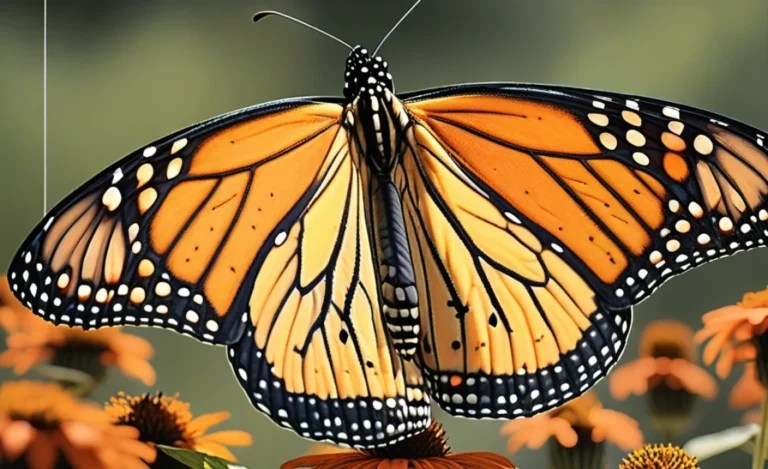
- Monarch: Monarchs have thick black veins outlining the orange sections of their wings. They also have a black border with white spots.
- Viceroy: Viceroys have a similar orange and black pattern, but they also have a distinctive black line that runs across the lower part of their hindwings. This line is the easiest way to identify a Viceroy.
Here’s a simple table summarizing the wing pattern differences:
| Feature | Monarch | Viceroy |
|---|---|---|
| Veins | Thick black veins | Thick black veins |
| Hindwing Line | No black line | Black line across hindwing |
| Border | Black with white spots | Black with white spots |
Color
While both butterflies are orange, there are subtle differences in their coloration.
- Monarch: Monarchs tend to have a richer, deeper orange color.
- Viceroy: Viceroys often have a slightly paler, more reddish-orange hue.
Flight Behavior
Observing how the butterflies fly can also provide clues.
- Monarch: Monarchs have a strong, gliding flight. They often soar gracefully through the air, especially during their long migrations.
- Viceroy: Viceroys have a quicker, more erratic flight pattern. They tend to flap their wings more frequently and don’t glide as much as Monarchs.
Habitat and Range
Knowing where you are can also help you identify the butterfly. While their ranges overlap, there are some differences.
- Monarch: Monarchs are found throughout North America. They are famous for their long migrations, traveling thousands of miles between their breeding grounds and overwintering sites.
- Viceroy: Viceroys are also found in North America, but their range extends further north into Canada. They don’t migrate as far as Monarchs.
Why Do Viceroys Mimic Monarchs?
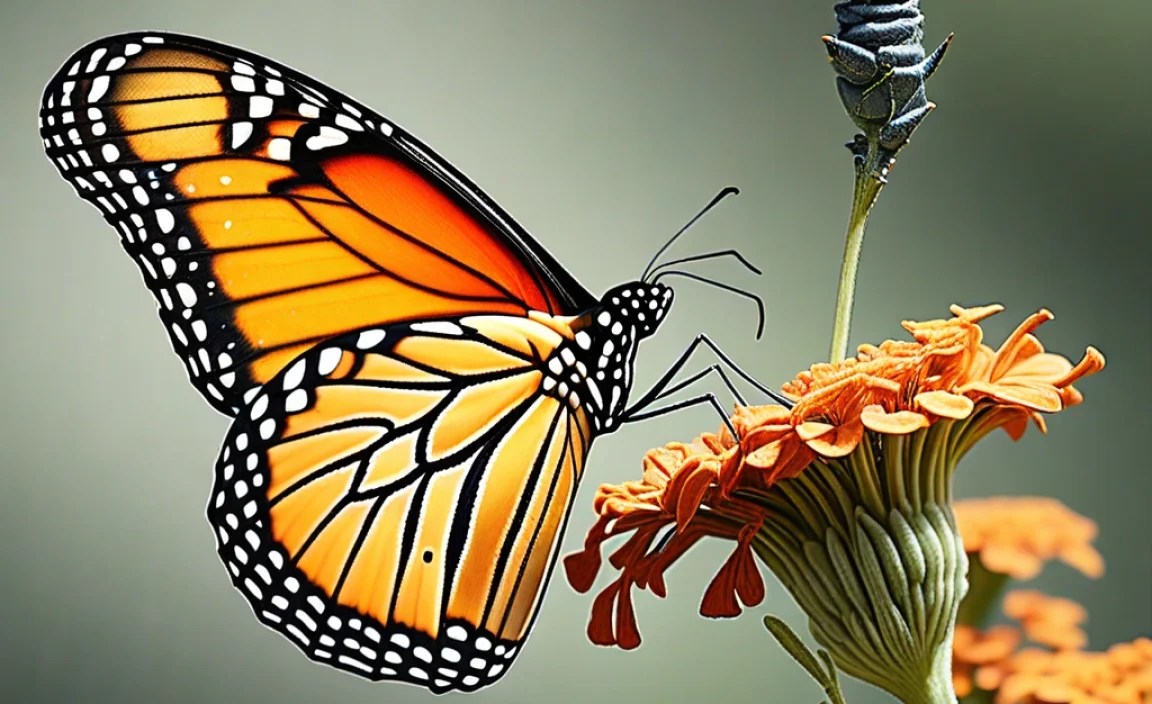
The resemblance between Viceroys and Monarchs is a fascinating example of mimicry in nature. Here’s why Viceroys have evolved to look like Monarchs:
Batesian Mimicry
The Viceroy’s mimicry is a classic example of Batesian mimicry. This is where a harmless species (the Viceroy) evolves to resemble a dangerous or unpalatable species (the Monarch) to protect itself from predators. This adaptation helps the Viceroy avoid being eaten by birds and other predators.
Monarchs’ Toxicity
Monarch butterflies are toxic to many predators because their caterpillars feed on milkweed plants, which contain poisonous compounds called cardiac glycosides. When a bird eats a Monarch, it gets sick and learns to avoid orange and black butterflies. Viceroys benefit from this because predators mistake them for Monarchs and leave them alone. According to the U.S. Forest Service, Monarch caterpillars consume milkweed, which makes them unpalatable to predators.
Evolutionary Advantage
Over time, Viceroys that looked more like Monarchs were more likely to survive and reproduce, passing on their genes to future generations. This process led to the evolution of Viceroys that closely resemble Monarchs.
The Life Cycle of Monarchs and Viceroys

Understanding the life cycle of these butterflies can also deepen your appreciation for them. Both Monarchs and Viceroys undergo complete metamorphosis, which includes four stages: egg, larva (caterpillar), pupa (chrysalis), and adult.
Monarch Life Cycle
- Egg: Monarchs lay their eggs on milkweed plants. The eggs are small, cream-colored, and oval-shaped.
- Larva (Caterpillar): The caterpillar hatches from the egg and feeds exclusively on milkweed. It grows rapidly, molting its skin several times. Monarch caterpillars have distinctive black, yellow, and white stripes.
- Pupa (Chrysalis): Once the caterpillar is fully grown, it forms a green chrysalis. Inside the chrysalis, the caterpillar transforms into a butterfly.
- Adult: After about two weeks, the chrysalis becomes transparent, and the adult Monarch butterfly emerges.
Viceroy Life Cycle
- Egg: Viceroy butterflies lay their eggs on the tips of host plants, such as willow, poplar, and aspen trees. The eggs are small and greenish.
- Larva (Caterpillar): The Viceroy caterpillar also feeds on the leaves of its host plants. It has a mottled brown and white appearance, resembling bird droppings, which helps it avoid predators.
- Pupa (Chrysalis): The Viceroy caterpillar forms a brown chrysalis that mimics a twig or dead leaf.
- Adult: The adult Viceroy butterfly emerges from the chrysalis, ready to fly and reproduce.
Here’s a table comparing the life cycles:
| Stage | Monarch | Viceroy |
|---|---|---|
| Egg | Laid on milkweed | Laid on willow, poplar, aspen |
| Larva (Caterpillar) | Black, yellow, and white stripes; feeds on milkweed | Mottled brown and white; feeds on willow, poplar, aspen |
| Pupa (Chrysalis) | Green | Brown, mimicking a twig |
Attracting Monarchs and Viceroys to Your Garden

If you want to enjoy these beautiful butterflies in your own backyard, here are some tips for creating a butterfly-friendly garden:
Plant Host Plants
- Monarchs: Plant milkweed! This is the only food source for Monarch caterpillars. There are many different species of milkweed, so choose one that is native to your area.
- Viceroy: Plant willow, poplar, or aspen trees. These are the host plants for Viceroy caterpillars.
Provide Nectar Sources
Plant a variety of nectar-rich flowers that bloom at different times of the year. Some good choices include:
- Monarchs: Butterfly bush, zinnias, coneflowers, and asters
- Viceroy: Similar nectar sources as Monarchs, plus goldenrod and other late-blooming flowers
Avoid Pesticides
Pesticides can harm or kill butterflies and other beneficial insects. Use organic gardening methods and avoid using pesticides whenever possible. The Xerces Society offers great resources for protecting pollinators from pesticides.
Provide Water
Butterflies need water to stay hydrated. Provide a shallow dish of water with pebbles or marbles for them to land on. This prevents them from drowning.
Provide Shelter
Plant shrubs and trees to provide shelter from the wind and sun. Butterflies also need places to roost at night.
The Importance of Butterfly Conservation
Monarch butterflies, in particular, have experienced significant population declines in recent years due to habitat loss, climate change, and pesticide use. It’s important to take action to protect these beautiful creatures and their habitats.
Support Conservation Organizations
Donate to or volunteer with organizations that are working to protect Monarch butterflies and other pollinators. These organizations conduct research, restore habitats, and educate the public about the importance of butterfly conservation.
Create Butterfly-Friendly Habitats
Whether you have a large garden or a small balcony, you can create a butterfly-friendly habitat by planting host plants and nectar sources. Every little bit helps!
Spread Awareness
Talk to your friends, family, and neighbors about the importance of butterfly conservation. Share information about the threats facing butterflies and what people can do to help.
Frequently Asked Questions (FAQ)
Here are some common questions people have about Monarch and Viceroy butterflies:
- Are Monarch and Viceroy butterflies poisonous?
- Monarchs are poisonous to many predators because their caterpillars feed on milkweed. Viceroys were once thought to be palatable, but recent research suggests they are also unpalatable, especially in areas where milkweed is scarce.
- Do Monarch and Viceroy butterflies migrate?
- Monarchs are famous for their long migrations, traveling thousands of miles between their breeding grounds and overwintering sites. Viceroys do not migrate as far as Monarchs.
- What is the main difference between Monarch and Viceroy caterpillars?
- Monarch caterpillars have distinctive black, yellow, and white stripes and feed exclusively on milkweed. Viceroy caterpillars have a mottled brown and white appearance, resembling bird droppings, and feed on willow, poplar, and aspen leaves.
- How can I tell if a butterfly is male or female?
- In Monarchs, males have thinner veins on their wings and a small black spot on each hindwing. Female Monarchs have thicker veins and lack the black spot. The differences are more subtle in Viceroys.
- What should I do if I find a Monarch caterpillar in my garden?
- If you find a Monarch caterpillar, make sure it has plenty of milkweed to eat. Protect it from predators and avoid using pesticides in your garden.
- Why are Monarch butterfly populations declining?
- Monarch populations are declining due to habitat loss, climate change, and pesticide use. Protecting their habitats and reducing pesticide use are crucial for their survival.
- Can I raise Monarch butterflies at home?
- Yes, you can raise Monarch butterflies at home. Make sure you have a source of fresh milkweed and a safe enclosure to protect the caterpillars from predators. Release the adult butterflies into the wild.
Conclusion
Distinguishing between Monarch and Viceroy butterflies is a delightful skill that deepens your connection with nature. By observing key features like wing patterns, size, and flight behavior, you can confidently identify these beautiful creatures. Remember, the Viceroy’s telltale black line on its hindwings is the easiest way to tell it apart from the Monarch. By creating butterfly-friendly habitats and supporting conservation efforts, you can help ensure that these amazing butterflies continue to grace our world for generations to come. So, go outside, explore, and enjoy the beauty of butterflies!