
Misidentification of Monarch: Smart ID Tips

Quick Summary:
Confusing a monarch butterfly with other similar-looking butterflies is common! Key differences lie in their wing patterns, size, and behavior. Monarchs have bold black veins, while viceroys have an extra black line across their hindwings. Queens are darker and lack prominent black veins. Paying close attention to these details and habitat can help you correctly identify these beautiful butterflies.
Have you ever spotted a vibrant orange butterfly flitting through your garden and wondered if it was a monarch? You’re not alone! Monarch butterflies have look-alikes, and it’s easy to get them mixed up. This can be frustrating if you’re trying to track their migration or create a butterfly-friendly garden. But don’t worry, with a few simple tips, you can become a monarch identification expert.
In this guide, we’ll explore the common butterflies that are often mistaken for monarchs and show you exactly how to tell them apart. We’ll cover key differences in wing patterns, size, and habitat. Get ready to sharpen your butterfly-spotting skills!
Common Butterflies Confused with Monarchs

Several butterfly species bear a resemblance to the monarch, leading to frequent misidentification. The most common of these are viceroys and queens. Understanding the unique characteristics of each species is crucial for accurate identification.
Viceroy Butterfly (Limenitis archippus)
The viceroy is perhaps the most well-known monarch mimic. Its orange and black wings are similar in color, but there’s a key difference: a black line running across the hindwing. This line is absent in monarchs.
- Size: Slightly smaller than a monarch.
- Wing Pattern: Orange with black veins, but has a distinctive black line across the hindwing.
- Behavior: Flies more quickly and erratically than the monarch.
- Habitat: Prefers wet areas like marshes and willow thickets.
Queen Butterfly (Danaus gilippus)
The queen butterfly is another close relative and mimic of the monarch. It’s generally a darker orange-brown color than the monarch and lacks the prominent black veins.
- Size: Similar in size to the monarch.
- Wing Pattern: Rich reddish-brown color with white spots on the wing borders. Lacks the bold black veining of the monarch.
- Behavior: Similar flight pattern to the monarch, but tends to be less migratory.
- Habitat: Found in warmer climates, especially in the southern United States.
Soldier Butterfly (Danaus eresimus)
Less common, but sometimes confused with the monarch, the soldier butterfly shares a similar size and shape but has a more muted orange color and less distinct wing patterns.
- Size: Similar to the monarch.
- Wing Pattern: Dull orange with a pattern that is a less defined version of the monarch’s.
- Behavior: Similar flight to monarchs, but less prone to long migrations.
- Habitat: Coastal areas of Florida, Texas, and the Caribbean.
Key Differences: A Side-by-Side Comparison
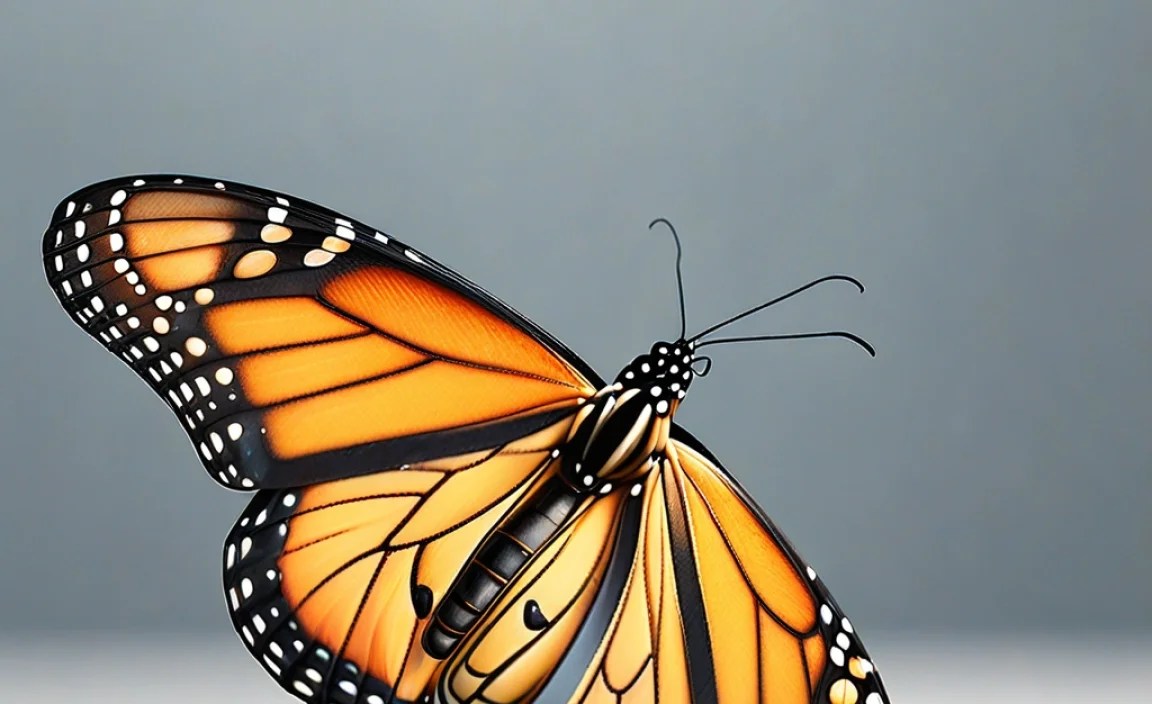
To make identification easier, here’s a table summarizing the key differences between monarchs, viceroys, and queens:
| Feature | Monarch (Danaus plexippus) | Viceroy (Limenitis archippus) | Queen (Danaus gilippus) |
|---|---|---|---|
| Size | Large (3.5 – 4 inches wingspan) | Medium (2.5 – 3 inches wingspan) | Large (3 – 3.5 inches wingspan) |
| Wing Color | Bright orange with black veins | Orange with black veins | Reddish-brown, no prominent veins |
| Hindwing | No black line | Distinct black line across hindwing | No distinct line |
| Habitat | Fields, meadows, gardens | Wet areas, marshes, willow thickets | Warm climates, open areas |
| Migration | Long-distance migration | Limited migration | Sedentary or short-distance migration |
Step-by-Step Guide to Identifying Monarchs
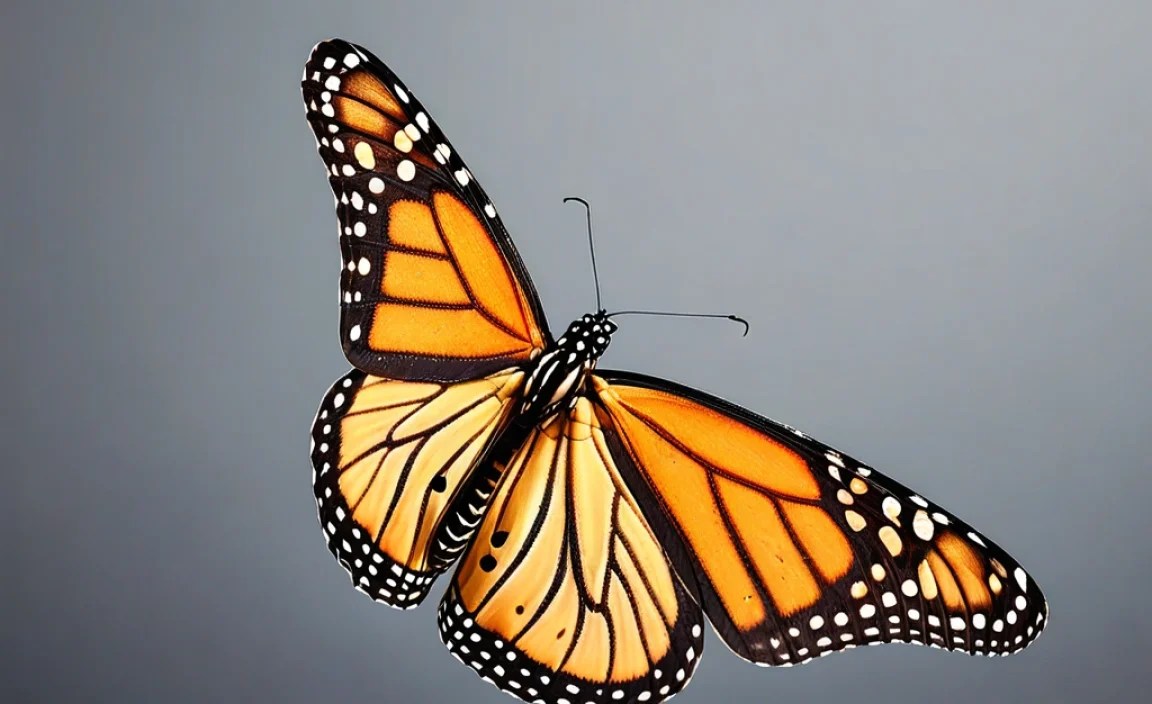
Follow these steps to confidently identify a monarch butterfly:
Step 1: Observe the Size
Monarchs are relatively large butterflies, with a wingspan of about 3.5 to 4 inches. If the butterfly you’re observing is significantly smaller, it’s likely not a monarch.
Step 2: Examine the Wing Pattern
The monarch’s wing pattern is its most distinctive feature. Look for bright orange wings with bold black veins and a black border containing white spots. If the veins are not clearly defined or the color is more reddish-brown, it might be a queen.
Step 3: Check for the Black Line on the Hindwing
This is the easiest way to distinguish a viceroy from a monarch. If there’s a black line running across the hindwing, it’s a viceroy, not a monarch.
Step 4: Consider the Habitat
Monarchs are commonly found in fields, meadows, and gardens where milkweed is abundant. If you spot a similar-looking butterfly in a marshy area, it’s more likely to be a viceroy. Queen butterflies prefer warmer climates.
Step 5: Observe the Flight Pattern
Monarchs have a graceful, gliding flight. Viceroys tend to fly more quickly and erratically. Observing the butterfly’s flight pattern can provide additional clues to its identity.
Distinguishing Monarch Caterpillars

Identifying monarch caterpillars is just as important as identifying the adults, especially if you’re trying to support their lifecycle in your garden. Here’s how to tell them apart from other caterpillars.
Monarch Caterpillar (Danaus plexippus)
- Appearance: Distinctive black, white, and yellow stripes running horizontally along its body.
- Antennae: Two pairs of black filaments (antennae-like structures) – one pair at the head and one pair towards the rear.
- Diet: Primarily feeds on milkweed leaves.
Viceroy Caterpillar (Limenitis archippus)
- Appearance: Brown and white mottled appearance, resembling bird droppings when young, providing camouflage.
- Spines: Has spines or horns on its body, which are absent in monarch caterpillars.
- Diet: Feeds on willow, poplar, and aspen leaves.
Queen Caterpillar (Danaus gilippus)
- Appearance: Similar to monarch caterpillars but with a darker overall coloration and more pronounced orange or reddish bands.
- Filaments: Three pairs of filaments instead of two (one on the head, two mid-body, and one at the rear).
- Diet: Feeds on milkweed, but prefers certain species over others.
Tips for Attracting Monarchs to Your Garden
Attracting monarchs to your garden involves providing them with the resources they need to thrive throughout their lifecycle. Here are some practical tips:
Plant Milkweed
Milkweed is the only food source for monarch caterpillars. Planting various milkweed species native to your area will ensure a consistent food supply. Common milkweed (Asclepias syriaca) and butterfly weed (Asclepias tuberosa) are excellent choices. You can find native milkweed species through local nurseries or native plant societies.
Provide Nectar Sources
Adult monarchs need nectar for energy. Plant a variety of nectar-rich flowers that bloom throughout the butterfly season. Good options include zinnias, coneflowers, asters, and goldenrod. Choose plants with different bloom times to provide continuous nectar sources. Refer to the Xerces Society’s pollinator plant lists for recommendations tailored to your region.
Avoid Pesticides
Pesticides can harm or kill monarch butterflies and other beneficial insects. Avoid using insecticides, herbicides, and fungicides in your garden. Opt for organic gardening practices to protect pollinators. Consider using natural pest control methods such as introducing beneficial insects or using insecticidal soap only when necessary.
Create a Butterfly-Friendly Habitat
Provide shelter from wind and rain by planting shrubs and trees. Include a shallow dish of water with pebbles for butterflies to land on and drink. Position your butterfly garden in a sunny location, as butterflies need sunlight to warm their bodies. Leave some leaf litter and dead stems over winter to provide overwintering habitat for other beneficial insects.
Raise Monarchs Responsibly
If you choose to raise monarch caterpillars indoors, ensure you provide a clean and safe environment. Use a mesh enclosure to protect them from predators and parasites. Feed them fresh milkweed daily and remove frass (caterpillar droppings) regularly. Release the butterflies in a safe location away from roads and other hazards. Be mindful of local regulations and guidelines regarding monarch rearing.
The Importance of Accurate Identification
Accurate identification of monarch butterflies is crucial for several reasons:
- Conservation Efforts: Knowing the actual monarch population numbers helps conservation organizations track their decline and implement effective strategies.
- Citizen Science: Many citizen science projects rely on accurate butterfly sightings to monitor populations and migration patterns.
- Gardening: Correct identification ensures you’re providing the right host plants for the caterpillars you’re trying to support.
- Education: Learning to distinguish between species enhances your understanding of biodiversity and ecological relationships.
Resources for Further Learning
To deepen your understanding of monarch butterflies and their look-alikes, here are some valuable resources:
- The Xerces Society: A non-profit organization dedicated to invertebrate conservation. Their website offers information on monarch biology, conservation, and citizen science projects.
- Monarch Watch: A research and education program focused on monarch butterfly conservation. They provide resources for tagging monarchs, creating monarch waystations, and learning about monarch biology.
- Journey North: A citizen science project that tracks monarch migration and other seasonal changes. Their website allows you to report your sightings and view maps of monarch migration patterns.
- Local Butterfly Clubs: Joining a local butterfly club is a great way to learn from experienced lepidopterists and participate in field trips and workshops.
Frequently Asked Questions
What is mimicry in butterflies?
Mimicry is when one species evolves to resemble another species for protection. For example, viceroy butterflies mimic monarchs to deter predators who have learned that monarchs are distasteful.
Why is it important to plant milkweed?
Milkweed is the only food source for monarch caterpillars. Without milkweed, monarchs cannot complete their lifecycle. Planting milkweed is essential for monarch conservation.
Are monarch butterflies poisonous?
Monarchs are not poisonous, but they are toxic and distasteful to predators. This is because monarch caterpillars feed on milkweed, which contains toxic compounds called cardiac glycosides. These compounds are stored in the caterpillar’s body and persist into the adult butterfly stage, making them unpalatable to birds and other predators.
How can I tell if a butterfly is male or female?
Male monarchs have thinner veins on their wings and a small black spot on each hindwing. Females have thicker veins and lack the black spot.
What do monarch butterflies eat besides milkweed?
Adult monarchs feed on nectar from various flowers, including zinnias, coneflowers, asters, and goldenrod. Nectar provides them with the energy they need for migration and reproduction.
What is a monarch waystation?
A monarch waystation is a garden or habitat that provides milkweed and nectar sources for monarch butterflies. These waystations serve as essential resting and refueling stops for monarchs during their long migration.
How long do monarch butterflies live?
Monarch butterflies have a lifespan of about two to six weeks during the breeding season. However, the generation that migrates to Mexico overwinters and can live for up to nine months.
Conclusion
Distinguishing monarchs from their look-alikes can be a rewarding challenge. By paying close attention to wing patterns, size, habitat, and behavior, you can confidently identify these iconic butterflies. Remember, accurate identification is crucial for conservation efforts and citizen science projects. So, grab your binoculars, head out to your garden or a nearby field, and put your newfound knowledge to the test. Happy butterfly watching!


