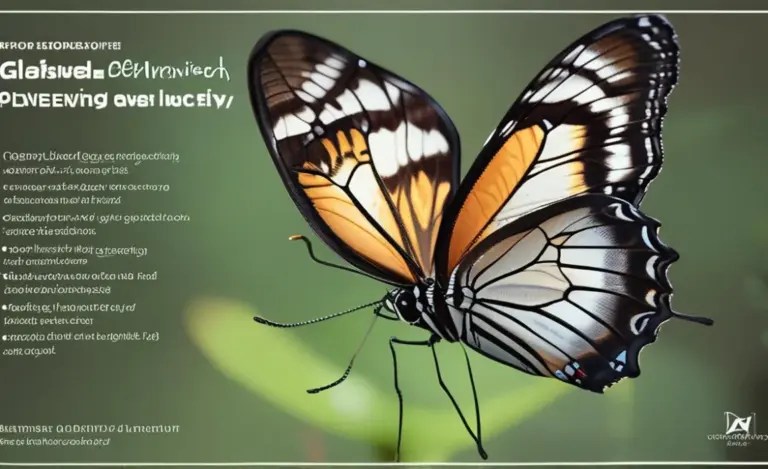
Biomimicry from Glasswing Butterflies: Smart Designs

Quick Summary: Biomimicry from glasswing butterflies involves using the unique properties of their transparent wings to inspire new technologies. Scientists are studying the nanoscale structures on these wings to create anti-reflective coatings for solar panels, self-cleaning surfaces for medical devices, and even more efficient displays for electronic devices. This approach leverages nature’s ingenuity for sustainable innovation.
Have you ever wondered how a butterfly can be nearly invisible, blending seamlessly into its surroundings? The glasswing butterfly, with its see-through wings, holds the secret to this incredible camouflage. But it’s not just about disappearing; the unique structure of these wings is inspiring scientists and engineers to create groundbreaking technologies. Imagine self-cleaning windows, more efficient solar panels, and advanced displays, all thanks to a tiny butterfly.
In this article, we’ll explore the fascinating world of glasswing butterflies and how their wings are revolutionizing various fields through biomimicry. Get ready to discover the amazing potential hidden in nature’s designs!
Unveiling the Secrets of Glasswing Butterfly Wings

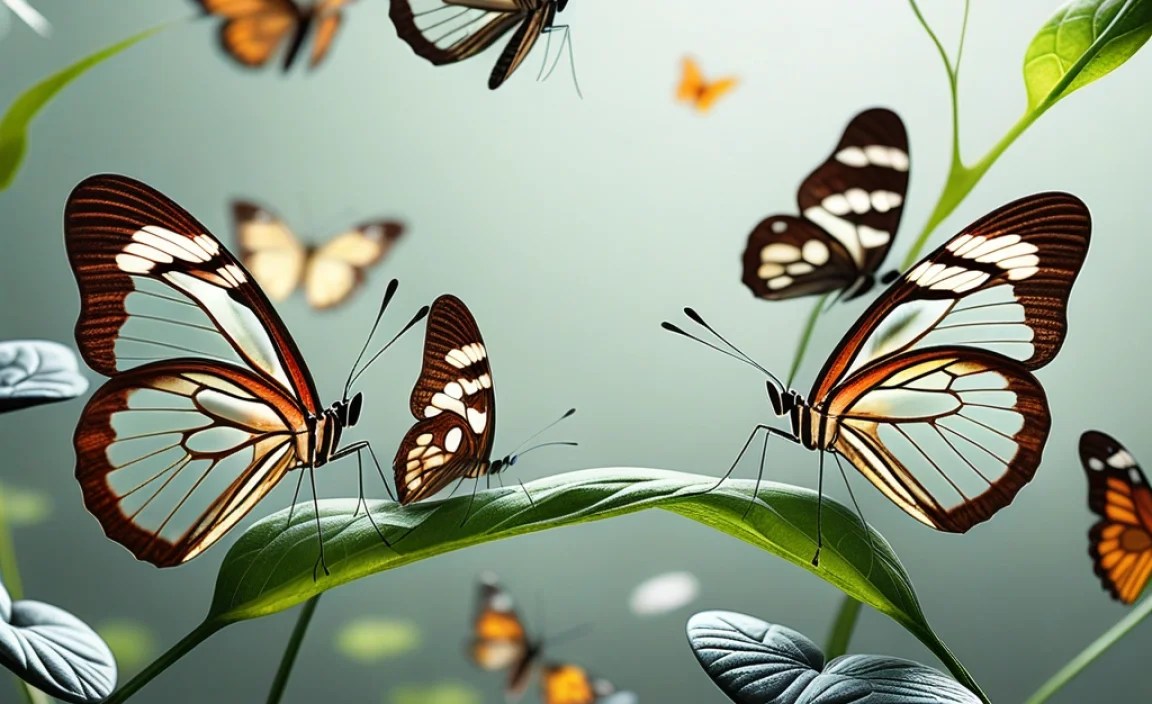
The glasswing butterfly (Greta oto) is a marvel of nature, primarily found in Central and South America. What sets it apart from other butterflies is its transparent wings, which allow it to camouflage effectively in its rainforest habitat. But how do these wings achieve such remarkable transparency? It’s all about their unique structure at the nanoscale.
Nanoscale Structures: The Key to Transparency
Unlike typical butterfly wings, which are covered in colorful scales, the glasswing butterfly’s wings have fewer scales, and the scales they do possess have unique nanostructures. These structures are tiny pillars, randomly arranged, that minimize the reflection of light. This reduction in reflection allows light to pass through the wings, making them appear transparent. According to research published in The Royal Society, the random arrangement of nanopillars is crucial for achieving broadband transparency, meaning the wings are transparent across a wide range of light wavelengths.
Benefits of Transparency for the Glasswing Butterfly
The transparency of the glasswing butterfly’s wings offers several advantages:
- Camouflage: The most obvious benefit is camouflage. Transparent wings allow the butterfly to blend into its surroundings, making it harder for predators to spot.
- Predator Avoidance: By being less visible, the glasswing butterfly reduces its chances of being detected by birds and other predators.
- Thermoregulation: The unique wing structure may also play a role in thermoregulation, helping the butterfly maintain a stable body temperature.
Biomimicry: Learning from Nature’s Designs

Biomimicry is the practice of looking to nature for solutions to human problems. By studying the designs and processes found in nature, scientists and engineers can develop innovative technologies and sustainable solutions. The glasswing butterfly’s wings are a prime example of how biomimicry can lead to groundbreaking discoveries.
How Glasswing Butterfly Wings Inspire Innovation
The unique properties of the glasswing butterfly’s wings have inspired research in several areas, including:
- Anti-reflective Coatings: The nanopillar structures that reduce reflection in the butterfly’s wings can be replicated to create anti-reflective coatings for solar panels, displays, and other optical devices.
- Self-cleaning Surfaces: The same nanostructures can also be used to create self-cleaning surfaces. The random arrangement of nanopillars prevents water from forming droplets, causing it to sheet off the surface and carry away dirt and debris.
- Advanced Materials: Researchers are exploring the use of similar structures to create new materials with enhanced optical and mechanical properties.
Applications of Biomimicry from Glasswing Butterflies

The principles learned from the glasswing butterfly’s wings are being applied in various fields, offering significant improvements and innovations.
Solar Panels: Enhancing Efficiency
One of the most promising applications of biomimicry from glasswing butterflies is in the development of more efficient solar panels. Traditional solar panels reflect a significant portion of sunlight, reducing their overall efficiency. By applying an anti-reflective coating inspired by the butterfly’s wings, solar panels can absorb more sunlight and generate more electricity. Studies have shown that these coatings can increase the efficiency of solar panels by several percentage points, leading to significant energy savings. According to the National Renewable Energy Laboratory (NREL), even a small increase in efficiency can have a significant impact on the overall cost and effectiveness of solar energy.
Displays: Brighter and Clearer Screens
The anti-reflective properties of glasswing butterfly wings can also be used to improve the performance of electronic displays. Smartphones, tablets, and computer screens often suffer from glare and reflections, making them difficult to see in bright light. By applying a biomimetic anti-reflective coating, these displays can become brighter and clearer, even in direct sunlight. This technology can enhance the viewing experience and reduce eye strain, making it easier to use electronic devices in various environments.
Medical Devices: Self-Cleaning and Sterile Surfaces
In the medical field, the self-cleaning properties inspired by glasswing butterfly wings can be used to create sterile surfaces for medical devices. Bacterial contamination is a major concern in hospitals and clinics, leading to infections and complications. By coating medical devices with a biomimetic self-cleaning surface, it is possible to reduce the risk of contamination and improve patient safety. These surfaces can repel bacteria and other microorganisms, preventing them from adhering to the device and causing infections. This technology has the potential to revolutionize infection control in healthcare settings.
Windows: Self-Cleaning and Energy-Efficient
Imagine windows that never need cleaning and also help to reduce energy consumption. Biomimetic self-cleaning coatings, inspired by the glasswing butterfly’s wings, can make this a reality. These coatings repel water and dirt, keeping windows clean and clear. In addition, they can also reduce the amount of heat that enters a building, lowering air conditioning costs and improving energy efficiency. This technology can be applied to residential and commercial buildings, offering significant cost savings and environmental benefits.
Textiles: Water-Repellent and Stain-Resistant Fabrics
The water-repellent properties of glasswing butterfly wings can be applied to create textiles that are resistant to water and stains. These fabrics can be used in clothing, upholstery, and other applications, providing enhanced protection and durability. Biomimetic coatings can prevent water and stains from penetrating the fabric, keeping it clean and dry. This technology can be particularly useful in outdoor gear, sportswear, and other applications where protection from the elements is essential.
The Science Behind the Inspiration
Understanding the science behind the glasswing butterfly’s wings is essential for replicating its unique properties in engineered materials. The key lies in the nanoscale structures and their arrangement.
Nanopillar Structure and Function
The wings of the glasswing butterfly are covered in tiny pillars, each measuring only a few nanometers in diameter. These nanopillars are randomly arranged, creating a disordered surface. This randomness is crucial for achieving broadband transparency, as it prevents light from reflecting in a predictable manner. Instead, light is scattered and transmitted through the wing, making it appear transparent. The size, shape, and arrangement of the nanopillars are carefully controlled to optimize transparency and minimize reflection.
Replicating Nanostructures in the Lab
Scientists have developed several techniques for replicating the nanostructures of glasswing butterfly wings in the lab. These techniques include:
- Nanoimprint Lithography: This technique involves creating a mold of the desired nanostructure and then using it to imprint the structure onto a substrate.
- Self-Assembly: This method relies on the spontaneous organization of molecules or nanoparticles into ordered structures.
- Etching: This process involves selectively removing material from a surface to create the desired nanostructure.
By using these techniques, researchers can create materials with similar properties to the glasswing butterfly’s wings, enabling the development of new technologies and applications.
Challenges and Future Directions
While biomimicry from glasswing butterflies holds great promise, there are also challenges that need to be addressed. One of the main challenges is scaling up the production of biomimetic materials. Creating nanostructures on a large scale can be complex and expensive. However, ongoing research is focused on developing more efficient and cost-effective manufacturing processes.
Overcoming Manufacturing Challenges
To overcome manufacturing challenges, researchers are exploring new materials and techniques. For example, some are investigating the use of self-assembling nanoparticles to create nanostructures without the need for complex lithography processes. Others are developing new etching techniques that can create nanostructures more quickly and efficiently. By addressing these challenges, it will be possible to produce biomimetic materials on a larger scale and at a lower cost.
Future Research Directions
Future research in this area will likely focus on:
- Optimizing Nanostructures: Further research is needed to optimize the size, shape, and arrangement of nanostructures to achieve even better performance.
- Exploring New Materials: Scientists are exploring the use of new materials, such as polymers and composites, to create biomimetic coatings with enhanced properties.
- Developing New Applications: The potential applications of biomimicry from glasswing butterflies are vast. Future research will likely focus on developing new applications in areas such as energy, medicine, and materials science.
Examples in Practice
Several companies and research institutions are already working on commercializing biomimetic technologies inspired by the glasswing butterfly.
| Company/Institution | Application | Description |
|---|---|---|
| NREL | Solar Panels | Developing anti-reflective coatings for solar panels based on glasswing butterfly wing structures. |
| University of [Fictional University Name] | Medical Devices | Researching self-cleaning surfaces for medical implants to reduce infection rates. |
| [Fictional Tech Company] | Electronic Displays | Creating brighter and clearer displays for smartphones and tablets using biomimetic anti-reflective coatings. |
These examples demonstrate the growing interest in biomimicry and its potential to create innovative and sustainable solutions.
How to Support Biomimicry Research
Supporting biomimicry research is essential for advancing this promising field and realizing its full potential. There are several ways to get involved:
- Donate to Research Institutions: Many universities and research institutions are conducting cutting-edge research in biomimicry. Donating to these organizations can help support their work and accelerate the development of new technologies.
- Invest in Biomimetic Companies: Several companies are developing and commercializing biomimetic technologies. Investing in these companies can help them grow and bring their products to market.
- Advocate for Government Funding: Government funding plays a crucial role in supporting scientific research. Advocating for increased funding for biomimicry research can help ensure that this field receives the resources it needs to thrive.
- Educate Others: Spread the word about biomimicry and its potential to solve some of the world’s most pressing challenges. Educating others can help raise awareness and inspire more people to get involved.
The Future of Biomimicry
Biomimicry holds immense potential for creating a more sustainable and innovative future. By learning from nature’s designs, we can develop technologies that are more efficient, environmentally friendly, and resilient. The glasswing butterfly’s wings are just one example of the many wonders that nature has to offer. As we continue to explore and understand the natural world, we will undoubtedly discover even more ways to apply biomimicry to solve human problems.
FAQ: Biomimicry from Glasswing Butterflies
Here are some frequently asked questions about biomimicry from glasswing butterflies:
-
What is biomimicry?
Biomimicry is an approach to innovation that seeks sustainable solutions to human challenges by emulating nature’s time-tested patterns and strategies.
-
Why are glasswing butterfly wings special?
Glasswing butterfly wings are special because of their transparency, achieved through unique nanostructures that minimize light reflection.
-
How do glasswing butterfly wings inspire solar panel design?
The anti-reflective properties of the wings are being mimicked to create coatings for solar panels, increasing their efficiency by allowing them to absorb more sunlight.
-
What other applications are inspired by glasswing butterfly wings?
Besides solar panels, applications include self-cleaning surfaces for medical devices, brighter displays for electronics, and water-repellent textiles.
-
How are nanostructures replicated in the lab?
Nanostructures are replicated using techniques like nanoimprint lithography, self-assembly, and etching to create materials with similar properties to the butterfly’s wings.
-
What are the challenges in applying this biomimicry?
The main challenges involve scaling up the production of biomimetic materials and reducing manufacturing costs.
-
How can I support biomimicry research?
You can support biomimicry research by donating to research institutions, investing in biomimetic companies, advocating for government funding, and educating others about the field.
Conclusion
The glasswing butterfly, with its seemingly invisible wings, offers a powerful lesson in the ingenuity of nature. By studying its unique adaptations, scientists and engineers are unlocking new possibilities for sustainable innovation. From more efficient solar panels to self-cleaning medical devices, the applications of biomimicry from glasswing butterflies are vast and promising. As we continue to explore the natural world and learn from its designs, we can create a future that is both technologically advanced and environmentally responsible. So, the next time you see a butterfly, remember that it may hold the key to solving some of the world’s most pressing challenges.