
Butterflies of Amazon Rainforest: Ultimate Guide

The Amazon rainforest is home to an estimated 1,500-2,000 butterfly species! These vibrant creatures play vital roles in pollination and the food chain. Discover their incredible diversity, camouflage techniques, and why protecting their habitat is crucial for the planet’s health.
Have you ever dreamed of exploring the Amazon rainforest? Imagine walking through a world filled with colorful butterflies fluttering all around you. It’s a truly magical experience! But with so many different kinds of butterflies in the Amazon, it can be tricky to know where to start learning about them. Don’t worry, I’m here to help!
In this guide, we’ll take a journey into the fascinating world of Amazonian butterflies. We’ll explore their amazing diversity, learn how they survive in the rainforest, and understand why it’s so important to protect them. Get ready to discover the hidden beauty and ecological importance of these incredible insects!
Why the Amazon Rainforest is a Butterfly Paradise

The Amazon rainforest is the largest tropical rainforest on Earth. It covers parts of Brazil, Peru, Colombia, and several other countries. This vast, green landscape is home to an incredible variety of plants and animals, including a huge number of butterfly species. But why does the Amazon have so many butterflies?
- Abundant Food Sources: Butterflies feed on nectar from flowers and other plant juices. The Amazon’s rich plant life provides plenty of food for them.
- Warm Climate: Butterflies thrive in warm, humid environments. The Amazon’s consistent warmth allows them to be active year-round.
- Diverse Habitats: The Amazon offers many different habitats, from dense forests to open riverbanks. This variety allows different butterfly species to find their ideal living conditions.
- Shelter and Protection: The dense vegetation provides shelter from predators and harsh weather. Butterflies can hide among the leaves and branches, staying safe and secure.
Meet Some of the Amazing Butterflies of the Amazon

The Amazon rainforest is home to a dazzling array of butterflies, each with its own unique beauty and adaptations. Here are a few of the most fascinating species you might encounter:
Blue Morpho (Morpho menelaus)
The Blue Morpho is perhaps the most iconic butterfly of the Amazon. Its wings shimmer with a brilliant, iridescent blue color that can be seen from a great distance. This dazzling display is created by microscopic scales on the wings that reflect light. The underside of the wings, however, is brown with eyespots, providing camouflage when the butterfly is at rest.
These butterflies are relatively large, with wingspans ranging from 5 to 8 inches. They are strong fliers and can often be seen gliding through the rainforest canopy. Blue Morphos feed on the sap of rotting fruit and the juices of fungi.
Owl Butterfly (Caligo memnon)
The Owl Butterfly is named for the large, owl-like eyespots on the underside of its wings. These eyespots are a form of mimicry, designed to startle predators or make them think they are being watched. The upper side of the wings is usually brown or gray, providing camouflage when the butterfly is resting with its wings closed.
Owl Butterflies are crepuscular, meaning they are most active at dawn and dusk. They are also quite large, with wingspans of up to 6.5 inches. They feed on rotting fruit and nectar, and their caterpillars feed on banana and other plant leaves.
Glasswing Butterfly (Greta oto)
The Glasswing Butterfly is truly remarkable for its transparent wings. The tissue between the veins of its wings is clear, making it look like the butterfly is flying on panes of glass. This transparency is a form of camouflage, allowing the butterfly to blend in with its surroundings and avoid predators.
Glasswing Butterflies are relatively small, with wingspans of about 2.2 to 2.4 inches. They are found in humid forests throughout Central and South America. Their caterpillars feed on plants in the nightshade family, which makes them poisonous to predators.
Monarch Butterfly (Danaus plexippus)
While Monarch butterflies are more commonly known for their migrations in North America, they can also be found in parts of the Amazon rainforest. These butterflies are famous for their striking orange and black wings and their incredible long-distance migrations. Monarchs that live in the Amazon do not migrate, but they still share the same beautiful coloration and fascinating life cycle as their North American cousins.
Monarch caterpillars feed exclusively on milkweed plants, which contain toxins that make them unpalatable to predators. The butterflies retain these toxins, providing them with protection throughout their lives.
Zebra Longwing (Heliconius charithonia)
The Zebra Longwing is a striking butterfly with long, narrow wings marked with black and white stripes. It is one of the few butterfly species that feeds on pollen as well as nectar. This allows it to live much longer than most butterflies, sometimes up to several months.
Zebra Longwings are found throughout Central and South America, as well as in parts of the southern United States. They are social butterflies and often gather in groups to roost at night. Their caterpillars feed on passionflower vines, which contain toxins that make them distasteful to predators.
Butterfly Camouflage and Mimicry in the Amazon

In the dense and competitive environment of the Amazon rainforest, butterflies have developed amazing strategies for survival. Two of the most important of these are camouflage and mimicry. These techniques allow butterflies to avoid predators and increase their chances of survival.
Camouflage: Blending In
Camouflage is the ability to blend in with the surrounding environment. Many Amazonian butterflies have evolved colors and patterns that match the leaves, bark, or other natural elements of their habitat. This makes it difficult for predators to spot them.
For example, some butterflies have wings that look exactly like dead leaves. When they land on a tree branch, they become virtually invisible. Others have wings that match the colors and patterns of tree bark, allowing them to disappear against the trunk of a tree.
Mimicry: Copying Others
Mimicry is the ability to resemble another organism, usually for protection. There are two main types of mimicry:
- Batesian Mimicry: This is when a harmless species mimics a harmful one. For example, a harmless butterfly might have the same colors and patterns as a poisonous butterfly. Predators that have learned to avoid the poisonous butterfly will also avoid the mimic.
- Müllerian Mimicry: This is when two or more harmful species mimic each other. This benefits all the species involved, as predators learn to avoid the shared warning signals more quickly.
Many Amazonian butterflies use mimicry to protect themselves from predators. Some mimic poisonous butterflies, while others mimic wasps or other stinging insects.
The Life Cycle of an Amazon Butterfly

Like all butterflies, Amazonian butterflies go through a complete metamorphosis, which includes four distinct stages:
- Egg: The butterfly life cycle begins with an egg. Butterflies lay their eggs on plants that the caterpillars will eat when they hatch.
- Larva (Caterpillar): The egg hatches into a larva, or caterpillar. The caterpillar’s main job is to eat and grow. It sheds its skin several times as it grows, a process called molting.
- Pupa (Chrysalis): When the caterpillar is fully grown, it enters the pupa stage. It forms a chrysalis, or pupal case, around itself. Inside the chrysalis, the caterpillar undergoes a remarkable transformation.
- Adult Butterfly: After a period of time, the pupa emerges as an adult butterfly. The butterfly’s wings are crumpled at first, but they soon expand and harden. The adult butterfly is now ready to reproduce and continue the cycle.
Butterfly Conservation in the Amazon Rainforest
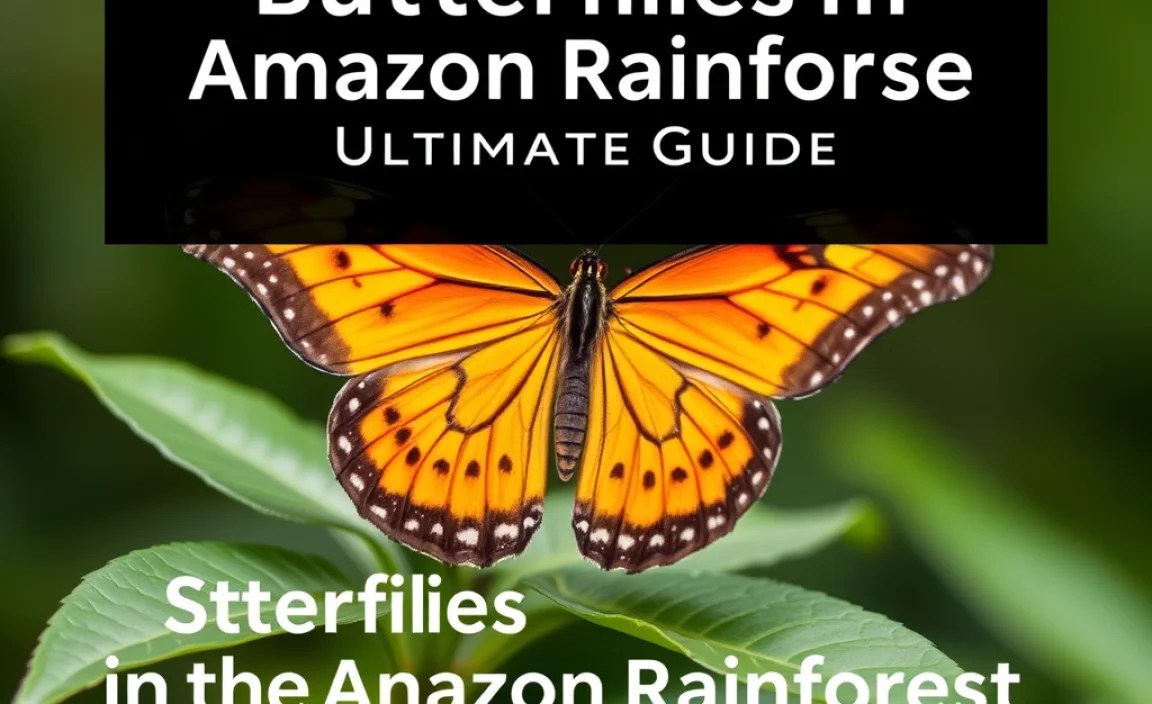
The Amazon rainforest is under threat from deforestation, climate change, and other human activities. These threats also affect the butterflies that live there. Protecting the Amazon and its butterflies is essential for maintaining biodiversity and the health of the planet.
Threats to Butterflies
Here are some of the main threats to butterflies in the Amazon:
- Deforestation: The clearing of forests for agriculture, logging, and mining destroys butterfly habitats.
- Climate Change: Changes in temperature and rainfall patterns can disrupt butterfly life cycles and food sources.
- Pesticide Use: Pesticides used in agriculture can kill butterflies and other beneficial insects.
- Habitat Fragmentation: The division of large forests into smaller fragments can isolate butterfly populations and reduce their genetic diversity.
What Can Be Done?
There are many things that can be done to protect butterflies and their habitats in the Amazon:
- Support Sustainable Agriculture: Encourage farming practices that minimize deforestation and pesticide use.
- Protect Existing Forests: Establish protected areas and enforce laws against illegal logging and mining.
- Restore Degraded Habitats: Plant native trees and plants to restore degraded forests and create new butterfly habitats.
- Raise Awareness: Educate people about the importance of butterflies and the threats they face.
- Support Conservation Organizations: Donate to organizations that are working to protect the Amazon rainforest and its wildlife.
| Threat | Impact on Butterflies | Possible Solutions |
|---|---|---|
| Deforestation | Habitat loss, reduced food sources | Sustainable agriculture, protected areas |
| Climate Change | Disrupted life cycles, altered food sources | Reduce carbon emissions, protect forests |
| Pesticide Use | Direct mortality, reduced food sources | Organic farming, integrated pest management |
| Habitat Fragmentation | Isolated populations, reduced genetic diversity | Habitat corridors, reforestation |
Attracting Butterflies to Your Garden (Even if You’re Not in the Amazon!)
While you may not live near the Amazon rainforest, you can still attract butterflies to your garden! By providing the right food and habitat, you can create a butterfly-friendly oasis in your own backyard.
Plant Butterfly-Friendly Flowers
Butterflies need nectar to fuel their flight. Plant a variety of flowers that provide nectar throughout the growing season. Some good choices include:
- Milkweed: A must-have for Monarch butterflies.
- Butterfly Bush: A popular choice that attracts many different butterfly species.
- Zinnia: Bright and colorful flowers that butterflies love.
- Lantana: A heat-tolerant plant that blooms all summer long.
- Coneflower: A native plant that provides nectar and seeds for butterflies and birds.
Provide Host Plants for Caterpillars
Butterflies also need host plants for their caterpillars. These are the plants that the caterpillars will eat as they grow. Some popular host plants include:
- Milkweed: The only food source for Monarch caterpillars.
- Passionflower: A host plant for Zebra Longwing butterflies.
- Spicebush: A host plant for Spicebush Swallowtail butterflies.
- Dill and Parsley: Host plants for Black Swallowtail butterflies.
- Oak Trees: Host plants for many different butterfly species.
Provide Water and Shelter
Butterflies need water and shelter to survive. Provide a shallow dish of water with pebbles or marbles for them to land on. You can also create a butterfly house or plant dense shrubs and trees to provide shelter from the wind and rain.
Avoid Pesticides
Pesticides can be harmful to butterflies and other beneficial insects. Avoid using pesticides in your garden, or choose organic or natural alternatives.
The Cultural Significance of Butterflies in the Amazon
Butterflies hold a special place in the cultures of many indigenous peoples of the Amazon. They are often seen as symbols of transformation, beauty, and spiritual connection.
- Transformation: The butterfly’s metamorphosis from caterpillar to pupa to adult butterfly is often seen as a metaphor for personal growth and transformation.
- Beauty: The vibrant colors and delicate beauty of butterflies are admired and celebrated in many cultures.
- Spiritual Connection: In some Amazonian cultures, butterflies are believed to be messengers from the spirit world or the souls of ancestors.
Butterflies are often featured in traditional art, music, and stories. They are also used in healing ceremonies and rituals. The knowledge and respect for butterflies are passed down through generations, highlighting their importance in the cultural heritage of the Amazon.
FAQ: Butterflies of the Amazon Rainforest
1. How many butterfly species live in the Amazon rainforest?
Estimates vary, but it’s believed that the Amazon is home to between 1,500 and 2,000 different butterfly species. This is a huge number compared to other regions!
2. What is the biggest threat to butterflies in the Amazon?
The biggest threat is deforestation. When forests are cleared for agriculture, logging, or mining, butterflies lose their habitats and food sources.
3. What do Amazonian butterflies eat?
Adult butterflies primarily feed on nectar from flowers. Some species also feed on rotting fruit, tree sap, or even pollen. Caterpillars eat the leaves of specific host plants.
4. Are Amazonian butterflies poisonous?
Some Amazonian butterflies are poisonous, especially the caterpillars. They obtain toxins from the plants they eat, which makes them unpalatable to predators. Some non-poisonous butterflies mimic these poisonous species for protection.
5. How can I help protect butterflies in the Amazon?
You can help by supporting sustainable agriculture, advocating for forest protection, donating to conservation organizations, and raising awareness about the importance of butterflies and their habitats.
6. What is special about the Blue Morpho butterfly?
The Blue Morpho is famous for its iridescent blue wings. This color is created by microscopic scales that reflect light. The underside of its wings is brown with eyespots, providing camouflage when it rests.
7. Why are Glasswing butterflies transparent?
Glasswing butterflies have transparent wings as a form of camouflage. The clear tissue between the veins allows them to blend in with their surroundings and avoid predators.
Conclusion
The butterflies of the Amazon rainforest are a testament to the incredible biodiversity and beauty of our planet. From the shimmering Blue Morpho to the camouflaged Owl Butterfly, each species has its own unique story to tell. By learning about these fascinating creatures and the threats they face, we can all play a part in protecting them and their precious habitat. Whether you’re planting a butterfly garden in your backyard or supporting conservation efforts in the Amazon, every action makes a difference. Let’s work together to ensure that future generations can marvel at the wonders of these amazing insects.


