
Butterflies of Cameroon Forest: Ultimate Guide

The Cameroon forests are home to a dazzling array of butterflies! This region boasts some of the highest butterfly diversity in Africa. Identifying these beautiful creatures can be challenging, but with some patience and the right resources, you can learn to recognize many of the common and unique species that call these forests home. From the vibrant colours of the swallowtails to the intricate patterns of the forest nymphs, there’s a whole world of butterflies to discover.
Have you ever dreamt of exploring the lush, vibrant forests of Cameroon and being surrounded by flitting, colourful butterflies? It’s an incredible experience! But identifying these delicate creatures can feel overwhelming. Don’t worry, you’re not alone. Many nature lovers find themselves in the same situation. This guide will walk you through the fascinating world of Cameroon’s butterflies. We’ll explore their habitats, learn how to identify different species, and understand the vital role they play in the ecosystem. Get ready to discover the hidden beauty of these amazing insects!
Discovering the Butterflies of Cameroon Forest

Cameroon’s rainforests are biodiversity hotspots, teeming with life. Among the most captivating inhabitants are its butterflies. These insects are not only beautiful but also crucial indicators of environmental health. Let’s dive into the world of Cameroon butterflies!
Why Cameroon’s Forests Are a Butterfly Paradise
The rich biodiversity of Cameroon’s forests provides a perfect environment for a wide variety of butterfly species. Several factors contribute to this:
- Diverse Flora: A wide range of plant species provides food for caterpillars and nectar for adult butterflies.
- Varied Habitats: From lowland rainforests to montane forests, the diverse habitats support different butterfly communities.
- Stable Climate: The relatively stable tropical climate allows butterflies to thrive year-round.
Common Butterfly Families in Cameroon
Several butterfly families are well-represented in Cameroon’s forests. Knowing these families can help you narrow down your identification efforts:
- Papilionidae (Swallowtails): Often large and brightly coloured, with distinctive tails on their hindwings.
- Pieridae (Whites and Yellows): Typically white or yellow, these butterflies are often seen fluttering around flowers.
- Nymphalidae (Brush-footed Butterflies): This diverse family includes species with reduced front legs, giving them the appearance of having only four legs.
- Lycaenidae (Blues, Coppers, and Hairstreaks): Small and often brightly coloured, these butterflies are known for their intricate wing patterns.
- Hesperiidae (Skippers): Small, stout-bodied butterflies with hooked antennae, known for their rapid, darting flight.
Identifying Cameroon’s Butterflies: A Step-by-Step Guide
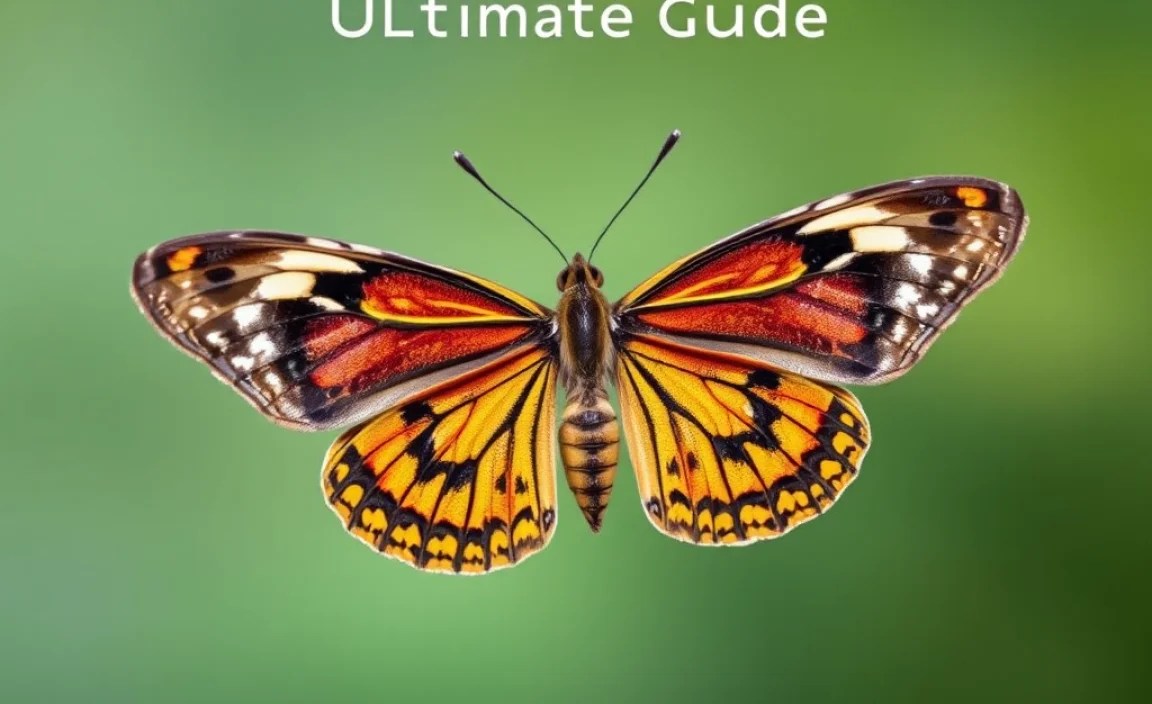
Identifying butterflies can seem daunting, but breaking it down into steps makes it much easier. Here’s how to approach butterfly identification in Cameroon:
Step 1: Observe the Butterfly’s Size and Shape
Start by noting the butterfly’s overall size and shape. Is it large or small? Does it have long, pointed wings or rounded ones? These basic observations can help you narrow down the possibilities.
Step 2: Examine the Wing Patterns and Colours
The patterns and colours on a butterfly’s wings are key to identification. Look for distinctive markings, such as spots, stripes, or bands. Note the colours and how they are distributed on the wings.
- Colour Combinations: Are the colours bold and contrasting, or subtle and muted?
- Markings: Are there any distinctive spots, stripes, or bands?
- Wing Shape: Are the wings rounded, pointed, or elongated?
Step 3: Note the Butterfly’s Behaviour
A butterfly’s behaviour can also provide clues to its identity. Consider the following:
- Flight Pattern: Does it fly quickly and erratically, or slowly and gracefully?
- Feeding Habits: What type of flowers does it visit? Does it feed on nectar, sap, or other substances?
- Habitat: Where did you find the butterfly? Was it in a sunny clearing, a shady forest, or near a stream?
Step 4: Use Field Guides and Online Resources
Field guides and online resources are invaluable tools for butterfly identification. Here are some recommended resources:
- Field Guides: Look for field guides specific to African butterflies, such as “Butterflies of West Africa” by Jonathan Ball.
- Online Databases: Websites like GBIF (Global Biodiversity Information Facility) and iNaturalist allow you to search for butterflies by location and compare your observations with photos and descriptions.
- Butterfly Forums: Online forums dedicated to butterfly enthusiasts can be a great place to ask for help with identification.
Step 5: Compare Your Observations
Once you have gathered your observations, compare them with the information in your field guide or online resource. Pay close attention to the key characteristics of each species, such as wing patterns, colours, and size. If possible, take a photo of the butterfly to aid in identification.
Spotlight on Some Remarkable Cameroon Butterflies

Cameroon is home to many unique and fascinating butterfly species. Here are a few examples:
The African Giant Swallowtail (Papilio antimachus)
One of the largest butterflies in the world, the African Giant Swallowtail is a sight to behold. With a wingspan of up to 23 cm, it dwarfs many other butterfly species. The males have striking orange and black wings, while the females are more subdued in colour.
- Habitat: Primary rainforests
- Distinguishing Features: Very large size, orange and black wings (males), mottled brown wings (females)
- Conservation Status: Relatively common
The Cameroon Forest Nymph (Pseudacraea camerunica)
This beautiful butterfly is endemic to Cameroon, meaning it is found nowhere else in the world. It is a master of camouflage, blending in perfectly with the forest floor.
- Habitat: Montane forests
- Distinguishing Features: Intricate brown and white patterns on the wings, resembling dead leaves
- Conservation Status: Vulnerable due to habitat loss
The Cream-banded Swallowtail (Papilio nireus lyaeus)
This striking swallowtail is known for its vibrant green and black wings, adorned with a distinctive cream-coloured band. It is a common sight in Cameroon’s forests and gardens.
- Habitat: Forests and gardens
- Distinguishing Features: Green and black wings with a cream-coloured band
- Conservation Status: Common
Creating a Butterfly-Friendly Habitat in Cameroon

Attracting butterflies to your garden or local area can be a rewarding experience. Here’s how to create a butterfly-friendly habitat:
Plant Nectar-Rich Flowers
Butterflies need nectar to fuel their flight. Plant a variety of nectar-rich flowers that bloom at different times of the year. Some good choices include:
- Lantana
- Hibiscus
- Buddleja (Butterfly Bush)
- Pentas
Provide Host Plants for Caterpillars
Butterflies lay their eggs on specific host plants, which the caterpillars then feed on. Research which butterflies are common in your area and plant their host plants. Some examples include:
- Citrus trees (host plants for swallowtail butterflies)
- Cassia species (host plants for pierid butterflies)
Offer a Water Source
Butterflies need water to stay hydrated. Provide a shallow dish of water with pebbles or sand for them to land on. You can also create a “puddling area” by wetting a patch of soil with water and adding a pinch of salt.
Avoid Pesticides
Pesticides can harm or kill butterflies and other beneficial insects. Avoid using pesticides in your garden, or choose natural alternatives.
Provide Shelter
Butterflies need shelter from wind and rain. Plant trees and shrubs to provide them with a safe haven.
The Ecological Importance of Butterflies

Butterflies play several important roles in the ecosystem:
- Pollination: Butterflies are important pollinators, transferring pollen from flower to flower as they feed on nectar. This helps plants reproduce and maintain biodiversity.
- Food Source: Butterflies and their caterpillars are a food source for birds, reptiles, and other animals.
- Indicators of Environmental Health: Butterflies are sensitive to changes in their environment. Their presence or absence can indicate the health of an ecosystem.
Conserving Cameroon’s Butterflies
Many butterfly species in Cameroon are threatened by habitat loss, deforestation, and climate change. Here are some ways you can help protect these beautiful creatures:
- Support Conservation Organizations: Donate to organizations that work to protect forests and biodiversity in Cameroon.
- Promote Sustainable Practices: Encourage sustainable agriculture and forestry practices that minimize harm to butterflies and their habitats.
- Educate Others: Share your knowledge about butterflies and their importance with friends, family, and community members.
- Create Butterfly-Friendly Habitats: Plant nectar-rich flowers and host plants in your garden or local area.
Table: Common Butterflies of Cameroon and Their Habitats
| Butterfly Species | Family | Habitat | Distinguishing Features |
|---|---|---|---|
| African Giant Swallowtail (Papilio antimachus) | Papilionidae | Primary rainforests | Very large size, orange and black wings (males), mottled brown wings (females) |
| Cameroon Forest Nymph (Pseudacraea camerunica) | Nymphalidae | Montane forests | Intricate brown and white patterns on the wings, resembling dead leaves |
| Cream-banded Swallowtail (Papilio nireus lyaeus) | Papilionidae | Forests and gardens | Green and black wings with a cream-coloured band |
| African Mocker Swallowtail (Papilio dardanus) | Papilionidae | Various habitats | Females mimic other butterfly species for protection; highly variable in appearance |
| Common Diadem (Hypolimnas misippus) | Nymphalidae | Open woodlands, gardens | Females mimic the poisonous African Monarch; orange and black markings |
Table: Host Plants for Cameroon Butterflies
| Butterfly Species | Host Plant |
|---|---|
| Various Swallowtails | Citrus trees (Citrus spp.) |
| Various Whites and Yellows | Cassia species (Cassia spp.) |
| African Monarch | Milkweed (Asclepias spp.) |
| Blue Pansy | Eranthemum species (Eranthemum spp.) |
FAQ: Butterflies of Cameroon Forest
Here are some frequently asked questions about the butterflies of Cameroon’s forests:
What is the best time of year to see butterflies in Cameroon?
The best time to see butterflies in Cameroon is during the rainy season (March to November). The increased moisture promotes plant growth, providing ample food for caterpillars and nectar for adult butterflies.
Are there any endangered butterfly species in Cameroon?
Yes, several butterfly species in Cameroon are endangered or vulnerable due to habitat loss and other threats. The Cameroon Forest Nymph (Pseudacraea camerunica) is one example of a vulnerable species.
How can I attract butterflies to my garden in Cameroon?
You can attract butterflies to your garden by planting nectar-rich flowers and host plants, providing a water source, avoiding pesticides, and offering shelter.
What are the main threats to butterflies in Cameroon?
The main threats to butterflies in Cameroon include habitat loss due to deforestation, agricultural expansion, and urbanization, as well as climate change and the use of pesticides.
Where are the best places to see butterflies in Cameroon?
Some of the best places to see butterflies in Cameroon include national parks such as Korup National Park and Dja Faunal Reserve, as well as botanical gardens and other protected areas.
How can I contribute to butterfly conservation in Cameroon?
You can contribute to butterfly conservation by supporting conservation organizations, promoting sustainable practices, educating others about butterflies, and creating butterfly-friendly habitats.
What role do butterflies play in the ecosystem?
Butterflies play several important roles in the ecosystem, including pollination, serving as a food source for other animals, and indicating environmental health.
Conclusion
The butterflies of Cameroon’s forests are a true treasure, showcasing the incredible biodiversity of this region. By learning to identify these fascinating creatures, creating butterfly-friendly habitats, and supporting conservation efforts, we can help protect them for future generations. So, grab your field guide, head out into the forest, and prepare to be amazed by the beauty and diversity of Cameroon’s butterflies. Every flutter of a wing is a reminder of the importance of preserving these precious ecosystems. Let’s work together to ensure these vibrant colours continue to grace the forests of Cameroon for years to come!


