
Butterflies in Congo Basin Wetlands: A Secret?

Butterflies in the Congo Basin wetlands are incredibly diverse and play a vital role in the ecosystem. This area is home to many unique species, some of which are still being discovered. These butterflies help pollinate plants and serve as a food source for other animals, making them essential for the health of the wetlands.
Have you ever wondered about the amazing butterflies that live in the Congo Basin wetlands? It’s a place full of incredible wildlife, and the butterflies there are no exception! But with so much dense forest and swampy areas, finding information about these beautiful creatures can be tricky. Don’t worry, we’ll explore the fascinating world of Congo Basin butterflies together.
In this guide, we’ll explore where these butterflies live, what they eat, and why they are so important. We’ll also learn about some of the unique species you can find there. Ready to discover the hidden gems of the Congo Basin?
What Makes the Congo Basin Wetlands Special?

The Congo Basin is the second-largest tropical rainforest in the world, right after the Amazon. It’s a vast area with a mix of forests, rivers, and wetlands. This creates a perfect home for many different types of animals and plants, including a stunning variety of butterflies. The wetlands, in particular, are key because they provide water and unique habitats that many butterfly species need to survive.
The climate in the Congo Basin is hot and humid all year round. This warm, wet environment helps plants grow quickly, providing plenty of food for butterfly caterpillars. The wetlands also act like giant sponges, soaking up rainwater and releasing it slowly. This keeps the area moist and green, even during drier times.
Why Are Wetlands Important for Butterflies?
Wetlands are vital for butterflies for a few key reasons:
- Water Source: Butterflies need water to stay hydrated, and wetlands provide a reliable source.
- Host Plants: Many wetland plants serve as food for butterfly caterpillars.
- Shelter: The dense vegetation in wetlands offers protection from predators and harsh weather.
- Breeding Grounds: Some butterfly species lay their eggs only on plants found in wetlands.
Butterfly Biodiversity in the Congo Basin

The Congo Basin is a hotspot for butterfly biodiversity. This means that there are a lot of different types of butterflies living there. Scientists are still discovering new species in this region, which shows how much we still have to learn. The variety of habitats, from swamps to forests, supports this incredible diversity.
Examples of Butterfly Species
Here are a few examples of the amazing butterfly species you might find in the Congo Basin:
- Giant Swallowtail (Papilio antimachus): This is one of the largest butterflies in the world, with beautiful orange and black wings.
- African Mocker Swallowtail (Papilio dardanus): This butterfly is famous for mimicking other poisonous butterfly species to protect itself from predators.
- Forest Glade Nymph (Alesa amesis): A beautiful butterfly with striking patterns, blending in perfectly with the forest environment.
- Various species of Charaxes: Known for their rapid flight and vibrant colors.
Step-by-Step: Identifying Butterflies in the Congo Basin
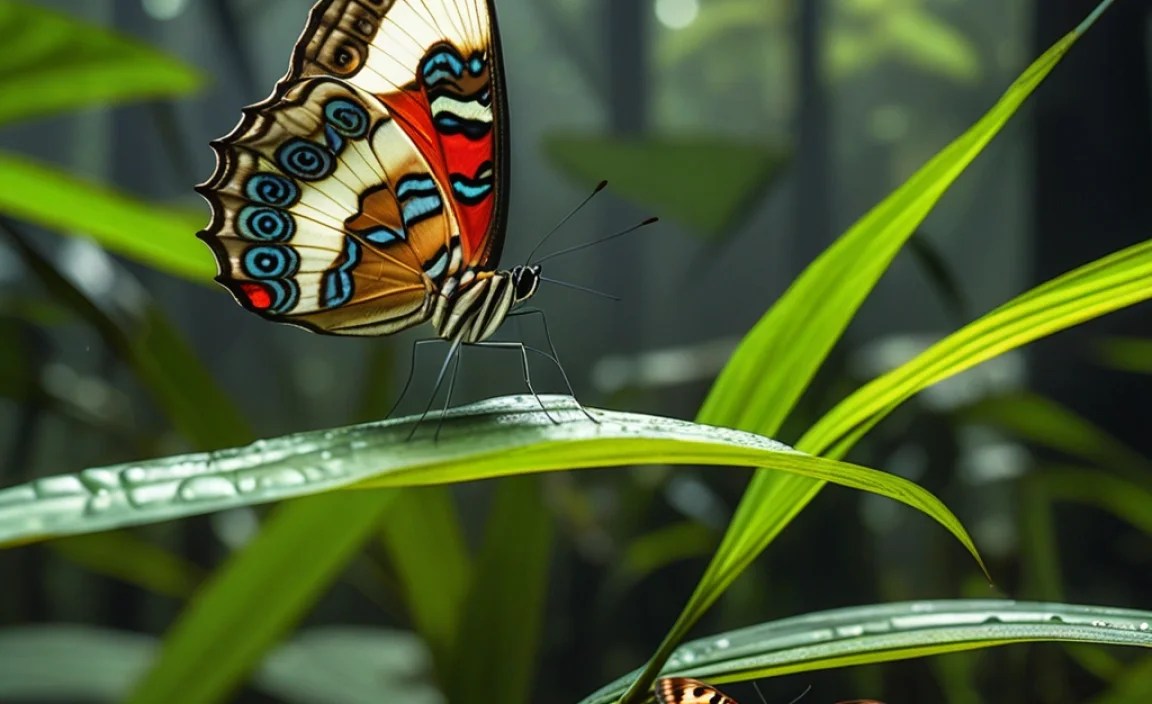
Identifying butterflies can be a fun and rewarding hobby. Here’s how to get started:
Step 1: Observe the Butterfly
Take a close look at the butterfly. Note its size, shape, and colors. Pay attention to any patterns on its wings.
- Size: Is it small, medium, or large?
- Shape: Are the wings rounded or angular?
- Colors: What colors are on the wings? Are they bright or dull?
- Patterns: Are there spots, stripes, or other markings?
Step 2: Note the Habitat
Where did you see the butterfly? Was it in a forest, near a river, or in a swamp? Different butterfly species prefer different habitats.
- Forest: Look for species that prefer shade and dense vegetation.
- Riverbank: Many butterflies gather near water sources.
- Swamp: Wetland species are often adapted to moist environments.
Step 3: Use a Field Guide
A field guide is a book that helps you identify butterflies. Look for a guide that covers the butterflies of Central Africa. Here are some things to consider when choosing a field guide:
- Illustrations: Clear pictures or drawings are essential for identification.
- Descriptions: Look for detailed descriptions of each species.
- Range Maps: These maps show where each species is found.
Step 4: Compare Your Observations
Compare your observations with the pictures and descriptions in your field guide. Pay close attention to the details that match.
- Wing Patterns: Match the patterns on the butterfly’s wings to the pictures in the guide.
- Size and Shape: Compare the size and shape of the butterfly to the descriptions.
- Habitat: Make sure the habitat matches the species’ preferred environment.
Step 5: Use Online Resources
There are many websites and apps that can help you identify butterflies. These resources often have pictures, descriptions, and range maps.
- Butterfly Identification Websites: Websites like iNaturalist and BugGuide can help you identify butterflies based on photos.
- Butterfly Apps: Apps like Picture Insect can identify butterflies using your smartphone’s camera.
Step 6: Consult Experts
If you’re still not sure what kind of butterfly you’ve seen, ask an expert. Local butterfly clubs or university entomology departments can help.
- Butterfly Clubs: These clubs often have members who are experts in butterfly identification.
- University Entomology Departments: These departments have scientists who study insects, including butterflies.
Butterfly Behavior and Ecology
Butterflies are not just beautiful; they also play important roles in the ecosystem. They are pollinators, which means they help plants reproduce. As they fly from flower to flower, they carry pollen on their bodies. This pollen fertilizes the plants, allowing them to produce seeds and fruits.
Butterfly Life Cycle
Butterflies go through a process called metamorphosis. This means they change their form completely during their life cycle. The life cycle has four stages:
- Egg: The butterfly starts as an egg, usually laid on a plant.
- Larva (Caterpillar): The egg hatches into a caterpillar, which eats and grows.
- Pupa (Chrysalis): The caterpillar turns into a pupa, also known as a chrysalis. Inside the chrysalis, the butterfly develops.
- Adult Butterfly: The chrysalis opens, and the adult butterfly emerges.
Feeding Habits
Adult butterflies feed mainly on nectar from flowers. They use a long, straw-like tongue called a proboscis to suck up the nectar. Caterpillars, on the other hand, eat leaves. Different butterfly species have different host plants, meaning they only eat certain types of leaves.
Table: Examples of Butterfly Host Plants in Congo Basin
| Butterfly Species | Host Plant |
|---|---|
| Giant Swallowtail (Papilio antimachus) | Citrus trees |
| African Mocker Swallowtail (Papilio dardanus) | Various plants, including citrus and legumes |
| Forest Glade Nymph (Alesa amesis) | Specific forest trees |
Threats to Butterflies in the Congo Basin
Unfortunately, butterflies in the Congo Basin face several threats. These threats include habitat loss, climate change, and pesticide use.
Habitat Loss
Deforestation is a major problem in the Congo Basin. As forests are cleared for agriculture, logging, and mining, butterflies lose their homes and food sources. Wetlands are also being drained and developed, further reducing butterfly habitats.
Climate Change
Climate change is affecting butterfly populations in several ways. Changes in temperature and rainfall patterns can disrupt butterfly life cycles and alter the distribution of their host plants. Extreme weather events, such as droughts and floods, can also harm butterfly populations.
Pesticide Use
Pesticides used in agriculture can harm butterflies directly or indirectly. Pesticides can kill butterflies and caterpillars, and they can also contaminate their food sources. This is a particular problem in areas where pesticides are used heavily.
Conservation Efforts
There are many efforts underway to protect butterflies and their habitats in the Congo Basin. These efforts include:
- Protected Areas: Establishing national parks and reserves to protect butterfly habitats.
- Sustainable Agriculture: Promoting farming practices that reduce pesticide use and protect butterfly habitats.
- Community Involvement: Engaging local communities in conservation efforts.
- Research and Monitoring: Studying butterfly populations and their habitats to better understand their needs.
How You Can Help
Even if you don’t live in the Congo Basin, there are things you can do to help protect butterflies:
- Support Conservation Organizations: Donate to organizations that are working to protect butterflies and their habitats.
- Reduce Your Carbon Footprint: Take steps to reduce your impact on the environment, such as using less energy and water.
- Educate Others: Spread the word about the importance of butterflies and the threats they face.
FAQ: Butterflies in the Congo Basin
What is the Congo Basin?
The Congo Basin is a large area in Central Africa. It’s the second-largest tropical rainforest in the world. It has forests, rivers, and wetlands.
Why are butterflies important?
Butterflies are important pollinators. They help plants make seeds and fruits. They are also food for birds and other animals.
What do butterflies eat?
Adult butterflies eat nectar from flowers. Caterpillars eat leaves from plants.
What are some threats to butterflies?
Threats include habitat loss, climate change, and pesticides. These can harm butterflies and their homes.
How can I help butterflies?
You can help by supporting conservation groups. You can also reduce your carbon footprint and teach others about butterflies.
Where can I see butterflies in the Congo Basin?
You can see them in national parks, reserves, and other protected areas. These places help keep butterflies safe.
Are there new butterfly species being found?
Yes, scientists are still finding new butterfly species in the Congo Basin. This shows how much there is to learn.
Conclusion
The butterflies of the Congo Basin wetlands are a treasure worth protecting. These beautiful creatures play a vital role in the ecosystem, and they face many threats. By learning about these butterflies and supporting conservation efforts, we can help ensure that they thrive for generations to come. Whether you’re an avid naturalist, a budding conservationist, or simply someone who appreciates the beauty of nature, you can contribute to the preservation of these incredible insects. Every action, no matter how small, makes a difference. Let’s work together to safeguard the future of butterflies in the Congo Basin and beyond.


