
Butterflies of California: Spotting Guide + FREE Tips!

California boasts a breathtaking diversity of butterflies! This guide helps you identify common species, understand their habitats, and learn how to attract these beautiful insects to your garden. Discover the joy of butterfly watching and contribute to their conservation.
Have you ever been mesmerized by a butterfly flitting through your garden? California is home to a stunning array of these winged wonders, but identifying them can feel overwhelming. Don’t worry, you’re not alone! Many people struggle to tell a Monarch from a Mournful Duskywing. This guide will simplify butterfly identification and teach you how to create a butterfly-friendly haven. Get ready to unlock the secrets of California’s butterflies and transform your backyard into a fluttering paradise!
Understanding California’s Butterflies

California’s diverse landscape, from coastal regions to mountains and deserts, supports a rich variety of butterflies. Understanding their habitat preferences and life cycles is key to identifying and appreciating these fascinating creatures.
Butterfly Habitats in California
Butterflies are very dependent on their environment. Different regions in California provide a wide variety of habitats, each hosting unique butterfly species:
- Coastal Areas: Characterized by mild temperatures and diverse plant life, these areas support butterflies like the Anise Swallowtail and West Coast Lady.
- Mountains: Higher elevations offer cooler temperatures and specific host plants, attracting species such as the California Sister and various Blues.
- Deserts: Arid conditions favor butterflies adapted to drought, including the Desert Swallowtail and various Sulphurs.
- Grasslands and Meadows: Open areas with wildflowers provide essential nectar sources for butterflies like the Monarch and Common Buckeye.
- Forests: Shaded areas with trees and shrubs host butterflies such as the Lorquin’s Admiral and California Tortoiseshell.
The Butterfly Life Cycle
Butterflies undergo complete metamorphosis, transforming through four distinct stages:
- Egg: Butterflies lay their eggs on specific host plants, which will serve as food for the emerging caterpillar.
- Larva (Caterpillar): The caterpillar hatches from the egg and spends its time eating and growing, molting its skin several times.
- Pupa (Chrysalis): The caterpillar forms a chrysalis, a protective shell where it undergoes a complete transformation.
- Adult: The adult butterfly emerges from the chrysalis, ready to reproduce and continue the cycle.
Identifying Common Butterflies of California

Let’s explore some of the most frequently seen butterfly species in California. Learning to recognize these beauties will enhance your butterfly-watching adventures.
Swallowtail Butterflies
Swallowtails are among the largest and most striking butterflies. They are named for the elongated extensions on their hindwings, resembling a swallow’s tail.
- Anise Swallowtail (Papilio zelicaon): This butterfly has black and yellow markings and is commonly found in open areas and gardens. Its caterpillars feed on anise, fennel, and other plants in the parsley family.
- Western Tiger Swallowtail (Papilio rutulus): Known for its bold black stripes on a yellow background, the Western Tiger Swallowtail is a common sight in forests and woodlands. Its caterpillars feed on willow, ash, and cottonwood trees.
- Pipevine Swallowtail (Battus philenor): This dark butterfly with iridescent blue markings is found near pipevine plants, which its caterpillars feed on. The Pipevine Swallowtail is toxic to predators, providing protection for itself and other butterflies that mimic its appearance.
- Desert Swallowtail (Papilio polyxenes coloro): A subspecies of the Black Swallowtail, adapted to arid environments. It has similar black and yellow patterns but is found in desert regions.
Brush-footed Butterflies
Brush-footed butterflies are a large and diverse group, characterized by their reduced front legs, which they use for tasting rather than walking.
- Monarch (Danaus plexippus): Famous for its long-distance migration, the Monarch is easily recognized by its orange wings with black veins and white spots. Monarch caterpillars feed exclusively on milkweed.
- California Tortoiseshell (Nymphalis californica): This vibrant butterfly has orange and black patterned wings. Outbreaks can occur periodically, with large numbers seen migrating.
- West Coast Lady (Vanessa annabella): Similar to the Painted Lady, the West Coast Lady has orange and brown wings with black spots. Its caterpillars feed on mallow plants.
- Painted Lady (Vanessa cardui): One of the most widespread butterflies in the world, the Painted Lady has orange and brown wings with black spots. Its caterpillars feed on a variety of plants, including thistles and mallows.
- Common Buckeye (Junonia coenia): This butterfly is known for its distinctive eyespots on its wings, which serve to startle predators. Its caterpillars feed on plants in the snapdragon family.
- Lorquin’s Admiral (Limenitis lorquini): A striking butterfly with black wings and orange-red tips.
Blue Butterflies
Blue butterflies are small and delicate, often with iridescent blue wings (especially in males). They are found in a variety of habitats, from grasslands to woodlands.
- Acmon Blue (Plebejus acmon): This small butterfly has bright blue wings (in males) and orange spots on the hindwings. Its caterpillars feed on various plants, including buckwheat and deerweed.
- Silvery Blue (Glaucopsyche lygdamus): The Silvery Blue has pale blue wings with a silvery sheen. Its caterpillars feed on plants in the pea family.
- Echo Blue (Celastrina echo): This delicate butterfly has pale blue wings with a subtle pattern.
Other Notable Butterflies
- Mournful Duskywing (Erynnis tristis): A small, brown butterfly often found in oak woodlands.
- California Sister (Adelpha californica): A striking butterfly with black and white markings, resembling a nun’s habit. Its caterpillars feed on oak trees.
- Sara Orangetip (Anthocharis sara): This delicate butterfly has white wings with orange tips (in males). It is often seen in early spring.
Butterfly Identification Table
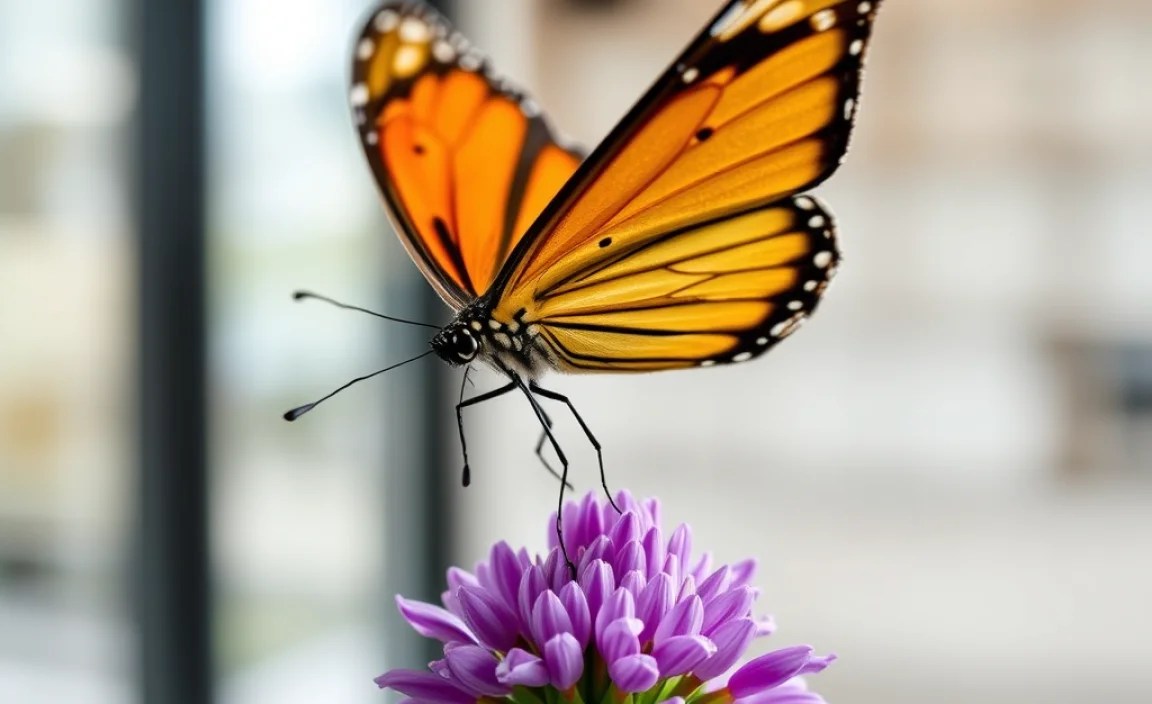
Here’s a quick reference table to help you identify common California butterflies:
| Butterfly Species | Description | Habitat | Host Plant |
|---|---|---|---|
| Anise Swallowtail | Black and yellow markings | Open areas, gardens | Anise, fennel |
| Western Tiger Swallowtail | Black stripes on yellow | Forests, woodlands | Willow, ash, cottonwood |
| Monarch | Orange wings with black veins | Grasslands, meadows | Milkweed |
| California Tortoiseshell | Orange and black patterned wings | Forests, woodlands | Various shrubs and trees |
| West Coast Lady | Orange and brown wings with black spots | Gardens, fields | Mallow plants |
| Acmon Blue | Bright blue wings (males), orange spots | Grasslands, open areas | Buckwheat, deerweed |
| Pipevine Swallowtail | Dark with iridescent blue | Near pipevine plants | Pipevine |
Attracting Butterflies to Your Garden

Creating a butterfly-friendly garden is a rewarding experience. By providing the right plants and conditions, you can attract a variety of butterflies to your yard.
Planting Host Plants
Host plants are essential for butterfly reproduction. These are the plants on which butterflies lay their eggs and that caterpillars feed on. Some popular host plants for California butterflies include:
- Milkweed (Asclepias spp.): The only food source for Monarch caterpillars.
- Pipevine (Aristolochia californica): The host plant for Pipevine Swallowtail caterpillars.
- Willow (Salix spp.): A host plant for Western Tiger Swallowtail caterpillars.
- Anise/Fennel (Foeniculum vulgare): A host plant for Anise Swallowtail caterpillars.
- Buckwheat (Eriogonum spp.): A host plant for Acmon Blue caterpillars.
Providing Nectar Sources
Nectar-rich flowers provide essential energy for adult butterflies. Choose a variety of flowering plants that bloom at different times of the year to provide a continuous source of nectar.
- California Poppy (Eschscholzia californica): A vibrant orange flower that attracts many butterflies.
- Lantana (Lantana spp.): A colorful flowering shrub that blooms for a long period.
- Salvia (Salvia spp.): A fragrant herb with nectar-rich flowers.
- Butterfly Bush (Buddleja davidii): A popular shrub that attracts butterflies with its long, cone-shaped flowers. Be aware that in some regions this plant can be invasive.
- Zinnia (Zinnia spp.): A colorful annual flower that is easy to grow.
Creating a Butterfly-Friendly Habitat
In addition to host plants and nectar sources, butterflies need other elements to thrive in your garden.
- Sunlight: Butterflies need sunlight to warm their bodies and fly. Choose a sunny location for your butterfly garden.
- Shelter: Provide shrubs and trees for butterflies to take shelter from wind and rain.
- Water: Butterflies need water to stay hydrated. Provide a shallow dish of water with pebbles or sand for them to land on.
- Avoid Pesticides: Pesticides can harm or kill butterflies and other beneficial insects. Use organic gardening practices to protect your butterfly garden.
The Importance of Butterfly Conservation

Butterflies play a crucial role in our ecosystem as pollinators and indicators of environmental health. Unfortunately, many butterfly populations are declining due to habitat loss, pesticide use, and climate change.
Threats to Butterfly Populations
- Habitat Loss: The destruction of natural habitats due to urbanization, agriculture, and logging is a major threat to butterfly populations.
- Pesticide Use: Pesticides can directly kill butterflies and other beneficial insects, as well as contaminate their host plants.
- Climate Change: Changes in temperature and rainfall patterns can disrupt butterfly life cycles and alter their habitat ranges.
- Invasive Species: Invasive plants can outcompete native host plants, reducing food sources for caterpillars.
How to Help Butterfly Conservation
There are many things you can do to help protect butterflies and their habitats:
- Plant a Butterfly Garden: Provide host plants and nectar sources in your garden to support butterfly populations.
- Avoid Pesticides: Use organic gardening practices to protect butterflies and other beneficial insects.
- Support Conservation Organizations: Donate to or volunteer with organizations that work to protect butterfly habitats. The Xerces Society is a great resource to learn more.
- Educate Others: Share your knowledge about butterflies with friends, family, and neighbors.
- Advocate for Conservation Policies: Support policies that protect butterfly habitats and reduce pesticide use.
Butterfly Symbolism and Cultural Significance
Butterflies have captivated humans for centuries, appearing in art, literature, and mythology. They often symbolize transformation, hope, and new beginnings.
- Transformation: The butterfly’s metamorphosis from caterpillar to chrysalis to winged adult represents personal growth and transformation.
- Hope: The butterfly’s delicate beauty and ability to fly symbolize hope and resilience.
- New Beginnings: The butterfly’s emergence from its chrysalis represents new beginnings and fresh starts.
- Soul and Spirit: In some cultures, butterflies are believed to represent the human soul or spirit.
Frequently Asked Questions (FAQs)
What is the best time of year to see butterflies in California?
Spring and summer are generally the best times to see butterflies in California, as this is when most species are active and breeding. However, some species can be seen year-round, depending on the region and weather conditions.
How can I tell the difference between a butterfly and a moth?
Butterflies typically have slender bodies, clubbed antennae, and hold their wings upright when at rest. Moths, on the other hand, have thicker bodies, feathery antennae, and often hold their wings flat when at rest.
What is a butterfly host plant?
A butterfly host plant is a specific plant species that a female butterfly lays her eggs on, and that the resulting caterpillar feeds on. Without the correct host plant, the caterpillar cannot survive.
Are butterflies important for the environment?
Yes, butterflies are important pollinators, helping to transfer pollen between flowers and enabling plants to reproduce. They also serve as a food source for birds and other animals.
How can I attract Monarch butterflies to my garden?
To attract Monarch butterflies, plant milkweed, which is the only food source for Monarch caterpillars. Also, provide nectar-rich flowers for adult butterflies to feed on.
What should I do if I find a caterpillar in my garden?
If you find a caterpillar in your garden, try to identify it and determine its host plant. If it is feeding on a plant you don’t want it to eat, you can gently move it to a more suitable plant. Avoid using pesticides, as they can harm or kill caterpillars.
Where can I learn more about California butterflies?
There are many resources available to learn more about California butterflies, including books, websites, and local nature centers. The Xerces Society is an excellent resource for information on butterfly conservation and identification.
Conclusion
California’s butterflies are a treasure trove of natural beauty and ecological importance. By learning to identify these fascinating creatures and creating butterfly-friendly habitats, you can contribute to their conservation and enjoy their enchanting presence in your garden. So, grab your binoculars, plant some milkweed, and get ready to be amazed by the butterflies of California!


