
Butterflies in Borneo Lowland Forest: A Powerful Guide

The lowland forests of Borneo are home to a dazzling array of butterflies! To spot these beauties, visit during the dry season, look for flowering plants, and move slowly and quietly. Bring binoculars and a good field guide, and you’ll be amazed by the diversity you find!
Have you ever dreamed of being surrounded by hundreds of butterflies, each one a tiny jewel fluttering in the sunlight? Borneo’s lowland forests offer just that! But figuring out where to start can be tricky. Don’t worry, it’s easier than you think.
In this guide, I’ll share my secrets for spotting and identifying these incredible insects. We’ll explore the best times and places to visit, the essential gear to bring, and some of the most spectacular species you might encounter. Get ready for an adventure into the vibrant world of Borneo’s butterflies!
Exploring the World of Butterflies in Borneo Lowland Forest

Borneo, the third-largest island in the world, is a biodiversity hotspot. Its lowland forests, in particular, are teeming with life, and butterflies are among the most visible and beautiful inhabitants. These forests provide the perfect habitat for a wide variety of butterfly species, thanks to the abundance of flowering plants, diverse vegetation, and warm, humid climate.
Why Borneo’s Lowland Forests?
Lowland forests are easily accessible and rich in resources. They offer a variety of habitats, from open clearings to dense undergrowth, each supporting different butterfly species. The consistent warmth and humidity create an ideal environment for butterflies to thrive year-round.
The Importance of Butterflies
Butterflies are not just pretty faces. They play a crucial role in the ecosystem as pollinators, helping to maintain plant diversity. They are also an important food source for birds, reptiles, and other insects. Monitoring butterfly populations can provide valuable insights into the health of the environment.
When to Visit: Best Time for Butterfly Watching

Timing is everything when it comes to butterfly watching. The dry season in Borneo, which typically runs from March to September, is the best time to visit. During these months, there is less rainfall, more sunshine, and an abundance of flowering plants, all of which attract butterflies.
Seasonal Variations
- Dry Season (March to September): This is the peak season for butterfly activity. The weather is more predictable, and butterflies are more likely to be seen basking in the sun.
- Wet Season (October to February): While butterfly activity is reduced during the wet season, some species are still active. However, heavy rainfall can make it difficult to spot them.
Time of Day
Butterflies are most active during the warmest parts of the day, typically from 10:00 AM to 3:00 PM. This is when they are most likely to be seen feeding on nectar, basking in the sun, or flying around in search of mates.
Where to Go: Prime Butterfly Habitats

Borneo has many fantastic locations for butterfly watching. Here are a few of the best:
- Danum Valley Conservation Area: This protected area is known for its pristine rainforest and abundant wildlife, including a wide variety of butterfly species.
- Kinabalu National Park: While famous for Mount Kinabalu, the park also boasts diverse lowland forests with numerous butterfly species.
- Tabin Wildlife Reserve: Located in eastern Sabah, this reserve is home to a variety of wildlife, including many species of butterflies.
- Lambir Hills National Park: Known for its incredible biodiversity, this park offers excellent opportunities for butterfly watching.
Specific Spots to Look For
- Forest edges: These areas provide a mix of sunlight and shelter, making them ideal for butterflies.
- Flowering plants: Butterflies are attracted to nectar-rich flowers, so look for areas with abundant blooms.
- Water sources: Butterflies often gather near puddles or streams to drink water and absorb minerals.
Essential Gear for Butterfly Watching
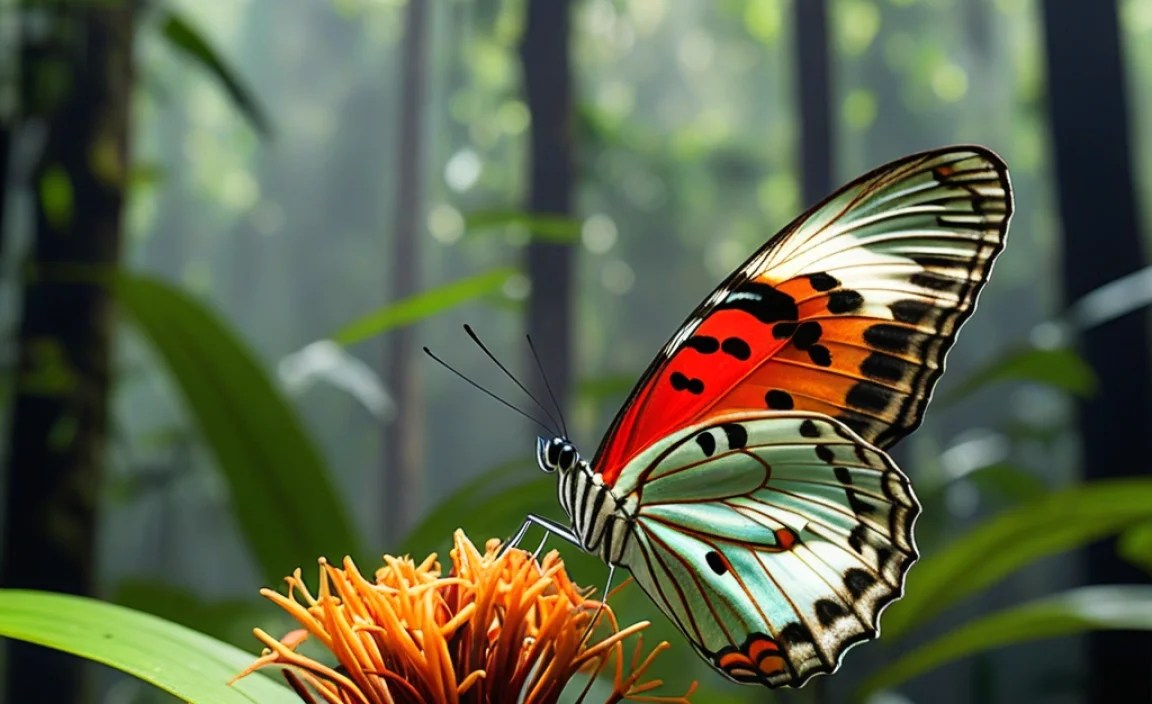
Having the right gear can make your butterfly watching experience much more enjoyable and productive. Here’s what I recommend:
- Binoculars: A good pair of binoculars will allow you to get a closer look at butterflies without disturbing them. Look for binoculars with a magnification of 8x or 10x.
- Field Guide: A field guide is essential for identifying the butterflies you see. Choose a guide that covers the butterflies of Borneo and includes detailed descriptions and illustrations.
- Camera: If you want to capture your butterfly sightings, bring a camera with a macro lens. This will allow you to take close-up photos of butterflies in their natural habitat.
- Notebook and Pen: Keep a notebook and pen handy to record your observations. Note the date, time, location, and any interesting behavior you observe.
- Comfortable Clothing: Wear lightweight, breathable clothing that will protect you from the sun and insects. Long sleeves and pants are recommended.
- Insect Repellent: Mosquitoes and other biting insects can be a nuisance in the rainforest. Apply insect repellent to your skin and clothing to protect yourself.
- Water and Snacks: Bring plenty of water and snacks to stay hydrated and energized during your butterfly watching excursion.
Identifying Butterflies: A Beginner’s Guide
Identifying butterflies can seem daunting at first, but with a little practice, you’ll be able to recognize many common species. Here are some tips to get you started:
Key Characteristics to Observe
- Size: Note the overall size of the butterfly, from the tip of one wing to the tip of the other.
- Color: Pay attention to the colors and patterns on the wings. Are they bright and bold, or muted and subtle?
- Shape: Observe the shape of the wings. Are they rounded, pointed, or elongated?
- Markings: Look for distinctive markings, such as spots, stripes, or bands.
- Behavior: Note how the butterfly is behaving. Is it feeding on nectar, basking in the sun, or flying around?
Common Butterfly Families in Borneo
Understanding the different butterfly families can help you narrow down your identification. Here are some of the most common families found in Borneo:
| Family | Characteristics | Examples |
|---|---|---|
| Papilionidae (Swallowtails) | Large, often with tails on their hindwings. Brightly colored. | Ornithoptera brookiana (Rajah Brooke’s Birdwing), Graphium spp. |
| Pieridae (Whites and Yellows) | Typically white or yellow, often with black markings. | Eurema spp., Catopsilia spp. |
| Nymphalidae (Brush-footed Butterflies) | Diverse family with a wide range of sizes and colors. Often have reduced forelegs. | Danaus chrysippus (Plain Tiger), Junonia spp. |
| Lycaenidae (Blues, Coppers, and Hairstreaks) | Small, often with metallic colors. Many have tails and false eye spots. | Jamides spp., Arhopala spp. |
| Hesperiidae (Skippers) | Small, stout-bodied butterflies with hooked antennae. Fly rapidly and erratically. | Telicota spp., Potanthus spp. |
Using a Field Guide
A field guide is your best friend when it comes to identifying butterflies. Here’s how to use it effectively:
- Start with the family: Use the key characteristics to determine which family the butterfly belongs to.
- Browse the illustrations: Look through the illustrations in the field guide to find a butterfly that matches the one you observed.
- Read the description: Once you find a potential match, read the description carefully to confirm the identification. Pay attention to details such as size, color, markings, and behavior.
- Compare with similar species: Many butterflies look similar, so be sure to compare your potential identification with other species that are found in the same area.
Spectacular Species to Look Out For
Borneo is home to many stunning butterfly species. Here are a few that you should keep an eye out for:
- Rajah Brooke’s Birdwing (Ornithoptera brookiana): This large, striking butterfly is named after Sir James Brooke, the first White Rajah of Sarawak. It is known for its iridescent green and black wings.
- Bornean Tree Nymph (Idea hypermnestra): A large, delicate butterfly with translucent wings marked with black spots. It glides gracefully through the forest.
- Malay Lacewing (Cethosia hypsea): A beautiful butterfly with intricate orange, black, and white patterns on its wings.
- Common Birdwing (Troides helena): Another large and impressive butterfly with vibrant yellow and black wings.
- Fivebar Swordtail (Graphium antiphates): A fast-flying butterfly with long, sword-like tails on its hindwings. It is black with greenish-white stripes.
Where to Find Them
Knowing the preferred habitats of these species can increase your chances of spotting them:
| Species | Preferred Habitat |
|---|---|
| Rajah Brooke’s Birdwing | Primary rainforest, forest edges |
| Bornean Tree Nymph | Dense rainforest, shaded areas |
| Malay Lacewing | Forest edges, open areas with flowering plants |
| Common Birdwing | Lowland forests, gardens |
| Fivebar Swordtail | Forest edges, streamsides |
Butterfly Photography Tips
Capturing beautiful photos of butterflies can be challenging, but with a few tips, you can improve your chances of getting great shots:
- Use a macro lens: A macro lens will allow you to get close-up shots of butterflies with incredible detail.
- Shoot in natural light: Avoid using flash, as it can scare butterflies and create harsh shadows. Instead, shoot in natural light, preferably during the golden hours of morning and evening.
- Focus carefully: Use autofocus or manual focus to ensure that your subject is sharp. Pay attention to the eyes and antennae.
- Use a fast shutter speed: Butterflies are constantly moving, so use a fast shutter speed to avoid motion blur. A shutter speed of 1/250th of a second or faster is recommended.
- Be patient: Butterflies can be skittish, so be patient and wait for the right moment to take your shot.
Butterfly Conservation in Borneo
Borneo’s lowland forests are under threat from deforestation, habitat loss, and climate change. These threats also impact butterfly populations. Here are some ways you can help protect these beautiful creatures:
- Support sustainable tourism: Choose eco-friendly tour operators that prioritize conservation.
- Reduce your carbon footprint: Take steps to reduce your impact on the environment, such as using public transportation, conserving energy, and reducing waste.
- Support conservation organizations: Donate to organizations that are working to protect Borneo’s forests and wildlife.
- Educate others: Share your passion for butterflies and conservation with your friends and family.
- Plant butterfly-friendly plants: If you have a garden, plant nectar-rich flowers and host plants for butterfly larvae.
Organizations Working to Protect Borneo’s Butterflies
Several organizations are dedicated to conserving Borneo’s biodiversity, including its butterflies. Here are a few:
- Borneo Conservation Trust: This organization works to protect forests and wildlife in Borneo through research, education, and community engagement.
- WWF-Malaysia: WWF-Malaysia is part of the global WWF network and works to conserve Borneo’s natural resources and biodiversity.
- Danum Valley Management Committee: This committee manages the Danum Valley Conservation Area and works to protect its unique ecosystem.
Frequently Asked Questions (FAQ)
What makes Borneo’s lowland forests so special for butterflies?
Borneo’s lowland forests offer a perfect mix of warmth, humidity, and diverse plants that butterflies need to thrive. The variety of habitats, from sunny clearings to shady undergrowth, supports many different butterfly species.
When is the best time to go butterfly watching in Borneo?
The dry season, from March to September, is the best time. You’ll find less rain, more sunshine, and plenty of flowers, which attract lots of butterflies.
What gear do I need for butterfly watching?
Binoculars, a field guide, a camera (with a macro lens if possible), a notebook, comfortable clothing, and insect repellent are essential. Don’t forget water and snacks!
How can I identify butterflies I see in Borneo?
Start by noting the butterfly’s size, color, shape, and any distinctive markings. Use a field guide to compare your observations with different species and families.
What are some of the most spectacular butterflies to look for?
Keep an eye out for the Rajah Brooke’s Birdwing, Bornean Tree Nymph, Malay Lacewing, Common Birdwing, and Fivebar Swordtail. They’re all stunning!
How can I help protect butterflies in Borneo?
Support sustainable tourism, reduce your carbon footprint, donate to conservation organizations, educate others, and plant butterfly-friendly plants in your garden.
Are there specific places in Borneo known for butterfly watching?
Yes! Danum Valley Conservation Area, Kinabalu National Park, Tabin Wildlife Reserve, and Lambir Hills National Park are all excellent spots.
Conclusion
Exploring the world of butterflies in Borneo’s lowland forests is an unforgettable experience. By understanding the best times and places to visit, equipping yourself with the right gear, and learning how to identify different species, you can unlock the secrets of this vibrant ecosystem. Remember, these beautiful creatures are also indicators of environmental health, and by supporting conservation efforts, we can help ensure that future generations can enjoy the magic of Borneo’s butterflies.


