
Swallowtail Butterfly in Captivity: An Easy Guide

Quick Summary: Raising swallowtail butterflies in captivity can be a rewarding experience! You’ll need a mesh enclosure, host plants like parsley or dill for caterpillars, and nectar sources for adults. Regularly clean the enclosure, provide fresh food and water, and protect them from extreme temperatures. With a little care, you can successfully observe these beautiful creatures up close!
Have you ever dreamed of witnessing the complete life cycle of a butterfly, right in your own home? Many nature enthusiasts are fascinated by the idea of raising swallowtail butterflies, but aren’t sure where to start. It can seem daunting, but with the right knowledge, it’s a truly amazing experience! You’ll get to see tiny eggs transform into hungry caterpillars, then into shimmering chrysalises, and finally, into magnificent butterflies.
This guide will walk you through each step, from setting up their habitat to releasing the adults back into nature. Get ready to embark on a fascinating journey into the world of swallowtail butterflies!
Understanding Swallowtail Butterflies
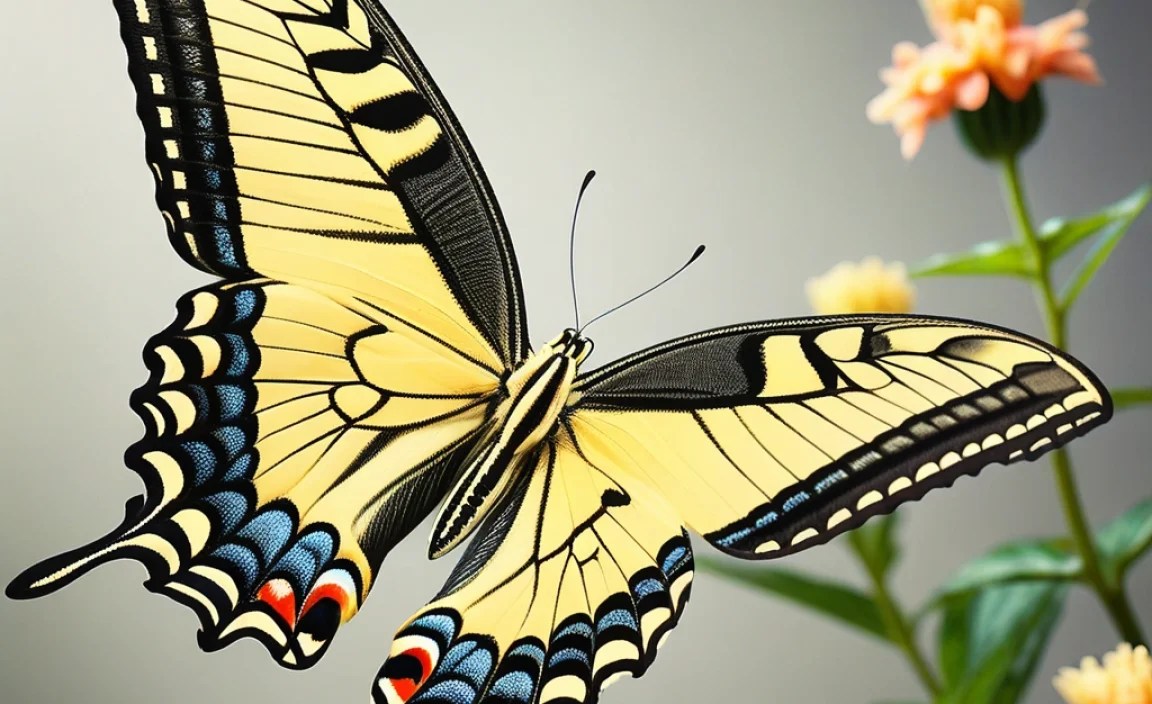
Before you begin, it’s helpful to understand a bit about swallowtail butterflies. These beauties are known for the distinctive “tails” on their hindwings. They are found all over the world, and many species are common in gardens and fields.
Common Swallowtail Species
Here are a few swallowtail species you might encounter:
- Eastern Black Swallowtail (Papilio polyxenes): Females have prominent blue markings; males have yellow.
- Giant Swallowtail (Papilio cresphontes): The largest butterfly in North America, known for its citrus-eating caterpillars.
- Tiger Swallowtail (Papilio glaucus): Yellow with black stripes, resembling a tiger.
- Spicebush Swallowtail (Papilio troilus): Dark blue-green with pale green spots.
- Anise Swallowtail (Papilio zelicaon): Native to western North America, feeds on anise and fennel.
The Swallowtail Life Cycle
Swallowtails go through complete metamorphosis, which includes four stages:
- Egg: Laid on host plants.
- Larva (Caterpillar): Eats and grows, molting several times.
- Pupa (Chrysalis): Transforms inside a protective shell.
- Adult: Emerges to reproduce, feeding on nectar.
Setting Up a Swallowtail Habitat
Creating the right environment is crucial for raising swallowtails successfully. Here’s what you’ll need:
Choosing an Enclosure
A mesh enclosure is ideal. It allows for good airflow and prevents escapes. Options include:
- Pop-up butterfly cages: Convenient and portable.
- Mesh laundry hampers: A budget-friendly option.
- DIY cages: Use wire mesh and a frame to build a custom enclosure.
Make sure the enclosure is large enough to accommodate host plants and allow the butterflies to fly a bit. A good size is about 2 feet wide, 2 feet deep, and 3 feet tall.
Essential Supplies
Gather these supplies before you start:
- Mesh enclosure
- Host plants (e.g., parsley, dill, fennel, rue, citrus)
- Small potted plants or cuttings
- Water source (e.g., shallow dish with pebbles)
- Spray bottle for misting
- Paper towels for cleaning
- Small paintbrush for moving caterpillars (optional)
Preparing the Enclosure
- Clean the enclosure: Wash with mild soap and water, then rinse thoroughly.
- Add host plants: Place potted host plants inside, or put cuttings in water-filled containers.
- Provide water: Place a shallow dish with pebbles inside. The pebbles prevent butterflies from drowning while drinking.
- Maintain humidity: Mist the enclosure lightly with water once or twice a day.
Finding Swallowtail Eggs and Caterpillars
You can find swallowtail eggs and caterpillars in your garden or local parks. Look for them on host plants like parsley, dill, fennel, and rue.
Identifying Eggs
Swallowtail eggs are usually small and round, and they can be cream-colored or pale green. They are often laid singly on the underside of leaves.
Identifying Caterpillars
Swallowtail caterpillars come in various colors and patterns, depending on the species and their stage of development (instar). Here are some common characteristics:
- Eastern Black Swallowtail: Young caterpillars resemble bird droppings. Older ones are green with black bands and yellow spots.
- Giant Swallowtail: Resemble bird droppings when small, then become mottled brown and white.
- Tiger Swallowtail: Green with a swollen thorax and false eyespots.
- Spicebush Swallowtail: Green with yellow eyespots and a swollen thorax.
Collecting Eggs and Caterpillars
If you find eggs or caterpillars, gently transfer them to your enclosure. Here’s how:
- Eggs: Carefully cut the leaf with the egg and place it in the enclosure.
- Small Caterpillars: Transfer the entire plant (if possible) or gently move the caterpillar with a soft brush.
- Large Caterpillars: Gently pick them up and place them on fresh host plants in the enclosure.
Caring for Swallowtail Caterpillars
Caring for swallowtail caterpillars involves providing fresh food, maintaining a clean environment, and protecting them from predators.
Providing Food
Caterpillars eat a lot! Make sure they always have access to fresh host plants. Here’s how to keep them well-fed:
- Replace host plants regularly: Provide fresh cuttings or potted plants daily.
- Keep cuttings fresh: Place cuttings in water-filled containers to keep them hydrated.
- Monitor food consumption: Check the plants regularly and replenish as needed.
Maintaining a Clean Environment
A clean environment is essential for preventing disease and keeping your caterpillars healthy.
- Remove frass (caterpillar poop) daily: Use a paper towel to clean the bottom of the enclosure.
- Change paper towels regularly: This helps prevent mold and bacteria growth.
- Clean the enclosure weekly: Wash with mild soap and water, then rinse thoroughly.
Protecting from Predators and Parasites
In captivity, you need to protect your caterpillars from threats they would face in the wild.
- Monitor for parasites: Check for signs of parasitism, such as small white eggs on the caterpillar’s body.
- Remove infested caterpillars: If you find a parasitized caterpillar, remove it to prevent the spread of parasites.
- Prevent overcrowding: Overcrowding can stress caterpillars and make them more susceptible to disease.
The Chrysalis Stage
When a caterpillar is ready to pupate, it will find a suitable spot and form a chrysalis. This stage can last from a week to several months, depending on the species and the time of year.
Preparing for Pupation
Caterpillars usually stop eating and become restless before pupating. They may wander around the enclosure in search of a good spot. Once they find a spot, they will spin a silk pad and attach themselves to it.
Caring for the Chrysalis
The chrysalis is a delicate structure, so it’s important to handle it with care. Here are some tips:
- Maintain humidity: Mist the chrysalis lightly with water once or twice a day to prevent it from drying out.
- Avoid touching: Avoid touching the chrysalis unless necessary.
- Protect from direct sunlight: Keep the chrysalis out of direct sunlight to prevent overheating.
Signs of a Healthy Chrysalis
A healthy chrysalis should be firm and green or brown, depending on the species. If the chrysalis turns black or becomes soft, it may be dead or diseased.
The Butterfly Emergence
The emergence of a butterfly from its chrysalis is a magical moment. Be patient and watch closely, as it can happen quickly.
Recognizing Imminent Emergence
A few days before emergence, the chrysalis will become transparent, and you’ll be able to see the butterfly’s wings inside. This is a sign that emergence is imminent.
Providing Support
The newly emerged butterfly will need to hang upside down to expand and dry its wings. Make sure there is enough space for it to do so. If necessary, provide a stick or twig for it to climb on.
What to Do After Emergence
After emergence, the butterfly will release a reddish fluid called meconium. This is normal and nothing to worry about. The butterfly will then begin to pump hemolymph (insect blood) into its wings to expand them.
- Provide nectar: Offer a nectar source, such as a sugar-water solution (1 part sugar to 4 parts water) in a shallow dish with pebbles.
- Allow wings to dry: Give the butterfly several hours to dry and harden its wings before releasing it.
Feeding Adult Swallowtails
Adult swallowtails need nectar for energy. You can provide them with natural nectar sources or make your own.
Natural Nectar Sources
Planting nectar-rich flowers in your garden is a great way to attract and feed adult swallowtails. Some favorite nectar plants include:
- Butterfly bush (Buddleja davidii)
- Zinnia (Zinnia elegans)
- Lantana (Lantana camara)
- Salvia (Salvia spp.)
- Coneflower (Echinacea purpurea)
Homemade Nectar
You can also make your own nectar using sugar and water. Here’s how:
- Mix 1 part sugar with 4 parts water.
- Boil the solution to dissolve the sugar.
- Let it cool completely.
- Place the nectar in a shallow dish with pebbles or a sponge.
Replace the nectar solution every day or two to prevent bacterial growth.
Releasing Swallowtail Butterflies
Once your butterflies are ready, it’s time to release them into the wild. Choose a warm, sunny day with little wind.
When to Release
Release the butterflies in the morning or early afternoon, when they are most active. Avoid releasing them in the evening or on cold, rainy days.
Where to Release
Release the butterflies in an area with plenty of nectar sources and host plants. A garden, park, or field is a good choice.
How to Release
Gently take the butterfly outside in its enclosure. Open the enclosure and allow the butterfly to fly out on its own. If it doesn’t fly out immediately, gently encourage it by placing it on a flower.
Troubleshooting Common Issues
Even with the best care, you may encounter some challenges when raising swallowtail butterflies. Here are some common issues and how to address them:
| Issue | Possible Cause | Solution |
|---|---|---|
| Caterpillars not eating | Wrong host plant, plant is not fresh, caterpillar is sick | Ensure correct host plant, provide fresh plants daily, check for signs of disease |
| Caterpillars dying | Disease, parasites, overcrowding, poor hygiene | Maintain clean environment, monitor for parasites, avoid overcrowding |
| Chrysalis turning black | Disease, injury | Monitor chrysalis closely, avoid touching, maintain humidity |
| Butterfly not emerging | Low humidity, chrysalis is dead | Maintain humidity, check for signs of life, be patient |
| Butterfly unable to fly | Wings did not expand properly, injury | Provide support for drying wings, handle gently |
Ethical Considerations
Raising butterflies in captivity comes with ethical responsibilities. Here are some things to keep in mind:
- Avoid taking from the wild: Whenever possible, obtain eggs or caterpillars from captive-bred sources.
- Release responsibly: Release butterflies in their native range and habitat.
- Prevent disease spread: Do not release butterflies that show signs of disease or parasitism.
- Educate others: Share your knowledge and passion for butterflies with others to promote conservation.
FAQ About Raising Swallowtail Butterflies
1. What do swallowtail caterpillars eat?
Swallowtail caterpillars eat the leaves of specific host plants. Common host plants include parsley, dill, fennel, rue, and citrus.
2. How long does it take for a swallowtail egg to hatch?
It usually takes about 3 to 7 days for a swallowtail egg to hatch, depending on the temperature and humidity.
3. How often should I clean the butterfly enclosure?
You should remove frass (caterpillar poop) daily and clean the entire enclosure weekly with mild soap and water.
4. How can I tell if a chrysalis is still alive?
A healthy chrysalis should be firm and green or brown. If it turns black or becomes soft, it may be dead.
5. What do adult swallowtail butterflies eat?
Adult swallowtail butterflies feed on nectar from flowers. You can provide them with natural nectar sources or make your own sugar-water solution.
6. Is it safe to handle swallowtail caterpillars?
It is generally safe to handle swallowtail caterpillars, but it’s best to do so gently. Some caterpillars have defensive mechanisms, such as osmeteria (scent glands) that can emit a foul odor.
7. Can I raise swallowtail butterflies indoors?
Yes, you can raise swallowtail butterflies indoors, as long as you provide them with the right environment, including host plants, nectar sources, and adequate space.
Conclusion
Raising swallowtail butterflies in captivity is a fascinating and rewarding experience. It allows you to observe the complete life cycle of these beautiful creatures up close and contribute to their conservation. By providing the right environment, food, and care, you can successfully raise swallowtail butterflies and release them back into nature to continue their vital role in our ecosystem. So, gather your supplies, find some eggs or caterpillars, and get ready to witness the magic of metamorphosis!


