
Species Identification by Skull: The Ultimate Guide

Do you ever wonder what animals live around you? Sometimes, you can find clues. One cool way is by looking at skulls. Skulls can tell us a lot. We can use species identification by skull to learn about different animals. It is like being a detective.
Have you ever found a bone in the woods? Was it big or small? What animal did it belong to? Learning about skulls helps us answer these questions. Species identification by skull is a fun science. It helps us understand the natural world.
Key Takeaways
- Species identification by skull helps us understand animal diversity and evolution.
- Skull shapes and sizes differ greatly among species due to diet and habitat.
- Dental features, like the number and type of teeth, are key identifiers.
- Measuring skull dimensions offers precise data for accurate classification.
- Observing skull features can reveal an animal’s behavior and ecological role.
The Basics of Species Identification by Skull

Species identification by skull is a fascinating way to learn about animals. Skulls are like puzzle pieces. They hold clues about an animal’s life. By studying a skull, we can figure out what animal it was. We can learn about its diet and habitat. We can even learn about how it lived. The shape of the skull is very important. Different animals have different skull shapes. Think about a deer skull. It is long and slender. Now think about a bear skull. It is big and strong. The teeth are also very important. Some animals have sharp teeth for eating meat. Other animals have flat teeth for eating plants. Species identification by skull is like reading a story. The skull tells us the story of the animal’s life. This helps us understand the world around us better. Experts use special tools and knowledge to identify skulls. Now, you can learn some of their secrets.
- Skull shape varies among species.
- Teeth tell us about diet.
- Size matters in skull identification.
- Bone structure provides clues.
- Experts use tools for accuracy.
To identify a skull, start by looking at its overall shape and size. Is it long or short? Is it wide or narrow? Next, examine the teeth. Are they sharp and pointy, or flat and grinding? Count the number of teeth. Look at the eye sockets. Where are they located on the skull? Are they big or small? Feel the texture of the bone. Is it smooth or rough? All of these details can help you narrow down the possibilities. Remember, species identification by skull takes practice. The more skulls you see, the better you will become at identifying them. You can even compare your findings to pictures in books. There are many online resources to help you too. Soon, you’ll be a skull identification expert!
What is Skull Morphology?
Have you ever noticed how different animals look? A giraffe has a long neck. A squirrel has a bushy tail. These differences are called morphology. Skull morphology is the study of skull shapes. It helps us understand how animals are related. Did you know that humans and chimpanzees share a common ancestor? Skull morphology provides clues. By comparing their skulls, we see similarities. We also see differences. These differences show how we evolved over time. Skull morphology is not just about bones. It also involves studying the teeth. The teeth can tell us what an animal eats. A carnivore, like a lion, has sharp teeth. A herbivore, like a cow, has flat teeth. Skull morphology is a powerful tool. It helps us understand evolution and animal behavior.
Why is Skull Size Important?
Imagine you found two skulls. One is tiny and delicate. The other is large and heavy. What can this tell you? Skull size is very important. It can help us identify the animal. A small skull might belong to a mouse. A large skull might belong to a bear. Skull size also tells us about brain size. A bigger skull usually means a bigger brain. A bigger brain can mean higher intelligence. However, this is not always the case. Some animals with small brains are very smart. Think about birds. They have small brains. But they can do amazing things. They can build nests and migrate long distances. Skull size is just one piece of the puzzle. We need to look at other features too.
How do Teeth Help in Identification?
Teeth are like fingerprints. No two animals have the same teeth. Teeth tell us a lot about an animal’s diet. Sharp, pointy teeth are for tearing meat. Flat, grinding teeth are for chewing plants. Some animals have both types of teeth. These animals are called omnivores. Humans are omnivores. We eat both meat and plants. The number of teeth is also important. Some animals have many teeth. Others have very few. The arrangement of teeth is also unique. Some animals have teeth that are close together. Others have teeth that are spaced apart. By studying the teeth, we can learn a lot about an animal’s life. We can even tell if an animal was sick or injured. Teeth are a valuable source of information. They help us identify different species.
Fun Fact or Stat: Did you know that a beaver’s teeth never stop growing? They have to keep chewing on wood to wear them down!
Dental Features and Species Identification by Skull

Species identification by skull relies heavily on dental features. Teeth are durable and preserve well. They provide valuable clues about an animal’s diet. Carnivores have sharp canines for tearing meat. Herbivores have flat molars for grinding plants. Omnivores have a mix of both. The number of incisors, canines, premolars, and molars differs among species. This is called the dental formula. Scientists use the dental formula to identify animals. The shape and size of the teeth also matter. Some animals have specialized teeth. For example, rodents have large incisors for gnawing. Elephants have tusks which are modified incisors. Dental features are a key component in species identification by skull. By carefully examining the teeth, we can unlock secrets about an animal’s life.
- Carnivores have sharp canines.
- Herbivores have flat molars.
- Omnivores have both types.
- Dental formula aids identification.
- Tooth shape reveals diet.
- Specialized teeth have unique functions.
Let’s look at some examples. A wolf skull has large canines for killing prey. A deer skull has flat molars for grinding plants. A raccoon skull has both types of teeth, showing it eats a varied diet. The arrangement of teeth also provides clues. Some animals have a diastema, a gap between their incisors and molars. This gap is common in herbivores. It allows them to manipulate plants with their tongue. The study of dental features is called odontology. Odontology is used in forensic science to identify human remains. It is also used in paleontology to study ancient animals. Species identification by skull using dental features is a powerful tool for understanding the natural world. It is a blend of science and detective work, revealing the stories behind the bones.
How do Carnivore Teeth Differ?
Imagine a lion’s mouth. It is full of sharp, pointy teeth. These teeth are perfect for tearing meat. Carnivore teeth are designed for hunting. They have long canines for stabbing prey. They also have sharp premolars and molars for slicing meat. Some carnivores have special teeth called carnassials. These teeth act like scissors. They help the animal shear through tough meat and bone. Carnivore teeth are strong and durable. They need to withstand a lot of force. Think about a hyena. It can crush bones with its powerful jaws. Carnivore teeth reflect their lifestyle. They are built for killing and eating meat. These teeth are essential for survival. Without them, carnivores could not hunt.
What About Herbivore Teeth?
Now, picture a cow’s mouth. It looks very different from a lion’s mouth. A cow has flat, grinding teeth. These teeth are perfect for chewing plants. Herbivore teeth are designed for grinding. They have broad molars for breaking down tough plant fibers. Some herbivores have a diastema. This gap allows them to use their tongue to grab plants. Herbivore teeth are constantly being worn down. This is because plants are abrasive. Some herbivores have teeth that grow continuously. This helps them replace the worn-down enamel. Herbivore teeth reflect their diet. They are built for eating plants. These teeth are essential for survival. Without them, herbivores could not digest their food.
What do Omnivore Teeth Look Like?
Think about your own mouth. You have a mix of sharp and flat teeth. This is because humans are omnivores. Omnivore teeth are designed for eating both meat and plants. They have canines for tearing meat. They also have molars for grinding plants. Omnivore teeth are versatile. They allow animals to eat a wide variety of foods. This gives them an advantage in different environments. Raccoons are a good example of omnivores. They eat everything from berries to insects to small animals. Omnivore teeth reflect their flexible diet. They are built for adapting to different food sources. These teeth are essential for survival. They allow omnivores to thrive in many habitats.
Fun Fact or Stat: The dental formula for humans is 2.1.2.3. This means we have 2 incisors, 1 canine, 2 premolars, and 3 molars on one side of our mouth.
Skull Shape and the Environment in Species Identification
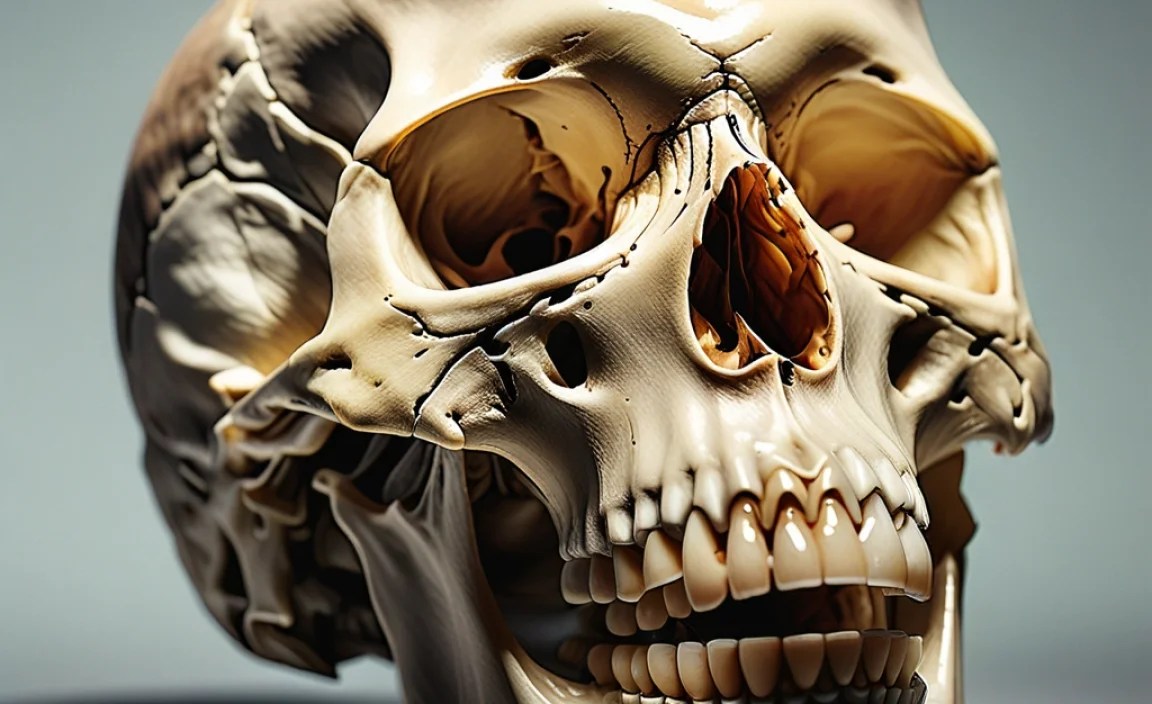
Species identification by skull also considers how skull shape relates to an animal’s environment. Animals adapt to their surroundings. Their skull shape reflects these adaptations. Aquatic animals, like dolphins, have streamlined skulls. This helps them move easily through the water. Burrowing animals, like moles, have strong, conical skulls. This helps them dig through the soil. Birds have lightweight skulls for flight. The shape of the skull can tell us a lot about an animal’s lifestyle. Species identification by skull uses this information to classify animals. By studying the skull, we can understand how an animal interacts with its environment. This provides valuable insights into its behavior and ecology. The environment shapes the skull, and the skull reveals the environment.
- Aquatic animals have streamlined skulls.
- Burrowing animals have strong skulls.
- Birds have lightweight skulls.
- Skull shape reflects environment.
- Adaptations aid survival.
Consider the skull of a woodpecker. It has a reinforced skull. This protects its brain when it pecks at trees. The skull also has special muscles that help absorb the shock. This adaptation allows woodpeckers to find food and build nests. Now think about the skull of a giraffe. It has a long neck to reach high into the trees. The skull is also adapted to support this long neck. These examples show how the environment shapes the skull. Species identification by skull uses these adaptations to understand animal evolution. By studying the skull, we can learn about the challenges an animal faces in its environment. We can also learn about how it has adapted to overcome these challenges. The skull is a window into an animal’s life and its relationship with its surroundings.
How do Aquatic Animals Adapt?
Imagine a dolphin swimming in the ocean. It moves effortlessly through the water. Its streamlined body helps it glide. Its skull is also adapted for aquatic life. The skull is smooth and lacks projections. This reduces drag in the water. The dolphin’s nostrils are located on top of its head. This allows it to breathe easily at the surface. Aquatic animals face unique challenges. They need to be able to swim, breathe, and find food in the water. Their skulls reflect these adaptations. Seals, whales, and other marine mammals have skulls that are specialized for their aquatic lifestyle. These adaptations help them thrive in the ocean. They allow them to hunt, navigate, and survive in their environment.
What About Burrowing Animals?
Picture a mole digging underground. It tunnels through the soil with ease. Its skull is strong and conical. This helps it push through the dirt. The mole’s eyes are small and often covered with fur. This protects them from debris. Burrowing animals need to be able to dig, navigate, and find food underground. Their skulls reflect these adaptations. Gophers, badgers, and other burrowing animals have skulls that are specialized for their underground lifestyle. These adaptations help them thrive in the soil. They allow them to create tunnels, find food, and avoid predators.
How do Birds Adapt for Flight?
Think about a bird soaring through the sky. It flies with grace and precision. Its skull is lightweight and strong. This helps it stay aloft. The bird’s bones are hollow. This reduces the overall weight of the skull. The skull is also fused together. This provides strength and stability during flight. Birds need to be able to fly, navigate, and find food in the air. Their skulls reflect these adaptations. Hawks, eagles, and other flying birds have skulls that are specialized for their aerial lifestyle. These adaptations help them thrive in the sky. They allow them to hunt, migrate, and survive in their environment.
Fun Fact or Stat: A bird’s skull is about 1% of its total body weight. This is much lighter than a mammal’s skull, which can be up to 10% of its body weight.
Measuring Skulls for Species Identification

For accurate species identification by skull, scientists use precise measurements. They use tools like calipers and rulers. These tools help them measure different parts of the skull. They measure the length, width, and height of the skull. They also measure the size of the eye sockets and the jaw. These measurements provide valuable data. Scientists compare these measurements to known standards. This helps them identify the species of the skull. Measuring skulls is a critical step in species identification by skull. It ensures that the identification is accurate and reliable. Without precise measurements, it would be difficult to distinguish between different species.
- Calipers measure skull dimensions.
- Rulers measure length and width.
- Measurements provide data.
- Data compared to standards.
- Accuracy is essential.
The process of measuring skulls involves several steps. First, the skull is carefully cleaned and prepared. Then, the scientist uses calipers to measure the length and width of the skull. They also measure the height of the skull at different points. Next, they measure the size and shape of the eye sockets. They also measure the length and width of the jaw. All of these measurements are recorded. The scientist then compares the measurements to known standards. These standards are based on measurements of skulls from known species. If the measurements match a particular species, the skull is identified. If the measurements do not match any known species, the skull may belong to a new species. In this case, further research is needed. Species identification by skull relies on accurate measurements and careful analysis.
What Tools Do Scientists Use?
Imagine a scientist working in a lab. They are surrounded by tools and equipment. Some of the most important tools for measuring skulls are calipers. Calipers are used to measure the distance between two points. They come in different sizes and shapes. Some calipers are digital. They provide very precise measurements. Other important tools include rulers and measuring tapes. These tools are used to measure the length and width of the skull. Scientists also use specialized software. This software helps them analyze the measurements. It can also create 3D models of the skull. These tools are essential for accurate species identification by skull. They allow scientists to gather and analyze data with precision.
How Are Measurements Recorded?
Think about a scientist taking notes in a field journal. They are carefully recording their observations. When measuring skulls, it is important to record the measurements accurately. Scientists use special forms to record the data. These forms include spaces for all of the important measurements. They also include spaces for notes and observations. The measurements are recorded in millimeters or centimeters. The scientist also records the date and location where the skull was found. All of this information is important for future research. Accurate and detailed records are essential for species identification by skull. They allow scientists to track their progress and share their findings with others.
What is the Importance of Accuracy?
Picture a detective solving a mystery. They need to gather all the facts and evidence. Accuracy is crucial for solving the case. The same is true for species identification by skull. Accurate measurements are essential for identifying the species of a skull. Even a small error can lead to a misidentification. This can have serious consequences. For example, it could lead to incorrect information about an animal’s diet or habitat. It could also affect conservation efforts. If we misidentify a species, we may not be able to protect it properly. Therefore, accuracy is paramount. Scientists must be careful and meticulous when measuring skulls. They must double-check their work and use the best tools available. Accuracy is the foundation of species identification by skull.
| Measurement | Description | Tool | Importance |
|---|---|---|---|
| Skull Length | Distance from front to back | Caliper/Ruler | Overall size comparison |
| Skull Width | Widest point of the skull | Caliper | Shape and proportions |
| Orbit Diameter | Size of the eye socket | Caliper | Predator/Prey distinction |
| Tooth Row Length | Length of the tooth row | Ruler | Dietary adaptations |
Fun Fact or Stat: Scientists can use 3D scanners to create digital models of skulls. This allows them to take measurements without handling the actual skull.
Skull Characteristics and Behavior in Species Identification
Species identification by skull can tell us about an animal’s behavior. The skull’s features are linked to how an animal lives. Strong jaw muscles mean a powerful bite. Large eye sockets suggest good eyesight. The position of the eyes indicates whether an animal is a predator or prey. Predators often have eyes facing forward. This gives them better depth perception. Prey animals often have eyes on the sides of their head. This gives them a wider field of vision. Even the shape of the snout can provide clues. A long snout might mean a good sense of smell. Species identification by skull connects the skull to the animal’s actions and interactions.
- Strong jaws mean powerful bites.
- Large eye sockets suggest good eyesight.
- Eye position indicates predator or prey.
- Snout shape reveals sense of smell.
- Skull links to animal behavior.
Let’s consider some examples. A wolf’s skull has strong jaw muscles and sharp teeth. This indicates that it is a predator that hunts large prey. A deer’s skull has eyes on the sides of its head. This gives it a wide field of vision to detect predators. A rabbit’s skull has large ears. This indicates a good sense of hearing. These features help it avoid danger. Species identification by skull allows us to understand how an animal’s skull is adapted to its lifestyle. It helps us appreciate the diversity and complexity of the natural world. By studying skulls, we can gain insights into the behavior and ecology of different species. The skull is more than just a bone. It is a window into an animal’s life.
What do Strong Jaws Indicate?
Imagine a crocodile snapping its jaws shut. The force is incredible. Strong jaws indicate a powerful bite. Animals with strong jaws can crush bones and tear through tough meat. They often hunt large prey. They may also need to defend themselves against predators. Animals with strong jaws have well-developed jaw muscles. These muscles attach to the skull and mandible (lower jaw). The size and shape of the skull can also contribute to jaw strength. Species identification by skull considers these features. It helps us understand the feeding habits and behavior of different animals. A strong jaw is a valuable adaptation for many species.
What does Good Eyesight Suggest?
Picture an eagle soaring high above the ground. It has incredible eyesight. Good eyesight suggests an animal is a predator. They need to spot prey from a distance. They also need to track moving targets. Animals with good eyesight often have large eye sockets. Their eyes are positioned forward on their skull. This gives them binocular vision. Binocular vision provides depth perception. This is essential for judging distances. Species identification by skull examines eye socket size and position. It helps us understand how an animal uses its vision to survive. Good eyesight is a crucial adaptation for many predators.
How does Snout Shape Relate to Smell?
Think about a dog sniffing the ground. It has a keen sense of smell. Snout shape relates to an animal’s sense of smell. Animals with long snouts often have a better sense of smell. This is because they have more space for olfactory receptors. Olfactory receptors are cells that detect odors. Animals with a good sense of smell use it to find food. They also use it to detect predators and communicate with others. Species identification by skull considers snout shape and size. It helps us understand the role of smell in an animal’s life. A good sense of smell is a valuable adaptation for many species.
Fun Fact or Stat: Some animals, like snakes, have heat-sensing pits on their skulls. These pits allow them to detect the body heat of their prey.
Challenges in Accurate Species Identification by Skull
Species identification by skull is not always easy. There are several challenges. Skulls can be damaged or incomplete. This makes it difficult to identify key features. Sometimes, skulls are from juvenile animals. Their skulls may not be fully developed. This can make them look different from adult skulls. Also, some species have very similar skulls. This can make it hard to tell them apart. Species identification by skull requires careful observation and expertise. It also requires a good understanding of animal anatomy. Despite these challenges, species identification by skull is a valuable tool for understanding the natural world.
- Skulls can be damaged.
- Juvenile skulls differ.
- Some species have similar skulls.
- Expertise is needed for accurate identification.
- Anatomy knowledge is very important.
One of the biggest challenges is dealing with incomplete skulls. If a skull is missing parts, it can be hard to determine its shape and size. This can make it difficult to compare it to known standards. Another challenge is identifying skulls from juvenile animals. Young animals have different skull proportions than adults. Their teeth may not be fully developed. This can make it hard to use dental features for identification. To overcome these challenges, scientists use a variety of techniques. They may use computer models to reconstruct damaged skulls. They may also compare the skull to skulls of known age. Species identification by skull is a complex process. It requires a combination of knowledge, skill, and patience. But the rewards are great. By accurately identifying skulls, we can learn a lot about the lives of animals.
What if a Skull is Damaged?
Imagine finding a skull that is broken and fragmented. It is missing pieces and hard to examine. A damaged skull presents a challenge. It can be difficult to determine its original shape and size. Key features may be missing or distorted. In these cases, scientists use special techniques to reconstruct the skull. They may use computer models to fill in the missing pieces. They may also compare the skull to similar skulls that are intact. This helps them estimate the missing dimensions. Even with these techniques, it can be difficult to identify a damaged skull with certainty. Careful observation and expertise are essential. Species identification by skull requires patience and skill when dealing with damaged specimens.
How do Juvenile Skulls Differ?
Picture a baby animal compared to its adult form. It looks different in many ways. Juvenile skulls also differ from adult skulls. They are often smaller and more delicate. Their bones may not be fully fused together. Their teeth may not be fully erupted. These differences can make it challenging to identify juvenile skulls. Scientists need to be aware of these variations. They may compare the skull to skulls of known age. They may also use other clues, such as the size and shape of the bones. Species identification by skull requires knowledge of developmental changes. This helps to accurately identify juvenile specimens.
What About Similar-Looking Skulls?
Think about twins. They can look very similar. It can be hard to tell them apart. Some species of animals also have very similar-looking skulls. This can make it challenging to identify them. The differences may be subtle and hard to detect. In these cases, scientists need to examine the skulls very carefully. They may use precise measurements to compare the dimensions. They may also look for subtle differences in the shape of the bones or the teeth. Species identification by skull requires attention to detail. This is especially important when dealing with similar-looking skulls.
Fun Fact or Stat: Some species have evolved to mimic the skulls of other species. This can make identification even more difficult!
Summary
Species identification by skull is a valuable tool for understanding the natural world. By studying the shape, size, and dental features of a skull, we can learn about the animal it belonged to. We can discover its diet, habitat, and behavior. This helps us understand animal diversity and evolution. Measuring skulls accurately is important. It ensures that we correctly identify the species. However, there are challenges. Skulls can be damaged, or they may be from juvenile animals. Some species have very similar skulls. Despite these challenges, species identification by skull remains a fascinating and important field of study.
Conclusion
Species identification by skull is a fascinating science. It helps us learn about the animals around us. By studying skulls, we can understand animal adaptations. We can also learn about their behavior and ecology. It takes practice to identify skulls correctly. With careful observation, you can become a skull detective. You can unlock the secrets hidden in the bones. Use what you have learned and keep exploring. Species identification by skull is a fun and rewarding way to connect with nature.
Frequently Asked Questions
Question No 1: What is the most important feature to look for when trying species identification by skull?
Answer: The most important feature depends on the animal group. However, teeth are often key. Look at the size, shape, and number of teeth. Carnivores have sharp teeth for tearing meat. Herbivores have flat teeth for grinding plants. Omnivores have a mix of both. Also, note the overall shape of the skull. Is it long and narrow, or short and wide? These features can help you narrow down the possibilities. Remember to look at multiple features. This will help you make an accurate identification. When using species identification by skull, it’s best to look at all details.
Question No 2: Can you always tell the species of an animal just by looking at its skull?
Answer: No, it is not always possible. Some species have very similar skulls. This can make it hard to tell them apart. Also, skulls can be damaged or incomplete. This makes identification more difficult. Juvenile skulls can also look different from adult skulls. However, with careful observation and expertise, you can often identify the species. Use multiple clues, such as teeth, skull shape, and size. Compare your findings to known standards. If you are unsure, consult with an expert. Species identification by skull can be challenging. It requires knowledge and patience.
Question No 3: What if I find a skull but I don’t know where it came from?
Answer: If you don’t know where the skull came from, start by considering the local animal populations. What animals live in your area? Look for field guides or online resources that show pictures of skulls. Compare the skull you found to the pictures in the guide. Pay attention to the size, shape, and teeth. If you still can’t identify the skull, try contacting a local museum or nature center. They may have experts who can help you. Providing the location where you found the skull can help narrow down the possibilities. Species identification by skull is easier when you have some context about the origin of the skull.
Question No 4: Are there any laws about collecting animal skulls?
Answer: Yes, there may be laws about collecting animal skulls. These laws vary depending on where you live. Some animals are protected by law. It is illegal to collect their skulls. Other animals may have restrictions on collecting their remains. Before you collect any skull, check with your local wildlife agency. They can tell you about the laws in your area. It is important to respect wildlife and follow the rules. You can still study skulls without collecting them. Take pictures and make notes. Share your findings with others. Species identification by skull can be done without harming animals or breaking the law.
Question No 5: Can learning about species identification by skull help me in other areas of science?
Answer: Yes, learning about species identification by skull can help you in many other areas of science. It can improve your observation skills. It can also help you learn about animal anatomy and ecology. You can apply this knowledge to other fields, such as zoology, paleontology, and forensic science. Studying skulls can also teach you about evolution and adaptation. You can learn how animals have changed over time to survive in different environments. Species identification by skull is a great way to develop your scientific skills and expand your knowledge.
Question No 6: What resources can I use to learn more about species identification by skull?
Answer: There are many resources available to help you learn more. Libraries and bookstores have field guides to animal skulls. Online resources, such as websites and videos, can also be helpful. Some museums and nature centers offer workshops and classes on skull identification. You can also join a local natural history club. This is a great way to connect with other people who are interested in skulls. Look for experts in your area who can share their knowledge and experience. With so many resources available, you can easily expand your knowledge of species identification by skull.


