
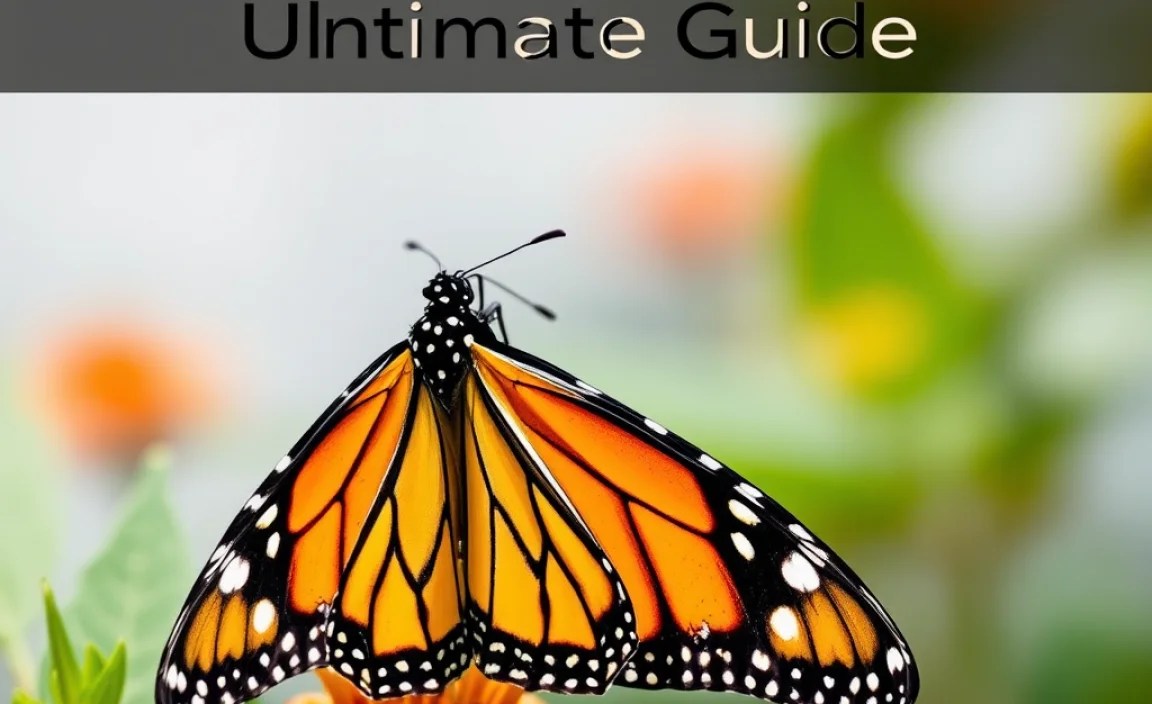
Monarch Butterfly Photography Tips: Ultimate Guide

Capturing stunning monarch butterfly photos requires patience, the right gear, and a few key techniques. Focus on early morning shoots, use a macro lens or close-up filters, and understand butterfly behavior to predict their movements. Gentle approach and ethical practices are essential for preserving these beautiful creatures while perfecting your photography.
Have you ever tried to photograph a monarch butterfly, only to end up with a blurry image or an empty frame? It’s a common frustration! These beautiful creatures are constantly on the move, flitting from flower to flower, making them a challenging subject for even experienced photographers. But don’t worry; with a few simple tips and tricks, you can capture breathtaking photos of these iconic insects.
We’ll explore the best times to shoot, essential equipment, and techniques for capturing those perfect moments. Plus, we’ll delve into ethical considerations to ensure we’re not disturbing these delicate creatures. Get ready to transform your butterfly photography and create images that showcase the monarch’s beauty and fragility.
Essential Gear for Monarch Butterfly Photography

Having the right equipment can make a huge difference in capturing stunning monarch butterfly photos. Here’s a breakdown of what you’ll need:
Camera and Lens Choices
The heart of your photography setup is, of course, your camera and lens. Here’s what to consider:
- DSLR or Mirrorless Camera: These offer the most flexibility with lens choices and settings, giving you greater control over your images. Look for models with good low-light performance and fast autofocus.
- Macro Lens: A macro lens is ideal for capturing the intricate details of a monarch butterfly. A 100mm macro lens is a popular choice, offering a good working distance.
- Zoom Lens with Macro Capabilities: If you’re not ready to invest in a dedicated macro lens, a zoom lens with macro capabilities can be a good alternative. Look for lenses that offer at least a 1:2 or 1:1 reproduction ratio.
- Close-Up Filters (Diopters): These screw onto the front of your lens and magnify the subject, allowing you to get closer. They are a budget-friendly option for macro photography.
Other Useful Accessories
Beyond the camera and lens, these accessories can further enhance your photography:
- Tripod: A tripod is essential for sharp images, especially in low light or when using a macro lens. Look for a lightweight and sturdy model.
- Remote Shutter Release: This prevents camera shake when taking photos on a tripod.
- Reflector: A reflector bounces light onto your subject, filling in shadows and creating a more even exposure. A small, foldable reflector is easy to carry.
- Diffuser: A diffuser softens harsh sunlight, creating a more pleasing light for your photos.
- Camera Bag: A comfortable and protective camera bag is essential for carrying your gear in the field.
Best Time and Location for Monarch Photography

Timing and location are crucial for successful monarch butterfly photography. Knowing when and where to find these beautiful creatures will greatly increase your chances of capturing stunning images.
Optimal Time of Day
The best time to photograph monarch butterflies is during the early morning hours. Here’s why:
- Cool Temperatures: Monarchs are less active in the cool morning air, often resting on flowers or leaves. This gives you a better chance to approach them slowly and capture sharp images.
- Dew-Covered Wings: Dewdrops on their wings can add a magical touch to your photos.
- Soft Light: The soft, diffused light of early morning is ideal for photography, avoiding harsh shadows and overexposure.
Ideal Locations
Knowing where to find monarchs is half the battle. Here are some prime locations:
- Butterfly Gardens: These gardens are specifically designed to attract butterflies, with a wide variety of nectar-rich flowers.
- Wildflower Meadows: Look for meadows with an abundance of milkweed, the monarch butterfly’s host plant.
- Migration Routes: During the fall migration, monarchs gather in large numbers at specific locations along their migration routes. Research local migration hotspots.
- Nature Reserves and Parks: Many nature reserves and parks have butterfly habitats. Check with local park authorities for information on monarch sightings.
- Your Own Backyard: Plant milkweed and nectar-rich flowers in your garden to attract monarchs.
Step-by-Step Guide to Photographing Monarch Butterflies

Now that you have the right gear and know when and where to find monarchs, let’s dive into the step-by-step process of capturing stunning photos.
Step 1: Approaching Monarchs Slowly and Gently
Monarch butterflies are easily startled, so a gentle approach is essential. Here’s how to do it:
- Move Slowly: Avoid sudden movements that could scare the butterfly.
- Approach from the Side: Approaching from the side is less threatening than approaching head-on.
- Avoid Shadows: Don’t cast a shadow on the butterfly, as this can startle it.
- Be Patient: Wait for the butterfly to settle before taking your shot.
Step 2: Setting the Right Camera Settings
Using the right camera settings is crucial for capturing sharp, well-exposed images. Here are some recommended settings:
- Aperture: Use a wide aperture (e.g., f/2.8 to f/5.6) to create a shallow depth of field, blurring the background and isolating the butterfly.
- Shutter Speed: Use a fast shutter speed (e.g., 1/250 second or faster) to freeze the butterfly’s movements. Increase the shutter speed if the butterfly is particularly active.
- ISO: Keep the ISO as low as possible (e.g., ISO 100 to ISO 400) to minimize noise. Increase the ISO if you need a faster shutter speed.
- Focus Mode: Use single-point autofocus to focus precisely on the butterfly’s eye or another key detail.
- Metering Mode: Use spot metering to meter the light on the butterfly itself, ensuring a proper exposure.
Step 3: Composition Techniques
A well-composed photo is more visually appealing. Here are some composition techniques to consider:
- Rule of Thirds: Place the butterfly off-center, along one of the gridlines or at one of the intersection points.
- Leading Lines: Use leading lines, such as flower stems or leaves, to draw the viewer’s eye to the butterfly.
- Negative Space: Use negative space around the butterfly to create a sense of calm and isolation.
- Backgrounds: Choose a clean, uncluttered background that doesn’t distract from the butterfly.
- Angles: Experiment with different angles, such as shooting from a low angle to create a more dramatic perspective.
Step 4: Focusing Techniques
Sharp focus is essential for macro photography. Here are some focusing techniques:
- Manual Focus: Use manual focus for precise control over the focus point. Zoom in on the butterfly’s eye and adjust the focus until it’s sharp.
- Focus Peaking: If your camera has focus peaking, use it to highlight the areas that are in focus.
- Rocking Technique: If you’re using a macro lens, try rocking your body back and forth slightly to fine-tune the focus.
Step 5: Capturing Action Shots
Capturing a monarch in flight can be challenging, but the results are worth it. Here’s how to increase your chances of success:
- Pre-Focus: Pre-focus on a flower or leaf where the butterfly is likely to land.
- Continuous Shooting Mode: Use continuous shooting mode to capture a burst of images.
- Fast Shutter Speed: Use a fast shutter speed (e.g., 1/1000 second or faster) to freeze the butterfly’s wings.
- Anticipate Movement: Watch the butterfly’s behavior and try to anticipate its movements.
Ethical Considerations

It’s crucial to photograph monarch butterflies in an ethical and responsible manner. Here are some guidelines to follow:
- Do Not Disturb: Avoid disturbing the butterflies or their habitat. Stay on designated trails and avoid trampling vegetation.
- Do Not Handle: Never handle a butterfly unless you have a valid permit for research or conservation purposes.
- Do Not Chase: Avoid chasing butterflies, as this can stress them out.
- Respect Their Space: Give the butterflies plenty of space and avoid getting too close.
- Leave No Trace: Pack out everything you pack in and leave the area as you found it.
Post-Processing Tips
Post-processing can enhance your monarch butterfly photos, but it’s important to use it sparingly and ethically. Here are some tips:
- Adjust Exposure and Contrast: Adjust the exposure and contrast to create a balanced image.
- Adjust White Balance: Adjust the white balance to correct any color casts.
- Sharpening: Sharpen the image to bring out the details of the butterfly’s wings.
- Noise Reduction: Reduce noise, especially in images taken at high ISO settings.
- Remove Distractions: Remove any distracting elements from the background.
- Crop for Composition: Crop the image to improve the composition.
Table: Recommended Camera Settings for Different Scenarios
| Scenario | Aperture | Shutter Speed | ISO |
|---|---|---|---|
| Stationary Butterfly in Good Light | f/5.6 | 1/250 second | ISO 100 |
| Stationary Butterfly in Low Light | f/2.8 | 1/125 second | ISO 400 |
| Butterfly in Flight | f/5.6 | 1/1000 second | ISO 400 |
| Dew-Covered Butterfly | f/8 | 1/200 second | ISO 200 |
Table: Troubleshooting Common Issues
| Issue | Possible Cause | Solution |
|---|---|---|
| Blurry Images | Slow shutter speed, camera shake | Increase shutter speed, use a tripod, use a remote shutter release |
| Overexposed Images | Too much light | Decrease aperture, increase shutter speed, lower ISO |
| Underexposed Images | Not enough light | Increase aperture, decrease shutter speed, raise ISO |
| Out-of-Focus Images | Incorrect focus, shallow depth of field | Use manual focus, increase aperture, move closer to subject |
| Distracting Backgrounds | Cluttered background | Choose a cleaner background, use a wider aperture to blur the background |
FAQ: Monarch Butterfly Photography
What is the best lens for monarch butterfly photography?
A macro lens (around 100mm) is ideal for capturing the intricate details of monarch butterflies. Alternatively, a zoom lens with macro capabilities or close-up filters can also work well.
What time of day is best for photographing monarch butterflies?
Early morning is the best time. Monarchs are less active due to cooler temperatures, making them easier to approach and photograph. Plus, you might capture dew-covered wings!
How do I approach a monarch butterfly without scaring it?
Move slowly and gently, avoid sudden movements, and approach from the side. Don’t cast a shadow on the butterfly, and be patient, waiting for it to settle before taking your shot.
What camera settings should I use for butterfly photography?
Use a wide aperture (f/2.8 to f/5.6) for a shallow depth of field, a fast shutter speed (1/250 second or faster) to freeze movement, and a low ISO (100 to 400) to minimize noise.
How can I capture a monarch butterfly in flight?
Pre-focus on a flower where the butterfly is likely to land, use continuous shooting mode, and set a fast shutter speed (1/1000 second or faster). Anticipate the butterfly’s movements.
What are some ethical considerations when photographing butterflies?
Do not disturb the butterflies or their habitat, never handle them (unless permitted), avoid chasing them, respect their space, and leave no trace behind.
How can I attract monarch butterflies to my garden for photography?
Plant milkweed, the monarch’s host plant, along with a variety of nectar-rich flowers. Provide a shallow dish of water with pebbles for them to drink from.
Conclusion
Photographing monarch butterflies is a rewarding experience that combines the beauty of nature with the art of photography. By understanding their behavior, using the right equipment, and employing effective techniques, you can capture stunning images that showcase their elegance and fragility. Remember to always practice ethical photography, respecting these delicate creatures and their environment. Your photos can not only bring you joy but also raise awareness about the importance of monarch conservation. So, grab your camera, head out to a butterfly-friendly location, and start capturing the magic of monarch butterflies!


