
Monarch Butterfly Flight Distance: Amazing Journey!

Quick Summary: Monarch butterflies are famous for their incredible long-distance migrations. These amazing insects can fly between 50 and 100 miles in a single day! Over their entire migration, some monarchs travel up to 3,000 miles from Canada and the United States to reach their overwintering grounds in Mexico. This journey takes several generations to complete.
Have you ever wondered how far a tiny butterfly can fly? It’s truly amazing! Monarch butterflies are famous for their super long trips. They fly thousands of miles every year. It’s one of the most amazing migrations in the world! But how far can they really fly? And how do they do it? We’ll answer those questions for you. This article breaks down everything you need to know about monarch butterfly flight distance. Get ready to be amazed by these delicate travelers!
Monarch Butterfly Flight Distance: An Amazing Journey

Monarch butterflies are renowned for their incredible migratory journeys. Unlike many other butterfly species, monarchs undertake long-distance flights to find suitable breeding and overwintering habitats. Understanding the distances they travel is key to appreciating their resilience and the challenges they face.
How Far Can Monarch Butterflies Fly in a Day?
On average, a monarch butterfly can fly approximately 50 to 100 miles in a single day. This distance can vary depending on several factors, including:
- Wind Conditions: Favorable winds can help monarchs cover greater distances.
- Availability of Resources: Access to nectar sources along the way provides the energy needed for flight.
- Butterfly Health: A healthy monarch is more capable of flying longer distances.
These daily distances add up significantly during their overall migration.
The Total Migration Distance
The total distance a monarch butterfly travels during its migration is truly remarkable. Monarchs that migrate from eastern North America can fly up to 3,000 miles to reach their overwintering sites in the oyamel fir forests of central Mexico. Western monarch populations migrate shorter distances to overwintering sites along the California coast, typically traveling several hundred miles.
The eastern monarch migration is particularly noteworthy because it involves multiple generations. The monarchs that complete the journey to Mexico are several generations removed from those that started the northward migration in the spring.
Understanding the Monarch Migration

The monarch migration is a complex and fascinating phenomenon. It involves intricate navigation, physiological adaptations, and ecological interactions. Here’s a closer look at the key aspects of this incredible journey.
Why Do Monarchs Migrate?
Monarchs migrate to escape harsh winter conditions in their breeding areas. In the northern parts of their range, temperatures drop too low for monarchs to survive. The overwintering sites in Mexico and California provide a more stable and favorable climate.
These overwintering sites offer:
- Moderate Temperatures: Keeps monarchs from freezing.
- Protection from Predators: Provides safety in numbers.
- Access to Water: Hydration is essential for survival.
Navigational Skills
How do monarchs find their way to these specific overwintering locations, especially when they have never been there before? Scientists believe that monarchs use a combination of cues, including:
- The Sun’s Position: Monarchs have a biological clock that helps them use the sun as a compass.
- The Earth’s Magnetic Field: Monarchs may be able to detect and use magnetic fields for navigation.
- Landmark Recognition: Monarchs likely use visual landmarks, such as mountain ranges and coastlines, to guide their journey.
Research from reputable sources like the Smithsonian Institution continues to shed light on these incredible navigational abilities.
Generational Migration
One of the most fascinating aspects of the eastern monarch migration is that it is completed over several generations. The monarchs that arrive in Mexico in the fall are the great-great-grandchildren of the monarchs that left Mexico in the spring. This means that no single monarch makes the entire round trip.
Here’s a breakdown of the generational migration:
- Generation 1: These monarchs leave the overwintering sites in Mexico in the spring and fly north, laying eggs along the way.
- Generation 2: The offspring of the first generation continue to move northward, breeding and laying eggs.
- Generation 3: This generation continues the northward expansion.
- Generation 4 (The Migratory Generation): This generation is different. They do not reproduce immediately but instead, fly south to the overwintering sites, living much longer than the previous generations (up to 8-9 months).
Factors Affecting Monarch Flight Distance

Several factors can influence how far a monarch butterfly can fly. Understanding these factors is important for conservation efforts aimed at supporting monarch populations.
Weather Conditions
Weather plays a crucial role in monarch migration. Favorable winds can assist monarchs in covering greater distances, while strong headwinds can impede their progress. Rain and cold temperatures can also force monarchs to stop and seek shelter, reducing their daily flight distance.
Optimal weather conditions include:
- Tailwinds: Provide a boost, helping monarchs fly faster and farther.
- Sunny Skies: Allow monarchs to use the sun for navigation.
- Moderate Temperatures: Prevent monarchs from becoming too cold or overheating.
Availability of Nectar Sources
Monarchs rely on nectar as their primary source of energy during migration. The availability of nectar-rich flowers along their migratory routes is essential for fueling their long flights. The Xerces Society emphasizes the importance of planting native milkweed and nectar plants to support monarch populations.
Key nectar sources include:
- Milkweed: Essential for monarch caterpillars.
- Asters: Provide late-season nectar.
- Goldenrod: Another important fall nectar source.
Habitat Quality
The quality of habitat along migratory routes and at overwintering sites also affects monarch flight distance. Degraded habitats with limited resources can weaken monarchs, reducing their ability to fly long distances. Protecting and restoring these habitats is crucial for supporting monarch migration.
Important habitat features include:
- Abundant Milkweed: Supports monarch breeding.
- Diverse Nectar Sources: Provides a continuous supply of energy.
- Shelter from the Elements: Protects monarchs from harsh weather.
Predation and Disease
Predation and disease can also impact monarch flight distance. Monarchs that are weakened by parasites or diseases may be less able to fly long distances and more vulnerable to predators. Efforts to reduce pesticide use and promote healthy monarch populations can help mitigate these threats.
Common threats include:
- Tachinid Flies: Parasitic flies that lay eggs on monarch caterpillars.
- Ophryocystis elektroscirrha (OE): A protozoan parasite that can weaken monarchs.
- Birds and Other Predators: Can prey on monarchs during migration.
How to Help Monarch Butterflies

Given the challenges monarchs face, it’s important to take action to support their populations. Here are some ways you can help monarch butterflies:
Plant Milkweed
Milkweed is the only food source for monarch caterpillars. Planting native milkweed species in your garden or local area provides essential habitat for monarch breeding. Be sure to choose milkweed species that are native to your region to ensure they are well-suited to the local environment.
Here are some popular milkweed varieties:
- Common Milkweed (Asclepias syriaca): A widespread and hardy species.
- Swamp Milkweed (Asclepias incarnata): Prefers moist soil.
- Butterfly Weed (Asclepias tuberosa): A drought-tolerant species with bright orange flowers.
Plant Nectar-Rich Flowers
Monarchs need nectar to fuel their long flights. Planting a variety of nectar-rich flowers that bloom throughout the spring, summer, and fall provides a continuous source of energy for monarchs. Choose native flower species whenever possible, as they are often the best sources of nectar for local butterfly populations.
Good nectar plant choices include:
- Asters: Provide late-season nectar.
- Goldenrod: Another important fall nectar source.
- Zinnias: Easy-to-grow annuals with bright, colorful flowers.
Avoid Pesticides
Pesticides can be harmful to monarch butterflies and other beneficial insects. Avoid using pesticides in your garden or local area, especially during the monarch breeding and migration seasons. If you must use pesticides, choose selective products that target specific pests and minimize harm to non-target species.
Consider these alternatives to pesticides:
- Hand-picking Pests: Remove pests manually from plants.
- Using Beneficial Insects: Introduce natural predators, such as ladybugs, to control pests.
- Applying Insecticidal Soap: A less toxic alternative to traditional pesticides.
Create a Butterfly Garden
Creating a butterfly garden provides a welcoming habitat for monarchs and other butterfly species. In addition to planting milkweed and nectar flowers, include features such as:
- A Water Source: A shallow dish of water with pebbles for butterflies to land on.
- Shelter: Trees and shrubs to provide protection from wind and predators.
- Sunlight: Butterflies need sunlight to warm their bodies and fly.
Support Conservation Organizations
Many organizations are working to protect monarch butterflies and their habitats. Supporting these organizations through donations, volunteer work, or advocacy can help ensure the long-term survival of monarch populations. Consider donating to organizations like the Xerces Society or Monarch Watch to support their conservation efforts.
Monarch Butterfly Flight Distance: Data and Statistics
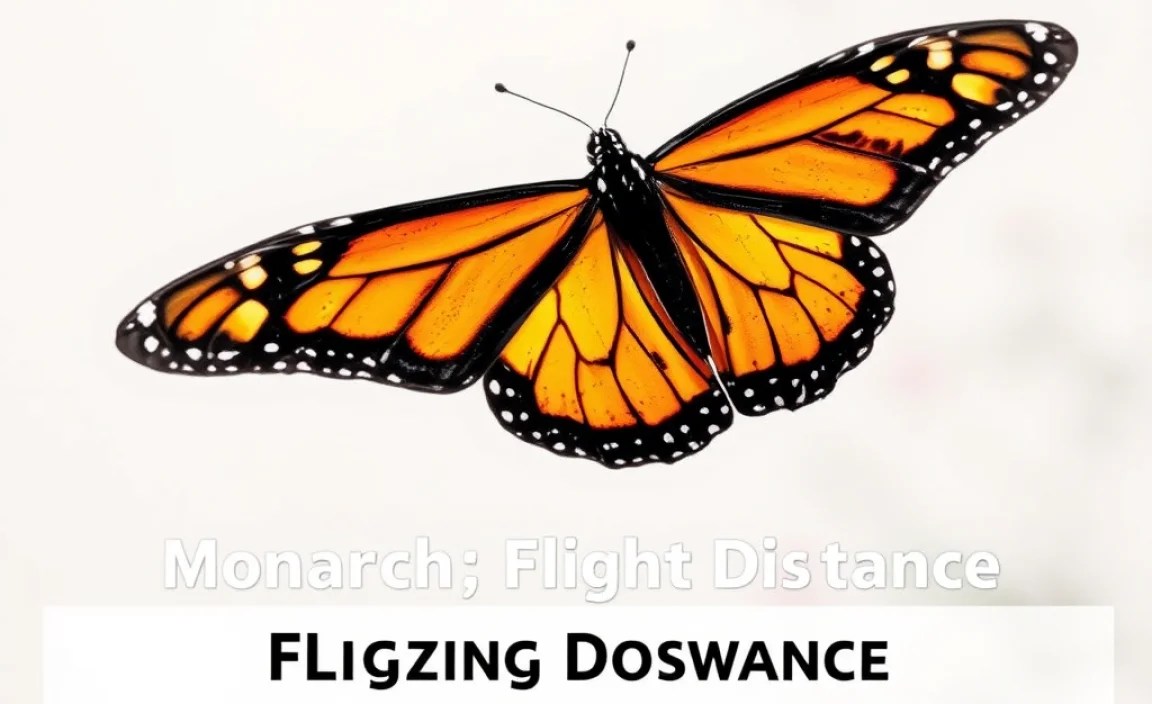
To further illustrate the incredible flight distance of monarch butterflies, here are some key data and statistics:
| Metric | Value | Source |
|---|---|---|
| Average Daily Flight Distance | 50-100 miles | National Geographic |
| Maximum Migration Distance (Eastern Monarchs) | Up to 3,000 miles | U.S. Forest Service |
| Overwintering Sites (Eastern Monarchs) | Oyamel Fir Forests in Central Mexico | World Wildlife Fund |
| Overwintering Sites (Western Monarchs) | California Coast | Xerces Society |
| Lifespan of Migratory Generation | Up to 8-9 months | Monarch Watch |
These figures highlight the remarkable endurance and navigational abilities of monarch butterflies. By understanding these statistics, we can better appreciate the importance of conservation efforts to protect these incredible insects.
The Future of Monarch Migration
The monarch butterfly migration is facing numerous threats, including habitat loss, climate change, and pesticide use. However, there is hope for the future of monarch populations. By taking action to protect and restore monarch habitats, reduce pesticide use, and address climate change, we can help ensure that future generations can witness the wonder of the monarch migration.
Conservation Efforts
Numerous conservation efforts are underway to protect monarch butterflies and their habitats. These efforts include:
- Habitat Restoration: Restoring milkweed and nectar plant habitats along migratory routes and at overwintering sites.
- Pesticide Reduction: Promoting the use of sustainable agricultural practices that minimize pesticide use.
- Climate Change Mitigation: Addressing climate change to protect monarch habitats from the impacts of rising temperatures and changing weather patterns.
Community Involvement
Community involvement is essential for the success of monarch conservation efforts. Individuals, schools, and community groups can play a role by:
- Planting Milkweed and Nectar Flowers: Creating butterfly gardens in their yards and local areas.
- Participating in Citizen Science Projects: Monitoring monarch populations and collecting data on their migration.
- Educating Others: Sharing information about monarch butterflies and the importance of conservation with friends, family, and community members.
Global Collaboration
Monarch conservation requires global collaboration, as monarchs migrate across international borders. Governments, conservation organizations, and individuals must work together to protect monarch habitats and address the threats facing monarch populations.
FAQ About Monarch Butterfly Flight Distance
How long does it take a monarch butterfly to migrate?
The entire monarch migration takes several months, typically from late summer to fall for the southward journey, and from spring to summer for the northward journey. The migratory generation lives much longer (up to 8-9 months) to complete the trip to overwintering sites.
Do all monarch butterflies migrate?
Most monarch butterflies east of the Rocky Mountains migrate to Mexico. Monarchs west of the Rockies migrate to the California coast. Some monarchs in Florida and other southern areas may not migrate and can stay year-round.
What happens if a monarch butterfly can’t complete its migration?
If a monarch butterfly cannot complete its migration due to exhaustion, injury, or unfavorable conditions, it may not survive. Monarchs rely on reaching suitable overwintering sites to survive the winter months.
How do scientists track monarch butterflies?
Scientists track monarchs by attaching small, lightweight tags to their wings. These tags allow researchers to monitor their movements and gather data on their migration routes and distances.
What is the biggest threat to monarch butterflies?
The biggest threats to monarch butterflies include habitat loss (especially the loss of milkweed), pesticide use, and climate change. These factors can reduce monarch populations and disrupt their migration.
Can monarch butterflies fly in the rain?
Monarch butterflies generally avoid flying in heavy rain. Rain can weigh down their wings and make it difficult for them to fly. They typically seek shelter during rainy periods.
What is the role of milkweed in monarch migration?
Milkweed is essential for monarch caterpillars, as it is the only plant they eat. Without milkweed, monarchs cannot complete their life cycle. The availability of milkweed along migratory routes is crucial for supporting monarch populations.
Conclusion
The monarch butterfly’s flight distance is a testament to the incredible endurance and navigational abilities of these delicate creatures. Their annual migration, spanning thousands of miles and multiple generations, is a remarkable feat of nature. By understanding the factors that influence monarch flight distance and taking action to protect their habitats, we can help ensure that future generations can witness the wonder of this amazing journey. Let’s all do our part to support monarch butterflies and preserve their incredible migration for years to come. Remember, even small actions like planting milkweed can make a big difference. Together, we can help these beautiful butterflies thrive!


