
Monarch Butterfly in Hawaii: A Stunning Secret

Quick Summary: Monarch butterflies aren’t native to Hawaii, but they’ve established themselves there! They thrive thanks to the abundant milkweed, their host plant. You can find them across the islands, especially in gardens. While beautiful, their presence impacts local ecosystems, so understanding their role is key to Hawaiian conservation.
Have you ever dreamed of seeing a monarch butterfly fluttering against a backdrop of tropical Hawaiian flowers? It’s a sight many nature lovers hope for! But finding reliable information about monarchs in Hawaii can be tricky. You might wonder if they belong there, how they survive, and what their impact is. Don’t worry, you’re not alone! Let’s explore the fascinating story of the monarch butterfly in Hawaii, step by step. We’ll uncover their journey, their needs, and how we can help them and the local environment thrive together.
Monarch Butterflies in Hawaii: An Unlikely Story

The monarch butterfly (Danaus plexippus) is famous for its incredible migrations across North America. But what about Hawaii? They’re not native, yet they’re present. How did they get there, and what makes Hawaii a suitable home?
A Journey Across the Ocean
Monarchs didn’t fly to Hawaii on their own! It’s believed they were likely introduced, possibly by accident, through human activity. Perhaps eggs or caterpillars hitched a ride on plants brought to the islands. However they arrived, they found a welcoming environment.
Hawaii: A Monarch’s Paradise?
Hawaii offers some advantages for monarchs:
- Year-round Warmth: No freezing temperatures to worry about! This allows them to breed continuously.
- Abundant Milkweed: Milkweed is the only plant monarch caterpillars eat. Several milkweed species are found in Hawaii, providing plenty of food.
- Fewer Natural Enemies: Compared to their native range, monarchs in Hawaii face fewer specialized predators and parasites.
Identifying Monarchs in Hawaii
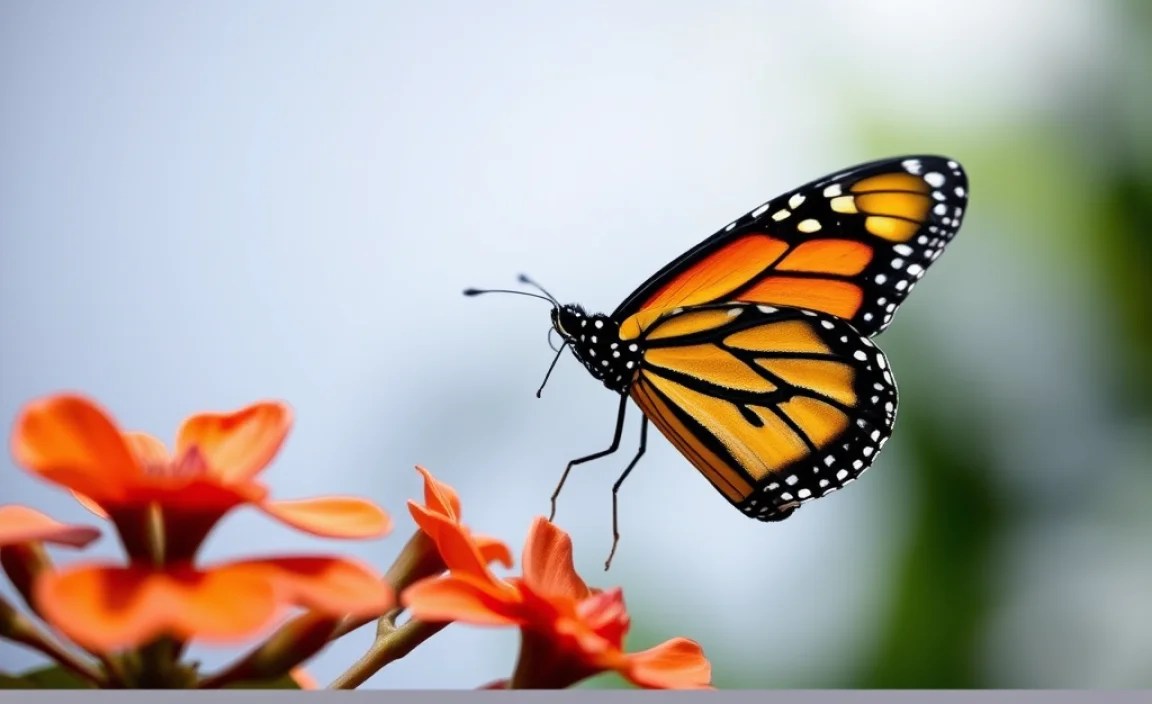
Knowing how to identify a monarch is the first step to understanding their role in the Hawaiian ecosystem. Here’s what to look for:
- Bright Orange Wings: Monarchs are famous for their vibrant orange wings, crisscrossed with black lines and bordered with black spots.
- Size: They are relatively large butterflies, with a wingspan of 3.5 to 4 inches (9 to 10 cm).
- Distinctive Markings: Look for white spots within the black border of the wings.
You can easily distinguish them from other butterflies with these characteristics.
The Monarch Life Cycle in Hawaii

Like all butterflies, monarchs undergo complete metamorphosis. Here’s what that looks like in Hawaii:
- Egg: Monarchs lay tiny, pearl-like eggs, usually on the underside of milkweed leaves.
- Larva (Caterpillar): The caterpillar hatches and eats milkweed constantly, growing rapidly. It molts (sheds its skin) several times as it grows.
- Pupa (Chrysalis): The caterpillar forms a jade-green chrysalis, hanging upside down from a branch. Inside, it transforms into a butterfly.
- Adult: The butterfly emerges from the chrysalis. It pumps fluid into its wings to expand them, then flies off to feed on nectar and reproduce.
In Hawaii’s warm climate, this cycle repeats continuously, allowing for multiple generations each year.
Milkweed: The Monarch’s Lifeline

Milkweed is crucial for monarch survival. Without it, they cannot complete their life cycle. Several milkweed species are found in Hawaii, including:
- Tropical Milkweed (Asclepias curassavica): This is the most common milkweed in Hawaii. It has bright red and yellow flowers.
- Other Asclepias Species: Other milkweed varieties may also be present, though less common.
Monarchs lay their eggs exclusively on milkweed. The caterpillars then feed on the leaves, gaining the nutrients they need to grow and transform.
The Ecological Impact of Monarchs in Hawaii

While monarchs are beautiful, their presence in Hawaii isn’t without consequences. As a non-native species, they can impact the local ecosystem.
Competition with Native Species
Monarch caterpillars compete with native Hawaiian insects for food resources. This competition can negatively affect native butterfly and moth populations.
Potential for Disease Spread
Monarchs can carry diseases and parasites that could potentially spread to native insects. Continuous breeding, fueled by year-round milkweed, can increase the risk of disease buildup.
Impact on Milkweed
Heavy feeding by monarch caterpillars can stress milkweed plants. In some cases, this can reduce milkweed abundance, impacting other insects that rely on it.
Conservation Considerations
Given the potential ecological impacts, it’s important to consider responsible conservation practices. Here’s what you can do:
- Plant Native Nectar Sources: Provide alternative food sources for monarchs and other butterflies by planting native Hawaiian flowering plants.
- Control Milkweed Growth: Limit the amount of milkweed in your garden to prevent monarch populations from growing too large.
- Monitor for Disease: Observe monarchs for signs of disease (e.g., sluggishness, deformed wings). Report any concerns to local wildlife authorities.
- Support Native Butterfly Conservation: Contribute to organizations working to protect native Hawaiian butterflies and their habitats.
Creating a Butterfly-Friendly Garden in Hawaii
If you want to attract butterflies to your garden, focus on native Hawaiian plants. These plants provide the best food and habitat for native species while also offering nectar for monarchs.
Native Nectar Plants
Here are some excellent native nectar plants for Hawaiian gardens:
- ʻIlima (Sida fallax)
- Koali (Ipomoea indica)
- ʻOhai (Sesbania tomentosa)
- Hinahina (Heliotropium anomalum)
These plants provide nectar for adult butterflies, including monarchs, and support a healthy ecosystem for native species.
Tips for a Butterfly-Friendly Garden
- Plant in Sunny Locations: Butterflies prefer sunny spots, as they need warmth to be active.
- Provide Shelter: Plant shrubs and trees to provide shelter from wind and rain.
- Avoid Pesticides: Pesticides can harm butterflies and other beneficial insects. Use natural pest control methods instead.
- Provide Water: Butterflies need water. Place a shallow dish of water with pebbles in your garden.
Monarch Butterfly Migration: Does it Happen in Hawaii?
One of the most fascinating aspects of monarch butterflies is their long-distance migration. However, this behavior is not observed in Hawaii.
No Mass Migration
Unlike their mainland counterparts, Hawaiian monarchs do not undertake mass migrations. The year-round warm climate and abundant milkweed allow them to breed continuously without the need to migrate.
Local Movements
While they don’t migrate long distances, monarchs in Hawaii may move locally in search of food and mates. These movements are typically short and within the same island.
The Cultural Significance of Butterflies
Butterflies have long held cultural significance in many societies, often symbolizing transformation, beauty, and hope. While not native to Hawaiian culture, their presence has added a new dimension to the islands’ natural beauty.
Symbolism
In many cultures, butterflies represent:
- Transformation: The metamorphosis from caterpillar to butterfly symbolizes personal growth and change.
- Hope: Butterflies are often seen as symbols of hope and new beginnings.
- Beauty: Their delicate beauty and vibrant colors make them a source of inspiration and joy.
Appreciation
Whether native or introduced, butterflies enrich our lives with their beauty and grace. By understanding their needs and respecting their place in the ecosystem, we can help ensure their survival for generations to come.
Where to See Monarchs in Hawaii
If you’re hoping to spot a monarch in Hawaii, you’re in luck! They can be found on all the major islands. Here are some tips on where to look:
- Gardens: Private gardens and public parks with milkweed are prime locations.
- Agricultural Areas: Fields with milkweed growing along the edges can attract monarchs.
- Natural Areas: Keep an eye out in open, sunny areas with flowering plants.
Remember to observe them respectfully, without disturbing their habitat or behavior.
Monarch Butterfly vs. Viceroy Butterfly
Monarch butterflies have a mimic called the Viceroy butterfly (Limenitis archippus) that looks very similar. Here’s how to tell them apart:
| Feature | Monarch Butterfly | Viceroy Butterfly |
|---|---|---|
| Size | Larger (3.5-4 inches wingspan) | Slightly Smaller (2.5-3 inches wingspan) |
| Wing Pattern | No black line across hindwing | Has a black line across the hindwing |
| Flight | Strong, soaring flight | More erratic, fluttering flight |
While Viceroy butterflies are not found in Hawaii, this comparison helps to appreciate the unique characteristics of the Monarch.
Resources for Further Learning
Want to learn more about monarch butterflies and their conservation? Here are some valuable resources:
- The Xerces Society for Invertebrate Conservation
- U.S. Fish and Wildlife Service
- Hawaii Department of Land and Natural Resources
These organizations offer a wealth of information on butterfly biology, conservation, and how you can get involved.
Frequently Asked Questions
Are monarch butterflies native to Hawaii?
No, monarch butterflies are not native to Hawaii. They were likely introduced, possibly by accident, through human activities.
What do monarch caterpillars eat in Hawaii?
Monarch caterpillars exclusively eat milkweed leaves. Tropical milkweed (Asclepias curassavica) is the most common species in Hawaii.
Do monarch butterflies migrate in Hawaii?
No, monarchs in Hawaii do not undertake long-distance migrations. The warm climate and abundant milkweed allow them to breed continuously.
Are monarch butterflies harmful to the Hawaiian ecosystem?
As a non-native species, monarchs can compete with native insects for food and potentially spread diseases. Responsible conservation practices are important.
How can I attract butterflies to my garden in Hawaii?
Plant native Hawaiian nectar plants, provide shelter, avoid pesticides, and offer a shallow source of water.
What is the life cycle of a monarch butterfly?
The monarch life cycle includes four stages: egg, larva (caterpillar), pupa (chrysalis), and adult butterfly.
Where can I see monarch butterflies in Hawaii?
Look for them in gardens, agricultural areas, and natural areas with milkweed and flowering plants on all major Hawaiian islands.
Conclusion
The story of the monarch butterfly in Hawaii is a fascinating example of nature’s adaptability and the complex interactions between species. While these beautiful butterflies are not native, they have found a way to thrive in the islands’ warm climate and abundant milkweed. By understanding their ecological impact and practicing responsible conservation, we can help ensure a healthy balance between introduced and native species. Whether you’re a seasoned naturalist or simply a butterfly enthusiast, there’s always something new to discover in the world of butterflies. So, get outside, explore, and appreciate the beauty and wonder of these amazing creatures!


