
Glasswing Butterfly Life Cycle: Amazing Stages!

The glasswing butterfly life cycle is a fascinating transformation! It starts as a tiny egg, usually laid on a host plant. The egg hatches into a larva (caterpillar) that eats and grows. This caterpillar then forms a pupa (chrysalis). Inside the pupa, a magical change happens, and finally, a beautiful glasswing butterfly emerges, ready to fly and reproduce.
Have you ever wondered how a delicate, transparent-winged butterfly comes to be? The glasswing butterfly, with its see-through wings, is truly a marvel of nature. Understanding its life cycle is like unlocking a secret garden, revealing the wonder and complexity of these creatures. Many people find the transformation from a tiny egg to a magnificent butterfly absolutely captivating. Let’s explore each stage together, step by step. Get ready to discover the amazing journey of the glasswing butterfly, from egg to adult!
The Amazing Glasswing Butterfly Life Cycle

The glasswing butterfly (Greta oto) undergoes complete metamorphosis. This means it has four distinct life stages: egg, larva (caterpillar), pupa (chrysalis), and adult. Each stage has a specific purpose, from growth and development to reproduction.
Stage 1: The Egg
The life cycle begins with the egg. Female glasswing butterflies typically lay their eggs on host plants, which will serve as food for the hatching caterpillars. These plants often belong to the genus Cestrum. The eggs are tiny and often a pearly white or pale green.
- Where: Laid on specific host plants, like Cestrum species.
- Appearance: Small, round or oval, and typically a light color.
- Purpose: To protect and nourish the developing larva inside.
Stage 2: The Larva (Caterpillar)
Once the egg hatches, the larva, or caterpillar, emerges. The primary job of the caterpillar is to eat and grow. Glasswing butterfly caterpillars feed on the leaves of their host plants, growing bigger with each molt (shedding of their skin).
- Eating Habits: Voracious eaters, consuming large amounts of plant matter.
- Appearance: Often have long, spiky protrusions and bright colors as a warning to predators.
- Molting: Caterpillars shed their skin multiple times as they grow.
Stage 3: The Pupa (Chrysalis)
After several molts, the caterpillar is ready to transform into a pupa, also known as a chrysalis. The caterpillar finds a safe spot and creates a protective shell around itself. Inside this chrysalis, a remarkable transformation takes place.
- Formation: The caterpillar forms a hard, protective shell.
- Appearance: The chrysalis of the glasswing butterfly is often metallic gold or silver, adding to its mystique.
- Transformation: Inside, the caterpillar’s body breaks down and reorganizes into the form of a butterfly.
Stage 4: The Adult Butterfly
Finally, after a period of development inside the pupa, the adult butterfly emerges. The newly emerged butterfly’s wings are soft and crumpled. It pumps hemolymph (insect blood) into the veins of its wings to expand them. Once the wings are dry and strong, the butterfly is ready to fly.
- Emergence: The butterfly breaks free from the chrysalis.
- Wing Expansion: Wings expand as fluids are pumped into them.
- Appearance: The adult glasswing butterfly has transparent wings with a delicate, lace-like pattern. The opaque borders of their wings are typically brown or orange.
- Function: The adult butterfly’s main roles are to reproduce and lay eggs, continuing the life cycle.
Detailed Look at Each Stage
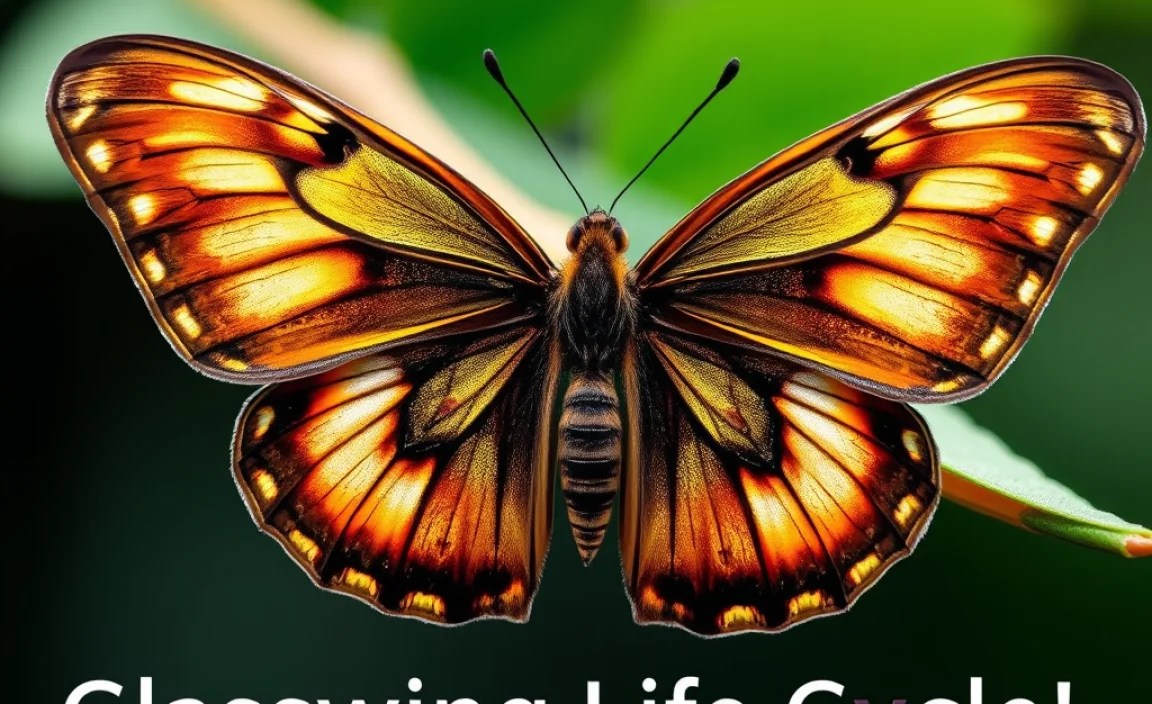
To truly appreciate the glasswing butterfly life cycle, let’s dive into each stage with more detail.
The Egg Stage: A Tiny Beginning
The egg stage is the foundation of the entire life cycle. Understanding the conditions and factors that affect the eggs can help with conservation efforts and butterfly gardening.
- Laying Process: Female glasswing butterflies carefully select host plants to lay their eggs. They use chemical cues to ensure the plant is suitable for their offspring.
- Environmental Factors: Temperature and humidity play crucial roles in the survival of the eggs. Too much or too little moisture can be detrimental.
- Predation: Eggs are vulnerable to predation by insects and other small animals.
The Larval Stage: Eating and Growing
The larval stage is all about growth. Caterpillars are eating machines, and their growth rate is astonishing. They also have defense mechanisms to protect themselves from predators.
- Diet: Glasswing butterfly caterpillars feed on specific host plants that contain compounds that make them unpalatable to predators. This is a form of chemical defense.
- Growth and Molting: As caterpillars grow, they shed their skin (molt) several times. Each stage between molts is called an instar.
- Defense Mechanisms: Bright colors and spiky protrusions warn predators of their toxicity.
The Pupal Stage: Transformation
The pupal stage is a period of intense transformation. Inside the chrysalis, the caterpillar undergoes a complete metamorphosis, reorganizing its body into the form of a butterfly. This process is one of nature’s most incredible feats.
- Chrysalis Formation: The caterpillar attaches itself to a stem or leaf and forms a hard, protective shell.
- Metamorphosis: Inside the chrysalis, the caterpillar’s tissues break down and reorganize into the structures of the adult butterfly.
- Duration: The pupal stage can last from a few days to several weeks, depending on environmental conditions.
The Adult Stage: Reproduction and Flight
The adult stage is focused on reproduction. Adult butterflies must find mates, reproduce, and lay eggs to continue the cycle. Their transparent wings are not just beautiful but also serve a purpose.
- Mating: Adult glasswing butterflies engage in courtship rituals to find mates.
- Egg Laying: After mating, females lay their eggs on host plants, starting the cycle anew.
- Wing Transparency: The transparent wings help the butterfly blend in with its surroundings, making it harder for predators to spot. The structure of the wings minimizes reflection and refraction of light, enhancing their camouflage.
Factors Affecting the Glasswing Butterfly Life Cycle

Several factors can influence the success of the glasswing butterfly life cycle. Understanding these factors can help in conservation efforts.
- Habitat Loss: Deforestation and habitat destruction reduce the availability of host plants and suitable environments for glasswing butterflies.
- Climate Change: Changes in temperature and rainfall patterns can disrupt the timing of the life cycle and affect the availability of host plants.
- Pesticide Use: Pesticides can harm or kill glasswing butterflies at any stage of their life cycle.
- Predators: Natural predators, such as birds, lizards, and insects, can prey on glasswing butterflies at any stage of their life cycle.
How to Support Glasswing Butterflies

There are several things you can do to help support glasswing butterflies and their populations.
- Plant Host Plants: Plant Cestrum species in your garden to provide food for the caterpillars.
- Avoid Pesticides: Use natural pest control methods to protect glasswing butterflies and other beneficial insects.
- Create a Butterfly Garden: Provide a variety of nectar-rich flowers to support adult butterflies.
- Support Conservation Organizations: Donate to or volunteer with organizations that work to protect butterfly habitats.
The Unique Transparency of Glasswing Butterfly Wings

One of the most remarkable features of the glasswing butterfly is its transparent wings. This transparency is due to the unique structure of the wings, which minimizes reflection and refraction of light. Let’s explore the science behind this phenomenon.
- Nanostructures: The wings are covered in tiny nanostructures that reduce light reflection.
- Irregular Arrangement: The scales are spaced and arranged irregularly, which helps to scatter light.
- Camouflage: The transparency provides excellent camouflage, allowing the butterfly to blend in with its surroundings and avoid predators.
Glasswing Butterfly Habitat and Distribution
Glasswing butterflies are primarily found in Central and South America. They inhabit tropical rainforests and subtropical forests, where their host plants are abundant.
- Geographic Range: From Mexico to Panama and south to Argentina.
- Habitat Preferences: Tropical and subtropical forests with high humidity and abundant host plants.
- Migration: While not migratory, glasswing butterflies may move locally in search of food and mates.
Glasswing Butterfly Diet
The diet of the glasswing butterfly varies depending on its life stage. Caterpillars feed on host plants, while adult butterflies feed on nectar.
- Caterpillar Diet: Primarily Cestrum species, which contain toxic compounds that deter predators.
- Adult Butterfly Diet: Nectar from a variety of flowers, providing energy for flight and reproduction.
Conservation Status of Glasswing Butterflies
While glasswing butterflies are not currently listed as endangered, they face threats from habitat loss and pesticide use. Conservation efforts are essential to ensure their survival.
- Threats: Habitat destruction, pesticide use, and climate change.
- Conservation Efforts: Protecting and restoring habitats, promoting sustainable agriculture, and educating the public about the importance of butterflies.
Interesting Facts About Glasswing Butterflies
Here are some fascinating facts about glasswing butterflies that you might enjoy:
- Transparency: Their transparent wings are a result of nanostructures that minimize light reflection.
- Toxicity: Caterpillars feed on toxic plants, making them unpalatable to predators.
- Camouflage: The transparent wings provide excellent camouflage in their natural habitat.
- Pollination: Adult butterflies play a role in pollination as they feed on nectar.
Observing Glasswing Butterflies in the Wild
If you’re lucky enough to visit Central or South America, you might have the opportunity to observe glasswing butterflies in their natural habitat. Here are some tips for spotting them:
- Visit Tropical Rainforests: Glasswing butterflies are most common in tropical rainforests.
- Look for Host Plants: Search for Cestrum species, where you might find caterpillars or eggs.
- Be Patient: Glasswing butterflies can be elusive, so be patient and observant.
Glasswing Butterfly Relatives
The glasswing butterfly belongs to the family Nymphalidae, which includes many other beautiful and interesting butterflies. Some notable relatives include:
- Monarch Butterfly (Danaus plexippus): Known for its long-distance migration. National Geographic – Monarch Butterfly
- Painted Lady (Vanessa cardui): A widespread butterfly found on every continent except Antarctica.
- Morpho Butterflies (Genus Morpho): Known for their iridescent blue wings.
The Role of Glasswing Butterflies in the Ecosystem
Glasswing butterflies play several important roles in the ecosystem.
- Pollination: As adult butterflies feed on nectar, they help pollinate plants.
- Food Source: Glasswing butterflies and their caterpillars serve as a food source for birds, lizards, and other animals.
- Indicator Species: Their presence or absence can indicate the health of the ecosystem.
Raising Glasswing Butterflies at Home
While it can be challenging, raising glasswing butterflies at home is possible if you can provide the right conditions and host plants.
- Obtain Eggs or Caterpillars: Source eggs or caterpillars from a reputable breeder.
- Provide Host Plants: Ensure you have a constant supply of fresh Cestrum leaves.
- Create a Suitable Habitat: Provide a humid environment with plenty of air circulation.
- Monitor and Protect: Protect the caterpillars from predators and diseases.
Glasswing Butterfly Symbolism and Cultural Significance
In some cultures, butterflies symbolize transformation, rebirth, and hope. The glasswing butterfly, with its transparent wings, can also represent clarity and adaptability.
- Transformation: The metamorphosis from caterpillar to butterfly symbolizes personal growth and change.
- Hope: Butterflies are often seen as symbols of hope and new beginnings.
- Clarity: The transparent wings of the glasswing butterfly can represent clarity of vision and purpose.
Table: Glasswing Butterfly Life Cycle Stages
| Stage | Description | Duration | Key Features |
|---|---|---|---|
| Egg | Tiny, laid on host plants | 3-7 days | Pearly white or pale green |
| Larva (Caterpillar) | Eats and grows, molts several times | 2-4 weeks | Bright colors, spiky protrusions |
| Pupa (Chrysalis) | Transformation inside a protective shell | 1-2 weeks | Metallic gold or silver |
| Adult Butterfly | Reproduces and lays eggs | 2-4 weeks | Transparent wings, delicate patterns |
Table: Factors Affecting Glasswing Butterfly Populations
| Factor | Description | Impact |
|---|---|---|
| Habitat Loss | Deforestation and destruction of natural habitats | Reduces availability of host plants and suitable environments |
| Climate Change | Changes in temperature and rainfall patterns | Disrupts life cycle timing and affects host plant availability |
| Pesticide Use | Application of pesticides in agricultural and urban areas | Harms or kills glasswing butterflies at any stage of their life cycle |
| Predators | Natural predators such as birds, lizards, and insects | Prey on glasswing butterflies at any stage of their life cycle |
FAQ About the Glasswing Butterfly Life Cycle
Q1: What do glasswing butterfly caterpillars eat?
Glasswing butterfly caterpillars primarily eat the leaves of plants in the genus Cestrum. These plants contain compounds that make the caterpillars toxic to predators.
Q2: How long does it take for a glasswing butterfly egg to hatch?
Glasswing butterfly eggs typically hatch in about 3 to 7 days, depending on environmental conditions like temperature and humidity.
Q3: How long does the pupal stage last for glasswing butterflies?
The pupal stage, during which the caterpillar transforms into a butterfly inside the chrysalis, usually lasts between 1 to 2 weeks.
Q4: What makes the wings of the glasswing butterfly transparent?
The transparency of the glasswing butterfly’s wings is due to tiny nanostructures on the wing surface that minimize light reflection and scattering.
Q5: Where are glasswing butterflies typically found?
Glasswing butterflies are primarily found in the tropical rainforests and subtropical forests of Central and South America, from Mexico to Argentina.
Q6: Are glasswing butterflies endangered?
While not currently listed as endangered, glasswing butterflies face threats from habitat loss, pesticide use, and climate change. Conservation efforts are important to protect their populations.
Q7: Can I raise glasswing butterflies at home?
Yes, it is possible to raise glasswing butterflies at home if you can provide the right host plants (Cestrum species) and create a suitable humid environment with protection from predators.
Conclusion
The glasswing butterfly life cycle is a remarkable journey of transformation, from a tiny egg to a stunning adult with transparent wings. Each stage plays a crucial role in the butterfly’s survival and the health of the ecosystem. By understanding and appreciating the factors that affect these delicate creatures, we can all take steps to support their conservation. Whether it’s planting host plants, avoiding pesticides, or simply spreading awareness, every effort counts. Let’s continue to marvel at the beauty and complexity of the glasswing butterfly, ensuring that future generations can also witness their enchanting flight.


