
Glasswing Butterfly Anatomy: See-Through Secret!

The glasswing butterfly’s most striking feature is its transparent wings! This is thanks to a unique nanostructure that minimizes light reflection. But there’s more to these delicate creatures than just clear wings. They have a head with sensory antennae, a thorax that powers their flight, and an abdomen that takes care of digestion and reproduction. These amazing adaptations help them thrive in the rainforest.
Have you ever seen a butterfly with wings so clear you could see right through them? That’s the magic of the glasswing butterfly! It’s easy to be captivated by their beauty, but have you ever wondered what makes them so special? It’s not just about having see-through wings. These incredible insects have a whole host of adaptations that help them survive and thrive in their rainforest homes.
Join me, Frances O’Brien, from ButterflyAsk.com, as we explore the fascinating anatomy of the glasswing butterfly. We’ll dive into the details of their wings, body, and unique features that make them so special. Get ready to discover the secrets behind their transparency and learn how these delicate creatures play a vital role in our ecosystem. Let’s flutter into the world of the glasswing butterfly!
Frequently Asked Questions About Glasswing Butterflies
Let’s explore some frequently asked questions about the fascinating glasswing butterfly!
What makes the glasswing butterfly’s wings transparent?
The transparency of the glasswing butterfly’s wings is due to nanostructures on the wing surface that minimize light reflection. These structures scatter light in a way that makes the wings appear clear.
How do glasswing butterflies protect themselves from predators?
Glasswing butterflies use their transparent wings as camouflage. They also feed on poisonous plants as caterpillars, making them unpalatable to some predators.
Where do glasswing butterflies live?
Glasswing butterflies are primarily found in the rainforests of Central and South America, from Mexico to Panama and Colombia.
What do glasswing butterflies eat?
As caterpillars, they feed on poisonous plants. Adult glasswing butterflies feed on the nectar of flowers.
Are glasswing butterflies endangered?
While not currently listed as endangered, glasswing butterfly populations are threatened by habitat loss and deforestation.
How big do glasswing butterflies get?
Glasswing butterflies typically have a wingspan of about 2.2 to 2.8 inches (5.6 to 7.1 cm).
Can glasswing butterflies fly long distances?
Yes, glasswing butterflies are capable of flying long distances. While not migratory in the same way as monarch butterflies, they can travel to find food sources and suitable habitats.
Unveiling the Anatomy of the Glasswing Butterfly

The glasswing butterfly, scientifically known as Greta oto, is a marvel of nature. Its most distinctive feature is, of course, its transparent wings. However, there’s much more to this delicate creature than meets the eye. Let’s explore the different parts of its anatomy, starting from head to toe!
The Head: Sensory Central
The head of the glasswing butterfly is small but packed with important sensory organs. These organs help the butterfly navigate its surroundings and find food.
- Antennae: These are the butterfly’s primary sensory organs. They are used to detect scents, air currents, and vibrations. Butterflies use their antennae to find flowers with nectar and to locate potential mates.
- Eyes: Glasswing butterflies have large, compound eyes that are made up of thousands of individual lenses. This gives them a wide field of vision and helps them detect movement.
- Proboscis: When not in use, this long, straw-like tongue is coiled up. The butterfly uncoils it to sip nectar from flowers.
The Thorax: The Engine of Flight
The thorax is the middle section of the butterfly’s body, located between the head and the abdomen. It’s the powerhouse that drives the butterfly’s flight.
- Wings: Attached to the thorax are the four wings that make the glasswing butterfly so famous. The wings are made of a thin membrane supported by veins. The transparent appearance is due to the unique nanostructure of the wing surface, which we will discuss in detail below.
- Muscles: The thorax contains powerful muscles that control the movement of the wings. These muscles contract and relax rapidly, allowing the butterfly to fly.
- Legs: The glasswing butterfly has six legs attached to its thorax. They use their legs for walking, clinging to plants, and tasting food.
The Abdomen: Digestion and Reproduction
The abdomen is the hindmost section of the butterfly’s body. It contains the digestive and reproductive organs.
- Digestive System: The abdomen houses the digestive system, which breaks down food and absorbs nutrients.
- Reproductive Organs: The abdomen also contains the reproductive organs, which are responsible for producing eggs and sperm.
- Spiracles: These small openings along the sides of the abdomen allow the butterfly to breathe.
The Magic of Transparent Wings

The most captivating aspect of the glasswing butterfly is its transparent wings. But how do these wings achieve this remarkable clarity? It’s all thanks to their unique structure at the nanoscale.
Nanostructures and Light Scattering
The wings of most butterflies are covered in tiny scales that reflect light, giving them their vibrant colors. However, the glasswing butterfly’s wings have a different structure. Instead of scales, their wings have tiny, pillar-like nanostructures. These structures are randomly arranged and are much smaller than the wavelength of visible light.
When light hits the wing, these nanostructures scatter it in a way that minimizes reflection. This allows most of the light to pass through the wing, making it appear transparent. The effect is similar to looking through a frosted window – the glass is still there, but you can see through it.
Scientists at the California Institute of Technology (Caltech) have studied the nanostructures of glasswing butterfly wings. They found that these structures are incredibly efficient at reducing light reflection over a wide range of angles and wavelengths.
Camouflage and Survival
The transparent wings of the glasswing butterfly provide excellent camouflage. When the butterfly is resting on a leaf or flower, its wings blend in with the background, making it difficult for predators to spot. This camouflage is essential for survival in the rainforest, where predators are abundant.
In addition to camouflage, the transparency of the wings may also help the butterfly regulate its body temperature. By allowing sunlight to pass through, the wings can prevent the butterfly from overheating in the hot, humid rainforest environment.
A Closer Look at the Wings
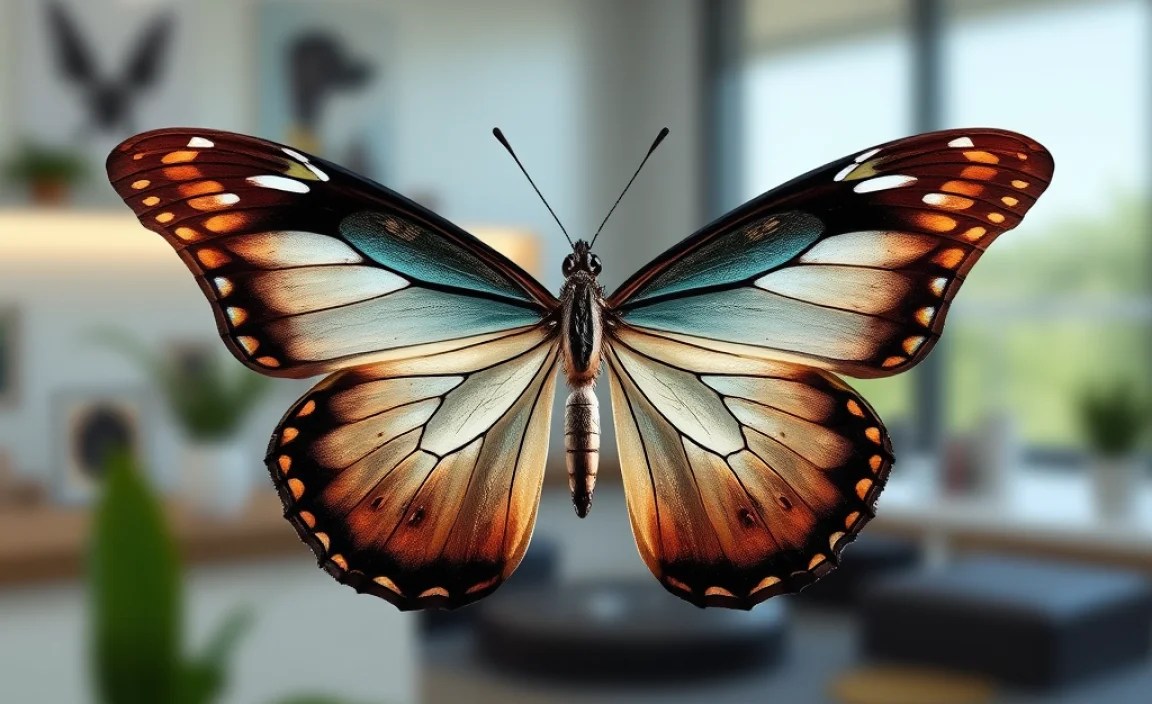
While the transparency of the glasswing butterfly’s wings is its most striking feature, there are other interesting details to explore.
Veins and Membranes
The wings are supported by a network of veins that provide structural support and carry nutrients. The veins are visible as dark lines running through the transparent membrane. The membrane itself is made of a thin layer of chitin, the same material that makes up the exoskeleton of insects.
Colored Borders
Although the majority of the wing is transparent, glasswing butterflies often have colored borders along the edges. These borders can be brown, black, or reddish-orange. The colored borders may serve as a warning signal to predators, indicating that the butterfly is unpalatable.
Wing Shape and Flight
The shape of the wings is also important for flight. Glasswing butterflies have broad, rounded wings that allow them to fly slowly and maneuver easily through the forest canopy. Their flight is often described as graceful and fluttering.
The Lifecycle of the Glasswing Butterfly

The glasswing butterfly goes through a complete metamorphosis, just like other butterflies. This means it has four distinct life stages: egg, larva (caterpillar), pupa (chrysalis), and adult.
Egg Stage
The female glasswing butterfly lays her eggs on the leaves of host plants. These eggs are small and round, and they are usually green or yellow in color.
Larva (Caterpillar) Stage
When the egg hatches, a tiny caterpillar emerges. The caterpillar’s primary job is to eat and grow. Glasswing butterfly caterpillars feed on plants in the Solanaceae family, which includes plants like nightshade and cestrum. These plants contain toxic compounds that the caterpillar stores in its body. This makes the caterpillar, and eventually the adult butterfly, unpalatable to predators.
The caterpillar goes through several molts as it grows. Each time it molts, it sheds its old skin and reveals a new, larger one.
Pupa (Chrysalis) Stage
Once the caterpillar is fully grown, it enters the pupa stage. The caterpillar transforms into a chrysalis, a hard, protective shell. Inside the chrysalis, the caterpillar undergoes a remarkable transformation, reorganizing its body into the adult butterfly form.
Adult Stage
After about two weeks, the adult butterfly emerges from the chrysalis. Its wings are crumpled and wet at first, but they quickly expand and dry. Once the wings are fully formed, the butterfly is ready to fly and reproduce.
Habitat and Distribution
Glasswing butterflies are found in the rainforests of Central and South America. They are most common in areas with high humidity and abundant vegetation.
- Geographic Range: From Mexico to Panama and Colombia, these butterflies thrive in the understory of tropical forests.
- Preferred Habitats: They prefer shaded areas with plenty of host plants for their caterpillars and nectar sources for the adults.
- Conservation Status: While not currently endangered, their populations are threatened by habitat loss and deforestation.
Diet and Feeding Habits
The diet of the glasswing butterfly varies depending on its life stage.
Caterpillars: As mentioned earlier, glasswing butterfly caterpillars feed on plants in the Solanaceae family. These plants contain toxic compounds that the caterpillar stores in its body.
Adults: Adult glasswing butterflies feed on the nectar of flowers. They use their long proboscis to sip nectar from deep inside the flower blossoms. They also feed on the pollen of certain flowers.
Predators and Defense Mechanisms
Glasswing butterflies face a variety of predators, including birds, lizards, and insects. To protect themselves, they employ several defense mechanisms.
- Camouflage: The transparent wings provide excellent camouflage, making it difficult for predators to spot them.
- Toxicity: By feeding on toxic plants as caterpillars, glasswing butterflies become unpalatable to some predators.
- Flight: They are skilled fliers and can quickly escape from danger.
Ecological Importance
Glasswing butterflies play an important role in the rainforest ecosystem.
- Pollination: As they feed on nectar, they help pollinate flowers, which is essential for plant reproduction.
- Food Source: They serve as a food source for other animals, such as birds and lizards.
- Indicator Species: Their presence or absence can indicate the health of the rainforest ecosystem.
Glasswing Butterfly vs. Other Butterflies: A Comparison
Glasswing butterflies are unique, but how do they compare to other butterflies in terms of anatomy?
Table: Glasswing Butterfly vs. Other Butterflies Anatomy
| Feature | Glasswing Butterfly | Other Butterflies |
|---|---|---|
| Wings | Transparent with nanostructures to minimize light reflection | Opaque, covered with colorful scales |
| Scales | Reduced or absent on transparent areas | Abundant, giving wings color and pattern |
| Camouflage | Relies on transparency to blend into background | Relies on colors and patterns to blend or startle |
| Diet (Caterpillar) | Specific host plants, often toxic | Wide variety of host plants |
| Habitat | Rainforest understory | Various habitats, including forests, meadows, and gardens |
Conservation Efforts
While glasswing butterflies are not currently listed as endangered, their populations are threatened by habitat loss and deforestation. Several organizations are working to protect their habitat and promote conservation.
- Habitat Preservation: Protecting rainforests and preventing deforestation is crucial for the survival of glasswing butterflies.
- Sustainable Agriculture: Promoting sustainable agriculture practices can reduce the impact of farming on butterfly habitats.
- Education: Raising awareness about the importance of butterflies and their habitats can inspire people to take action. Organizations like the World Wildlife Fund and Rainforest Alliance are actively involved in these efforts.
How to Attract Glasswing Butterflies to Your Garden
While glasswing butterflies are primarily rainforest dwellers, you can still create a butterfly-friendly garden that attracts other beautiful species.
- Plant Nectar-Rich Flowers: Choose a variety of flowers that provide nectar for adult butterflies. Some good choices include zinnias, butterfly bushes, and lantanas.
- Provide Host Plants: Research which plants are host plants for butterflies in your area and include them in your garden.
- Avoid Pesticides: Pesticides can harm butterflies and other beneficial insects. Use natural pest control methods instead.
- Provide Water: Butterflies need water to drink. Provide a shallow dish of water with pebbles or stones for them to land on.
- Create Shelter: Plant trees and shrubs to provide shelter from the wind and sun.
The Glasswing Butterfly in Culture and Art
The glasswing butterfly’s unique appearance has made it a popular subject in art and culture. Its delicate beauty and transparency have inspired artists, writers, and designers around the world.
- Symbolism: The glasswing butterfly is often seen as a symbol of beauty, fragility, and transformation.
- Art: It has been featured in paintings, sculptures, and jewelry.
- Literature: It has appeared in poems and stories, often as a symbol of hope and resilience.
Conclusion: A Delicate Wonder
The glasswing butterfly is a true marvel of nature. From its transparent wings to its unique life cycle and ecological importance, it’s a creature that inspires awe and wonder. By understanding its anatomy and behavior, we can better appreciate its delicate beauty and the importance of protecting its rainforest habitat.
I hope this journey into the world of the glasswing butterfly has been as enlightening for you as it has been for me. Remember, every creature, no matter how small, plays a vital role in the balance of our ecosystem. Let’s continue to explore, learn, and protect the natural world around us. Thank you for joining me on ButterflyAsk.com!


