
Glasswing Wings: Smart Engineering Inspiration

Quick Summary: Glasswing butterflies have nearly transparent wings, a marvel of nature! Engineers are studying these wings to create new technologies. They’re learning how to make materials that are less reflective, more efficient for solar panels, and even better at camouflage. This amazing butterfly is inspiring innovations in many fields!
Have you ever wondered how a butterfly can seemingly disappear in plain sight? The glasswing butterfly, with its see-through wings, is a master of camouflage. This incredible adaptation has caught the attention of engineers and scientists. They are eager to understand the secrets behind this natural wonder.
The unique structure of the glasswing’s wings offers exciting possibilities for new technologies. Imagine materials that can hide objects, improve solar energy, or reduce glare on screens. This article will explore how engineers are using the glasswing butterfly as a blueprint for innovation. Get ready to discover the amazing potential of nature-inspired engineering!
The Amazing Glasswing Butterfly

The glasswing butterfly (Greta oto) is a tropical butterfly known for its unique transparent wings. Unlike most butterflies with colorful, scaled wings, the glasswing’s wings lack many of these light-reflecting scales. This gives them a clear, glass-like appearance.
Habitat and Distribution
Glasswing butterflies are found in the rainforests of Central and South America. They thrive in humid, shaded environments. You can spot them flitting through the understory, often near flowering plants where they feed on nectar. Countries like Costa Rica, Panama, and Colombia are prime locations to observe these fascinating insects in their natural habitat.
Wing Structure
The secret to the glasswing’s transparency lies in the structure of its wings. Here’s a closer look:
- Nanopillars: The wing surface is covered in tiny, randomly arranged nanopillars. These structures are smaller than the wavelength of visible light. This reduces the amount of light that reflects off the wing.
- Scale Reduction: Glasswing wings have fewer scales than other butterflies. The scales they do have are arranged in a way that minimizes light scattering.
- Refractive Index: The material that makes up the wing has a low refractive index. This means that light passes through it easily.
Why Transparency?
Transparency offers several advantages to the glasswing butterfly:
- Camouflage: Clear wings help the butterfly blend into its surroundings. This makes it harder for predators to spot them.
- Predator Avoidance: By being less visible, glasswings can avoid being eaten by birds and other insects.
- Thermoregulation: The transparent wings may also help regulate the butterfly’s body temperature.
Engineering Inspired by Glasswing Wings
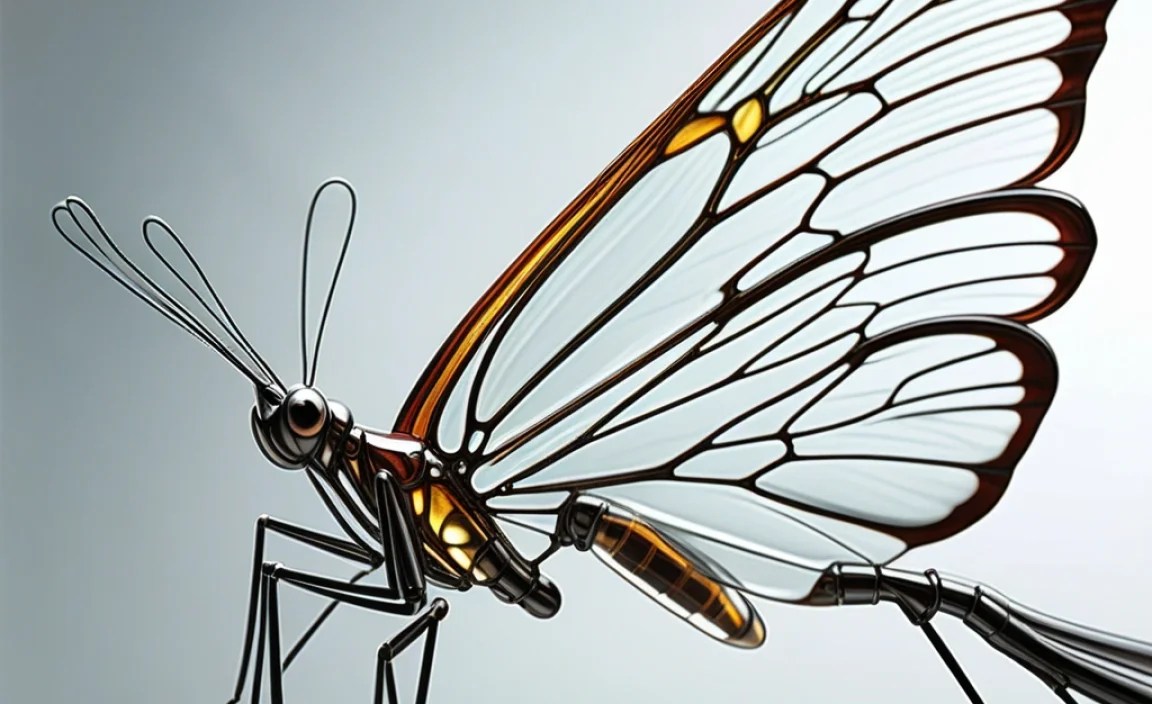
The unique properties of the glasswing butterfly’s wings have inspired engineers to develop new technologies. By mimicking the wing structure, they aim to create materials with similar characteristics. Here are some exciting applications:
Anti-Reflective Coatings
One of the most promising applications is in anti-reflective coatings. These coatings can reduce glare and increase light transmission in various devices. Think of eyeglasses, solar panels, and electronic displays.
How it works: Engineers are creating surfaces with nanopillars similar to those found on glasswing wings. These nanopillars minimize light reflection, allowing more light to pass through. This improves the efficiency and clarity of the coated material.
Improved Solar Panels
Solar panels can benefit greatly from anti-reflective coatings. By reducing the amount of light that bounces off the panel, more sunlight is absorbed. This leads to higher energy conversion efficiency.
Researchers at the California Institute of Technology (Caltech) are exploring the use of glasswing-inspired coatings to enhance solar panel performance. Their work shows that these coatings can significantly increase the amount of electricity generated by solar cells.
Camouflage Technology
The glasswing’s ability to disappear into its environment has inspired the development of camouflage technology. Engineers are working on materials that can mimic the butterfly’s transparency. This could have applications in military camouflage, architecture, and even fashion.
Imagine buildings that blend seamlessly into the landscape or clothing that adapts to its surroundings. The possibilities are endless!
Self-Cleaning Surfaces
The nanopillar structure on glasswing wings not only reduces reflection but also helps keep the wings clean. The tiny pillars prevent dirt and water from accumulating on the surface. This self-cleaning property is another area of interest for engineers.
Applications: Self-cleaning surfaces could be used in a variety of products, such as windows, car windshields, and medical devices. This would reduce the need for manual cleaning and improve hygiene.
Display Technology
Reducing glare on electronic displays is a major challenge. Glasswing-inspired coatings can help improve the viewing experience by minimizing reflections. This is especially important for devices used outdoors or in brightly lit environments.
Companies are exploring the use of these coatings on smartphones, tablets, and computer monitors. This would make screens easier to read and reduce eye strain.
Specific Engineering Applications

Let’s dive into some specific examples of how glasswing wing structure is being applied in engineering:
Creating Anti-Reflective Films
Researchers are using various techniques to create anti-reflective films inspired by glasswing wings. These include:
- Nanosphere Lithography: This method involves using tiny spheres to create a pattern on a surface. The patterned surface is then etched to create nanopillars.
- Self-Assembly: This technique relies on the natural tendency of certain molecules to organize themselves into ordered structures. This can be used to create nanopillar arrays.
- 3D Printing: Advanced 3D printing techniques can be used to create complex nanopillar structures with precise control over their size and shape.
Mimicking the Nanopillar Structure
The key to creating effective anti-reflective coatings is to mimic the size, shape, and arrangement of the nanopillars on glasswing wings. Here are some important considerations:
- Pillar Height: The height of the nanopillars should be optimized to minimize reflection across a range of wavelengths.
- Pillar Spacing: The distance between the pillars also affects the coating’s performance. The optimal spacing depends on the wavelength of light.
- Randomness: The random arrangement of nanopillars on glasswing wings is important for reducing reflection from all angles.
Materials Used
Various materials can be used to create glasswing-inspired coatings. Some common choices include:
- Silicon Dioxide (SiO2): This is a widely used material in the semiconductor industry. It is transparent and can be easily patterned.
- Titanium Dioxide (TiO2): This material has a high refractive index and is often used in solar cells.
- Polymers: Polymers are lightweight and flexible. They can be used to create coatings on flexible substrates.
Table: Comparison of Traditional vs. Glasswing-Inspired Coatings
| Feature | Traditional Coatings | Glasswing-Inspired Coatings |
|---|---|---|
| Reflection | Higher | Lower |
| Light Transmission | Lower | Higher |
| Efficiency (Solar Panels) | Lower | Higher |
| Glare Reduction | Less Effective | More Effective |
| Self-Cleaning | No | Yes |
Advantages and Disadvantages
Like any technology, glasswing-inspired engineering has its pros and cons.
Advantages
- Improved Efficiency: Anti-reflective coatings can significantly improve the efficiency of solar panels and other devices.
- Enhanced Clarity: These coatings can reduce glare and improve the clarity of displays and lenses.
- Self-Cleaning Properties: The nanopillar structure can help keep surfaces clean, reducing the need for maintenance.
- Camouflage Potential: The transparency of glasswing wings can be mimicked to create advanced camouflage materials.
Disadvantages
- Manufacturing Challenges: Creating nanopillar structures can be complex and expensive.
- Durability: The long-term durability of these coatings needs to be further investigated.
- Scalability: Scaling up the production of these coatings to meet industrial demand is a challenge.
- Cost: The initial cost of glasswing-inspired coatings may be higher than traditional coatings.
Real-World Examples and Case Studies
Several companies and research institutions are already working on commercializing glasswing-inspired technologies. Here are a few examples:
- Butterfly iQ+: While not directly glasswing-inspired, this handheld ultrasound device uses biomimicry principles to improve image quality and reduce noise.
- Researchers at MIT: They are developing anti-reflective coatings for solar panels that mimic the structure of glasswing wings. Their work has shown promising results in terms of increased energy conversion efficiency.
- Companies developing advanced display technologies: Some companies are incorporating glasswing-inspired coatings into their products to reduce glare and improve viewing angles.
The Future of Biomimicry
The glasswing butterfly is just one example of how nature can inspire engineering innovation. Biomimicry, the practice of learning from and mimicking nature’s designs, has the potential to solve many of the world’s challenges. From sustainable materials to energy-efficient technologies, nature offers a wealth of inspiration.
As we continue to explore the natural world, we are sure to discover even more amazing adaptations that can be applied to engineering. The future of biomimicry is bright, and the glasswing butterfly is leading the way.
How to Get Involved
Want to learn more about glasswing butterflies and biomimicry? Here are some ways to get involved:
- Visit a Butterfly Garden: Many botanical gardens and nature centers have butterfly exhibits where you can see glasswing butterflies up close.
- Read Books and Articles: There are many excellent resources available on butterflies, biomimicry, and engineering.
- Attend a Conference: Biomimicry conferences bring together experts from various fields to share their knowledge and ideas.
- Support Conservation Efforts: Protecting butterfly habitats is essential for ensuring the survival of glasswing butterflies and other species.
- Experiment at Home: Try simple science experiments to understand how light interacts with different surfaces.
FAQ
What makes glasswing butterfly wings transparent?
Glasswing butterfly wings are transparent because they have tiny, randomly arranged nanopillars on their surface. These pillars are smaller than the wavelength of visible light, which reduces reflection.
Where do glasswing butterflies live?
Glasswing butterflies live in the rainforests of Central and South America. They prefer humid, shaded environments.
How are engineers using glasswing wing structure?
Engineers are using the glasswing wing structure to create anti-reflective coatings, improve solar panel efficiency, and develop camouflage technology.
What is biomimicry?
Biomimicry is the practice of learning from and mimicking nature’s designs to solve engineering problems.
Are glasswing-inspired technologies available now?
Some glasswing-inspired technologies are already being commercialized, such as anti-reflective coatings for displays and solar panels. More applications are under development.
Why is reducing reflection important?
Reducing reflection improves light transmission, reduces glare, and increases the efficiency of devices like solar panels and displays.
How can I help protect glasswing butterflies?
You can help protect glasswing butterflies by supporting conservation efforts, protecting their habitats, and educating others about their importance.
Conclusion
The glasswing butterfly, with its seemingly magical transparent wings, offers a powerful lesson in the beauty and ingenuity of nature. This tiny creature is inspiring engineers and scientists to develop groundbreaking technologies. From more efficient solar panels to advanced camouflage, the possibilities are truly remarkable.
By understanding the secrets of the glasswing’s wings, we can create a more sustainable and innovative future. Let’s continue to look to nature for inspiration and work together to protect the incredible biodiversity of our planet. The future of engineering may just be fluttering right in front of us!


