
European Swallowtail Butterfly Facts: Ultimate Guide

Quick Summary: The European Swallowtail butterfly (Papilio machaon) is a stunning insect known for its vibrant yellow wings adorned with black patterns and elegant tail-like extensions. These butterflies are found across Europe and Asia, favor open landscapes with nectar-rich flowers, and play a vital role in pollination. Their caterpillars feed on plants like fennel and dill, making them a welcome sight in herb gardens!
Have you ever been captivated by a butterfly flitting through your garden, its wings a kaleidoscope of color? The European Swallowtail is one such beauty, and learning about its life cycle, habitat, and unique features is a wonderful way to connect with nature. Understanding the European Swallowtail not only enriches your appreciation for butterflies but also helps you support their conservation. So, let’s dive into the fascinating world of this incredible insect and discover some amazing facts together!
What Makes the European Swallowtail Butterfly Special?

The European Swallowtail, scientifically known as Papilio machaon, is a truly remarkable butterfly. From its striking appearance to its vital role in the ecosystem, there’s so much to admire. Let’s explore some of the key characteristics that make this butterfly so special.
Identifying Features
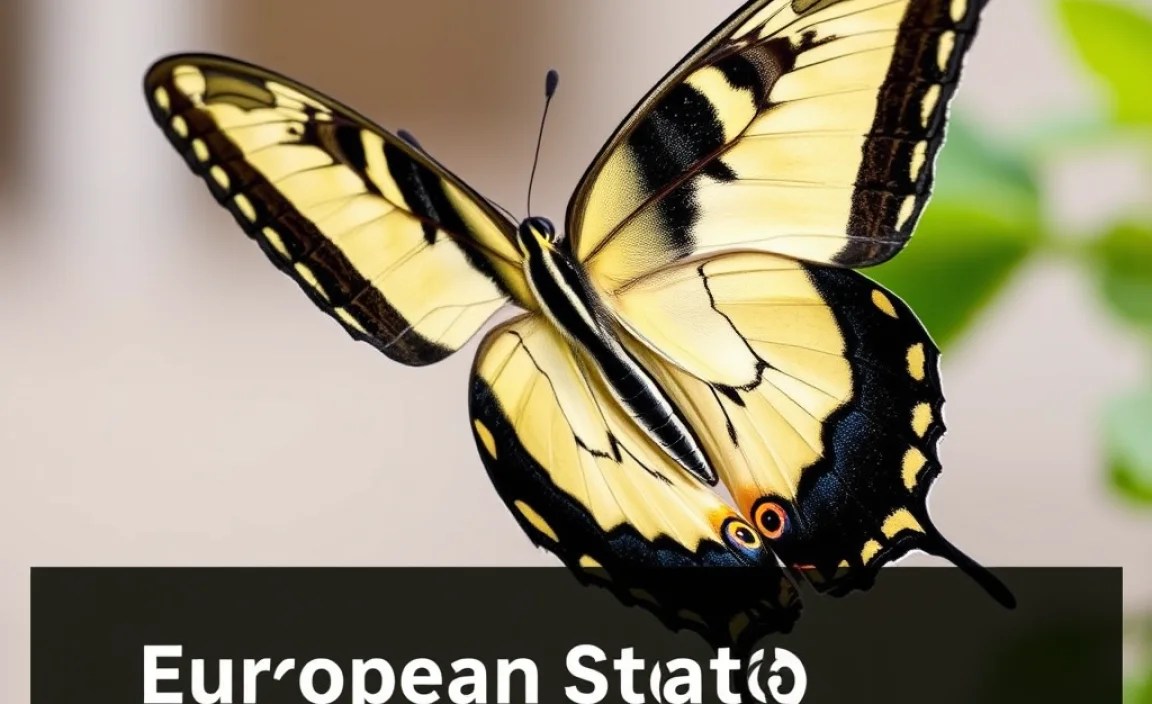
Recognizing a European Swallowtail is easier than you might think. Here’s what to look for:
- Wing Color: Predominantly yellow with black veins and markings.
- Tail-like Extensions: Distinctive “tails” on the hindwings, giving it the “Swallowtail” name.
- Eyespots: Blue and orange eyespots near the tails on the hindwings.
- Size: Relatively large, with a wingspan ranging from 2.5 to 3.5 inches (65-90 mm).
Life Cycle
The life cycle of the European Swallowtail is a beautiful example of metamorphosis. It consists of four stages:
- Egg: The female lays small, round eggs on host plants, often fennel or dill.
- Larva (Caterpillar): The caterpillar hatches and feeds voraciously, growing through several instars (stages) while molting its skin.
- Pupa (Chrysalis): The caterpillar transforms into a pupa, a protective casing where the metamorphosis occurs.
- Adult: The adult butterfly emerges from the pupa, ready to reproduce and continue the cycle.
Habitat and Distribution
European Swallowtails are found in a wide range of habitats across Europe and Asia. They prefer:
- Open meadows and fields
- Gardens and parks
- Heathlands and grasslands
- Areas with plenty of nectar-rich flowers
They are distributed across Europe, from the UK to Southern Europe, and extend eastward through Asia to Japan. Their adaptability allows them to thrive in various climates and landscapes.
The Fascinating Life of a European Swallowtail

Beyond its appearance, the European Swallowtail leads a fascinating life. Let’s delve into its behavior, diet, and ecological role.
Diet and Feeding Habits
Both the caterpillar and the adult butterfly have specific dietary needs.
- Caterpillars: Primarily feed on plants from the Umbelliferae family, such as fennel, dill, parsley, and carrot tops.
- Adult Butterflies: Consume nectar from various flowers, including buddleia, thistles, and lavender.
The caterpillars’ diet is crucial for their growth and development, while the adults rely on nectar for energy to fly and reproduce.
Behavior and Habits
European Swallowtails exhibit interesting behaviors throughout their lives.
- Flight: Known for their strong and graceful flight, often seen soaring high in the sky.
- Basking: Frequently bask in the sun to warm their bodies and increase their activity levels.
- Puddling: Males often gather at puddles or damp soil to extract minerals, which they use in reproduction.
Ecological Role
These butterflies play a significant role in the ecosystem.
- Pollination: As they feed on nectar, they transfer pollen from flower to flower, aiding in plant reproduction.
- Food Source: Caterpillars and butterflies serve as a food source for birds, reptiles, and other insects.
- Indicator Species: Their presence and abundance can indicate the health of the environment.
How to Attract European Swallowtails to Your Garden

Attracting these beautiful butterflies to your garden is a rewarding experience. By providing the right conditions, you can create a haven for them.
Planting Host Plants
To support the caterpillars, plant their favorite host plants:
- Fennel (Foeniculum vulgare)
- Dill (Anethum graveolens)
- Parsley (Petroselinum crispum)
- Carrot tops (Daucus carota)
These plants provide food for the caterpillars and encourage the butterflies to lay their eggs in your garden.
Providing Nectar Sources
To attract adult butterflies, plant nectar-rich flowers:
- Buddleia (Butterfly Bush)
- Lavender (Lavandula)
- Thistles (Cirsium)
- Zinnias (Zinnia elegans)
- Cosmos (Cosmos bipinnatus)
Choose a variety of flowers that bloom at different times of the year to provide a continuous source of nectar.
Creating a Butterfly-Friendly Habitat
In addition to food sources, provide a suitable habitat:
- Sunlight: Butterflies need sunlight to warm their bodies.
- Shelter: Provide shrubs or trees for shelter from wind and rain.
- Water Source: A shallow dish of water with pebbles for butterflies to land on.
- Avoid Pesticides: Pesticides can harm or kill butterflies and caterpillars.
Conservation Status and Threats
While the European Swallowtail is not currently endangered, it faces several threats that could impact its populations.
Habitat Loss
The destruction and fragmentation of their natural habitats due to agriculture, urbanization, and deforestation pose a significant threat.
Pesticide Use
The widespread use of pesticides in agriculture and gardens can directly harm or kill caterpillars and butterflies.
Climate Change
Changes in climate patterns can disrupt their life cycle and alter the availability of host plants and nectar sources.
Conservation Efforts
Several conservation efforts are underway to protect European Swallowtails:
- Habitat Restoration: Restoring and managing natural habitats to provide suitable conditions for butterflies.
- Sustainable Agriculture: Promoting farming practices that minimize pesticide use and protect butterfly habitats.
- Public Awareness: Educating the public about the importance of butterflies and how to support their conservation.
European Swallowtail Subspecies and Variations

The European Swallowtail has several subspecies and regional variations, each with unique characteristics.
Subspecies
Some notable subspecies include:
- Papilio machaon britannicus (British Swallowtail): Found in the UK, particularly in the Norfolk Broads.
- Papilio machaon gorganus: Found in Southern Europe and North Africa.
- Papilio machaon hippocrates: Found in Japan and parts of Asia.
Regional Variations
Variations in wing patterns and colors can occur depending on the region. For example, butterflies in colder climates may have darker wings to absorb more heat.
| Subspecies | Location | Characteristics |
|---|---|---|
| Papilio machaon britannicus | UK (Norfolk Broads) | Smaller size, darker markings |
| Papilio machaon gorganus | Southern Europe, North Africa | Brighter yellow color, distinct patterns |
| Papilio machaon hippocrates | Japan, Asia | Larger size, more pronounced tails |
Cultural Significance and Symbolism
Butterflies, including the European Swallowtail, hold cultural significance and symbolism in many societies.
Symbolism
Butterflies are often associated with:
- Transformation and rebirth
- Beauty and grace
- Freedom and joy
- The human soul
Cultural References
Butterflies appear in art, literature, and mythology across various cultures. They are often used to represent positive change and spiritual growth.
In some cultures, butterflies are believed to carry messages from the spirit world, symbolizing loved ones who have passed away.
European Swallowtail vs. Other Swallowtail Butterflies
It’s easy to confuse the European Swallowtail with other swallowtail species. Here’s how to differentiate it.
Similar Species
Some similar species include:
- Old World Swallowtail (Papilio machaon): Often used synonymously with European Swallowtail, but can refer to populations outside of Europe.
- Black Swallowtail (Papilio polyxenes): Found in North America, with darker wings and different patterns.
- Giant Swallowtail (Papilio cresphontes): Also found in North America, much larger with distinct yellow markings.
Key Differences
To distinguish the European Swallowtail:
- Wing Color: Predominantly yellow with black markings, unlike the mostly black wings of the Black Swallowtail.
- Size: Smaller than the Giant Swallowtail.
- Habitat: Found in Europe and Asia, while others are native to North America.
| Feature | European Swallowtail (Papilio machaon) | Black Swallowtail (Papilio polyxenes) | Giant Swallowtail (Papilio cresphontes) |
|---|---|---|---|
| Geographic Location | Europe and Asia | North America | North America |
| Wing Color | Primarily yellow with black veins and markings | Mostly black with yellow spots | Dark brown with prominent yellow markings |
| Size (Wingspan) | 2.5 to 3.5 inches | 3 to 4 inches | 4 to 7 inches |
| Tail Appearance | Distinctive tail-like extensions with blue and orange eyespots | Similar tails but with more pronounced blue areas | Longer tails with a yellow stripe |
| Host Plants | Fennel, dill, parsley | Parsley, dill, rue | Citrus trees, rue |
Capturing the Beauty: Photography Tips
Photographing European Swallowtails can be a rewarding challenge. Here are some tips to capture their beauty:
Equipment
- Camera: DSLR or mirrorless camera with a macro lens.
- Lens: Macro lens (e.g., 100mm) for close-up shots.
- Tripod: For stability, especially in low light.
- Reflector: To bounce light and fill in shadows.
Techniques
- Patience: Butterflies are active and move quickly, so be patient.
- Timing: Early morning or late afternoon when the light is soft and butterflies are less active.
- Focus: Use manual focus to ensure sharp details.
- Composition: Experiment with different angles and backgrounds.
Settings
- Aperture: Use a wide aperture (e.g., f/2.8 or f/4) for a shallow depth of field.
- ISO: Keep ISO as low as possible to minimize noise.
- Shutter Speed: Adjust shutter speed to avoid motion blur.
Frequently Asked Questions (FAQ)
What do European Swallowtail caterpillars eat?
European Swallowtail caterpillars primarily feed on plants from the Umbelliferae family, such as fennel, dill, parsley, and carrot tops. These plants provide the essential nutrients for their growth and development.
Where can I find European Swallowtail butterflies?
These butterflies are found across Europe and Asia, in open meadows, gardens, and parks. Look for them in areas with plenty of nectar-rich flowers and host plants like fennel and dill.
How can I attract European Swallowtails to my garden?
Plant host plants like fennel and dill to support the caterpillars, and nectar-rich flowers like buddleia and lavender to attract the adult butterflies. Also, provide sunlight, shelter, and a water source.
Are European Swallowtail butterflies endangered?
While not currently endangered, they face threats like habitat loss, pesticide use, and climate change. Supporting conservation efforts and creating butterfly-friendly habitats can help protect their populations.
What is the lifespan of a European Swallowtail butterfly?
The lifespan of an adult European Swallowtail butterfly is typically around two to three weeks. The entire life cycle, from egg to adult, can take several months, depending on environmental conditions.
How do I tell the difference between a male and female European Swallowtail?
It can be challenging to distinguish between male and female European Swallowtails, but generally, females tend to be slightly larger and have more rounded wings. Males often exhibit more active puddling behavior to gather minerals for reproduction.
What is the significance of the “tails” on their wings?
The “tails” on the hindwings are a distinguishing feature of swallowtail butterflies. These tails may serve several functions, including attracting mates, distracting predators, and aiding in flight stability.
Conclusion
The European Swallowtail butterfly is a captivating creature that embodies beauty, resilience, and ecological importance. By understanding its life cycle, habitat, and threats, we can all play a role in protecting this incredible species. Whether you’re planting host plants in your garden, supporting conservation efforts, or simply admiring its graceful flight, you’re contributing to a world where these butterflies can thrive for generations to come. So, keep an eye out for these stunning insects, and let their beauty inspire you to connect with nature and protect our planet.


