
European Blue Butterflies List: Spot Them All!

Discovering the beautiful world of European Blue Butterflies is easier than you think! This list highlights some common species, their habitats, and unique features. Learn how to identify these stunning creatures and support their conservation with simple steps. Enjoy exploring the fascinating diversity of European Blue Butterflies!
Have you ever been captivated by a tiny, vibrant blue butterfly flitting through a meadow? Identifying these little gems can be tricky, but it’s also incredibly rewarding. Many species look similar, and it can be hard to tell them apart. Don’t worry! With a bit of practice and this handy guide, you’ll soon be spotting and naming these beauties like a pro.
In this article, we’ll explore a list of common European Blue Butterflies, highlighting key features to help you identify them. We’ll also look at their habitats and how you can help protect them. Ready to dive in? Let’s get started!
What are European Blue Butterflies?

European Blue Butterflies belong to the family Lycaenidae, a large group of small butterflies known for their vibrant blue wings (especially in males). These butterflies are found across Europe and parts of Asia, inhabiting grasslands, meadows, and woodland edges. They play a vital role in their ecosystems as pollinators and indicators of environmental health.
These butterflies typically have a wingspan of 2 to 4 centimeters and exhibit variations in color and markings depending on the species. The undersides of their wings are often patterned with spots and lines, which help with identification. The caterpillars of blue butterflies feed on a variety of plants, often forming symbiotic relationships with ants.
A List of Common European Blue Butterflies

Here’s a list of some of the most common European Blue Butterflies, along with their key characteristics and habitats. Understanding these details will help you identify them in the wild.
1. Common Blue (Polyommatus icarus)
The Common Blue is one of the most widespread and frequently seen blue butterflies in Europe. You’ll find it just about everywhere!
- Appearance: Males have bright blue wings with a narrow black border, while females are brown with varying amounts of blue. Both sexes have white-fringed wing edges and distinctive black spots on the underside.
- Habitat: Grasslands, meadows, gardens, and roadside verges.
- Flight Period: May to October (multiple broods).
- Larval Foodplant: Various legumes, including bird’s-foot trefoil and clovers.
2. Adonis Blue (Lysandra bellargus)
The Adonis Blue is a striking butterfly, known for its intense blue coloration.
- Appearance: Males have a brilliant sky-blue color with a thin black border and white fringe. Females are chocolate brown with blue scaling near the base of the wings. The underside has bright orange spots.
- Habitat: Chalk and limestone grasslands.
- Flight Period: May to June and August to September (two broods).
- Larval Foodplant: Horseshoe Vetch (Hippocrepis comosa).
3. Chalkhill Blue (Lysandra coridon)
The Chalkhill Blue is another species found on chalky soils, often in large colonies.
- Appearance: Males are a pale, powdery blue, sometimes appearing almost white. Females are brown. Both sexes have a checkered fringe. The undersides have distinct black spots.
- Habitat: Chalk grasslands.
- Flight Period: July to September (one brood).
- Larval Foodplant: Horseshoe Vetch (Hippocrepis comosa).
4. Holly Blue (Celastrina argiolus)
The Holly Blue is often found in gardens and woodland areas, and is known for its early flight season.
- Appearance: Both sexes are pale blue with broad black borders on the upper side. The underside is a pale, silvery blue with small black spots.
- Habitat: Gardens, parks, woodland edges.
- Flight Period: March to May and July to September (two broods).
- Larval Foodplant: Holly (Ilex aquifolium) and Ivy (Hedera helix).
5. Silver-studded Blue (Plebejus argus)
The Silver-studded Blue is named for the metallic blue scales on the underside of its wings.
- Appearance: Males are bright blue with a dark border and silver-studded spots on the underside. Females are brown with some blue scaling.
- Habitat: Heaths, grasslands, and open woodlands.
- Flight Period: June to August (one brood).
- Larval Foodplant: Heathers (Calluna and Erica species) and bird’s-foot trefoil.
6. Small Blue (Cupido minimus)
As the name suggests, the Small Blue is one of the smallest butterflies in Europe.
- Appearance: Both sexes are a dull, grayish-blue. The underside is gray with small black spots.
- Habitat: Calcareous grasslands and brownfield sites.
- Flight Period: June to July (one brood).
- Larval Foodplant: Kidney Vetch (Anthyllis vulneraria).
7. Turquoise Blue (Plebicula dorylas)
The Turquoise Blue is a less common species, found in specific habitats.
- Appearance: Males have a bright turquoise-blue color with a narrow dark border. Females are brown with some blue scaling.
- Habitat: Dry grasslands and flowery meadows.
- Flight Period: June to August (one brood).
- Larval Foodplant: Bird’s-foot trefoil and other legumes.
Here is a table summarizing the butterflies:
| Butterfly Name | Appearance (Male) | Appearance (Female) | Habitat | Larval Foodplant |
|---|---|---|---|---|
| Common Blue (Polyommatus icarus) | Bright blue with narrow black border | Brown with varying amounts of blue | Grasslands, meadows, gardens | Legumes (bird’s-foot trefoil, clovers) |
| Adonis Blue (Lysandra bellargus) | Brilliant sky-blue with thin black border | Chocolate brown with blue scaling | Chalk and limestone grasslands | Horseshoe Vetch (Hippocrepis comosa) |
| Chalkhill Blue (Lysandra coridon) | Pale, powdery blue | Brown | Chalk grasslands | Horseshoe Vetch (Hippocrepis comosa) |
| Holly Blue (Celastrina argiolus) | Pale blue with broad black borders | Pale blue with broad black borders | Gardens, parks, woodland edges | Holly (Ilex aquifolium), Ivy (Hedera helix) |
| Silver-studded Blue (Plebejus argus) | Bright blue with dark border | Brown with some blue scaling | Heaths, grasslands, open woodlands | Heathers (Calluna, Erica), bird’s-foot trefoil |
| Small Blue (Cupido minimus) | Dull, grayish-blue | Dull, grayish-blue | Calcareous grasslands, brownfield sites | Kidney Vetch (Anthyllis vulneraria) |
| Turquoise Blue (Plebicula dorylas) | Bright turquoise-blue with narrow dark border | Brown with some blue scaling | Dry grasslands, flowery meadows | Bird’s-foot trefoil, other legumes |
How to Identify Blue Butterflies
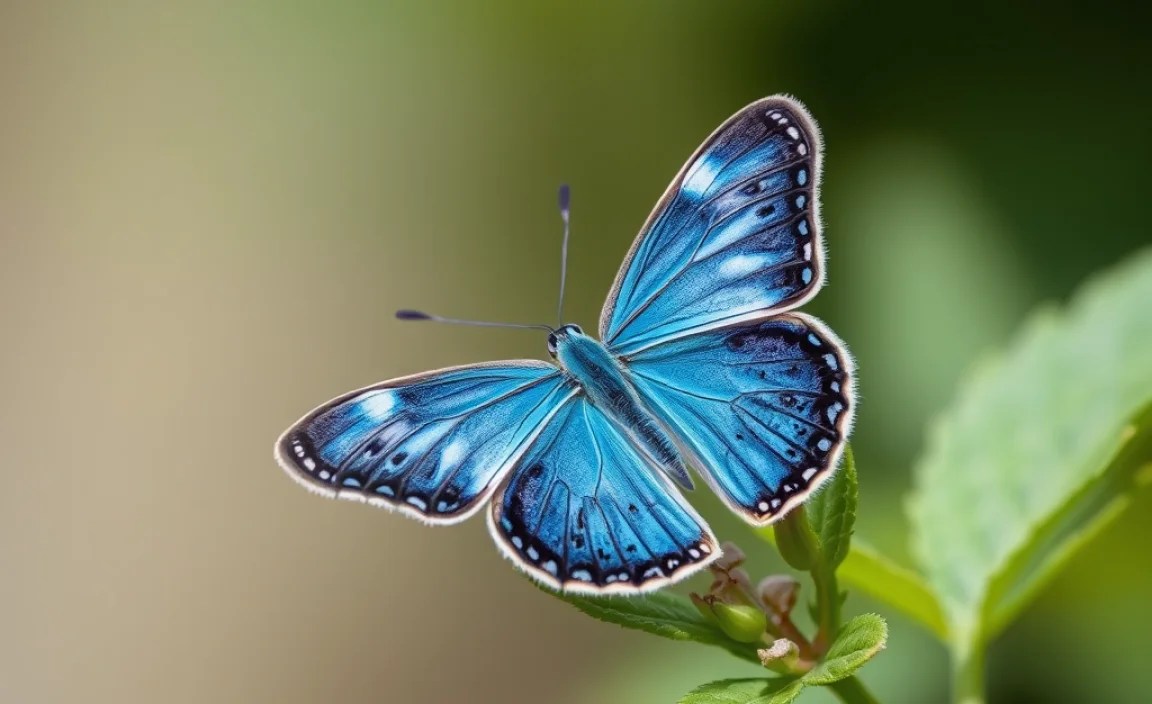
Identifying blue butterflies can seem challenging, but here are a few tips to help you distinguish between species:
- Observe the Color: Note the shade of blue. Is it bright sky-blue, pale powdery blue, or a dull grayish-blue?
- Check the Borders: Look at the edges of the wings. Are they broadly black, narrowly black, or checkered?
- Examine the Underside: The patterns and spots on the underside are often key to identification. Look for silver studs, orange spots, or distinct black spots.
- Consider the Habitat: Where did you find the butterfly? Some species are specific to chalk grasslands, while others are more common in gardens or woodlands.
- Note the Size: Some blues are noticeably smaller than others. The Small Blue, for example, is one of the tiniest butterflies in Europe.
Attracting Blue Butterflies to Your Garden

Want to see more blue butterflies in your garden? Here’s how to make your garden a butterfly haven:
- Plant Larval Foodplants: Provide the plants that caterpillars need to feed on. For example, plant Horseshoe Vetch for Adonis and Chalkhill Blues, or Holly and Ivy for Holly Blues.
- Offer Nectar Sources: Plant flowers that provide nectar for adult butterflies, such as lavender, thyme, and buddleja.
- Avoid Pesticides: Pesticides can harm or kill butterflies and other beneficial insects. Opt for organic gardening methods.
- Provide a Water Source: Butterflies need water. A shallow dish of water with pebbles for them to land on can be very helpful.
- Create a Sunny Spot: Butterflies need sunlight to warm their bodies. Make sure your garden has a sunny area where they can bask.
The Wildlife Trusts offer helpful advice on creating wildlife-friendly gardens.
The Conservation Status of European Blue Butterflies

Many European Blue Butterflies face threats from habitat loss, climate change, and pesticide use. Conservation efforts are crucial to protect these beautiful creatures. Here are some ways you can help:
- Support Conservation Organizations: Donate to or volunteer with organizations that work to protect butterfly habitats.
- Create Butterfly-Friendly Habitats: Encourage local authorities to manage grasslands and roadside verges in a way that benefits butterflies.
- Record Your Sightings: Report your butterfly sightings to local butterfly conservation groups. This data helps monitor populations and identify important habitats.
- Educate Others: Share your knowledge and passion for butterflies with friends, family, and your community.
Learn more about butterfly conservation from organizations like Butterfly Conservation.
Ecological Importance of Blue Butterflies
Blue butterflies play several important roles in their ecosystems:
- Pollination: As they feed on nectar, butterflies transfer pollen from flower to flower, helping plants reproduce.
- Food Source: Butterflies and their caterpillars are a food source for birds, reptiles, and other insects.
- Indicators of Environmental Health: Butterfly populations are sensitive to changes in their environment, making them useful indicators of habitat quality and climate change.
- Symbiotic Relationships: Many blue butterfly caterpillars have a symbiotic relationship with ants. The caterpillars secrete a sugary substance that ants feed on, and in return, the ants protect the caterpillars from predators.
Cultural Significance and Symbolism
Butterflies have long held cultural significance and symbolic meaning in many societies:
- Transformation and Rebirth: The butterfly’s life cycle, from egg to caterpillar to pupa to butterfly, symbolizes transformation, rebirth, and renewal.
- Beauty and Grace: Butterflies are often seen as symbols of beauty, grace, and freedom.
- Soul and Spirituality: In some cultures, butterflies are believed to represent the human soul or spirit.
- Good Luck: In some traditions, seeing a butterfly is considered a sign of good luck or a message from a loved one who has passed away.
Understanding the cultural significance of butterflies can deepen our appreciation for these fascinating creatures.
Frequently Asked Questions
What is the easiest way to identify a blue butterfly?
Start by noting the color and pattern on both the upper and undersides of the wings. Also, consider the habitat where you found it, as some species are specific to certain areas.
Are blue butterflies common in Europe?
Yes, several species of blue butterflies are common in Europe, but some are more localized and rarer than others. The Common Blue is one of the most widespread.
What do blue butterfly caterpillars eat?
Blue butterfly caterpillars feed on a variety of plants, often legumes such as bird’s-foot trefoil, clovers, and Horseshoe Vetch. The specific foodplant varies depending on the species.
How can I attract blue butterflies to my garden?
Plant larval foodplants and nectar sources, avoid pesticides, provide a water source, and create a sunny spot in your garden.
Why are butterfly populations declining?
Butterfly populations are declining due to habitat loss, climate change, pesticide use, and other environmental factors.
What is the difference between male and female blue butterflies?
In many species, males have brighter blue wings, while females are brown or have varying amounts of blue. The underside patterns are often similar but can have subtle differences.
What time of year are blue butterflies most active?
Blue butterflies are most active during the warmer months, from spring to autumn, with peak flight periods varying by species and location.
Conclusion
Exploring the world of European Blue Butterflies is a delightful journey into the beauty and complexity of nature. By learning to identify these stunning creatures, creating butterfly-friendly habitats, and supporting conservation efforts, you can play a part in protecting them for future generations. So, grab your binoculars, head outside, and start discovering the fascinating world of European Blue Butterflies!


