
European Butterflies in Italy List: See Them All!

Quick Summary: Italy boasts a rich diversity of European butterflies, with over 280 species flitting across its varied landscapes. From the vibrant Swallowtail to the elusive Apollo, these butterflies play crucial roles in Italy’s ecosystems. This guide introduces you to some of the most fascinating butterflies found in Italy, helping you identify and appreciate these winged wonders.
Italy, a land of rolling hills, ancient ruins, and sun-drenched coastlines, is also a haven for butterflies. These delicate creatures add splashes of color to the Italian countryside and play a vital role in the country’s ecosystems. Identifying these butterflies, however, can sometimes feel overwhelming with so many species. This guide will walk you through some of the most common and captivating European butterflies found in Italy. We’ll explore their unique characteristics, habitats, and behaviors, making butterfly spotting a delightful and educational experience. Get ready to discover the enchanting world of Italian butterflies!
A Flutter Through Italy: Discovering Its Butterflies

Italy’s diverse geography, ranging from the Alps to the Mediterranean coast, supports a remarkable variety of butterfly species. These butterflies are not only beautiful but also vital indicators of environmental health. Understanding and appreciating them can deepen our connection to nature and inspire conservation efforts.
Why Are Butterflies Important?
Butterflies are more than just pretty faces; they’re essential pollinators, contributing to the reproduction of countless plant species. They also serve as a food source for birds, bats, and other animals, playing a crucial role in the food chain. The presence and health of butterfly populations can reflect the overall health of an ecosystem.
Where to Find Butterflies in Italy
Butterflies can be found throughout Italy, from mountain meadows to coastal gardens. Some of the best places to spot them include:
- National parks and nature reserves
- Botanical gardens
- Rural farmlands with wildflowers
- Alpine meadows
- Woodland edges
The best time to see butterflies is during the warmer months, from spring to autumn, when they are most active.
Common European Butterflies in Italy: A Detailed List

Here’s a list of some of the most common and interesting butterfly species you might encounter in Italy:
Swallowtail (Papilio machaon)
The Swallowtail is one of Europe’s largest and most striking butterflies. Its bright yellow wings are adorned with black markings and distinctive tails, making it easily recognizable. They are often found in meadows and gardens, feeding on nectar from various flowers.
- Wingspan: 70-90 mm
- Habitat: Meadows, gardens, open woodlands
- Food Plants: Wild carrot, fennel, rue
Scarce Swallowtail (Iphiclides podalirius)
Similar to the Swallowtail, the Scarce Swallowtail has a more elongated shape and paler yellow wings with black stripes. It prefers warmer climates and can be found in orchards and open countryside.
- Wingspan: 70-80 mm
- Habitat: Orchards, open countryside
- Food Plants: Hawthorn, blackthorn, fruit trees
Apollo (Parnassius apollo)
The Apollo is a majestic butterfly with translucent white wings marked with black spots and distinctive red eyespots. It’s an alpine species, typically found in mountainous regions. Due to habitat loss, it is considered a species of conservation concern.
- Wingspan: 62-86 mm
- Habitat: Mountainous regions, alpine meadows
- Food Plants: Stonecrop (Sedum species)
Small Tortoiseshell (Aglais urticae)
The Small Tortoiseshell is a familiar sight in gardens and parks. Its bright orange wings are patterned with black and yellow markings, and a row of blue spots along the edge. It’s known for hibernating in buildings during the winter.
- Wingspan: 45-56 mm
- Habitat: Gardens, parks, meadows
- Food Plants: Nettles
Peacock Butterfly (Aglais io)
The Peacock Butterfly is named for the striking eyespots on its wings, which it uses to startle predators. Its deep reddish-brown wings provide a beautiful backdrop for these vibrant markings. It’s a common butterfly in gardens and woodlands.
- Wingspan: 50-55 mm
- Habitat: Gardens, woodlands, parks
- Food Plants: Nettles
Red Admiral (Vanessa atalanta)
The Red Admiral is a migratory butterfly with distinctive black wings adorned with red bands and white spots. It can be found in a variety of habitats, including gardens, woodlands, and coastal areas. It’s known for its strong flight and ability to travel long distances. The Smithsonian Institution provides valuable insights into butterfly migration patterns.
- Wingspan: 50-56 mm
- Habitat: Gardens, woodlands, coastal areas
- Food Plants: Nettles
Painted Lady (Vanessa cardui)
The Painted Lady is another migratory butterfly, famous for its global distribution. Its orange and brown wings are intricately patterned with black and white markings. It can be found almost anywhere, from deserts to mountains.
- Wingspan: 50-70 mm
- Habitat: Almost any habitat
- Food Plants: Thistles, mallows
Large White (Pieris brassicae)
The Large White, also known as the Cabbage White, is a common butterfly with white wings and black tips. It’s often seen in gardens and fields, and its caterpillars can be a pest on cabbage and other cruciferous plants.
- Wingspan: 50-65 mm
- Habitat: Gardens, fields, agricultural areas
- Food Plants: Cabbage, broccoli, other cruciferous plants
Small White (Pieris rapae)
Similar to the Large White, the Small White is smaller and has less extensive black markings. It’s also a common butterfly in gardens and fields and can be a pest on crops. The Xerces Society offers comprehensive information on managing garden pests in an environmentally friendly way.
- Wingspan: 40-50 mm
- Habitat: Gardens, fields, agricultural areas
- Food Plants: Cabbage, broccoli, other cruciferous plants
Orange Tip (Anthocharis cardamines)
The Orange Tip is a delightful spring butterfly with white wings and bright orange tips on the forewings (in males). It’s often found in meadows and woodland edges, where it feeds on nectar from various flowers.
- Wingspan: 40-50 mm
- Habitat: Meadows, woodland edges
- Food Plants: Cuckooflower, garlic mustard
Brown Argus (Aricia agestis)
The Brown Argus is a small butterfly with brown wings and orange spots along the edges. It can be found in grasslands and heathlands, where its caterpillars feed on rock-rose and other plants.
- Wingspan: 25-30 mm
- Habitat: Grasslands, heathlands
- Food Plants: Rock-rose, geraniums
Common Blue (Polyommatus icarus)
The Common Blue is a widespread butterfly with bright blue wings (in males) and brown wings with blue scales (in females). It’s found in a variety of habitats, including grasslands, meadows, and gardens. National Geographic provides excellent resources on the habitats of various butterfly species.
- Wingspan: 30-40 mm
- Habitat: Grasslands, meadows, gardens
- Food Plants: Bird’s-foot trefoil, other legumes
Adonis Blue (Polyommatus bellargus)
The Adonis Blue is a vibrant butterfly with dazzling blue wings (in males) and brown wings with orange spots (in females). It’s found in chalk grasslands, where its caterpillars feed on horseshoe vetch.
- Wingspan: 30-35 mm
- Habitat: Chalk grasslands
- Food Plants: Horseshoe vetch
Butterfly Identification Tips
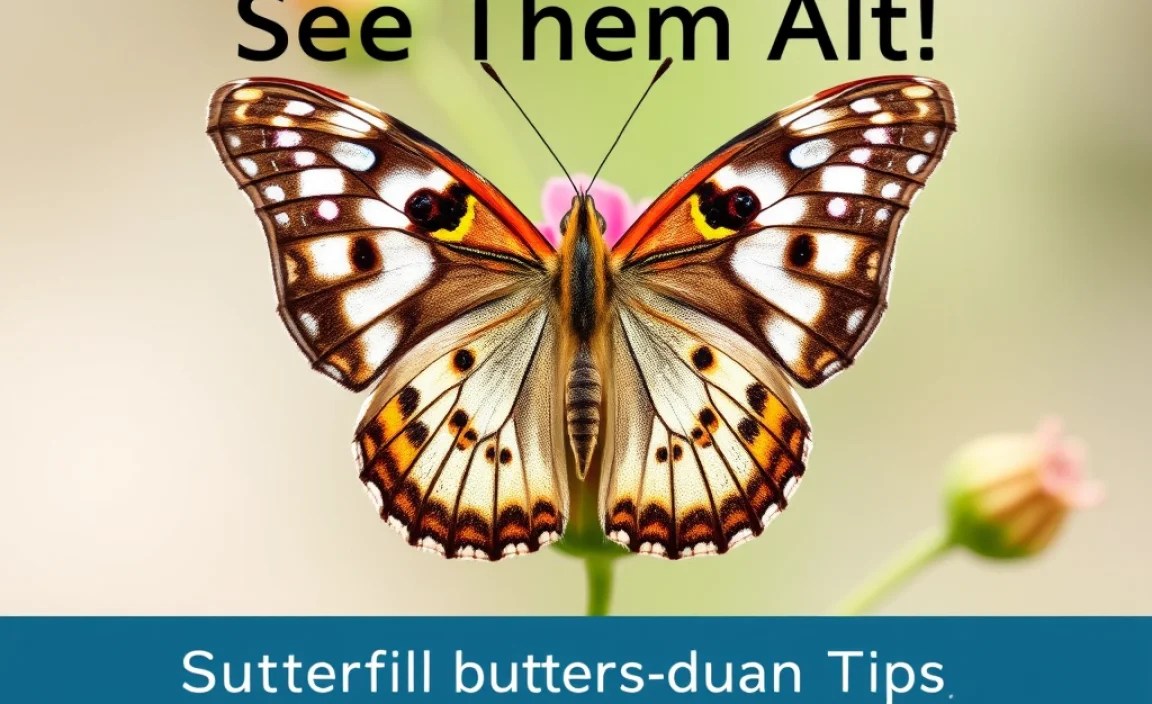
Identifying butterflies can be a rewarding experience. Here are some tips to help you:
- Observe the size and shape: Note the butterfly’s wingspan and overall body shape.
- Examine the wing patterns: Pay attention to the colors, spots, stripes, and other markings on the wings.
- Consider the habitat: Where did you find the butterfly? Different species prefer different habitats.
- Look at the behavior: How does the butterfly fly? What flowers does it visit?
- Use a field guide: A good field guide can be invaluable for identifying butterflies.
- Take a photo: If possible, take a photo of the butterfly and compare it to images in field guides or online resources.
Attracting Butterflies to Your Garden

Creating a butterfly-friendly garden is a wonderful way to support these beautiful creatures. Here are some tips:
- Plant nectar-rich flowers: Choose flowers that provide nectar for adult butterflies, such as lavender, buddleja (butterfly bush), and Verbena.
- Provide host plants: Plant the food plants that caterpillars need to survive, such as nettles for Small Tortoiseshells and milkweed for Monarchs.
- Offer a water source: Place a shallow dish of water with pebbles for butterflies to drink from.
- Avoid pesticides: Pesticides can harm butterflies and other beneficial insects.
- Provide shelter: Plant shrubs and trees to provide shelter from wind and predators.
- Leave some areas wild: Allow some areas of your garden to grow wild, providing habitat for butterflies and other wildlife.
Butterfly Conservation in Italy
Many butterfly species are facing threats due to habitat loss, climate change, and pesticide use. Supporting butterfly conservation is crucial for protecting these beautiful creatures and the ecosystems they inhabit.
How to Help
- Support conservation organizations: Donate to or volunteer with organizations that work to protect butterflies and their habitats.
- Create butterfly-friendly habitats: Plant a butterfly garden in your backyard or support local initiatives to create larger habitats.
- Reduce pesticide use: Use natural pest control methods in your garden and support farmers who use sustainable practices.
- Educate others: Share your knowledge and passion for butterflies with friends, family, and community members.
- Report sightings: Contribute to citizen science projects by reporting butterfly sightings to help monitor populations and track changes over time.
Table: Common Italian Butterflies and Their Characteristics
| Butterfly Species | Wingspan (mm) | Habitat | Food Plants |
|---|---|---|---|
| Swallowtail (Papilio machaon) | 70-90 | Meadows, gardens | Wild carrot, fennel, rue |
| Scarce Swallowtail (Iphiclides podalirius) | 70-80 | Orchards, open countryside | Hawthorn, blackthorn, fruit trees |
| Apollo (Parnassius apollo) | 62-86 | Mountainous regions | Stonecrop (Sedum species) |
| Small Tortoiseshell (Aglais urticae) | 45-56 | Gardens, parks, meadows | Nettles |
| Peacock Butterfly (Aglais io) | 50-55 | Gardens, woodlands, parks | Nettles |
| Red Admiral (Vanessa atalanta) | 50-56 | Gardens, woodlands, coastal areas | Nettles |
| Painted Lady (Vanessa cardui) | 50-70 | Almost any habitat | Thistles, mallows |
| Large White (Pieris brassicae) | 50-65 | Gardens, fields, agricultural areas | Cabbage, broccoli |
| Small White (Pieris rapae) | 40-50 | Gardens, fields, agricultural areas | Cabbage, broccoli |
| Orange Tip (Anthocharis cardamines) | 40-50 | Meadows, woodland edges | Cuckooflower, garlic mustard |
| Brown Argus (Aricia agestis) | 25-30 | Grasslands, heathlands | Rock-rose, geraniums |
| Common Blue (Polyommatus icarus) | 30-40 | Grasslands, meadows, gardens | Bird’s-foot trefoil |
| Adonis Blue (Polyommatus bellargus) | 30-35 | Chalk grasslands | Horseshoe vetch |
FAQ: Italian Butterflies
What is the most common butterfly in Italy?
The Small White (Pieris rapae) is one of the most commonly seen butterflies in Italy, often found in gardens and agricultural areas.
Are there any poisonous butterflies in Italy?
No, there are no poisonous butterflies in Italy. However, some butterflies, like the Apollo, are protected species due to their declining populations.
What is the best time of year to see butterflies in Italy?
The best time to see butterflies in Italy is from spring to autumn (April to September), when they are most active and abundant.
What kind of flowers attract butterflies in Italy?
Butterflies in Italy are attracted to nectar-rich flowers such as lavender, buddleja (butterfly bush), Verbena, and various wildflowers.
How can I create a butterfly-friendly garden in Italy?
To create a butterfly-friendly garden in Italy, plant nectar-rich flowers, provide host plants for caterpillars, offer a water source, avoid pesticides, and provide shelter.
Are butterflies important for the Italian ecosystem?
Yes, butterflies are crucial pollinators and play a vital role in the Italian ecosystem by contributing to plant reproduction and serving as a food source for other animals.
Where can I find the Apollo butterfly in Italy?
The Apollo butterfly (Parnassius apollo) is typically found in mountainous regions and alpine meadows in Italy.
Conclusion: Embrace the Beauty of Italian Butterflies
Exploring the world of European butterflies in Italy is an enriching journey that connects us to the natural beauty and ecological importance of these winged creatures. By learning to identify different species, creating butterfly-friendly habitats, and supporting conservation efforts, we can help ensure that these delicate creatures continue to flutter across the Italian landscape for generations to come. So, grab your field guide, head outdoors, and immerse yourself in the enchanting world of Italian butterflies. Every sighting is a small victory for nature, a reminder of the beauty that surrounds us, and an opportunity to contribute to a healthier planet. Happy butterfly watching!


