
Butterflies of British Columbia: A Colorful Guide

British Columbia is home to a stunning array of butterflies! From the vibrant Monarch to the elusive Western White, identifying these winged wonders can be a rewarding experience. This guide will help you recognize common species, understand their habitats, and learn how to support butterfly conservation in your own backyard.
Have you ever been captivated by the sight of a butterfly flitting through your garden? British Columbia’s diverse landscapes—from coastal rainforests to arid grasslands—host an incredible variety of these delicate creatures. Identifying them, however, can sometimes feel like a daunting task. But don’t worry! This guide is designed to help you easily recognize the most common butterflies in BC, understand their unique characteristics, and discover how you can play a part in protecting their habitats. Get ready to explore the fascinating world of BC butterflies!
Frequently Asked Questions About Butterflies in British Columbia
What is the most common butterfly in British Columbia?
The Cabbage White butterfly is one of the most common butterflies in British Columbia. You’ll often see them fluttering around gardens and fields.
Are Monarch butterflies found in BC?
Yes, Monarch butterflies can be found in British Columbia, especially during their migration. However, their numbers are declining, so spotting one is a special treat.
How can I attract butterflies to my garden?
Planting nectar-rich flowers like lavender, butterfly bush, and coneflowers is a great way to attract butterflies. Also, provide a water source and avoid using pesticides.
What is the lifespan of a butterfly?
The lifespan of a butterfly varies by species. Some butterflies live only a few weeks, while others, like the Monarch, can live for several months.
What do caterpillars eat?
Caterpillars have different food preferences depending on the butterfly species. Many eat leaves from specific host plants. For example, Monarch caterpillars exclusively eat milkweed.
Are butterflies important for the environment?
Yes! Butterflies are important pollinators. They help plants reproduce by carrying pollen from one flower to another.
Where can I learn more about butterfly conservation?
Organizations like the Xerces Society and the David Suzuki Foundation offer valuable information and resources on butterfly conservation. Check out their websites to learn more.
Identifying Butterflies of British Columbia

British Columbia boasts a rich diversity of butterfly species. Learning to identify these beautiful insects can enhance your appreciation for the natural world. Here’s a guide to some of the most commonly seen butterflies in BC.
Swallowtail Butterflies
Swallowtails are among the largest and most striking butterflies you’ll encounter. They are known for their distinctive “tails” on their hindwings.
Western Tiger Swallowtail (Papilio rutulus)
The Western Tiger Swallowtail is a common sight in BC. These butterflies are large and yellow with black stripes, resembling a tiger’s pattern.
- Appearance: Bright yellow wings with bold black stripes.
- Habitat: Open woodlands, gardens, and riparian areas.
- Host Plants: Willow, aspen, and cottonwood trees.
- Fun Fact: The caterpillars can mimic bird droppings to avoid predators.
Two-Tailed Swallowtail (Papilio multicaudata)
The Two-Tailed Swallowtail is similar to the Western Tiger Swallowtail, but it has two “tails” on each hindwing instead of one.
- Appearance: Yellow with black stripes and two tails on each hindwing.
- Habitat: Canyons, streamsides, and open forests.
- Host Plants: Cherry and ash trees.
- Fun Fact: They are strong fliers and can often be seen soaring high in the sky.
Brush-Footed Butterflies
Brush-footed butterflies are a large and diverse group. They get their name from their reduced front legs, which they use for tasting rather than walking.
Monarch (Danaus plexippus)
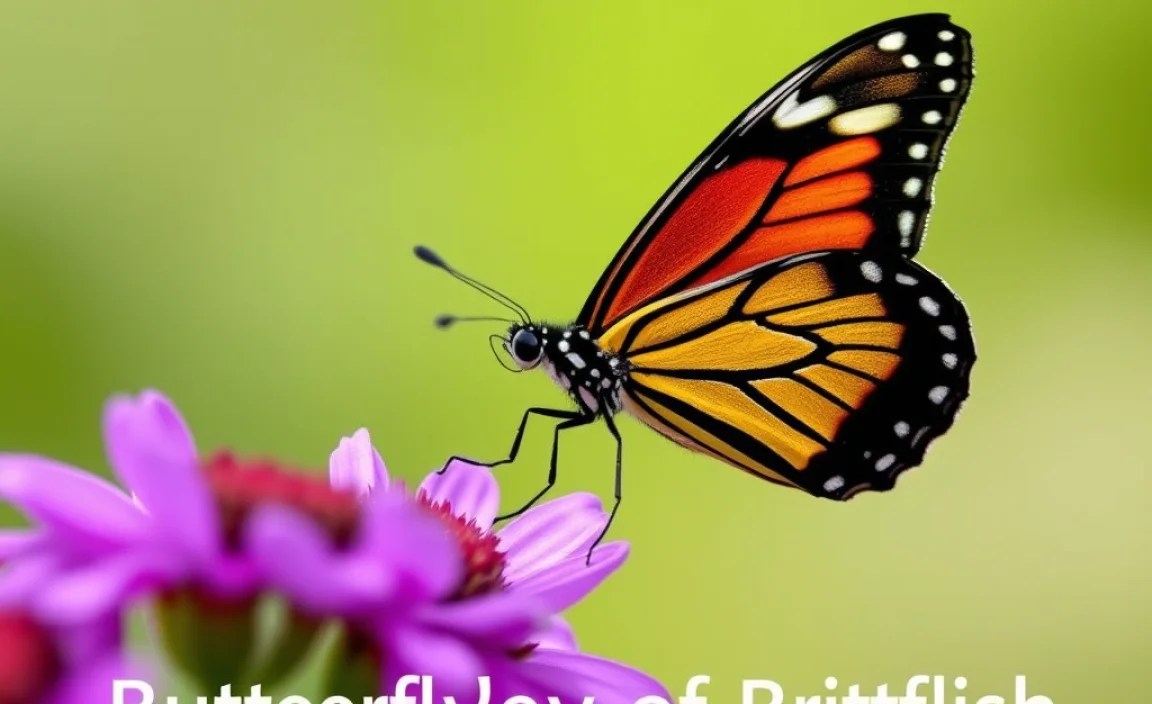
The Monarch is famous for its long migration. Although their numbers have declined, they are still seen in BC.
- Appearance: Bright orange wings with black borders and white spots.
- Habitat: Open fields, meadows, and gardens.
- Host Plants: Milkweed (the only food source for Monarch caterpillars).
- Fun Fact: Monarchs undertake a multi-generational migration across North America.
Painted Lady (Vanessa cardui)
The Painted Lady is a widespread butterfly found on every continent except Antarctica.
- Appearance: Orange and brown wings with black and white markings.
- Habitat: Almost any open habitat, including gardens, fields, and roadsides.
- Host Plants: Thistle, mallow, and various other plants.
- Fun Fact: Painted Ladies are strong migrants and can travel long distances.
Red Admiral (Vanessa atalanta)
The Red Admiral is known for its striking black wings with red bands.
- Appearance: Dark brown to black wings with bright red bands and white spots.
- Habitat: Woodlands, parks, and gardens.
- Host Plants: Nettles.
- Fun Fact: Red Admirals can overwinter in warmer regions of BC.
Whites and Sulphurs
These butterflies are typically white, yellow, or orange. They are often seen in open areas and are important pollinators.
Cabbage White (Pieris rapae)
The Cabbage White is one of the most common butterflies in BC, often seen in gardens and agricultural areas.
- Appearance: White wings with small black spots.
- Habitat: Gardens, fields, and disturbed areas.
- Host Plants: Cabbage, broccoli, and other cruciferous plants.
- Fun Fact: The Cabbage White is considered a pest because its caterpillars can damage crops.
Western White (Pontia occidentalis)
The Western White is similar to the Cabbage White but is native to western North America.
- Appearance: White wings with faint gray markings.
- Habitat: Open forests, meadows, and rocky slopes.
- Host Plants: Mustard family plants.
- Fun Fact: They are often found in higher elevations.
Orange Sulphur (Colias eurytheme)
The Orange Sulphur is a bright orange butterfly commonly seen in fields and meadows.
- Appearance: Bright orange wings with black borders.
- Habitat: Fields, meadows, and roadsides.
- Host Plants: Alfalfa, clover, and other legumes.
- Fun Fact: The intensity of the orange color can vary depending on the individual and the season.
Blues and Coppers
These small butterflies are often overlooked, but they add a touch of beauty to any garden. Males are typically blue, while females can be blue, brown, or orange.
Silvery Blue (Glaucopsyche lygdamus)
The Silvery Blue is a delicate butterfly with silvery-blue wings.
- Appearance: Silvery-blue wings (males) or brownish-gray wings (females) with white fringes.
- Habitat: Open woodlands, meadows, and grasslands.
- Host Plants: Various legumes.
- Fun Fact: They often form symbiotic relationships with ants, which protect the caterpillars from predators.
Purplish Copper (Lycaena helloides)
The Purplish Copper is a small butterfly with coppery-orange wings.
- Appearance: Coppery-orange wings with dark spots.
- Habitat: Marshes, meadows, and damp areas.
- Host Plants: Dock and knotweed.
- Fun Fact: The color intensity can vary depending on the location and time of year.
Butterfly Habitats in British Columbia

British Columbia’s diverse landscapes provide a variety of habitats for butterflies. Understanding these habitats can help you find and identify different species.
Coastal Regions
Coastal areas are home to butterflies that thrive in moist, temperate climates. Look for species like the Red Admiral and Painted Lady in gardens and parks.
Mountainous Regions
The mountains of BC offer habitats for butterflies adapted to cooler temperatures and higher altitudes. The Western White and Silvery Blue can be found in these areas.
Grasslands and Open Fields
Grasslands and open fields are ideal habitats for butterflies that feed on nectar-rich flowers. The Orange Sulphur and Monarch are commonly seen in these areas.
Woodlands and Forests
Woodlands and forests provide shelter and food for many butterfly species. The Western Tiger Swallowtail and Two-Tailed Swallowtail are often found in these habitats.
Attracting Butterflies to Your Garden

Creating a butterfly-friendly garden is a rewarding way to support these important pollinators. Here are some tips to attract butterflies to your yard.
Plant Nectar-Rich Flowers
Butterflies feed on nectar, so planting flowers that provide a good source of nectar is essential. Some popular choices include:
- Butterfly Bush (Buddleja davidii)
- Lavender (Lavandula)
- Coneflower (Echinacea)
- Phlox (Phlox paniculata)
- Zinnia (Zinnia elegans)
Provide Host Plants for Caterpillars
Butterflies lay their eggs on specific host plants, which the caterpillars then feed on. Planting these plants is crucial for supporting the butterfly life cycle.
- Milkweed (Asclepias) for Monarchs
- Nettles (Urtica dioica) for Red Admirals
- Cabbage, broccoli, and other cruciferous plants for Cabbage Whites
- Willow, aspen, and cottonwood trees for Western Tiger Swallowtails
Offer a Water Source
Butterflies need water to stay hydrated. Provide a shallow dish of water with pebbles or sand for them to land on.
Avoid Pesticides
Pesticides can harm or kill butterflies and other beneficial insects. Avoid using pesticides in your garden, or choose organic options that are less harmful.
Provide Shelter
Butterflies need shelter from wind and rain. Plant shrubs and trees to provide them with a safe place to rest.
Butterfly Conservation in British Columbia

Many butterfly species are facing threats from habitat loss, climate change, and pesticide use. Here are some ways you can help protect butterflies in British Columbia.
Support Conservation Organizations
Organizations like the Xerces Society and the David Suzuki Foundation are working to protect butterflies and their habitats. Support their work by donating or volunteering.
Create Butterfly-Friendly Habitats
Planting a butterfly garden is a great way to provide food and shelter for butterflies. Encourage your neighbors and community to do the same.
Educate Others
Share your knowledge about butterflies with others. Educate your friends, family, and community about the importance of butterfly conservation.
Advocate for Change
Support policies and initiatives that protect butterfly habitats and reduce pesticide use. Contact your elected officials and let them know you care about butterfly conservation.
Butterfly Identification Guide
Use this table to quickly identify common butterflies in British Columbia based on their appearance and habitat.
| Butterfly Species | Appearance | Habitat | Host Plants |
|---|---|---|---|
| Western Tiger Swallowtail | Yellow with black stripes | Open woodlands, gardens | Willow, aspen, cottonwood |
| Two-Tailed Swallowtail | Yellow with black stripes, two tails | Canyons, streamsides | Cherry, ash |
| Monarch | Orange with black borders | Open fields, meadows | Milkweed |
| Painted Lady | Orange and brown with black markings | Any open habitat | Thistle, mallow |
| Red Admiral | Black with red bands | Woodlands, parks, gardens | Nettles |
| Cabbage White | White with black spots | Gardens, fields | Cabbage, broccoli |
| Western White | White with faint gray markings | Open forests, meadows | Mustard family plants |
| Orange Sulphur | Bright orange with black borders | Fields, meadows | Alfalfa, clover |
| Silvery Blue | Silvery-blue (males), brownish-gray (females) | Open woodlands, meadows | Legumes |
| Purplish Copper | Coppery-orange with dark spots | Marshes, meadows | Dock, knotweed |
The Symbolic Meaning of Butterflies
Beyond their beauty, butterflies hold deep symbolic meanings in various cultures. Understanding these meanings can add another layer of appreciation for these remarkable creatures.
Transformation and Rebirth
The butterfly’s life cycle, from egg to caterpillar to pupa to butterfly, is a powerful symbol of transformation and rebirth. It represents the ability to overcome challenges and emerge as something new and beautiful. This symbolism is often associated with personal growth and spiritual development.
Hope and Positivity
Butterflies are often seen as symbols of hope and positivity. Their delicate beauty and graceful flight can bring a sense of joy and inspiration. They remind us to appreciate the beauty in life and to stay hopeful even in difficult times.
Freedom and Joy
Butterflies symbolize freedom and joy. Their ability to fly freely from flower to flower represents the liberation from earthly constraints and the pursuit of happiness. They encourage us to embrace our freedom and to find joy in the simple things in life.
Soul and Spirituality
In some cultures, butterflies are associated with the soul and spirituality. They are seen as messengers from the spirit world or as symbols of departed loved ones. This symbolism reflects the belief that butterflies carry the essence of the soul and can connect us to the spiritual realm.
Resources for Further Learning
To deepen your knowledge of butterflies, explore these resources:
- The Xerces Society: A non-profit organization dedicated to protecting invertebrates and their habitats. Xerces Society Website
- Butterflies and Moths of North America: A comprehensive website with information on butterfly and moth species. Butterflies and Moths of North America
- Local Butterfly Guides: Field guides specific to British Columbia can be invaluable for identification.
Exploring the world of butterflies in British Columbia is an adventure filled with beauty and discovery. By learning to identify these fascinating creatures, creating butterfly-friendly habitats, and supporting conservation efforts, you can play a vital role in protecting these important pollinators for future generations. So, grab your binoculars, head outdoors, and immerse yourself in the enchanting world of BC butterflies!


