
Butterflies in Deserts of India: A Hidden Paradise!

Butterflies can indeed thrive in the deserts of India! These resilient insects have adapted to survive in harsh, arid conditions by using strategies like seeking shade, conserving water, and feeding on desert plants. You’ll find species like the Common Grass Yellow and the Plain Tiger fluttering in these unexpected habitats.
Have you ever imagined butterflies fluttering amidst the stark beauty of an Indian desert? It might seem impossible, but these delicate creatures are surprisingly resilient. Many people assume that butterflies need lush, green environments to survive, but several species have adapted to the harsh conditions of the Indian deserts. This article will guide you through the fascinating world of butterflies in these arid landscapes, showing you how they survive and where to find them. Get ready to discover the hidden beauty and incredible adaptations of these desert butterflies!
Butterflies in Deserts of India: An Unexpected Discovery

India’s deserts, particularly the Thar Desert, are known for their extreme temperatures and scarce rainfall. Yet, life finds a way to flourish even here. Butterflies, often associated with vibrant gardens and forests, have carved out a niche for themselves in these challenging environments. Understanding their presence requires a closer look at their adaptations and the specific desert ecosystems they inhabit.
Adaptations for Survival
Butterflies in deserts have developed unique strategies to cope with the arid climate. These adaptations help them conserve water, regulate their body temperature, and find sustenance in the sparse vegetation.
- Water Conservation: Desert butterflies minimize water loss by reducing their activity during the hottest parts of the day. They also have physiological adaptations that allow them to extract moisture from food more efficiently.
- Thermoregulation: Butterflies use behavioral strategies to regulate their body temperature. They seek shade under rocks or desert plants and orient their bodies to minimize exposure to direct sunlight.
- Dietary Adaptations: Desert butterflies feed on nectar from desert flowers, which bloom during the monsoon season or after occasional rains. Some species also rely on specific host plants for their larval stages.
Common Butterfly Species in Indian Deserts
Several butterfly species have been identified in the deserts of India. These butterflies showcase remarkable resilience and adaptability.
- Common Grass Yellow (Eurema hecabe): This small, bright yellow butterfly is one of the most common species found in Indian deserts. It is highly adaptable and can thrive in various habitats, including arid regions.
- Plain Tiger (Danaus chrysippus): A medium-sized butterfly with orange wings and black markings, the Plain Tiger is known for its migratory behavior. It can be found in desert areas, especially where its host plants are available.
- Small Salmon Arab (Colotis amata): This butterfly is recognized by its white and orange wings, often seen in arid landscapes.
- Crimson Tip (Colotis danae): This butterfly is known for the bright red or pink tips on its forewings. It is commonly found in dry, open areas and deserts.
- Indian Painted Lady (Vanessa cardui): This widespread butterfly is found across various habitats, including deserts. It is known for its migratory behavior and ability to adapt to different environments.
Identifying Desert Butterflies
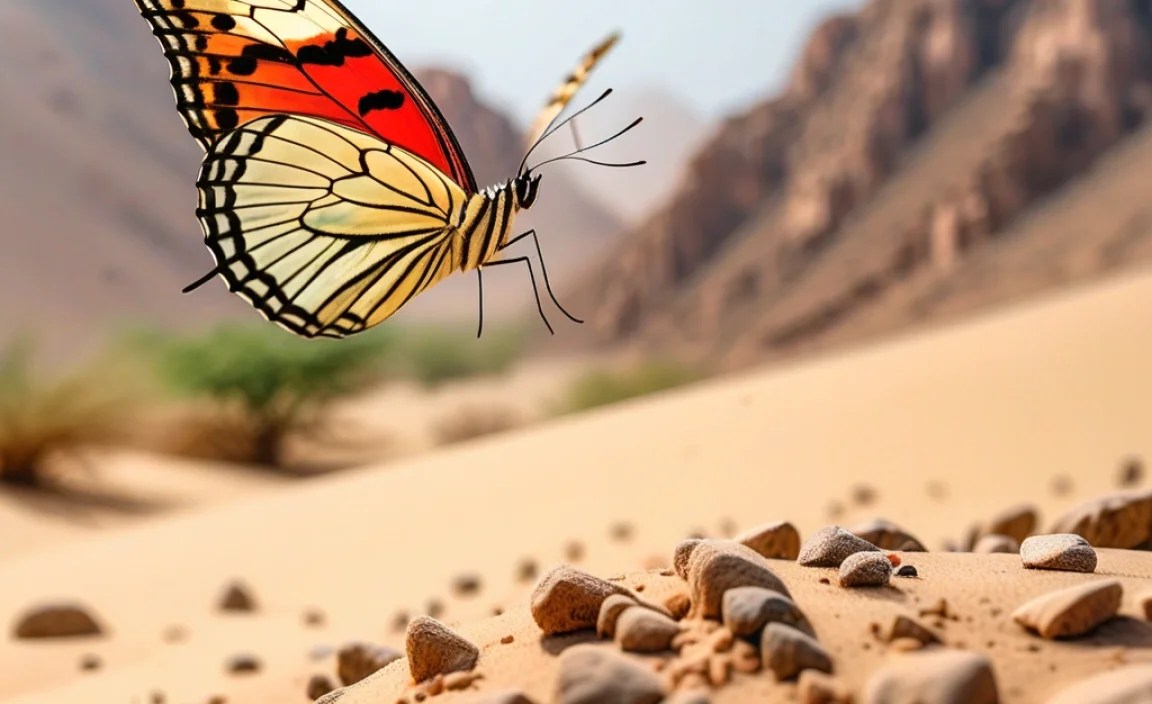
Identifying butterflies in the desert can be a rewarding experience. Here’s how to get started:
Tools for Identification
Having the right tools can greatly assist in identifying butterfly species. Here are some essentials:
- Butterfly Field Guide: A good field guide with detailed descriptions and images of Indian butterflies is invaluable. Look for guides that include information on habitat and distribution.
- Binoculars: A pair of binoculars allows you to observe butterflies from a distance without disturbing them.
- Camera: A camera can help you capture images of butterflies for later identification.
- Notebook and Pen: Taking notes on the butterfly’s size, color, and behavior can aid in identification.
Key Characteristics to Observe
When identifying butterflies, pay attention to the following characteristics:
- Size and Shape: Note the butterfly’s size (small, medium, large) and the shape of its wings.
- Color and Markings: Observe the colors and patterns on the wings. Look for distinctive spots, stripes, or borders.
- Flight Pattern: Describe how the butterfly flies – is it fast and erratic, or slow and graceful?
- Habitat: Note the type of habitat where you found the butterfly, such as sandy dunes, rocky outcrops, or near specific plants.
- Behavior: Observe the butterfly’s behavior, such as feeding on nectar, basking in the sun, or flying in a particular pattern.
Example: Identifying the Common Grass Yellow
Let’s walk through an example of how to identify a Common Grass Yellow butterfly:
- Observe the Size and Shape: The Common Grass Yellow is a small butterfly with a wingspan of about 4 to 5 cm.
- Note the Color and Markings: Its wings are bright yellow with a black border on the forewings. The underside of the wings is a paler yellow with faint markings.
- Consider the Habitat: This butterfly is commonly found in open grassy areas, gardens, and even desert fringes.
- Check the Behavior: It is a fast flier and often seen feeding on nectar from small flowers.
Using these observations and comparing them with a field guide, you can confidently identify the Common Grass Yellow.
Where to Find Butterflies in Indian Deserts

Knowing where to look increases your chances of spotting these desert butterflies.
Prime Locations
Certain areas within Indian deserts are more likely to host butterfly populations:
- Desert National Park, Rajasthan: This park is one of the largest protected areas in the Thar Desert and supports a variety of desert wildlife, including butterflies.
- Areas Near Water Sources: Butterflies are often found near oases, waterholes, and seasonal streams where vegetation is more abundant.
- Gardens and Plantations: In some desert regions, gardens and plantations provide a refuge for butterflies with a reliable source of nectar and host plants.
- Kutch, Gujarat: The arid and semi-arid regions of Kutch in Gujarat also host a variety of butterfly species adapted to dry conditions.
Best Times to Visit
The best time to observe butterflies in the desert is during the cooler months and after rainfall:
- Post-Monsoon Season (September to November): After the monsoon, desert plants bloom, providing nectar for butterflies.
- Early Morning and Late Afternoon: Butterflies are most active during the cooler parts of the day.
- Avoid the Peak Summer Months (April to June): The extreme heat makes it difficult for butterflies to survive, and they are less active.
Creating a Butterfly-Friendly Desert Garden
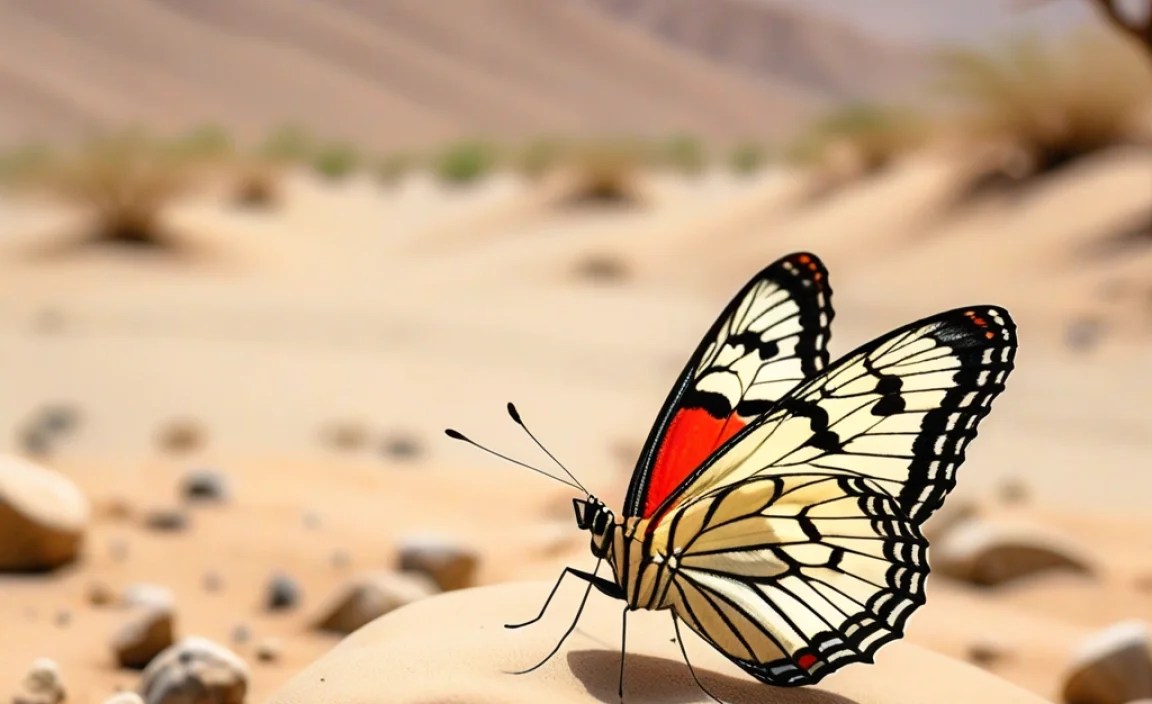
Even in arid environments, you can create a small haven for butterflies. Here’s how:
Choosing the Right Plants
Selecting the right plants is crucial for attracting butterflies to your garden.
- Nectar Plants: Plant flowers that provide nectar for adult butterflies. Some good choices include:
- Lantana (Lantana camara): A hardy plant that produces clusters of colorful flowers.
- Zinnia (Zinnia elegans): Easy-to-grow flowers that come in a variety of colors.
- Cosmos (Cosmos bipinnatus): Delicate flowers that attract many butterfly species.
- Host Plants: Provide plants that serve as food for butterfly larvae. Some options include:
- Milkweed (Asclepias spp.): Essential for Monarch butterflies, but also beneficial for other species.
- Citrus Trees (Citrus spp.): Host plants for the Citrus Swallowtail butterfly.
- গুলঞ্চ (Tinospora cordifolia): গুলঞ্চ is a host plant for the Common Mormon butterfly.
Providing Water and Shelter
Butterflies need water and shelter to survive in the harsh desert environment.
- Water Source: Create a shallow dish with water and add pebbles or marbles for butterflies to land on.
- Shelter: Plant shrubs and trees to provide shade and protection from the sun and wind.
- Avoid Pesticides: Use organic gardening methods to protect butterflies and their larvae from harmful chemicals.
Maintaining Your Garden
Regular maintenance will keep your garden thriving and attractive to butterflies.
- Watering: Water plants regularly, especially during dry periods.
- Weeding: Keep the garden free of weeds that compete with your plants.
- Pruning: Prune plants to encourage new growth and flowering.
The Ecological Importance of Desert Butterflies

Butterflies play a vital role in desert ecosystems.
Pollination
Butterflies are important pollinators, helping to transfer pollen from one flower to another. This process is essential for the reproduction of many desert plants.
Food Source
Butterflies and their larvae serve as a food source for other animals, such as birds, lizards, and insects. They are an integral part of the desert food web.
Indicators of Environmental Health
Butterfly populations can indicate the health of an ecosystem. Changes in butterfly numbers or species diversity can signal environmental problems, such as habitat loss or pollution.
Conservation Efforts
Protecting desert butterflies and their habitats is crucial for maintaining biodiversity.
Habitat Preservation
Conserving and restoring desert habitats is essential for the survival of butterfly populations. This includes protecting natural areas, managing grazing, and controlling invasive species.
Sustainable Practices
Promoting sustainable land management practices can help to protect desert ecosystems. This includes reducing pesticide use, conserving water, and supporting local communities.
Raising Awareness
Educating the public about the importance of desert butterflies can inspire conservation action. This can involve organizing butterfly walks, creating educational materials, and supporting butterfly conservation organizations.
Photographing Desert Butterflies
Capturing beautiful images of desert butterflies can be a rewarding experience. Here are some tips for successful butterfly photography:
Equipment
Having the right equipment can make a big difference in the quality of your photos.
- Camera: A DSLR or mirrorless camera with a macro lens is ideal for capturing close-up images of butterflies.
- Lens: A macro lens with a focal length of 100mm or greater allows you to focus on small details.
- Tripod: A tripod helps to stabilize your camera and reduce camera shake, especially in low light conditions.
- Flash: An external flash can provide additional light when needed, but be careful not to startle the butterflies.
Techniques
Using the right techniques can help you capture stunning butterfly photos.
- Approach Slowly: Approach butterflies slowly and quietly to avoid startling them.
- Focus Carefully: Use manual focus to ensure that your subject is sharp.
- Use Natural Light: Whenever possible, use natural light to capture the colors and textures of the butterflies.
- Capture Behavior: Look for opportunities to capture butterflies feeding on nectar, basking in the sun, or interacting with other butterflies.
Ethical Considerations
It’s important to photograph butterflies responsibly and ethically.
- Avoid Disturbing Butterflies: Do not touch or handle butterflies, and avoid disturbing their habitat.
- Respect Their Space: Give butterflies plenty of space and avoid crowding them.
- Leave No Trace: Pack out everything you pack in and leave the area as you found it.
Butterflies and Desert Culture
Butterflies often hold symbolic significance in various cultures, including those in desert regions.
Symbolism
In many cultures, butterflies symbolize transformation, hope, and new beginnings. Their ability to transform from a caterpillar to a beautiful winged creature is often seen as a metaphor for personal growth and spiritual development.
Folklore
Butterflies appear in the folklore and mythology of many cultures. They are often associated with spirits, souls, and messengers from the divine realm.
Art and Literature
Butterflies have inspired artists and writers for centuries. They are often depicted in paintings, poems, and stories as symbols of beauty, freedom, and the ephemeral nature of life.
Threats to Desert Butterflies
Despite their adaptations, desert butterflies face several threats.
Habitat Loss
Habitat loss due to agriculture, urbanization, and mining is a major threat to desert butterflies. As their natural habitats are destroyed, butterfly populations decline.
Climate Change
Climate change is altering desert ecosystems, leading to increased temperatures, reduced rainfall, and more frequent droughts. These changes can negatively impact butterfly populations by affecting their food sources and breeding habitats.
Pesticide Use
Pesticide use in agriculture and gardening can harm butterflies and their larvae. Pesticides can contaminate nectar and host plants, leading to poisoning and death.
Overgrazing
Overgrazing by livestock can degrade desert habitats and reduce the availability of host plants for butterflies. This can lead to a decline in butterfly populations.
Supporting Butterfly Conservation
There are many ways to support butterfly conservation efforts.
Citizen Science
Participate in citizen science projects to monitor butterfly populations and collect data on their distribution and behavior. This information can help scientists understand the needs of butterflies and develop effective conservation strategies. The National Geographic Society and the Xerces Society are good sources of information on citizen science projects.
Education and Outreach
Educate others about the importance of butterflies and their conservation needs. Share your knowledge with friends, family, and community members, and encourage them to take action to protect butterflies.
Supporting Organizations
Support butterfly conservation organizations by donating your time or money. These organizations work to protect butterfly habitats, conduct research, and promote sustainable practices.
| Organization | Focus | Website |
|---|---|---|
| The Xerces Society | Invertebrate Conservation | xerces.org |
| Butterfly Conservation Society | Butterfly Conservation | [Butterfly Conservation Society Website] |
| Wildlife Institute of India | Wildlife Research and Conservation | wii.gov.in |
FAQ: Butterflies in Deserts of India
1. Can butterflies really survive in the desert?
Yes, certain butterfly species have adapted to survive in desert environments by conserving water, seeking shade, and feeding on desert plants.
2. What do desert butterflies eat?
Desert butterflies primarily feed on nectar from desert flowers. Their larvae feed on the leaves of specific host plants found in the desert.
3. How do butterflies conserve water in the desert?
Butterflies conserve water by minimizing activity during the hottest parts of the day and extracting moisture efficiently from their food.
4. What is the best time to see butterflies in the desert?
The best time is after the monsoon season (September to November) and during the cooler parts of the day (early morning and late afternoon).
5. Where can I find butterflies in the Thar Desert?
Look for butterflies in areas near water sources, gardens, plantations, and in protected areas like Desert National Park in Rajasthan.
6. How can I help conserve desert butterflies?
You can help by supporting habitat preservation, promoting sustainable practices, raising awareness, and participating in citizen science projects.
7. What kind of garden can I create to attract butterflies in arid regions?
Plant nectar-rich flowers like lantana and zinnia, provide host plants, supply a water source, and offer shade and shelter to create a butterfly-friendly garden.
Conclusion
Butterflies in the deserts of India are a testament to the incredible adaptability of life. These delicate creatures thrive in seemingly inhospitable environments, showcasing unique strategies for survival. By learning about these butterflies, understanding their ecological importance, and supporting conservation efforts, we can help protect these remarkable insects and the fragile ecosystems they inhabit. Whether you’re a nature enthusiast, a gardener, or a conservation supporter, there’s a role for everyone in ensuring the future of butterflies in the deserts of India. So, let’s continue to explore, appreciate, and protect these beautiful symbols of resilience and transformation.


