
Blue Butterflies in Africa: Discover the Secret!

Quick Summary:
Discovering blue butterflies in Africa is an exciting adventure! These beautiful insects, often belonging to the Lycaenidae family, can be found across the continent. Key species include the African Cupid and various Jewel butterflies. To spot them, explore diverse habitats like forests and grasslands, and learn to identify their unique markings and behaviors. With patience and a keen eye, you’ll be amazed by the vibrant blue butterflies of Africa.
Have you ever dreamed of seeing a flash of brilliant blue flitting through an African landscape? Many nature lovers are fascinated by the vibrant colors and delicate beauty of butterflies. Figuring out where to find these elusive creatures and how to identify them can be a challenge. But don’t worry! This guide will walk you through everything you need to know to spot and appreciate the stunning blue butterflies of Africa.
Ready to explore the captivating world of African blue butterflies? We’ll cover the best places to find them, how to identify different species, and some fascinating facts about their lives. Let’s get started!
Identifying Blue Butterflies in Africa

Blue butterflies in Africa are primarily from the family Lycaenidae, often called “blues” or “gossamer-winged butterflies.” Identifying them involves observing specific features:
- Color and Markings: Note the shade of blue and any patterns on the wings.
- Size: Blue butterflies are generally small.
- Habitat: Knowing the typical environment can help narrow down the species.
Common Species
Here are a few notable species of blue butterflies you might encounter in Africa:
African Cupid (Cupidopsis cissus)
The African Cupid is a small, delicate butterfly with pale blue wings. It’s commonly found in grasslands and open woodlands. Look for its distinctive flight pattern and the small size of its wings.
Jewel Butterflies (Hypolycaena spp.)
Jewel butterflies are known for their bright, metallic blue wings and often have small tails on their hindwings. They are typically found in forested areas. The genus Hypolycaena has several species with varying patterns and shades of blue.
Other Notable Blues
- Azanus jesous (Topaz Blue): This butterfly has a widespread distribution and can be found in various habitats.
- Lepidochrysops spp.: Several species in this genus are endemic to specific regions of Africa and showcase unique blue shades.
Distinguishing Features
To accurately identify blue butterflies, pay attention to these details:
- Wing Shape: Note whether the wings are rounded or more angular.
- Underside Patterns: The patterns on the underside of the wings can be crucial for identification.
- Size and Proportions: Compare the size of the butterfly to common objects or use a ruler for a more precise measurement.
Use the following table to help distinguish between the different species:
| Species | Size | Color | Habitat | Distinguishing Features |
|---|---|---|---|---|
| African Cupid (Cupidopsis cissus) | Small (1-2 cm) | Pale Blue | Grasslands, Open Woodlands | Delicate wings, small size |
| Jewel Butterflies (Hypolycaena spp.) | Small to Medium (2-3 cm) | Metallic Blue | Forests | Bright color, often with tails |
| Azanus jesous (Topaz Blue) | Small (1-2 cm) | Light Blue | Various | Widespread, adaptable |
| Lepidochrysops spp. | Variable (2-4 cm) | Various Blues | Specific Regions | Endemic, unique patterns |
Where to Find Blue Butterflies in Africa
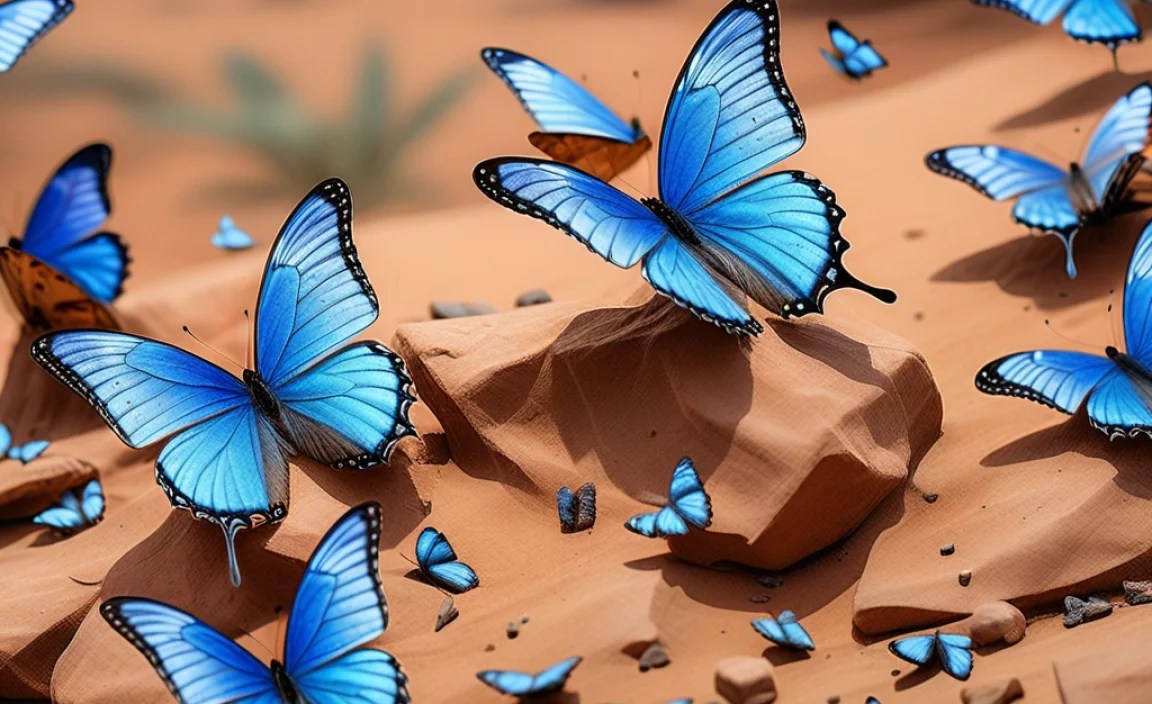
Locating blue butterflies requires understanding their preferred habitats and behaviors. Here’s where to look:
Prime Habitats
- Forests: Many Jewel butterflies thrive in the sheltered environment of forests.
- Grasslands: Open grasslands provide the right conditions for species like the African Cupid.
- Woodlands: Open woodlands offer a mix of shelter and sunlight that many blue butterflies enjoy.
- Gardens and Parks: Urban green spaces can also host blue butterflies if they provide the right host plants.
Specific Regions
Certain regions in Africa are particularly rich in butterfly diversity:
- East Africa: Countries like Kenya, Tanzania, and Uganda boast diverse habitats and butterfly species.
- Southern Africa: South Africa, Zimbabwe, and Botswana offer varied landscapes from forests to savannas.
- West Africa: Nigeria, Ghana, and Cameroon have tropical forests that are home to many butterfly species.
Tips for Spotting Butterflies
To increase your chances of seeing blue butterflies, consider these tips:
- Timing: Butterflies are most active during warm, sunny days.
- Location: Focus on areas with flowering plants that provide nectar.
- Patience: Approach slowly and observe quietly.
- Observation: Use binoculars to get a closer look without disturbing them.
Butterfly Biology and Behavior

Understanding the biology and behavior of blue butterflies can greatly enhance your appreciation of these insects.
Life Cycle
Butterflies undergo complete metamorphosis, with four distinct stages:
- Egg: Butterflies lay their eggs on specific host plants.
- Larva (Caterpillar): The caterpillar feeds on the host plant, growing and molting several times.
- Pupa (Chrysalis): The caterpillar transforms into a pupa, inside which the butterfly develops.
- Adult: The adult butterfly emerges from the pupa, ready to reproduce.
Feeding Habits
Adult butterflies primarily feed on nectar from flowers. Some species also supplement their diet with minerals from mud puddles or sap from trees.
Reproduction
Butterflies reproduce sexually. Males often engage in courtship displays to attract females. After mating, the female lays her eggs on or near the host plant.
Behavioral Traits
- Flight Patterns: Each species has a unique flight pattern. Some fly rapidly, while others flutter gently.
- Resting Postures: Butterflies often rest with their wings closed or open, depending on the species and environmental conditions.
- Territoriality: Some male butterflies are territorial and will defend their area from other males.
Attracting Blue Butterflies to Your Garden
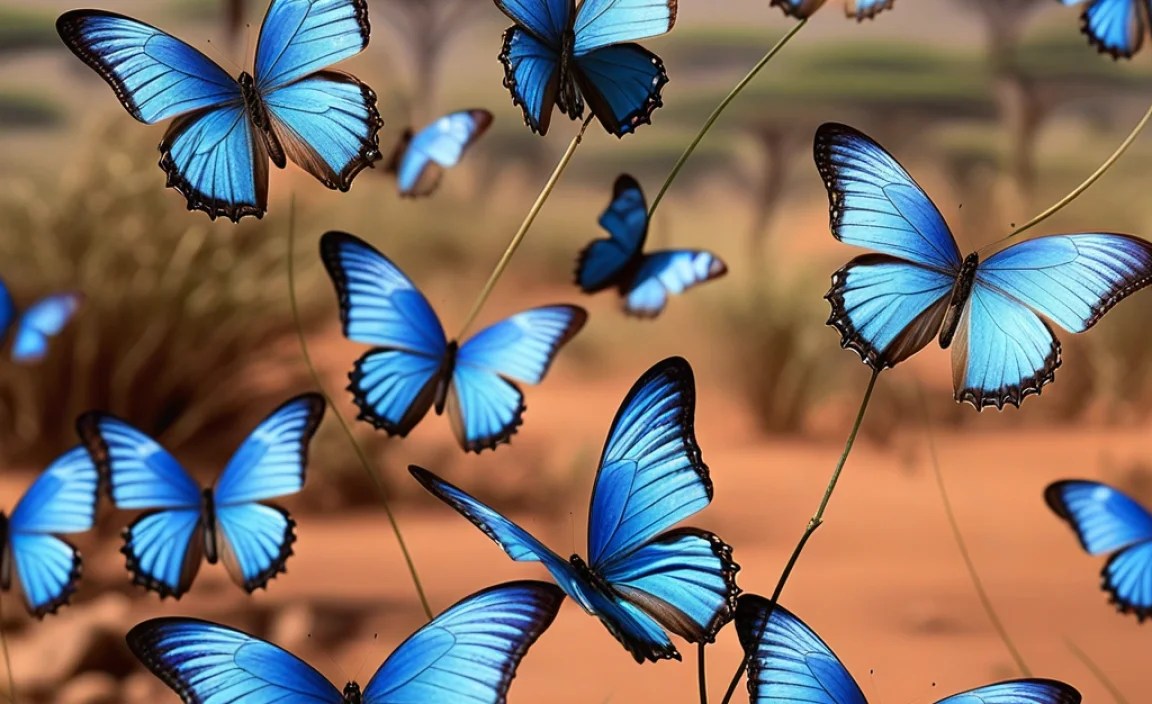
Creating a butterfly-friendly garden is a rewarding way to support these beautiful insects and enjoy their presence up close.
Host Plants
Host plants are essential for butterfly larvae (caterpillars). Here are some plants that attract blue butterflies:
- Acacia: Many Lycaenidae species use acacia trees as host plants.
- Indigofera: This plant is a favorite among several blue butterfly species.
- Legumes: Various legumes provide food for caterpillars.
Nectar Sources
Nectar sources provide food for adult butterflies. Choose plants that offer a continuous supply of nectar throughout the butterfly season:
- Lantana: This colorful plant is a magnet for butterflies.
- Pentas: Pentas flowers are rich in nectar and attract a variety of butterfly species.
- Zinnia: Zinnias are easy to grow and offer a wide range of colors.
Creating a Butterfly-Friendly Environment
In addition to host and nectar plants, consider these factors:
- Sunlight: Butterflies need sunlight to warm their bodies.
- Shelter: Provide shrubs and trees for shelter from wind and predators.
- Water: A shallow dish of water with pebbles provides a place for butterflies to drink.
- Avoid Pesticides: Pesticides can harm or kill butterflies and other beneficial insects.
Conservation Efforts
Many butterfly species are threatened by habitat loss, climate change, and pesticide use. Conservation efforts are essential to protect these vital insects.
Threats to Butterfly Populations
- Habitat Loss: Deforestation, urbanization, and agricultural expansion reduce the available habitat for butterflies.
- Climate Change: Changes in temperature and rainfall patterns can disrupt butterfly life cycles and distribution.
- Pesticide Use: Pesticides can directly kill butterflies or reduce their food sources.
- Pollution: Air and water pollution can harm butterflies and their habitats.
Conservation Strategies
Here are some strategies to protect butterfly populations:
- Habitat Preservation: Protecting and restoring natural habitats is crucial.
- Sustainable Agriculture: Promoting farming practices that minimize pesticide use and conserve biodiversity.
- Butterfly Gardens: Creating butterfly-friendly gardens in urban and rural areas.
- Education and Awareness: Raising awareness about the importance of butterflies and the threats they face.
Organizations Involved in Butterfly Conservation
Several organizations are dedicated to butterfly conservation:
- The Xerces Society: This organization focuses on invertebrate conservation, including butterflies.
- Butterfly Conservation: This UK-based organization works to protect butterflies and their habitats.
- IUCN Butterfly Specialist Group: This group assesses the conservation status of butterfly species worldwide.
You can contribute to butterfly conservation by supporting these organizations, participating in citizen science projects, and making butterfly-friendly choices in your own garden and community.
Photography Tips for Capturing Blue Butterflies
Photographing blue butterflies can be challenging but rewarding. Here are some tips to help you capture stunning images:
Equipment
- Camera: A DSLR or mirrorless camera with a macro lens is ideal.
- Lens: A macro lens allows you to capture close-up details.
- Tripod: A tripod helps stabilize your camera for sharp images.
- Flash: An external flash can provide additional light in shaded areas.
Techniques
- Focus: Use manual focus for precise control.
- Aperture: Use a narrow aperture (e.g., f/8 or f/11) for greater depth of field.
- Shutter Speed: Use a fast shutter speed to freeze movement.
- ISO: Keep the ISO as low as possible to minimize noise.
Composition
- Rule of Thirds: Position the butterfly off-center for a more dynamic composition.
- Background: Choose a clean, uncluttered background.
- Angle: Experiment with different angles to find the most appealing perspective.
- Patience: Wait for the butterfly to adopt an interesting pose.
Here’s a table summarizing the best settings for butterfly photography:
| Setting | Recommendation | Reason |
|---|---|---|
| Focus | Manual | Precise control over focus point |
| Aperture | f/8 to f/11 | Greater depth of field for sharpness |
| Shutter Speed | 1/200 second or faster | Freeze butterfly movement |
| ISO | As low as possible (e.g., 100-400) | Minimize noise in the image |
Cultural Significance and Symbolism
Butterflies have long held cultural significance and symbolic meaning in various societies. In many cultures, butterflies are seen as symbols of transformation, rebirth, and hope.
Symbolism
- Transformation: The butterfly’s life cycle, from caterpillar to pupa to adult, represents personal growth and change.
- Rebirth: The emergence of the butterfly from the chrysalis symbolizes new beginnings and resurrection.
- Hope: Butterflies are often seen as messengers of hope and good fortune.
- Soul: In some cultures, butterflies are believed to represent the human soul.
Cultural Significance in Africa
In various African cultures, butterflies have different meanings:
- Some cultures see butterflies as symbols of ancestors or spirits.
- In certain regions, butterflies are associated with fertility and good luck.
- Traditional stories often feature butterflies as messengers or guides.
Art and Literature
Butterflies have inspired countless works of art and literature. Their beauty and symbolism make them a popular subject for paintings, poems, and stories.
FAQ
What is the best time of year to see blue butterflies in Africa?
The best time to see blue butterflies is during the warm, rainy seasons, typically from November to April. This is when flowering plants are abundant, providing nectar for adult butterflies.
Where are the best places in Africa to find blue butterflies?
East Africa (Kenya, Tanzania, Uganda), Southern Africa (South Africa, Zimbabwe, Botswana), and West Africa (Nigeria, Ghana, Cameroon) are biodiversity hotspots. Explore forests, grasslands, and woodlands for the best sightings.
How can I attract blue butterflies to my garden?
Plant host plants like acacia and indigofera for caterpillars, and nectar sources like lantana and pentas for adult butterflies. Provide sunlight, shelter, and a water source.
What do blue butterfly caterpillars eat?
Blue butterfly caterpillars feed on specific host plants, such as acacia trees, indigofera, and various legumes. The exact host plant varies by butterfly species.
Are blue butterflies endangered?
Some blue butterfly species are threatened due to habitat loss, climate change, and pesticide use. Conservation efforts are essential to protect these vulnerable insects.
What should I bring when looking for butterflies?
Bring a field guide, binoculars, a camera, water, and sunscreen. Wear appropriate clothing and shoes for hiking. Respect the environment and avoid disturbing the butterflies.
How can I contribute to butterfly conservation?
Support conservation organizations, create butterfly-friendly gardens, avoid pesticide use, and educate others about the importance of butterflies.
Conclusion
Exploring the world of blue butterflies in Africa is a journey filled with wonder and discovery. By learning to identify different species, understanding their habitats, and supporting conservation efforts, you can play a vital role in protecting these beautiful creatures. Whether you’re a seasoned naturalist or a beginner, the vibrant blue butterflies of Africa offer endless opportunities for appreciation and inspiration. So grab your binoculars, head out into nature, and prepare to be amazed by the delicate beauty of these enchanting insects.


