
Asian Butterfly Wing Markings Explained: The Secret

Have you ever seen a butterfly up close? Their wings are so pretty. They have lots of colors and shapes. These markings help them in many ways. Today, we will explore Asian butterfly wing markings explained. It’s like learning a secret code.
Butterflies live all over Asia. Each type has its own special look. These looks help them survive. Let’s find out how! We’ll learn about their colors and patterns. It’s more than just being beautiful.
Why do butterflies have such colorful wings? Do the colors scare away birds? Or do they help butterflies find friends? Keep reading to learn all about Asian butterfly wing markings explained. Get ready for a fun adventure!
Key Takeaways
- Asian butterfly wing markings explained show amazing ways nature helps butterflies.
- Wing colors and patterns help butterflies hide from predators and stay safe.
- Some markings help butterflies attract mates for making baby butterflies.
- Certain wing patterns can trick other animals, making the butterfly seem bigger.
- Different types of butterflies in Asia have unique markings for their environment.
Asian Butterfly Wing Patterns: An Overview
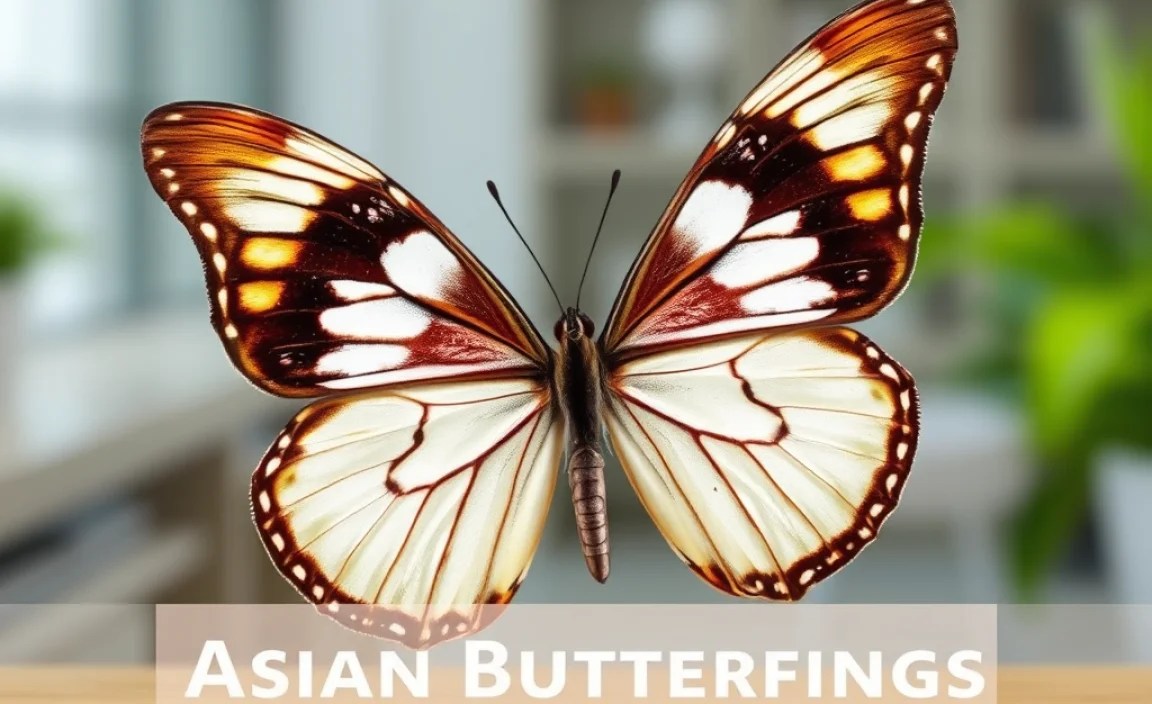
Butterflies are very pretty insects. They fly around in gardens and fields. Asian butterfly wing markings are very interesting. These markings are not just for show. They help butterflies survive in the wild. The patterns and colors on their wings serve many purposes. Some markings help them hide from predators. Other markings help them find a mate. Some markings even help them control their body temperature! The colors can be bright and bold. Or, they can be dull and blend in with leaves. It all depends on the type of butterfly and where it lives. Understanding these markings can help us learn more about these amazing creatures. We can also learn about how they live and survive in their habitats. Nature is full of surprises, and butterflies are a great example!
- Wing patterns help butterflies hide.
- Colors attract mates.
- Markings can scare away predators.
- Patterns help with body temperature.
- Different patterns suit different habitats.
The study of Asian butterfly wing markings explained is called pattern identification. Scientists look closely at each butterfly. They record the colors, shapes, and sizes of the markings. This helps them understand what each marking does. For example, a butterfly with bright colors might be poisonous. The colors warn predators to stay away. A butterfly with dull colors might blend in with tree bark. This helps it hide from birds. The location of the markings is also important. Some butterflies have eyespots on their wings. These spots can scare away predators by making the butterfly look like a bigger animal. Learning about these markings is like learning a secret language of the butterfly world. It shows how amazing and clever nature can be!
Fun Fact or Stat: Some butterflies have markings that look like snake heads to scare away predators!
What Makes Butterfly Wings Colorful?
Have you ever wondered why butterflies have such bright colors? It’s all thanks to tiny scales on their wings. These scales are like tiny tiles. They are covered in pigments. Pigments are substances that give things color. Different pigments create different colors. Some pigments are made by the butterfly’s body. Others come from the food they eat as caterpillars. The scales also have tiny structures. These structures can bend light. This creates even more colors, like blues and greens. Sometimes, the colors change depending on how you look at them. This is called iridescence. It’s like the colors on a soap bubble. The combination of pigments and structures makes butterfly wings so colorful and beautiful. Butterflies use these colors to attract mates, warn predators, and blend in with their surroundings.
How Do Markings Help Butterflies Survive?
Imagine you are a butterfly trying to stay safe. How would you do it? One way is to have markings that help you blend in. This is called camouflage. Some butterflies have wings that look like leaves. When they land on a tree, they disappear! Other butterflies have bright colors. These colors warn predators that they are poisonous. This is called warning coloration. Some butterflies even have markings that look like eyes. These eyespots can scare away predators. The predator might think the butterfly is a bigger animal. Markings also help butterflies find mates. Male butterflies often have bright colors that attract females. The markings on a butterfly’s wings are like a survival kit. They help it stay safe, find food, and reproduce.
Why Are Butterfly Wing Patterns Different?
Why don’t all butterflies look the same? The answer is adaptation. Adaptation means that butterflies change over time to better suit their environment. Butterflies that live in forests might have dull colors. This helps them blend in with the trees. Butterflies that live in sunny fields might have bright colors. This helps them attract mates. The type of food a butterfly eats as a caterpillar can also affect its wing patterns. Some caterpillars eat poisonous plants. This makes them poisonous as butterflies. Their bright colors warn predators to stay away. The climate can also play a role. Butterflies in hot climates might have lighter colors. This helps them stay cool. Butterflies in cold climates might have darker colors. This helps them stay warm. All these factors work together to create the amazing variety of butterfly wing patterns we see in Asia.
Camouflage and Mimicry in Asian Butterflies

Camouflage is like a secret hiding trick. It helps butterflies blend in with their surroundings. This makes it hard for predators to see them. Some butterflies look just like leaves. They even have fake veins and spots! When they sit on a tree, they disappear. Mimicry is another clever trick. It’s when one butterfly looks like another. Some harmless butterflies mimic poisonous ones. This tricks predators into thinking they are dangerous. For example, the Viceroy butterfly looks a lot like the Monarch butterfly. Monarchs are poisonous to birds. So, birds avoid Viceroys too! Asian butterfly wing markings explained often involve camouflage and mimicry. These tricks help butterflies survive in a world full of dangers. It’s like they have their own superhero powers of disguise!
- Camouflage helps butterflies blend in.
- Mimicry makes them look like other butterflies.
- Some butterflies look like leaves.
- Others mimic poisonous butterflies.
- These tricks protect them from predators.
- Camouflage and mimicry are survival tools.
To understand camouflage better, think about a butterfly that lives in a forest. The forest floor is covered in dead leaves. This butterfly has wings that are brown and speckled. When it lands on the leaves, it becomes almost invisible. This is great camouflage. Now, imagine a butterfly that is bright orange and black. This butterfly is poisonous. Birds know that if they eat it, they will get sick. Another butterfly that is not poisonous might copy the colors and patterns of the poisonous butterfly. This is mimicry. The birds will avoid the mimic butterfly too, even though it is safe to eat. These strategies are very important for butterflies. They help them survive and reproduce. The world of Asian butterfly wing markings explained is full of these amazing adaptations.
Fun Fact or Stat: The Kallima inachus butterfly looks exactly like a dead leaf when its wings are closed!
How Do Butterflies Use Camouflage?
Have you ever played hide-and-seek? Butterflies use camouflage in a similar way. They want to hide from predators. Birds, lizards, and other animals like to eat butterflies. Camouflage helps butterflies blend in with their surroundings. Some butterflies have wings that look like tree bark. Others look like dead leaves. They can land on a tree or the ground and disappear. The colors and patterns on their wings match the environment. This makes it hard for predators to spot them. Butterflies also use their behavior to enhance their camouflage. They might sit still or position themselves in a certain way. This makes them even harder to see. Camouflage is a very important survival strategy for many butterflies in Asia. It helps them stay safe and live longer.
What Is Batesian Mimicry?
Imagine you are a harmless butterfly. You want to protect yourself from predators. One way to do this is to look like a dangerous butterfly. This is called Batesian mimicry. A harmless butterfly copies the colors and patterns of a poisonous butterfly. Predators learn to avoid the poisonous butterfly. They also avoid the harmless butterfly that looks like it. The Viceroy butterfly is a good example of Batesian mimicry. It looks very similar to the Monarch butterfly. Monarchs are poisonous to birds. So, birds avoid Viceroys too. Batesian mimicry is a clever way for harmless butterflies to protect themselves. It’s like wearing a disguise to trick predators.
Why Is Mimicry Important for Butterflies?
Why do some butterflies go to the trouble of mimicking others? Mimicry is a very important survival strategy. It helps butterflies avoid being eaten by predators. Butterflies that mimic poisonous species have a better chance of survival. Predators learn to avoid the poisonous species. They also avoid the mimics. This gives the mimics a big advantage. Mimicry can also help butterflies expand their range. If a poisonous species lives in a certain area, its mimics can also live there. Predators will avoid them both. This allows the mimics to live in a place where they might not otherwise survive. Mimicry is a powerful tool for butterflies. It helps them stay safe and thrive in their environment.
Eyespots and Startle Displays
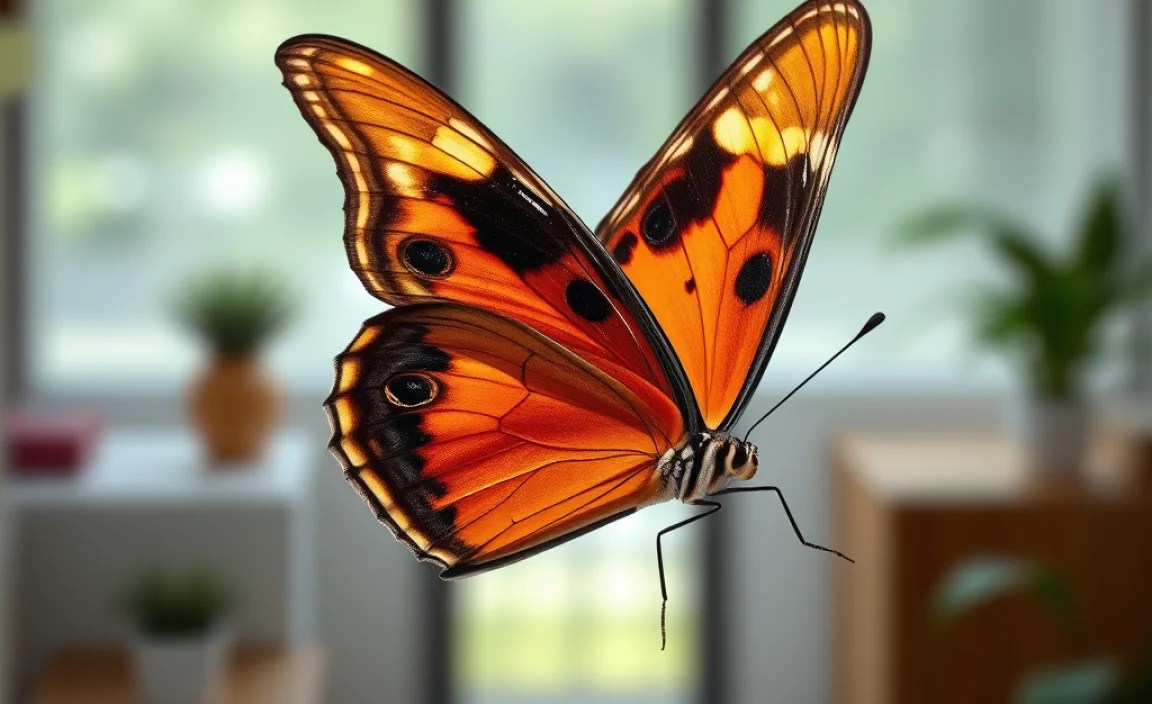
Have you ever seen a butterfly with eyes on its wings? These are called eyespots. Eyespots are a type of Asian butterfly wing markings explained. They can be very useful for butterflies. Eyespots can scare away predators. They make the butterfly look like a bigger animal. Some eyespots even look like the eyes of an owl or a snake. This can startle the predator and give the butterfly time to escape. Startle displays are another way butterflies protect themselves. A butterfly might suddenly flash its wings open. This reveals bright colors or patterns. This can also startle a predator and give the butterfly time to fly away. Eyespots and startle displays are like built-in defense mechanisms. They help butterflies survive in a dangerous world. These adaptations show how clever nature can be!
- Eyespots look like eyes on wings.
- They can scare away predators.
- Startle displays flash bright colors.
- These displays startle predators.
- Butterflies can escape during the confusion.
- Eyespots and displays are defense mechanisms.
Imagine a small bird is about to eat a butterfly. Suddenly, the butterfly flashes its wings open. The bird sees two big eyes staring back at it. The bird gets scared and flies away. This is how eyespots work. They trick the predator into thinking the butterfly is a bigger, more dangerous animal. Startle displays work in a similar way. A butterfly might have dull colors when its wings are closed. But when it opens its wings, it reveals bright colors or patterns. This sudden flash can startle a predator and give the butterfly time to escape. These defense mechanisms are very important for butterflies. They help them survive and reproduce. The study of Asian butterfly wing markings explained helps us understand these amazing adaptations.
Fun Fact or Stat: Some butterflies can even make a hissing sound when they flash their wings!
How Do Eyespots Scare Predators?
Why are eyespots so effective at scaring predators? Eyespots work because they look like the eyes of a larger animal. Predators are often afraid of bigger animals. They don’t want to get hurt. When a predator sees eyespots on a butterfly’s wings, it might think the butterfly is a bigger, more dangerous animal. This can scare the predator away. Eyespots can also distract predators. The predator might focus on the eyespots instead of the butterfly’s body. This gives the butterfly a chance to escape. Eyespots are a simple but effective way for butterflies to protect themselves. They are a great example of how evolution can create amazing adaptations.
What Are Startle Displays?
Have you ever been surprised by something unexpected? Butterflies use startle displays to surprise predators. A startle display is a sudden flash of color or pattern. A butterfly might have dull colors when its wings are closed. But when it opens its wings, it reveals bright colors or patterns. This sudden flash can startle a predator. The predator might hesitate for a moment. This gives the butterfly time to escape. Startle displays are a great way for butterflies to protect themselves. They are especially useful against predators that rely on surprise attacks.
Why Are Eyespots and Startle Displays Important?
Why do butterflies need eyespots and startle displays? Butterflies are small and fragile insects. They are vulnerable to many predators. Birds, lizards, and other animals like to eat butterflies. Eyespots and startle displays help butterflies protect themselves from these predators. These defense mechanisms increase the butterfly’s chances of survival. This allows them to reproduce and pass on their genes to the next generation. Eyespots and startle displays are a testament to the power of natural selection. They show how animals can adapt to their environment to survive.
Wing Coloration and Mate Attraction
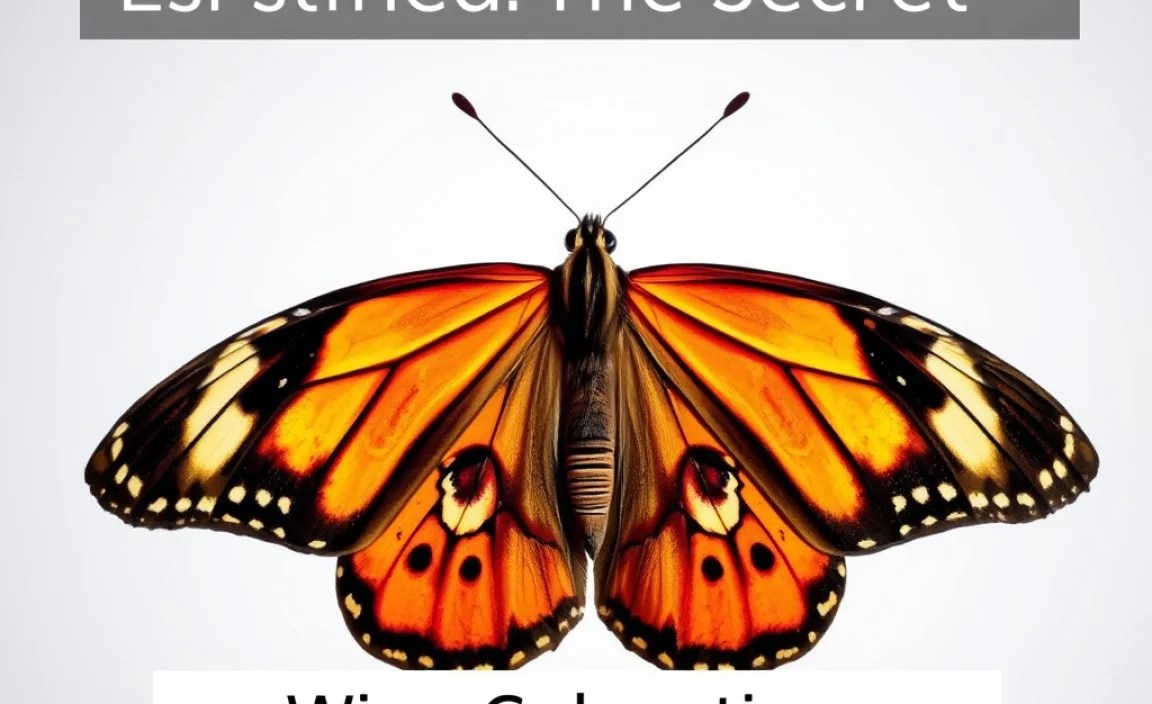
Butterflies use their wings to find love! Wing color is very important for attracting mates. Male butterflies often have bright, colorful wings. These colors attract the attention of female butterflies. The brighter the colors, the more attractive the male is. Some butterflies even have special patterns on their wings. These patterns can only be seen by other butterflies. They use ultraviolet light to see them. It’s like a secret code! Female butterflies choose mates based on the color and pattern of their wings. This helps them find the best mate to produce healthy offspring. Wing coloration is a key part of Asian butterfly wing markings explained. It shows how butterflies use their appearance to find love and reproduce.
- Wing color attracts mates.
- Bright colors are more attractive.
- Some patterns are only visible in UV light.
- Females choose mates based on wing color.
- This helps them find the best mate.
- Wing coloration is important for reproduction.
Imagine a male butterfly with dull, drab wings. He would have a hard time attracting a mate. But a male butterfly with bright, vibrant wings would be very popular. Female butterflies are attracted to these colors. They see them as a sign of good health and strong genes. The colors tell the females that the male is a good choice for a mate. The patterns on the wings also play a role. Some patterns are more attractive than others. Female butterflies have evolved to prefer certain patterns. This ensures that they choose the best possible mate. The study of Asian butterfly wing markings explained has shown us how important wing coloration is for mate attraction. It’s a fascinating example of how animals use their appearance to find love and reproduce.
Fun Fact or Stat: Male butterflies often perform elaborate dances to show off their wing colors to females!
How Do Male Butterflies Attract Females?
How do male butterflies get the attention of females? They use their bright, colorful wings! Male butterflies often have more vibrant colors than females. These colors attract the attention of females. The brighter the colors, the more attractive the male is. Male butterflies also perform elaborate dances. They fly around the female, showing off their wings. This gives the female a chance to see the colors and patterns up close. Some male butterflies even release pheromones. Pheromones are chemicals that attract females. The combination of bright colors, dances, and pheromones helps male butterflies attract mates.
What Role Does Wing Pattern Play?
Is it just about color, or do patterns matter too? Wing patterns are also very important for mate attraction. Some butterflies have special patterns on their wings. These patterns can only be seen by other butterflies. They use ultraviolet light to see them. It’s like a secret code! Female butterflies can see these patterns and use them to choose a mate. The patterns might indicate the male’s health or genetic quality. Some patterns are more attractive than others. Female butterflies have evolved to prefer certain patterns. This ensures that they choose the best possible mate.
Why Is Mate Attraction Important?
Why do butterflies go to so much trouble to attract mates? Mate attraction is essential for reproduction. Butterflies need to find a mate to produce offspring. The better the mate, the healthier the offspring will be. Female butterflies are very selective when it comes to choosing a mate. They want to find the best possible partner to pass on their genes. Male butterflies compete with each other to attract females. The males with the brightest colors and the best patterns are more likely to be chosen. Mate attraction is a driving force behind the evolution of butterfly wing coloration. It ensures that the strongest and healthiest butterflies reproduce.
Temperature Regulation Through Wing Markings
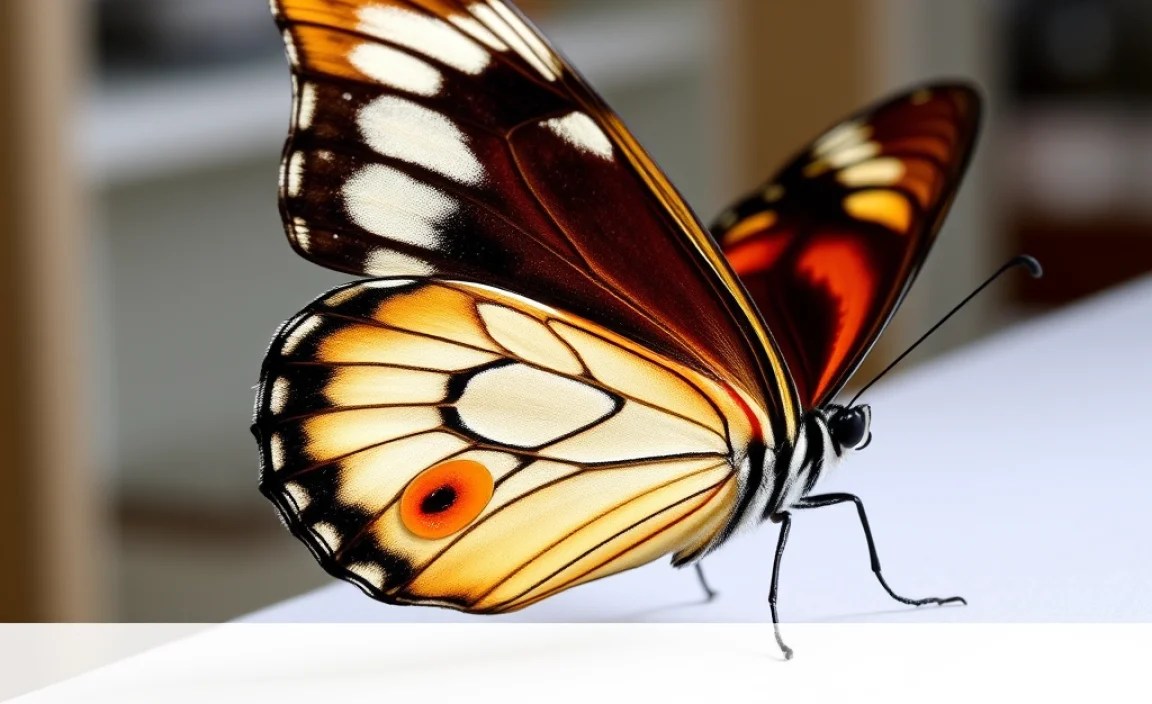
Did you know butterflies can use their wings to control their body temperature? It’s true! Darker colors absorb more sunlight. This helps butterflies warm up on cool days. Lighter colors reflect sunlight. This helps butterflies stay cool on hot days. Some butterflies have dark patches on their wings. These patches help them warm up quickly in the morning. Other butterflies have light-colored scales on their wings. These scales reflect sunlight and keep them from overheating. Asian butterfly wing markings explained also includes how these markings help butterflies regulate their temperature. It’s like having a built-in air conditioner and heater! This adaptation is very important for butterflies that live in extreme climates.
- Dark colors absorb sunlight.
- Light colors reflect sunlight.
- Dark patches help butterflies warm up.
- Light scales keep them cool.
- Markings help regulate body temperature.
- This is important in extreme climates.
Imagine a butterfly living in a cold mountain region. It needs to warm up quickly in the morning to fly. It has dark patches on its wings that absorb sunlight. These patches help it warm up faster than if its wings were all light-colored. Now, imagine a butterfly living in a hot desert. It needs to stay cool to avoid overheating. It has light-colored scales on its wings that reflect sunlight. These scales help it stay cooler than if its wings were all dark-colored. Butterflies can also adjust their behavior to regulate their temperature. They might bask in the sun to warm up. Or, they might seek shade to cool down. The combination of wing markings and behavior helps butterflies survive in a wide range of climates. The study of Asian butterfly wing markings explained has revealed the importance of temperature regulation for butterfly survival.
Fun Fact or Stat: Some butterflies can change the angle of their wings to control how much sunlight they absorb!
How Do Dark Colors Help Butterflies Warm Up?
Why do dark colors absorb more sunlight? Dark colors absorb more sunlight because they absorb more wavelengths of light. When light hits a dark surface, most of the light is absorbed. This energy is converted into heat. The heat warms up the butterfly. Butterflies that live in cold climates often have dark wings. This helps them warm up quickly in the morning. They can then fly and search for food. Dark colors are a simple but effective way for butterflies to regulate their body temperature.
How Do Light Colors Help Butterflies Stay Cool?
Why do light colors reflect sunlight? Light colors reflect sunlight because they reflect most of the wavelengths of light. When light hits a light surface, most of the light is reflected. This means that less energy is absorbed. The butterfly stays cooler. Butterflies that live in hot climates often have light wings. This helps them stay cool and avoid overheating. Light colors are a crucial adaptation for butterflies that live in hot environments.
Why Is Temperature Regulation Important?
Why do butterflies need to regulate their body temperature? Butterflies are cold-blooded animals. This means that their body temperature depends on the temperature of their environment. If a butterfly gets too cold, it cannot fly. If it gets too hot, it can overheat and die. Butterflies need to regulate their body temperature to survive. They use their wing markings and behavior to do this. Temperature regulation is essential for butterfly survival in all types of climates.
Regional Variations in Wing Markings
Asia is a big place! Different regions have different climates and habitats. This means that butterflies in different regions have different wing markings. Butterflies in tropical rainforests might have bright colors and complex patterns. This helps them blend in with the lush vegetation. Butterflies in dry deserts might have dull colors and simple patterns. This helps them conserve water. Butterflies in mountainous regions might have dark colors and large wings. This helps them absorb sunlight and fly in windy conditions. Asian butterfly wing markings explained often shows how these markings vary from region to region. It’s like each region has its own unique style of butterfly fashion! These variations are a testament to the power of adaptation.
| Region | Typical Wing Markings | Reason |
|---|---|---|
| Tropical Rainforests | Bright colors, complex patterns | Camouflage in lush vegetation |
| Dry Deserts | Dull colors, simple patterns | Conserve water |
| Mountainous Regions | Dark colors, large wings | Absorb sunlight, fly in wind |
| Temperate Forests | Earthy tones, leaf-like patterns | Blend with forest floor |
- Different regions have different climates.
- Butterfly markings vary by region.
- Rainforest butterflies are colorful.
- Desert butterflies are dull.
- Mountain butterflies are dark.
- Markings suit the local environment.
Think about a butterfly living in the Himalayas. It has to survive in a cold, windy environment. It has dark wings to absorb sunlight and large wings to fly in the wind. Now, think about a butterfly living in the Amazon rainforest. It has to survive in a hot, humid environment with lots of predators. It has bright colors and complex patterns to blend in with the lush vegetation. These examples show how important it is for butterflies to have wing markings that are suited to their local environment. The study of Asian butterfly wing markings explained helps us understand these regional variations. It’s a fascinating example of how animals adapt to their surroundings.
Fun Fact or Stat: Some butterflies migrate thousands of miles to find suitable climates!
Why Do Rainforest Butterflies Have Bright Colors?
Why are rainforest butterflies so colorful? Rainforests are full of vibrant colors. Butterflies need to blend in with their surroundings to avoid predators. Bright colors and complex patterns help them do this. The bright colors mimic the flowers and plants in the rainforest. The complex patterns break up the butterfly’s outline. This makes it harder for predators to see them. Rainforest butterflies are a stunning example of camouflage.
What Makes Desert Butterfly Markings Unique?
How do desert butterflies survive in such a harsh environment? Desert butterflies need to conserve water. They often have dull colors and simple patterns. This helps them reflect sunlight and stay cool. They also have small bodies and wings. This reduces their surface area and minimizes water loss. Desert butterfly markings are a testament to their ability to adapt to extreme conditions.
How Do Mountain Butterfly Markings Help Them?
What challenges do mountain butterflies face? Mountain butterflies have to survive in cold, windy environments. They often have dark colors to absorb sunlight and large wings to fly in the wind. They also have thick bodies and scales. This helps them insulate themselves and stay warm. Mountain butterfly markings are essential for their survival in these challenging environments.
Summary
Asian butterfly wing markings explained reveals many amazing things. Butterfly wings have colors and patterns. These aren’t just pretty. They help butterflies survive. Markings help butterflies hide from predators. Some markings scare predators away. Other markings help butterflies find mates. Some markings even help control body heat. Different areas in Asia have different butterflies. Each type has special markings for its home. Learning about these markings helps us see how cool nature is. It shows us how animals change to live in their world.
Conclusion
Butterflies are amazing creatures. Their wings are like little works of art. Asian butterfly wing markings explained shows us how important these markings are. They help butterflies survive in many ways. From hiding from predators to finding mates, their wings are essential tools. By learning about these markings, we can appreciate the beauty and complexity of nature even more. Let’s keep exploring and protecting these amazing insects.
Frequently Asked Questions
Question No 1: Why do butterflies have different wing markings?
Answer: Butterflies have different wing markings for many reasons. Some markings help them hide from predators. This is called camouflage. Other markings scare away predators. These are called eyespots. Some markings attract mates. These markings are often bright and colorful. Wing markings also help butterflies regulate their body temperature. Dark colors absorb heat, while light colors reflect heat. The specific markings a butterfly has depend on its species and where it lives. Understanding Asian butterfly wing markings explained shows how nature helps them.
Question No 2: How do eyespots protect butterflies?
Answer: Eyespots are large, circular markings on a butterfly’s wings. They look like the eyes of a larger animal. When a predator sees eyespots, it might think the butterfly is a bigger, more dangerous animal. This can scare the predator away. Eyespots can also distract predators. The predator might focus on the eyespots instead of the butterfly’s body. This gives the butterfly a chance to escape. Eyespots are a simple but effective way for butterflies to protect themselves from predators. Many Asian butterfly wing markings explained involve the use of eyespots.
Question No 3: What is mimicry in butterflies?
Answer: Mimicry is when one butterfly looks like another butterfly. Some harmless butterflies mimic poisonous butterflies. Predators learn to avoid the poisonous butterflies. They also avoid the harmless butterflies that look like them. This protects the harmless butterflies from being eaten. Mimicry is a clever way for butterflies to protect themselves. Batesian mimicry is where a harmless species mimics a harmful one. This adaptation is a key part of Asian butterfly wing markings explained.
Question No 4: How do butterflies use their wings to regulate temperature?
Answer: Butterflies can use their wings to regulate their body temperature. Dark colors absorb heat from the sun. Light colors reflect heat. Butterflies that live in cold climates often have dark wings. This helps them warm up quickly. Butterflies that live in hot climates often have light wings. This helps them stay cool. Butterflies can also adjust their posture to regulate their temperature. They might bask in the sun to warm up. Or, they might seek shade to cool down. The Asian butterfly wing markings explained show that temperature regulation is crucial.
Question No 5: Do all butterflies have the same wing markings?
Answer: No, not all butterflies have the same wing markings. Different species of butterflies have different markings. The markings depend on where the butterfly lives and what it needs to survive. Butterflies in tropical rainforests might have bright colors and complex patterns. Butterflies in dry deserts might have dull colors and simple patterns. Even within the same species, there can be some variation in wing markings. These differences highlight the incredible diversity of butterflies. This diversity is a key aspect of Asian butterfly wing markings explained.
Question No 6: Can wing markings change over time?
Answer: Yes, wing markings can change over time. This is called evolution. Over many generations, butterflies can adapt to their environment. If a certain wing marking helps them survive better, they are more likely to pass that marking on to their offspring. Over time, the wing marking can become more common in the population. This is how butterflies have evolved to have such diverse and amazing wing markings. Studying the changes in Asian butterfly wing markings explained over time helps us understand evolution.


