Swallowtail Butterfly Species List: The Ultimate Guide

Quick Summary: Swallowtail butterflies are among the largest and most beautiful butterflies! This list highlights some of the most common and fascinating swallowtail species found around the world, including their key characteristics and habitats. This guide will help you identify and appreciate these stunning insects in your garden or local environment.
Have you ever been mesmerized by a large, colorful butterfly gracefully fluttering through your garden? Chances are, it was a swallowtail! These butterflies are known for their size, vibrant colors, and distinctive “tails” on their hindwings. But with so many different kinds, how can you tell them apart? Don’t worry, identifying swallowtails doesn’t have to be confusing. In this article, we’ll explore a variety of swallowtail species, providing you with a helpful guide to recognize and appreciate these magnificent creatures. Get ready to discover the amazing diversity within the swallowtail family!
What is a Swallowtail Butterfly?
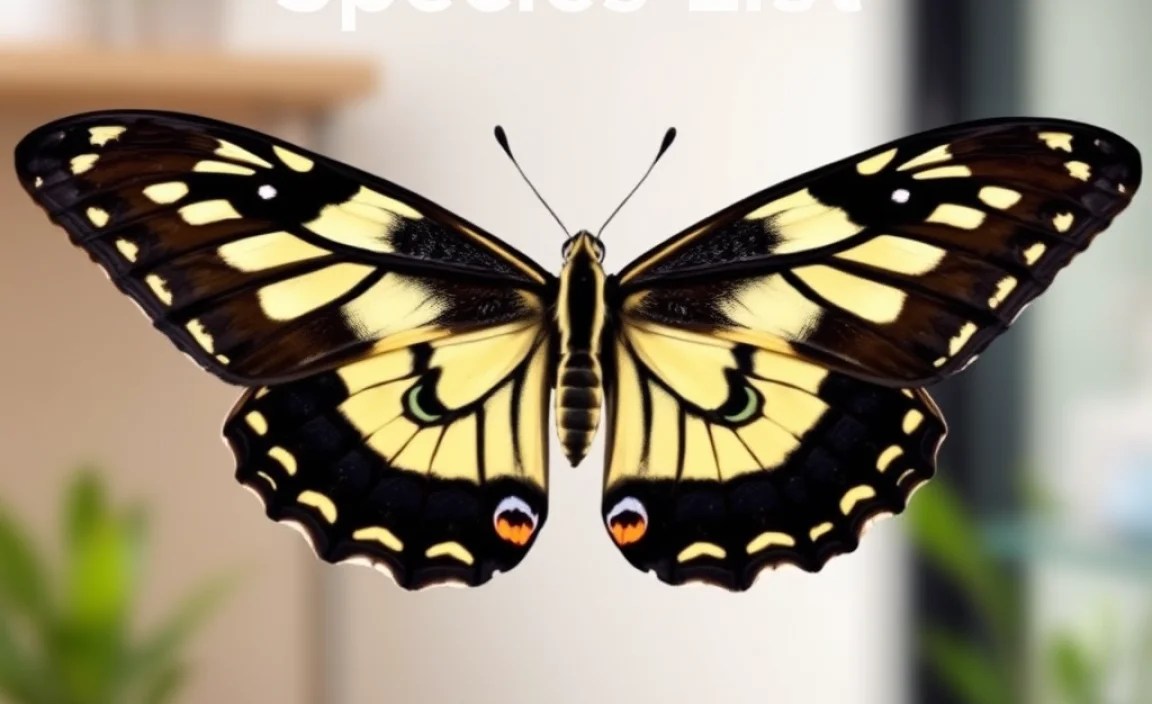
Swallowtail butterflies belong to the family Papilionidae, one of the most diverse and striking groups of butterflies. These butterflies are found all over the world, except for Antarctica. They are known for their large size, vibrant colors, and the characteristic “tails” on their hindwings, which resemble the tails of swallows.
Swallowtails play important roles in their ecosystems as pollinators. As they feed on nectar, they transfer pollen from flower to flower, helping plants to reproduce. Many swallowtail species are also admired for their beauty, making them popular subjects for nature enthusiasts and photographers.
Key Characteristics of Swallowtail Butterflies

Here are some features that help identify swallowtail butterflies:
- Size: Generally larger than most other butterfly species.
- Color: Display a wide range of colors, including black, yellow, blue, green, and red.
- Tails: Most species have distinctive “tails” on their hindwings, though some species lack them.
- Wingspan: Varies by species, but typically ranges from 2 to 6 inches.
- Flight: Strong and graceful fliers.
Common Swallowtail Butterfly Species
Let’s explore some well-known swallowtail species from around the world.
North American Swallowtails
North America is home to many beautiful swallowtail species.
Eastern Tiger Swallowtail (Papilio glaucus)
The Eastern Tiger Swallowtail is a familiar sight in eastern North America. The females come in two forms, yellow and black. The yellow form looks similar to the males, while the black form is more common in the southern parts of its range. These butterflies are often seen in gardens, woodlands, and along streams.
- Appearance: Yellow with black stripes (male and yellow female form); black with faint stripes (black female form).
- Wingspan: 3 to 5.5 inches.
- Habitat: Deciduous woods, fields, and gardens.
- Host Plants: Wild cherry, tulip tree, and sweetbay.
Black Swallowtail (Papilio polyxenes)
The Black Swallowtail is found throughout North America. Males and females look different. Males have a yellow band on their wings, while females have blue spots. This butterfly is often seen in gardens and fields, and its caterpillars feed on plants in the carrot family.
- Appearance: Black with yellow spots (male); black with blue spots (female).
- Wingspan: 2.5 to 4 inches.
- Habitat: Open fields, gardens, and roadsides.
- Host Plants: Parsley, dill, and fennel.
Giant Swallowtail (Papilio cresphontes)
As its name suggests, the Giant Swallowtail is one of the largest butterflies in North America. It is found in the eastern and southern United States. Its caterpillars feed on citrus trees, which sometimes makes them unpopular with gardeners.
- Appearance: Dark brown with yellow markings.
- Wingspan: 4 to 7 inches.
- Habitat: Open woodlands, citrus groves, and gardens.
- Host Plants: Citrus, prickly ash, and rue.
Two-tailed Swallowtail (Papilio multicaudata)
The Two-tailed Swallowtail is found in the western United States and Canada. It is named for the two “tails” on each hindwing. This butterfly is often seen flying high in canyons and mountain areas.
- Appearance: Yellow with black markings and two tails on each hindwing.
- Wingspan: 3.5 to 6 inches.
- Habitat: Canyons, streamsides, and open woodlands.
- Host Plants: Chokecherry, ash, and hoptree.
European Swallowtails
Europe has its own share of beautiful swallowtail butterflies.
Old World Swallowtail (Papilio machaon)
The Old World Swallowtail is found throughout Europe, Asia, and North America. It is a striking butterfly with yellow wings and black markings. The Old World Swallowtail is a strong flier and can be found in a variety of habitats.
- Appearance: Yellow with black veins and blue and red spots on the hindwings.
- Wingspan: 2.5 to 4 inches.
- Habitat: Meadows, gardens, and open woodlands.
- Host Plants: Fennel, rue, and milk parsley.
Asian Swallowtails
Asia is home to a diverse range of swallowtail butterflies, many of which are incredibly beautiful and unique.
Common Bluebottle (Graphium sarpedon)
The Common Bluebottle is a vibrant butterfly found in South and Southeast Asia, as well as Australia. It is known for its bright blue bands on its black wings. These butterflies are fast fliers and are often seen near water sources.
- Appearance: Black with bright blue bands.
- Wingspan: 2.5 to 3 inches.
- Habitat: Rainforests, gardens, and streamsides.
- Host Plants: Cinnamon, camphor laurel, and avocado.
Paris Peacock (Papilio paris)
The Paris Peacock is a stunning butterfly found in Southeast Asia. It has iridescent green and blue scales on its black wings. The Paris Peacock is often seen in forests and gardens.
- Appearance: Black with iridescent green and blue scales.
- Wingspan: 3 to 4 inches.
- Habitat: Forests, gardens, and woodlands.
- Host Plants: Rue, citrus, and prickly ash.
Australian Swallowtails
Australia has several unique swallowtail species adapted to its diverse environments.
Chequered Swallowtail (Papilio demoleus)
The Chequered Swallowtail is a common butterfly found throughout Australia and Asia. It is known for its black and white checkered pattern on its wings. This butterfly is a strong flier and can be found in a variety of habitats.
- Appearance: Black with white checkered markings.
- Wingspan: 3 to 4 inches.
- Habitat: Gardens, open woodlands, and urban areas.
- Host Plants: Citrus, rue, and native limes.
African Swallowtails
Africa is home to a wide variety of swallowtail butterflies, many of which are brightly colored and uniquely patterned.
Mocker Swallowtail (Papilio dardanus)
The Mocker Swallowtail is found throughout sub-Saharan Africa. It is famous for its mimicry, where females mimic the appearance of toxic butterflies to avoid predators. Males do not have this mimicry and retain the typical swallowtail appearance.
- Appearance: Males are yellow and black; females vary in color and pattern to mimic toxic butterflies.
- Wingspan: 3 to 5 inches.
- Habitat: Forests, woodlands, and savannas.
- Host Plants: Citrus, lance-leaved clausena, and cape chestnut.
Swallowtail Butterfly Identification Table
Here is a quick reference table to help you identify some common swallowtail butterflies:
| Species | Appearance | Wingspan | Habitat | Host Plants |
|---|---|---|---|---|
| Eastern Tiger Swallowtail | Yellow with black stripes (male and yellow female form); black with faint stripes (black female form) | 3 to 5.5 inches | Deciduous woods, fields, and gardens | Wild cherry, tulip tree, and sweetbay |
| Black Swallowtail | Black with yellow spots (male); black with blue spots (female) | 2.5 to 4 inches | Open fields, gardens, and roadsides | Parsley, dill, and fennel |
| Giant Swallowtail | Dark brown with yellow markings | 4 to 7 inches | Open woodlands, citrus groves, and gardens | Citrus, prickly ash, and rue |
| Two-tailed Swallowtail | Yellow with black markings and two tails on each hindwing | 3.5 to 6 inches | Canyons, streamsides, and open woodlands | Chokecherry, ash, and hoptree |
| Old World Swallowtail | Yellow with black veins and blue and red spots on the hindwings | 2.5 to 4 inches | Meadows, gardens, and open woodlands | Fennel, rue, and milk parsley |
| Common Bluebottle | Black with bright blue bands | 2.5 to 3 inches | Rainforests, gardens, and streamsides | Cinnamon, camphor laurel, and avocado |
| Paris Peacock | Black with iridescent green and blue scales | 3 to 4 inches | Forests, gardens, and woodlands | Rue, citrus, and prickly ash |
| Chequered Swallowtail | Black with white checkered markings | 3 to 4 inches | Gardens, open woodlands, and urban areas | Citrus, rue, and native limes |
| Mocker Swallowtail | Males are yellow and black; females vary in color and pattern to mimic toxic butterflies | 3 to 5 inches | Forests, woodlands, and savannas | Citrus, lance-leaved clausena, and cape chestnut |
Attracting Swallowtail Butterflies to Your Garden

Want to see more swallowtail butterflies in your yard? Here’s how!
- Plant Host Plants: Swallowtail caterpillars need specific plants to feed on. Planting these host plants will encourage swallowtails to lay their eggs in your garden.
- Provide Nectar Sources: Adult swallowtails feed on nectar from flowers. Plant a variety of nectar-rich flowers that bloom throughout the growing season.
- Avoid Pesticides: Pesticides can harm or kill butterflies and caterpillars. Use organic gardening methods to protect these beautiful insects.
- Offer a Water Source: Butterflies need water to stay hydrated. Provide a shallow dish of water with pebbles or sand for them to land on.
- Provide Shelter: Butterflies need shelter from wind and rain. Plant shrubs and trees to provide them with a safe place to rest.
Conservation Status of Swallowtail Butterflies
Many swallowtail butterfly species are facing threats due to habitat loss, climate change, and pesticide use. Conservation efforts are essential to protect these beautiful insects and their habitats. Organizations like the Xerces Society are working to conserve butterflies and other invertebrates through habitat restoration, research, and education.
You can support swallowtail butterfly conservation by:
- Planting native host plants and nectar sources in your garden.
- Avoiding the use of pesticides.
- Supporting organizations that are working to protect butterfly habitats.
- Educating others about the importance of butterfly conservation.
Swallowtail Butterfly Symbolism and Cultural Significance
Butterflies, including swallowtails, have long held symbolic meaning in various cultures. They often represent transformation, rebirth, and hope. In some cultures, butterflies are seen as symbols of the soul or spirits of the departed. Their beauty and grace have made them popular subjects in art, literature, and mythology.
The transformation from caterpillar to butterfly is a powerful metaphor for personal growth and change. Swallowtail butterflies, with their striking colors and patterns, remind us of the beauty and wonder of nature. Their presence in our gardens and natural areas brings joy and inspiration.
Frequently Asked Questions (FAQ)
What is the lifespan of a swallowtail butterfly?
The lifespan of a swallowtail butterfly varies by species but is generally around 6 to 12 months, including the egg, caterpillar, pupa, and adult stages. The adult butterfly stage usually lasts for a few weeks.
What do swallowtail caterpillars eat?
Swallowtail caterpillars eat the leaves of specific host plants. These plants vary by species but often include trees, shrubs, and herbs. Examples include citrus, parsley, dill, fennel, and wild cherry.
Are swallowtail butterflies poisonous?
Some swallowtail butterflies are poisonous, particularly those that mimic toxic butterfly species. The caterpillars of these butterflies feed on poisonous plants and store the toxins in their bodies, making them distasteful to predators.
How can I tell the difference between male and female swallowtail butterflies?
In many swallowtail species, males and females have different color patterns. For example, in the Black Swallowtail, males have a yellow band on their wings, while females have blue spots. In the Eastern Tiger Swallowtail, females can have either a yellow or black form, while males are always yellow.
What is the best time of year to see swallowtail butterflies?
The best time of year to see swallowtail butterflies depends on the species and location. In general, they are most active during the warmer months, from spring to fall. Peak butterfly season is often in the summer.
Do swallowtail butterflies migrate?
Some swallowtail butterflies migrate, but migration is not as common in swallowtails as it is in Monarch butterflies. Some species, like the Pipevine Swallowtail, may undertake short migrations to find better conditions or host plants.
How can I help protect swallowtail butterflies?
You can help protect swallowtail butterflies by planting native host plants and nectar sources in your garden, avoiding the use of pesticides, supporting organizations that are working to protect butterfly habitats, and educating others about the importance of butterfly conservation.
Conclusion
Swallowtail butterflies are truly remarkable creatures, adding beauty and wonder to our world. By learning about their different species, habitats, and host plants, we can better appreciate and protect these magnificent insects. Whether you are a seasoned butterfly enthusiast or just starting to explore the world of butterflies, there is always something new to discover. So, get outside, explore your local environment, and see how many different swallowtail species you can find. Happy butterflying!