
Painted Lady Butterfly Anatomy Explained: The Ultimate Guide

Have you ever seen a butterfly flutter by? Did you notice its bright colors? Butterflies are beautiful and interesting creatures. Today, we will discover the secrets of the painted lady butterfly anatomy explained.
Have you ever wondered how butterflies fly? How do they taste food? The painted lady butterfly has special body parts. Each part helps it live and thrive. Let’s explore the amazing world of butterfly anatomy.
Imagine a tiny flying machine. This machine can taste with its feet. It can see in many directions at once. This is the painted lady butterfly! Understanding its anatomy is like understanding a magical puzzle.
The painted lady butterfly anatomy explained helps us see how nature works. It shows us the beauty of small things. It also teaches us about the connections between all living things. Get ready for a fun adventure!
Key Takeaways
- The painted lady butterfly anatomy explained includes wings, legs, and antennae.
- Butterflies use their proboscis to drink nectar from flowers.
- A butterfly’s wings are covered in tiny scales that create their colors.
- Painted lady butterflies have compound eyes for seeing in multiple directions.
- These butterflies undergo metamorphosis, changing from larva to pupa to adult.
Painted Lady Butterfly: Body Structure
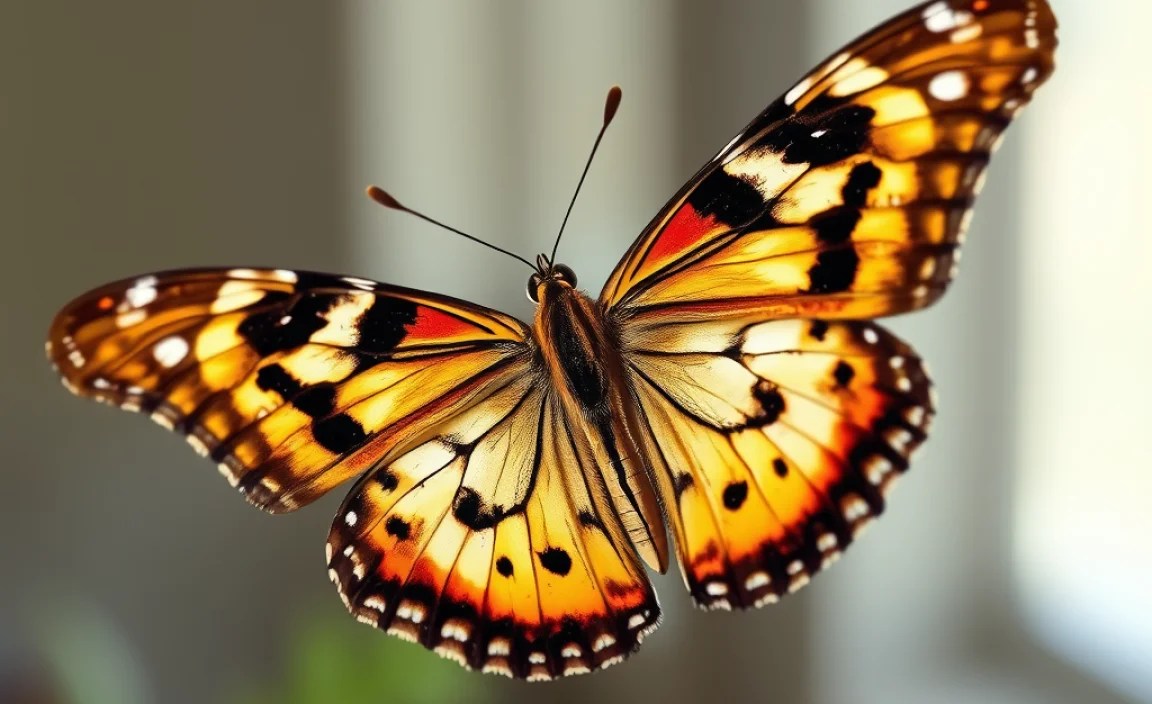
The painted lady butterfly’s body is divided into three main parts. These parts are the head, thorax, and abdomen. The head has important features like eyes and antennae. The thorax is where the wings and legs attach. The abdomen contains the butterfly’s digestive system. Each section plays a vital role in the butterfly’s life. Understanding these parts helps us understand how the butterfly lives. The body structure supports all of its activities. This includes flying, feeding, and reproducing. It’s a complex and fascinating design. The painted lady butterfly is perfectly adapted to its environment.
- The head contains the brain and sensory organs.
- The thorax supports the wings and legs for movement.
- The abdomen holds the digestive and reproductive systems.
- Each body segment has a specific function.
- The exoskeleton protects the butterfly’s soft body.
The exoskeleton is the butterfly’s outer covering. It is like a suit of armor. This protects the butterfly from harm. It also helps to keep the butterfly from drying out. The butterfly’s body is built for flight. Its lightweight structure and strong wings make it an excellent flyer. The painted lady butterfly is a marvel of nature. Its body structure is perfectly suited for its life. Studying the body structure helps us appreciate the complexity of nature. It also helps us learn about adaptation.
Fun Fact or Stat: A butterfly’s exoskeleton is made of chitin, the same material that makes up the shells of crabs and insects!
What is the butterfly head?
Have you ever looked closely at a butterfly’s head? It’s packed with important tools. The head includes the eyes, antennae, and proboscis. The eyes are compound eyes. This means they are made up of many tiny lenses. This lets the butterfly see in many directions at once. The antennae are used to smell and sense the environment. The proboscis is a long, straw-like tongue. The butterfly uses it to drink nectar from flowers. All these parts work together. They help the butterfly find food and stay safe. How cool is that?
What is the butterfly thorax?
The thorax is the middle section of the butterfly. It is like the engine room of a car. This is where the wings and legs are attached. The thorax contains powerful muscles. These muscles allow the butterfly to fly. The butterfly has six legs. They are attached to the thorax. Butterflies also use their legs to taste. They have taste receptors on their feet! Imagine tasting with your feet. The thorax is a busy place. It supports movement and helps the butterfly explore the world.
What is the butterfly abdomen?
The abdomen is the final section of the butterfly’s body. It is like the storage room. This section holds the digestive and reproductive organs. The abdomen helps the butterfly digest food. It also helps the butterfly reproduce. The abdomen expands and contracts as the butterfly breathes. It plays a key role in the butterfly’s life cycle. Without a healthy abdomen, the butterfly cannot survive. The abdomen is essential for growth and reproduction. It helps the butterfly continue its life cycle.
Understanding Butterfly Wings and Flight
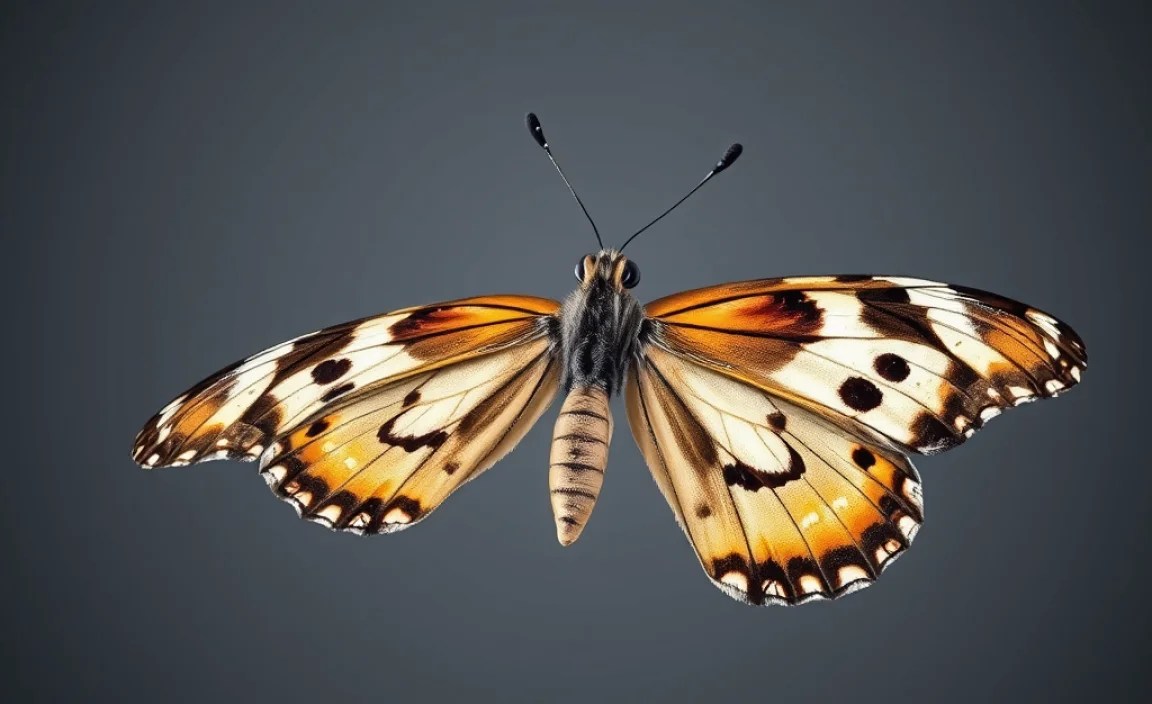
Butterfly wings are delicate and beautiful. They are made of thin membranes. These membranes are covered in tiny scales. These scales give the wings their color and pattern. The wings are attached to the thorax. Butterflies use their wings to fly. They flap their wings up and down. This creates lift and propels them through the air. The shape and size of the wings affect how well a butterfly can fly. Some butterflies are fast flyers. Others are slower and more graceful. The painted lady butterfly is known for its strong and agile flight. Understanding butterfly wings and flight is key to understanding their life.
- Wings are covered in tiny, colorful scales.
- Wing patterns help with camouflage and attracting mates.
- Butterflies flap their wings to create lift.
- Wing shape affects flight speed and agility.
- The thorax muscles power the wings.
- Some butterflies migrate long distances using their wings.
Butterfly flight is a complex process. It involves precise coordination of muscles and wings. Butterflies can adjust their flight to suit different conditions. They can fly in windy weather. They can also glide on air currents. Some butterflies migrate thousands of miles. They use their wings to travel long distances. The painted lady butterfly is a strong flier. It can travel long distances to find food and mates. Studying butterfly wings and flight helps us learn about aerodynamics. It also helps us understand the amazing adaptations of nature.
Fun Fact or Stat: Butterflies can beat their wings about 5 to 20 times per second, depending on the species!
How do butterfly wings work?
Have you ever wondered how butterfly wings work? The wings are not just pretty decorations. They are complex flying machines. The tiny scales on the wings help to create lift. They also help to reduce drag. The butterfly moves its wings up and down. This pushes air downwards. This creates an upward force. This force lifts the butterfly into the air. The shape of the wing is important. It helps to create a smooth flow of air. This makes the flight more efficient. Butterfly wings are a marvel of engineering.
What are butterfly wing scales?
Butterfly wings are covered in tiny scales. These scales are like tiny shingles on a roof. They overlap each other. This provides a smooth surface. The scales are made of chitin. This is the same material that makes up insect exoskeletons. The scales contain pigments. These pigments give the wings their color. The patterns on the wings are created by different colored scales. The scales also help to protect the wings. They prevent the wings from tearing. They also help to insulate the butterfly.
How do butterflies control their flight?
Butterflies control their flight using their muscles and wings. They can change the angle of their wings. This allows them to turn and maneuver. They can also adjust the speed of their wing beats. This allows them to fly faster or slower. Butterflies use their antennae to sense the air. This helps them to stay balanced. They also use their eyes to navigate. Butterflies are skilled fliers. They can perform complex maneuvers in the air. They can even fly backwards!
The Sensory Organs of a Painted Lady Butterfly

Butterflies have amazing sensory organs. These organs help them to find food, avoid danger, and find mates. Butterflies have compound eyes. These eyes are made up of thousands of tiny lenses. This allows them to see in many directions at once. They also have antennae. These antennae are used to smell and sense the environment. Butterflies can taste with their feet. They have taste receptors on their feet. This helps them to find suitable food sources. The sensory organs of a painted lady butterfly are essential for its survival. They help it to navigate the world around it.
- Compound eyes provide wide-angle vision.
- Antennae detect smells and chemicals.
- Butterflies taste with their feet.
- Sensory organs help find food and mates.
- They sense air currents and temperature.
- Their sensory system is adapted for survival.
The butterfly’s sensory organs are finely tuned. They allow it to detect even the smallest changes in its environment. Butterflies can sense the presence of predators. They can also find nectar-rich flowers from a distance. The antennae are particularly sensitive. They can detect pheromones. These are chemicals released by other butterflies. This helps them to find mates. The sensory organs of the painted lady butterfly are a testament to the power of evolution. They allow it to thrive in its environment.
Fun Fact or Stat: Butterflies can see ultraviolet light, which helps them find nectar guides on flowers!
How do butterflies use their eyes?
Have you ever wondered how butterflies see the world? They use their compound eyes. These eyes are made up of many tiny lenses. Each lens sees a small part of the image. The brain puts all the images together. This creates a wide view of the world. Butterflies can see colors. They can also see ultraviolet light. This helps them find nectar guides on flowers. These guides are invisible to humans. Butterfly eyes are very sensitive to movement. This helps them to avoid predators.
How do butterflies use their antennae?
Butterflies use their antennae to smell. They can detect scents from far away. This helps them find food and mates. The antennae are covered in tiny sensors. These sensors detect chemicals in the air. The butterfly’s brain interprets these signals. This tells the butterfly what is nearby. Butterflies can also use their antennae to sense humidity. This helps them find water. The antennae are important sensory organs. They help butterflies survive in their environment.
Why do butterflies taste with their feet?
Butterflies taste with their feet! They have taste receptors on their feet. This helps them find food. When a butterfly lands on a flower, it tastes it. If the flower has nectar, the butterfly will start to feed. This is a quick and easy way to find food. Butterflies need to find nectar to survive. Tasting with their feet helps them do this efficiently. It’s like having a built-in taste test.
Painted Lady Butterfly: The Proboscis Explained
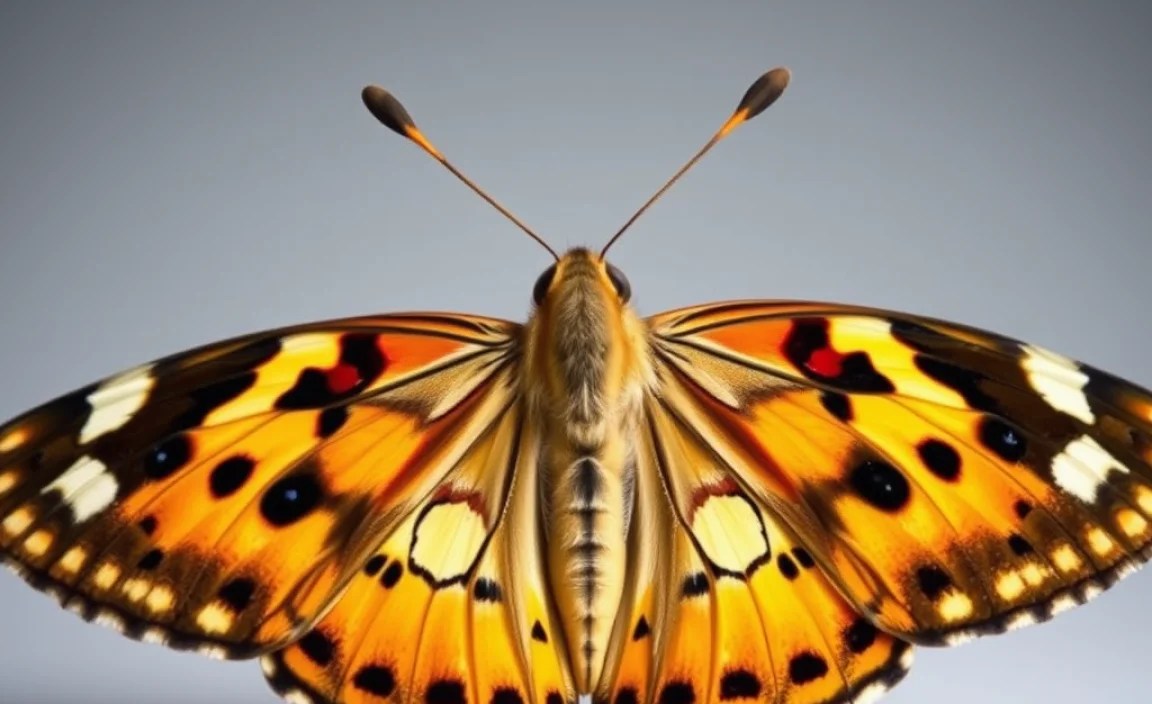
The proboscis is a long, straw-like tongue. Butterflies use it to drink nectar from flowers. When not in use, the proboscis is coiled up. It looks like a tiny spring. When the butterfly wants to feed, it uncoils the proboscis. It then inserts it into the flower. The butterfly sucks up the nectar. The proboscis is a marvel of engineering. It is flexible and strong. It allows the butterfly to reach nectar deep inside flowers. The painted lady butterfly’s proboscis is essential for its survival. Without it, the butterfly could not feed.
- The proboscis is a long, straw-like tongue.
- It is used to drink nectar from flowers.
- When not in use, it coils up.
- It uncoils to reach nectar.
- It is flexible and strong.
- The proboscis is essential for feeding.
The proboscis is an adaptation that allows butterflies to feed on nectar. Nectar is a sugary liquid produced by flowers. It is a valuable source of energy for butterflies. Butterflies need energy to fly and reproduce. The proboscis allows butterflies to access this energy source. The painted lady butterfly is a frequent visitor to flowers. It uses its proboscis to feed on nectar. This helps it to survive and thrive. The proboscis is a key part of the butterfly’s anatomy.
Fun Fact or Stat: A butterfly’s proboscis can be longer than its body!
How does the proboscis work?
The proboscis works like a straw. The butterfly uncoils it and sticks it into a flower. Then, it uses muscles to suck up the nectar. The nectar travels up the proboscis and into the butterfly’s stomach. The proboscis is made of two tubes. These tubes fit together to form a channel. When the butterfly is not using the proboscis, it coils it up. This protects it from damage. The proboscis is a remarkable adaptation.
What is nectar?
Nectar is a sweet liquid. Flowers make it. It attracts butterflies and other insects. Nectar is made of sugar and water. It gives butterflies energy. Butterflies need energy to fly and reproduce. Nectar is an important food source for butterflies. Without nectar, butterflies would not be able to survive. Flowers benefit from nectar. Butterflies carry pollen from flower to flower. This helps the flowers reproduce.
Why is the proboscis important?
The proboscis is very important for butterflies. It lets them drink nectar. Nectar gives them energy. Without the proboscis, butterflies could not eat. They would not be able to fly or reproduce. The proboscis is a vital part of the butterfly’s anatomy. It helps them survive and thrive. The proboscis is a perfect example of adaptation. It shows how animals can evolve to fit their environment.
The Legs and Feet of Painted Lady Butterflies

Butterflies have six legs. These legs are attached to the thorax. The legs are used for walking and clinging. Butterflies also use their legs to taste. They have taste receptors on their feet. This helps them to find suitable food sources. The legs of a painted lady butterfly are slender and delicate. They are well-suited for clinging to flowers and leaves. Butterflies also use their legs to clean their antennae. This helps them to keep their sensory organs clean and functioning properly. The legs are essential for the butterfly’s survival.
- Butterflies have six legs attached to the thorax.
- They use legs for walking and clinging.
- They taste with their feet using taste receptors.
- Legs are used for cleaning antennae.
- Legs help them find food sources.
- Legs are slender and delicate.
The butterfly’s legs are adapted for its lifestyle. They are not used for walking long distances. Instead, they are used for clinging to flowers and leaves. This allows the butterfly to feed and rest. The taste receptors on the feet are highly sensitive. They can detect even the smallest amounts of nectar. This helps the butterfly to find the best food sources. The painted lady butterfly is a skilled climber. It can easily navigate through dense vegetation. Its legs are perfectly suited for this purpose.
Fun Fact or Stat: Some butterflies have claws on their feet to help them grip onto surfaces!
How do butterflies walk?
Have you ever watched a butterfly walk? It’s not something they do very often. Butterflies prefer to fly. However, they can walk if they need to. They use their six legs to move. They step carefully. They keep their balance. Walking is not their main mode of transportation. But it is a useful skill to have. Butterflies can walk on flowers and leaves. This helps them find food.
How do butterflies taste with their feet?
Butterflies taste with their feet! They have special sensors on their feet. These sensors detect chemicals. When a butterfly lands on a flower, it tastes it. If the flower has nectar, the butterfly will start to feed. This is a quick way to find food. It helps the butterfly save energy. Tasting with their feet is a clever adaptation. It helps butterflies survive.
Why do butterflies clean their antennae?
Butterflies clean their antennae to keep them working well. The antennae are important for smelling. They help butterflies find food and mates. Dust and pollen can get on the antennae. This can block the sensors. The butterfly uses its legs to clean the antennae. It wipes them carefully. This keeps the antennae clean and sensitive. Clean antennae help butterflies survive.
Painted Lady Butterfly: Metamorphosis Stages
The painted lady butterfly goes through metamorphosis. This is a big change. It starts as an egg. The egg hatches into a larva. This larva is called a caterpillar. The caterpillar eats and grows. It sheds its skin several times. Then, it turns into a pupa. The pupa is also called a chrysalis. Inside the pupa, the caterpillar changes. It transforms into a butterfly. Finally, the butterfly emerges from the pupa. It flies away. Metamorphosis is an amazing process. It shows the power of nature.
| Stage | Description | Duration | Key Features |
|---|---|---|---|
| Egg | Small and laid on host plants. | 3-7 days | Various shapes and colors. |
| Larva (Caterpillar) | Eats and grows rapidly. | 2-4 weeks | Sheds skin several times. |
| Pupa (Chrysalis) | Transformation occurs inside. | 1-2 weeks | Protective shell forms. |
| Adult (Butterfly) | Reproduces and flies. | 2-4 weeks | Wings are fully developed. |
Metamorphosis is a complex process. It involves many changes in the butterfly’s body. The caterpillar’s body is broken down. It is then rebuilt into a butterfly. This process is controlled by hormones. The pupa is a protective shell. It protects the butterfly during this transformation. The painted lady butterfly is a symbol of transformation. It shows that change is possible. Metamorphosis is a reminder of the beauty and wonder of nature.
Fun Fact or Stat: During the pupa stage, the caterpillar’s body essentially dissolves into a soup before reforming into a butterfly!
What happens in the egg stage?
Have you ever seen a butterfly egg? It’s tiny. It’s usually laid on a leaf. The egg contains everything the caterpillar needs. It will hatch in a few days. The egg is a protected environment. It keeps the caterpillar safe. The egg stage is the beginning of the butterfly’s life. It’s the first step in metamorphosis. The egg is a small but important part of the butterfly’s life cycle.
What happens in the larva stage?
The larva stage is when the caterpillar eats and grows. It eats leaves. It grows very quickly. The caterpillar sheds its skin several times. This is called molting. The caterpillar needs to molt because its skin doesn’t grow. The larva stage is a time of rapid growth. The caterpillar prepares for the next stage. It stores up energy. It will need this energy to transform.
What happens in the pupa stage?
The pupa stage is a time of transformation. The caterpillar turns into a butterfly. This happens inside a chrysalis. The chrysalis is a hard shell. It protects the butterfly. Inside the chrysalis, the caterpillar’s body changes. It breaks down and rebuilds. This is a complex process. It takes about two weeks. The pupa stage is a time of great change. The butterfly emerges from the chrysalis.
Conservation and Painted Lady Butterflies
Painted lady butterflies are important for the environment. They help to pollinate flowers. Pollination is important for plants to reproduce. Butterflies carry pollen from flower to flower. This helps the plants make seeds. Butterflies are also a food source for other animals. Birds and other insects eat butterflies. It is important to protect butterflies. We can do this by planting flowers. We can also avoid using pesticides. Pesticides can harm butterflies. Conservation efforts can help to protect these beautiful creatures. Painted lady butterfly populations can benefit from our actions.
- Butterflies pollinate flowers.
- They are a food source for other animals.
- Planting flowers helps butterflies.
- Avoiding pesticides protects them.
- Conservation efforts are important.
- Painted lady butterflies benefit from our actions.
Butterflies are sensitive to changes in their environment. Habitat loss is a major threat to butterflies. When forests and meadows are destroyed, butterflies lose their homes. Climate change is also a threat. Changes in temperature and rainfall can affect butterfly populations. We can help butterflies by creating butterfly gardens. These gardens provide food and shelter for butterflies. We can also support organizations that are working to protect butterfly habitats. By working together, we can help to ensure that painted lady butterflies continue to thrive.
Fun Fact or Stat: Butterfly populations can indicate the health of an ecosystem!
Why are butterflies important?
Have you ever wondered why butterflies are important? They are more than just pretty insects. Butterflies play a crucial role in the ecosystem. They pollinate flowers. This helps plants reproduce. Butterflies are also a food source for birds and other animals. They are part of the food chain. Without butterflies, the ecosystem would be different. It might not be as healthy. Butterflies are important for the environment.
What are the threats to butterflies?
Butterflies face many threats. Habitat loss is a big problem. When forests and meadows are destroyed, butterflies lose their homes. Climate change is another threat. Changes in temperature and rainfall can hurt butterflies. Pesticides are also harmful. They can kill butterflies and other insects. Pollution can also affect butterflies. It’s important to protect butterflies from these threats.
How can we help butterflies?
We can help butterflies in many ways. We can plant flowers in our gardens. This gives butterflies food. We can avoid using pesticides. This protects butterflies from harm. We can also create butterfly gardens. These gardens provide shelter for butterflies. We can support organizations that protect butterfly habitats. Every little bit helps. Together, we can make a difference for butterflies.
Summary
The painted lady butterfly is an amazing insect. Its anatomy is perfectly suited for its life. The body is divided into three parts. These are the head, thorax, and abdomen. The wings are covered in tiny scales. The proboscis is used to drink nectar. The legs are used for walking and tasting. Butterflies go through metamorphosis. This is a big change from egg to larva to pupa to adult. Butterflies are important for the environment. They help to pollinate flowers.
Understanding the painted lady butterfly anatomy explained helps us appreciate these creatures. We can learn about their adaptations. We can also learn about their role in the ecosystem. By protecting butterflies, we can help to protect the environment. Every action counts. Simple actions can make a big difference for butterflies.
Conclusion
The painted lady butterfly is a marvel of nature. Its anatomy is complex and fascinating. The butterfly’s body parts work together. This helps it to survive and thrive. From its wings to its proboscis, each part is perfectly adapted. Understanding the painted lady butterfly anatomy explained allows us to appreciate the beauty and complexity of the natural world. We must protect these amazing creatures. By doing so, we protect our planet.
Frequently Asked Questions
Question No 1: What are the main body parts of a painted lady butterfly?
Answer: The main body parts include the head, thorax, and abdomen. The head has eyes and antennae. The thorax has wings and legs. The abdomen contains the digestive system. Each part has a special job. The painted lady butterfly anatomy explained shows how these parts work together. These parts help it survive and thrive. The body is covered in an exoskeleton. This protects the butterfly. The exoskeleton helps keep the butterfly from drying out. It’s like a suit of armor for a tiny insect.
Question No 2: How do painted lady butterflies use their wings?
Answer: Butterflies use their wings to fly. The wings are covered in tiny scales. These scales give the wings color. They also help with flight. The butterfly moves its wings up and down. This creates lift. It propels the butterfly through the air. The shape of the wings helps with flight. Some butterflies are fast flyers. Others are slower. The painted lady butterfly is known for its agile flight. They can travel long distances using their wings. Understanding painted lady butterfly anatomy explained is key. It is important to know that wings are essential for their survival.
Question No 3: What is the proboscis and how does it work?
Answer: The proboscis is a long, straw-like tongue. Butterflies use it to drink nectar from flowers. When not in use, it is coiled up. When the butterfly wants to feed, it uncoils it. It inserts it into the flower. It sucks up the nectar. The proboscis is flexible and strong. It allows the butterfly to reach nectar deep inside flowers. The proboscis is essential for feeding. Without it, the butterfly could not get food. The painted lady butterfly anatomy explained shows this.
Question No 4: How do painted lady butterflies taste things?
Answer: Butterflies taste with their feet! They have taste receptors on their feet. When a butterfly lands on a flower, it tastes it. If the flower has nectar, the butterfly will start to feed. This is a quick way to find food. It helps the butterfly save energy. Tasting with their feet is a clever adaptation. It helps butterflies survive. Imagine tasting with your feet. It’s like having a built-in taste test. The painted lady butterfly anatomy explained proves how special these creatures are.
Question No 5: What are the stages of metamorphosis for a painted lady butterfly?
Answer: The painted lady butterfly goes through metamorphosis. This is a big change. It starts as an egg. The egg hatches into a larva. This larva is called a caterpillar. The caterpillar eats and grows. It sheds its skin several times. Then, it turns into a pupa. The pupa is also called a chrysalis. Inside the pupa, the caterpillar changes. It transforms into a butterfly. Finally, the butterfly emerges from the pupa. It flies away. Metamorphosis is an amazing process. The painted lady butterfly anatomy explained clearly shows these stages.
Question No 6: Why is it important to protect painted lady butterflies?
Answer: Painted lady butterflies are important for the environment. They help to pollinate flowers. Pollination is important for plants to reproduce. Butterflies carry pollen from flower to flower. This helps the plants make seeds. Butterflies are also a food source for other animals. Birds and other insects eat butterflies. It is important to protect butterflies. We can do this by planting flowers. We can also avoid using pesticides. Painted lady butterfly anatomy explained shows how delicate their bodies are. Pesticides can harm butterflies. Conservation efforts can help to protect these beautiful creatures.


