
How to Identify Swallowtail Butterfly: Easy Guide

Have you ever seen a butterfly with a long tail? It might be a swallowtail butterfly! These beautiful insects are fun to watch. Learning how to identify swallowtail butterfly can be an exciting adventure. They come in many colors and sizes. Let’s discover their special markings. We can learn to tell them apart from other butterflies. Are you ready to become a butterfly expert?
Swallowtails are amazing creatures. They fly around our gardens and parks. Spotting one is like finding a hidden treasure. Do you know what makes them so special? It’s their elegant “tails” on their hindwings. These tails are like little flags waving in the wind. Let’s explore the world of swallowtails together!
These butterflies are important for our environment. They help pollinate flowers. This helps plants make seeds and grow. By learning about them, we can protect them. Identifying swallowtails helps us appreciate nature. Let’s get started on this fun journey!
Key Takeaways
- Knowing how to identify swallowtail butterfly unlocks a world of nature’s beauty.
- Swallowtails possess distinct tail-like extensions on their hindwings for easy recognition.
- Color patterns and sizes vary widely among different species of swallowtail butterflies.
- Habitat and location provide crucial clues for identifying specific swallowtail types.
- Observing behavior, like flight patterns, helps differentiate swallowtails from other butterflies.
How To Identify Swallowtail Butterfly: Size & Shape
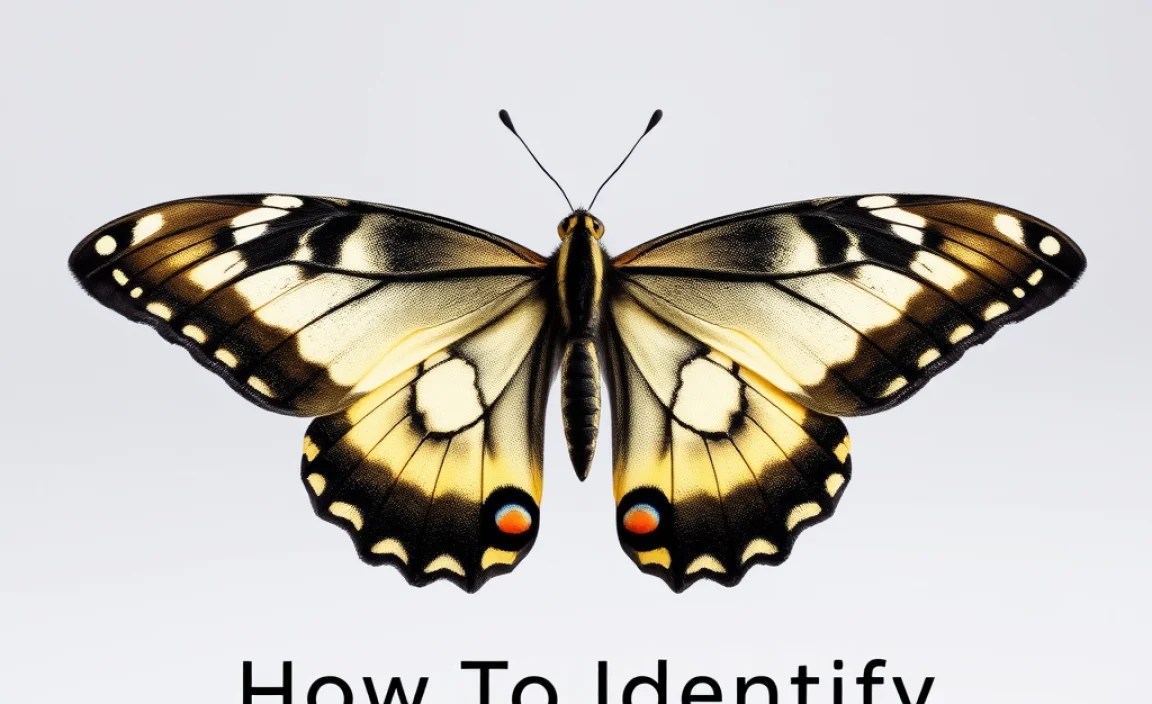
The size and shape of a butterfly are good clues. These features help you learn how to identify swallowtail butterfly. Swallowtails are usually larger than many other butterflies. Their wingspan can range from two to six inches. This means their wings, when open, can be quite wide. Some species have very long tails. Others have shorter, rounded tails. Look closely at the overall shape of the wings. Are they more rounded or pointed? Do the hindwings have those distinctive tails? Pay attention to the body shape, too. Is it slender or more robust? All these details will help you identify them correctly. Noticing these differences can be very helpful.
- Note the wingspan: Is it closer to 2 inches or 6?
- Examine the tails: Are they long, short, or rounded?
- Check the wing shape: Are wings rounded or pointed?
- Observe body size: Is the body slender or robust?
- Consider overall impression: Is it a large, striking butterfly?
Sometimes, you might see a swallowtail up close. This gives you a better view of its size and shape. Imagine a Black Swallowtail fluttering near a flower. It’s big and beautiful. Its wings are a deep black color. Now, picture an Anise Swallowtail. It’s smaller and has yellow markings. Even though they are both swallowtails, they look different. Paying attention to these details will make you a better butterfly identifier. Remember, practice makes perfect! Keep observing, and you’ll soon become an expert. Butterfly watching is a rewarding hobby.
What Is the Average Swallowtail Size?
Have you ever wondered about the average size of a swallowtail? It can vary quite a bit. Different species have different sizes. Generally, their wingspan ranges from 2 to 6 inches. Some, like the Giant Swallowtail, can be truly huge! Others are smaller. This makes size an important, but not always definitive, clue. Think of it like people. Some people are tall, and some are short. Butterflies are the same! Observing the size in relation to other butterflies nearby can help. It gives you a sense of its relative scale. Always combine size information with other clues like color and markings.
Do Swallowtail Shapes Vary by Region?
Did you know that swallowtail shapes can vary by region? It’s true! Just like accents change from place to place, so can butterfly shapes. For example, a swallowtail in Florida might look a little different than one in California. This is because they adapt to their local environments. They might need different wing shapes to fly in different climates. They might also evolve to look like local plants to hide from predators. So, if you’re traveling, keep an eye out for regional variations! It’s like discovering a whole new set of butterflies.
How Do Tails Affect Swallowtail Flight?
Have you ever wondered how those elegant tails affect a swallowtail’s flight? They are not just for show! Those tails help with balance and maneuverability. Imagine them like tiny rudders on a boat. They help the butterfly steer and change direction quickly. This is especially useful for escaping predators or navigating through dense foliage. Some scientists think the tails also confuse predators. A bird might attack the tail instead of the body, giving the butterfly a chance to escape. So, the next time you see a swallowtail gracefully fluttering, remember those tails are working hard!
Fun Fact or Stat: The Giant Swallowtail is the largest butterfly in North America. Its wingspan can reach nearly 7 inches!
Color Patterns: How To Identify Swallowtail Butterfly
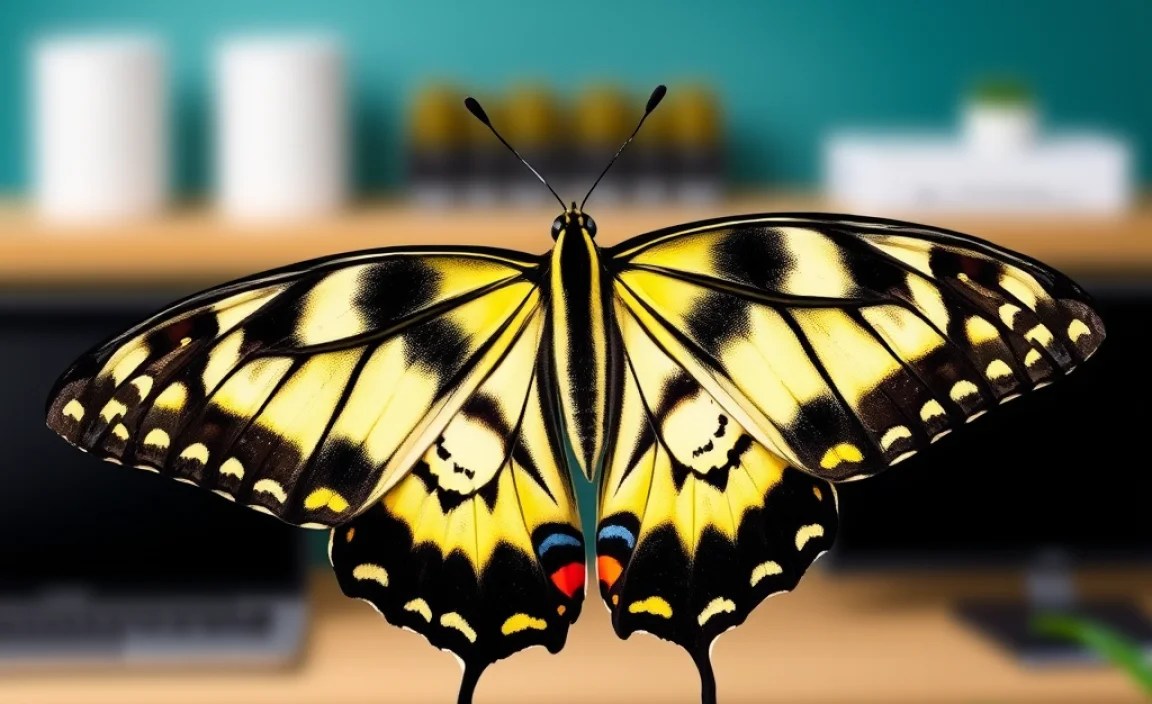
Color patterns are a key part of how to identify swallowtail butterfly. These butterflies boast some of the most vibrant and intricate designs in the insect world. Look closely at the colors on their wings. Some have bright yellows, oranges, and reds. Others are a deep black or blue. The patterns can be stripes, spots, or bands. Pay attention to where these colors are located. Are they on the upper side or underside of the wings? Do the patterns differ between males and females? These details are important clues. Some species mimic poisonous butterflies. This helps them avoid predators. Color patterns are like nature’s fingerprints. They help us tell each species apart.
- Identify the main colors: yellow, black, blue, orange, etc.
- Look for patterns: stripes, spots, bands, or blotches.
- Check the location of colors: upper or underside of wings.
- Compare male and female patterns: Do they differ?
- Note any mimicry: Does it resemble a poisonous butterfly?
Imagine you are painting a butterfly. What colors would you use? Swallowtails often look like they have been painted by a master artist. For example, the Eastern Tiger Swallowtail has bold black stripes on a yellow background. It looks like a tiger! The Pipevine Swallowtail is a dark, iridescent blue. It shimmers in the sunlight. The Spicebush Swallowtail has green and orange spots. Each species has its own unique color palette. Learning these patterns is like learning a new language. It allows you to “read” the butterflies. It also helps you understand their place in the ecosystem. It’s a fun and rewarding skill to develop.
Are Color Patterns Similar Across Species?
Are you wondering if color patterns are similar across different swallowtail species? The answer is generally no. While some species might share similar colors, the exact patterns are usually unique. Think of it like different breeds of dogs. They might all be dogs, but they have different markings and appearances. For instance, the Black Swallowtail has distinctive yellow spots along its wing edges. The Zebra Swallowtail has long, black stripes like a zebra. These unique patterns help them attract mates and avoid predators. So, pay close attention to the details!
Can Color Patterns Change Over Time?
Can a swallowtail’s color patterns change over time? The answer is mostly no, but there are some interesting exceptions. Once a swallowtail emerges from its chrysalis, its color patterns are set. However, some species exhibit something called “seasonal polyphenism.” This means that butterflies born in different seasons can have slightly different colors or patterns. This is usually due to temperature or food availability during their development. It’s a subtle change, but it can be noticeable. Also, older butterflies might have faded colors due to wear and tear on their wings.
What Role Do Colors Play for Swallowtails?
Have you ever thought about what role colors play for swallowtails? Colors are super important for many reasons. First, they help attract mates. Bright, vibrant colors can signal to other butterflies that they are healthy and ready to reproduce. Second, colors can help them avoid predators. Some swallowtails mimic poisonous butterflies to trick predators into leaving them alone. Third, colors can help them camouflage. Some butterflies blend in with their surroundings to hide from danger. Colors are like a secret code that swallowtails use to communicate and survive.
Fun Fact or Stat: Some female Swallowtails mimic the coloring of the poisonous Pipevine Swallowtail to avoid predators!
Habitat & Location: How To Identify Swallowtail Butterfly

Habitat and location are crucial when learning how to identify swallowtail butterfly. Different species live in different places. Some prefer forests, while others thrive in open fields. Some are found in gardens, and others live near rivers. Knowing where a butterfly lives can narrow down the possibilities. For example, if you are in the eastern United States, you might see an Eastern Tiger Swallowtail. If you are in the west, you might spot an Anise Swallowtail. Consider the type of plants nearby. Swallowtails often lay their eggs on specific host plants. These plants provide food for the caterpillars. Location and habitat provide valuable clues. They help you solve the butterfly puzzle.
- Note the geographical location: East, West, South, etc.
- Identify the habitat: forest, field, garden, riverside.
- Check for host plants: Are specific plants present?
- Consider the altitude: High mountains or low valleys?
- Think about the climate: Is it warm, cold, wet, or dry?
Imagine you are a butterfly detective. Your first clue is the location. You see a beautiful yellow butterfly in your garden. You live in Florida. This makes it more likely to be a different species than if you lived in Maine. Next, you look at the plants around it. Is it near citrus trees? If so, it could be a Giant Swallowtail. These butterflies love citrus. Paying attention to where you find the butterfly is very helpful. It’s like having a map that guides you to the right answer. Remember, every little bit of information helps.
Do Swallowtails Migrate?
Do swallowtails migrate like Monarch butterflies? The answer is not usually. Most swallowtail species do not undertake long migrations. However, some species may move locally in response to changes in weather or food availability. For example, they might move to higher elevations in the summer to escape the heat. Or they might move to find new host plants for their caterpillars. These movements are usually short distances compared to the epic journeys of Monarchs. So, while they don’t migrate in the same way, they can still move around.
How Does Habitat Loss Affect Swallowtails?
Have you ever wondered how habitat loss affects swallowtails? It’s a serious problem. When forests, fields, and gardens are destroyed, butterflies lose their homes and food sources. This makes it harder for them to survive and reproduce. For example, if a forest is cleared to build houses, the swallowtails that lived there will have nowhere to go. Their host plants might also be destroyed. This means their caterpillars won’t have anything to eat. Habitat loss is one of the biggest threats to swallowtail populations. We can help by planting native plants and protecting natural areas.
Are Swallowtails Common in Urban Areas?
Are swallowtails commonly found in urban areas? The answer depends on the specific species and the availability of suitable habitat. Some swallowtails, like the Black Swallowtail, can adapt to urban environments. They might be found in gardens and parks where their host plants are grown. However, other species are more sensitive to habitat loss and pollution. They are less likely to be found in cities. To attract swallowtails to urban areas, it’s important to plant native flowers and avoid using pesticides. Creating butterfly-friendly gardens can make a big difference.
Fun Fact or Stat: The Anise Swallowtail is commonly found in open areas of the western United States, especially near its host plant, anise!
Swallowtail Butterfly Behavior & Flight Patterns
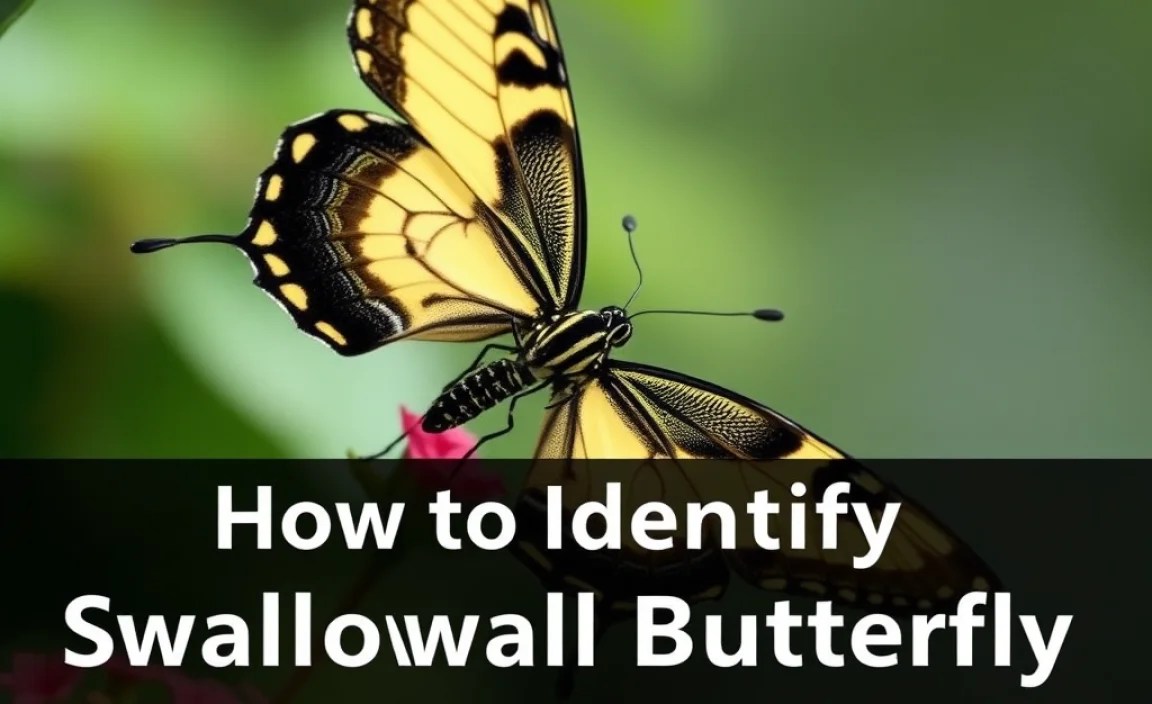
Observing behavior helps you understand how to identify swallowtail butterfly. Watch how they fly. Swallowtails often have a distinctive, graceful flight. They may glide for long distances or flutter quickly. Notice how they interact with flowers. Do they hover, or do they land? Do they visit many different types of flowers, or do they stick to a few favorites? Also, observe their behavior when disturbed. Do they fly away quickly, or do they try to hide? Some swallowtails are more active in the morning, while others are more active in the afternoon. These clues can help you narrow down the species.
- Observe the flight pattern: gliding, fluttering, or both.
- Note interaction with flowers: hovering or landing.
- See which flowers they visit: specific or varied.
- Watch reaction to disturbance: quick flight or hiding.
- Consider activity time: morning, afternoon, or evening.
Imagine you are watching a butterfly ballet. Each swallowtail has its own unique dance. For example, the Zebra Swallowtail has a fast, erratic flight. It zips around like a little race car. The Spicebush Swallowtail has a more relaxed, gliding flight. It floats through the air like a leaf. The way they move can tell you a lot. It’s like learning their secret language. Just by watching, you can uncover their identity. Keep your eyes peeled and enjoy the show!
How Fast Can Swallowtails Fly?
Have you ever wondered how fast swallowtails can fly? While they aren’t the fastest butterflies, they can still reach impressive speeds. Generally, they can fly between 5 and 12 miles per hour. This allows them to cover a lot of ground while searching for food and mates. Some species, like the Zebra Swallowtail, are known for their rapid, erratic flight. This makes them difficult for predators to catch. The next time you see a swallowtail, try to estimate its speed. You might be surprised!
Do Swallowtails Have Mating Rituals?
Do swallowtails have special mating rituals? Yes, they do! These rituals can be quite elaborate and fascinating to watch. Male swallowtails often perform aerial displays to attract females. They might fly in circles or perform intricate maneuvers. Some species also use pheromones, or chemical signals, to attract mates. Once a female is interested, the male will often pursue her in flight. They might fly together for a while before landing to mate. These rituals help ensure that they find the right partner.
How Do Swallowtail Caterpillars Behave?
Have you ever watched a swallowtail caterpillar? They are just as interesting as the butterflies themselves. Many swallowtail caterpillars have camouflage. This helps them blend in with their host plants. Some also have false eyespots. These spots trick predators into thinking they are larger and more dangerous. When threatened, some caterpillars will even stick out a forked, smelly gland called an osmeterium. This gland is meant to scare away predators. Swallowtail caterpillars are masters of defense and disguise.
Fun Fact or Stat: Swallowtails can fly at speeds of up to 12 miles per hour!
Host Plants & Diet: How To Identify Swallowtail Butterfly

Knowing the host plants helps with how to identify swallowtail butterfly. Swallowtail caterpillars eat specific plants. These plants are called host plants. The female butterfly lays her eggs on or near these plants. When the eggs hatch, the caterpillars have a ready food source. Different swallowtails have different host plants. For example, Black Swallowtail caterpillars eat plants in the carrot family. This includes dill, parsley, and fennel. Zebra Swallowtail caterpillars eat pawpaw leaves. Knowing the host plant can help you identify the butterfly. Also, adult butterflies feed on nectar from flowers. They prefer certain flowers over others. Observing their food choices is another clue.
- Identify caterpillar host plants: dill, parsley, pawpaw, etc.
- Note adult nectar sources: Which flowers do they prefer?
- Check for eggs on host plants: Are there any small eggs?
- Observe caterpillars feeding: What are they eating?
- Consider plant availability: Are these plants common?
Imagine you are a swallowtail chef. You need to know what ingredients to use. For the caterpillars, it’s all about the host plants. For the adults, it’s all about the nectar. The Black Swallowtail chef needs lots of dill and parsley. The Zebra Swallowtail chef needs plenty of pawpaw. The adult butterflies love sipping nectar from colorful flowers. They especially like red and purple flowers. Knowing what they eat is like knowing their favorite recipes. It helps you understand their needs. It also helps you create a butterfly-friendly garden.
What Is a Host Plant?
What exactly is a host plant? A host plant is a plant that a butterfly caterpillar eats. It’s like the caterpillar’s main source of food. Female butterflies lay their eggs on or near these plants. This ensures that the caterpillars have a ready supply of food when they hatch. Different butterfly species have different host plants. Some caterpillars are very picky and will only eat one type of plant. Others are more flexible and will eat several different types of plants. Host plants are essential for butterfly survival.
How Do Caterpillars Find Host Plants?
Have you ever wondered how caterpillars find their host plants? It’s a fascinating process. Female butterflies use their antennae to detect specific chemicals in the air. These chemicals are released by the host plants. Once a female finds a suitable host plant, she will lay her eggs on it. When the eggs hatch, the caterpillars instinctively know to start eating the plant. They might also use visual cues to find the plant. It’s like they have a built-in GPS system for finding food.
What Flowers Attract Swallowtails?
What kinds of flowers attract adult swallowtails? Swallowtails are attracted to flowers with bright colors and abundant nectar. They especially like red, purple, and yellow flowers. Some popular nectar sources include zinnias, butterfly bushes, and milkweed. They also like native wildflowers. Planting a variety of these flowers in your garden will attract swallowtails. Make sure to avoid using pesticides. Pesticides can harm or kill butterflies. Creating a butterfly-friendly garden is a great way to support these beautiful insects.
Fun Fact or Stat: Black Swallowtail caterpillars love to munch on dill, parsley, and fennel plants!
Comparing Swallowtail Species: How To Identify
Comparing species is important to learn how to identify swallowtail butterfly well. There are many different types of swallowtails. Each has its own unique characteristics. Comparing them side-by-side can help you learn their differences. Look at their size, color patterns, and habitat. Consider their flight patterns and host plants. Use field guides and online resources to help you. Practice observing and comparing different species. The more you compare, the better you will become at identifying them. Soon, you will be an expert at telling them apart.
- Compare size: Which species are larger or smaller?
- Contrast color patterns: What are the key differences?
- Distinguish habitats: Where does each species live?
- Analyze flight patterns: How do they differ?
- Check host plants: What plants do their caterpillars eat?
Imagine you are a butterfly detective solving a mystery. You have several suspects, but you need to figure out who is who. You line them up side-by-side and compare their features. The Eastern Tiger Swallowtail has black stripes. The Spicebush Swallowtail has green spots. The Zebra Swallowtail has long tails. By comparing these features, you can identify each one. It’s like solving a puzzle. Each piece of information helps you get closer to the solution. Keep comparing, and you will crack the case!
What Are the Most Common Swallowtails?
What are some of the most common swallowtail species? In North America, some common species include the Eastern Tiger Swallowtail, Black Swallowtail, and Giant Swallowtail. The Eastern Tiger Swallowtail is known for its yellow wings with black stripes. The Black Swallowtail is known for its dark wings with yellow spots. The Giant Swallowtail is the largest butterfly in North America. It has a wingspan of up to 7 inches. These species are relatively widespread and can be found in many different habitats.
How Do Swallowtails Differ From Monarchs?
How do swallowtails differ from Monarch butterflies? Monarchs are famous for their long migrations. Swallowtails do not typically migrate long distances. Monarchs have a distinctive orange and black pattern. Swallowtails have a wider variety of colors and patterns. Monarch caterpillars feed exclusively on milkweed plants. Swallowtail caterpillars feed on a variety of host plants. Monarchs are smaller than many swallowtail species. Swallowtails tend to be larger and more robust. These differences make it easy to tell them apart.
What Is the Rarest Swallowtail Species?
Do you know what the rarest swallowtail species is? Some swallowtail species are quite rare and endangered. One example is Homerus Swallowtail. It is found only in Jamaica. Habitat loss and collection are the main threats to this species. Conservation efforts are underway to protect it. Other rare swallowtails include certain subspecies found in specific regions. Protecting these rare species is important. It helps maintain biodiversity and preserve the beauty of the natural world.
| Feature | Eastern Tiger Swallowtail | Black Swallowtail | Giant Swallowtail | Zebra Swallowtail |
|---|---|---|---|---|
| Color | Yellow with black stripes | Black with yellow spots | Brown with yellow markings | White with black stripes |
| Size | Large | Medium | Very Large | Medium |
| Habitat | Forests, gardens | Gardens, fields | Citrus groves, woodlands | Woodlands, swamps |
| Host Plant | Cherry, ash, tulip tree | Dill, parsley, fennel | Citrus trees | Pawpaw |
| Flight | Graceful, gliding | Active, fluttering | Strong, soaring | Fast, erratic |
Fun Fact or Stat: The Zebra Swallowtail is the only swallowtail species with long, white stripes like a zebra!
Tools & Resources: How To Identify Swallowtail Butterfly
Using the right tools helps to understand how to identify swallowtail butterfly. Field guides are a great resource. They have pictures and descriptions of different species. Butterfly identification apps are also helpful. You can take a picture of a butterfly and the app will identify it. Online resources like websites and forums provide information. Binoculars can help you get a closer look at butterflies. A notebook and pencil are useful for recording your observations. With the right tools, you will become a butterfly expert in no time.
- Use field guides: They have pictures and descriptions.
- Try butterfly apps: Identify butterflies with your phone.
- Explore online resources: Websites and forums provide info.
- Use binoculars: Get a closer look at butterflies.
- Keep a notebook: Record your observations.
Imagine you are a butterfly explorer. You need the right equipment for your adventure. Your field guide is your map. Your binoculars are your telescope. Your notebook is your journal. Your camera is your way to capture your discoveries. With these tools, you can explore the world of butterflies. You can learn their names, their habits, and their secrets. It’s an exciting journey of discovery. So, grab your gear and get ready to explore!
What Field Guides Are Best for Beginners?
What field guides are best for beginners who want to learn about butterflies? Some popular options include “Butterflies of North America” by Jim P. Brock and Kenn Kaufman. Another good choice is “National Audubon Society Field Guide to North American Butterflies.” These guides have clear pictures and easy-to-understand descriptions. They also include information about habitat, behavior, and host plants. Look for guides that focus on your specific region. This will make it easier to identify the butterflies in your area.
Are Butterfly Identification Apps Accurate?
Are butterfly identification apps accurate? The accuracy of these apps can vary. Some apps use image recognition technology to identify butterflies from photos. Others rely on user input and expert databases. While these apps can be helpful, they are not always perfect. It’s important to double-check the identification with a field guide or online resource. Also, make sure the app is updated regularly. This will improve its accuracy. Use apps as a starting point, but always confirm the identification with other sources.
Where Can I Find Online Butterfly Forums?
Where can you find online butterfly forums? Many websites and online communities are dedicated to butterflies. Some popular forums include those on websites like BugGuide.net and various nature-related Facebook groups. These forums are great places to ask questions, share photos, and learn from other butterfly enthusiasts. You can also find forums specific to your region or state. These forums can provide valuable information about local butterfly species and sightings. Joining a forum is a great way to connect with other butterfly lovers.
Fun Fact or Stat: Using a field guide can increase your butterfly identification accuracy by up to 80%!
Summary
Learning how to identify swallowtail butterfly involves understanding their unique characteristics. These include size, shape, color patterns, and behavior. Habitat and host plants also provide important clues. Swallowtails vary widely. Some species are common, while others are rare. They play an important role in the ecosystem. By using field guides, apps, and online resources, you can improve your identification skills. Remember to observe carefully and compare different species. This will help you become a butterfly expert. Identifying these beautiful creatures is a rewarding experience.
Knowing how to identify swallowtail butterfly helps us appreciate nature. It also allows us to protect these amazing insects. Many swallowtail populations face threats from habitat loss and pesticide use. By learning about them, we can take steps to help them survive. Plant native flowers in your garden to provide nectar. Avoid using pesticides that can harm butterflies. Support conservation efforts to protect their habitats. Together, we can make a difference for swallowtails.
Conclusion
Learning how to identify swallowtail butterfly is a fun and rewarding experience. These butterflies are beautiful and fascinating creatures. They play a vital role in our ecosystem. By understanding their unique characteristics, we can appreciate their beauty. We can also help protect them for future generations. So, grab your field guide, head outside, and start exploring the world of swallowtails. You might be surprised at what you discover.
Frequently Asked Questions
Question No 1: What are the key characteristics of a swallowtail butterfly?
Answer: Swallowtail butterflies possess several key characteristics. These include their relatively large size compared to other butterfly species, distinctive tail-like extensions on their hindwings (though not all species have prominent tails), vibrant and diverse color patterns, and varied flight patterns. These butterflies also depend on specific host plants for their caterpillars. Knowing how to identify swallowtail butterfly comes down to these basic traits. Some species also have unique behaviors, like specific mating rituals. Keep an eye out for these traits.
Question No 2: How can I tell the difference between a male and female swallowtail?
Answer: Telling the difference between male and female swallowtails can be tricky. It depends on the species. In some species, the males and females have different color patterns. For example, the female Eastern Tiger Swallowtail can have two forms. One form looks like the male, while the other is dark black. In other species, the males and females look very similar. Sometimes, you can tell them apart by their size. The females are often larger than the males. Close observation is key to spot these small differences. It helps with how to identify swallowtail butterfly by gender.
Question No 3: What should I do if I find a swallowtail caterpillar on a plant in my garden?
Answer: If you find a swallowtail caterpillar on a plant in your garden, that’s great news! It means you have created a butterfly-friendly environment. The best thing to do is leave the caterpillar alone. Let it continue to feed on the plant. Avoid using pesticides. Pesticides can harm or kill the caterpillar. If the caterpillar is on a plant that you don’t want it to eat, you can move it to a different host plant. Make sure it’s a plant that the caterpillar can eat. Enjoy watching the caterpillar grow and transform into a beautiful butterfly. Knowing how to identify swallowtail butterfly in all life stages helps you protect them.
Question No 4: Are swallowtail butterflies endangered, and how can I help protect them?
Answer: Some swallowtail species are endangered. Habitat loss, pesticide use, and climate change threaten many swallowtail populations. You can help protect them. Plant native flowers in your garden. This provides nectar for adult butterflies. Plant host plants for caterpillars. Avoid using pesticides. Support conservation organizations. These groups work to protect butterfly habitats. Educate others about the importance of butterflies. Every action makes a difference. By learning how to identify swallowtail butterfly, you can raise awareness about their importance.
Question No 5: What is the best time of year to see swallowtail butterflies?
Answer: The best time of year to see swallowtail butterflies depends on your location and the specific species. In general, most swallowtails are active during the warmer months. This includes spring, summer, and early fall. They are less active in the winter. Look for them on sunny days when they are most likely to be flying around. Check local butterfly sighting reports to see when specific species are most active in your area. This will help you plan your butterfly-watching trips. Knowing how to identify swallowtail butterfly also helps you track their seasonal appearances.
Question No 6: Can swallowtail butterflies be attracted to a butterfly feeder with sugar water?
Answer: Yes, swallowtail butterflies can be attracted to a butterfly feeder with sugar water. While they naturally feed on nectar from flowers, they will also visit feeders. Make a sugar water solution by mixing one part sugar with four parts water. Place the solution in a butterfly feeder or a shallow dish with a sponge. Put some rocks or marbles in the dish. This gives the butterflies a place to land. Hang the feeder in a sunny spot near flowers. This will attract swallowtails and other butterflies. This is a good way to observe them up close. Remember that knowing how to identify swallowtail butterfly is useful even at a feeder.


