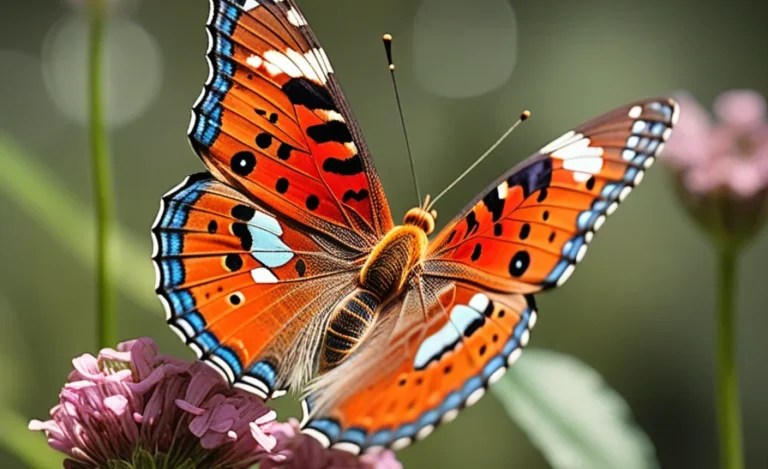
Butterfly Identification Using Wing Venation: A Smart Guide

Have you ever seen a butterfly up close? Butterflies are beautiful insects. They fly around in gardens. Each one has a unique pattern. But how do scientists tell them apart? One way is by looking at their wings. The lines on their wings are called wing venation. Butterfly identification using wing venation is like using a map to know which butterfly is which!
Key Takeaways
- Butterfly identification using wing venation helps scientists know different types of butterflies.
- Wing veins are like fingerprints; each butterfly species has a unique pattern.
- Looking at wing venation can tell us about a butterfly’s family history.
- Scientists also use color and size to identify butterflies.
- Learning about butterflies helps us protect their homes.
Understanding Butterfly Wing Venation
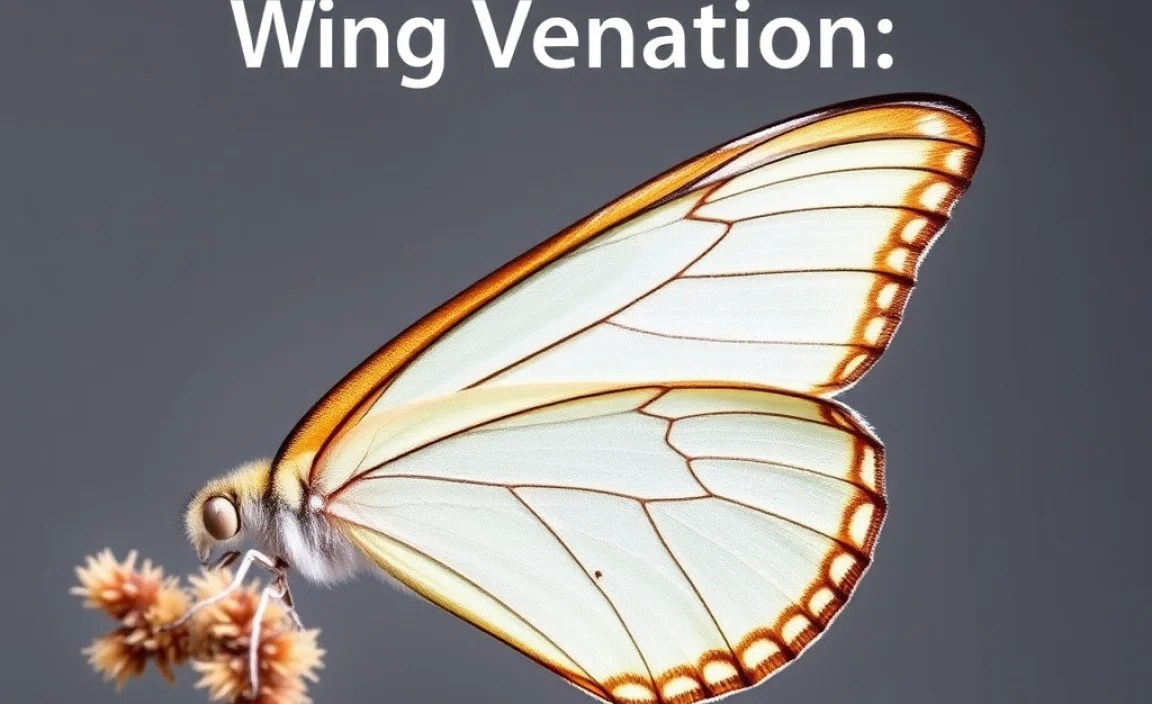
Have you ever wondered what makes a butterfly’s wings so special? Butterflies have lines on their wings. These lines are called veins. The veins help butterflies fly. They also help scientists with butterfly identification using wing venation. Each vein has a specific name. The names tell where the vein is on the wing. Some veins run from the body to the edge. Other veins connect to these main veins. Scientists study these vein patterns. The patterns are different for each type of butterfly. It is like each butterfly has its own special code. Understanding this code helps us learn more about them.
- Veins support the butterfly’s delicate wings.
- Veins carry fluids that help wings grow.
- Different butterflies have different vein patterns.
- These patterns are unique to their species.
- Scientists use these patterns to identify them.
Butterfly wing venation is more than just lines. The veins are hollow tubes. When a butterfly is growing, fluid flows through these tubes. This fluid helps the wing expand. Once the wing is fully grown, the fluid dries up. The veins become stiff. They give the wing its shape. The veins also help the butterfly feel. They can sense changes in air pressure. This helps them fly better. Scientists look at the number of veins. They also look at how the veins connect. This helps them figure out which butterfly they are seeing.
Fun Fact or Stat: Some butterfly wings have over 100 veins!
Why Study Wing Veins?
Why do scientists care about butterfly wing veins? Imagine you are trying to solve a puzzle. Each butterfly is a piece of the puzzle. To put the puzzle together, you need to know what each piece looks like. Wing veins help scientists do just that. By studying the veins, they can learn about the butterfly’s family. They can also learn about how the butterfly evolved over time. It is like reading a story written on the butterfly’s wings. Learning about butterflies can help us protect them.
Vein Patterns and Evolution
Did you know that wing vein patterns can change over time? This is called evolution. As butterflies adapt to new environments, their wing veins may change. For example, a butterfly that lives in a windy area might have stronger veins. A butterfly that needs to fly very fast might have a different vein pattern. Scientists can study these changes. They can see how butterflies are adapting. This helps them understand how life on Earth changes. It also helps them protect butterflies from harm.
Tools for Studying Venation
How do scientists study wing veins? They use special tools. One tool is a magnifying glass. This helps them see the veins up close. Another tool is a microscope. This lets them see even tiny details. Scientists also use computers. They take pictures of the wings. Then, the computer analyzes the vein patterns. This helps them compare different butterflies. It also helps them create maps of the veins. These maps help other scientists identify butterflies too.
Methods for Butterfly Identification

How can you tell one butterfly from another? There are many ways to identify butterflies. One way is by looking at their color. Some butterflies are bright and colorful. Others are dull and camouflaged. Another way is by looking at their size. Some butterflies are very small. Others are quite large. But the best way is butterfly identification using wing venation. Wing venation is a reliable method. It does not change as much as color or size. Using wing venation, you can be sure you know what you are seeing.
- Observe the butterfly’s overall size.
- Note the colors and patterns on the wings.
- Examine the shape of the wings.
- Check for any unique markings or spots.
- Look closely at the wing venation.
- Use a field guide to compare your observations.
Scientists use many tools to identify butterflies. They use books called field guides. These books have pictures of different butterflies. They also have descriptions of their features. Scientists also use online databases. These databases contain information about butterflies from all over the world. They can search for a butterfly by its color, size, or wing venation. Then, they can compare it to the butterflies in the database. This helps them confirm their identification. Butterfly identification using wing venation is a key skill for any butterfly scientist.
Fun Fact or Stat: There are over 20,000 different species of butterflies in the world!
Using Field Guides
Have you ever used a field guide? A field guide is a book that helps you identify things in nature. There are field guides for birds, trees, and even butterflies! A butterfly field guide will have pictures of different butterflies. It will also have descriptions of their colors, sizes, and wing venation. To use a field guide, you first need to find a butterfly. Then, you compare the butterfly to the pictures in the guide. Look for the butterfly that matches the closest. Read the description to confirm your identification.
Online Databases
The internet has made butterfly identification easier. Many websites have pictures and information about butterflies. These are called online databases. Some databases let you search for butterflies by their features. You can enter the color, size, and wing venation. The database will show you the butterflies that match. This can be a quick way to identify a butterfly. But always double-check your identification with a field guide or expert.
Expert Identification
Sometimes, identifying a butterfly can be tricky. Some butterflies look very similar. In these cases, it is best to ask an expert. Experts are people who know a lot about butterflies. They can help you identify even the most difficult ones. Experts often work at museums or universities. You can contact them by email or phone. You can also bring them a picture of the butterfly. They will be happy to help you learn more about these amazing creatures.
Wing Vein Patterns in Different Families

Butterflies belong to different families. Each family has its own unique features. One way to tell families apart is by looking at their wing veins. For example, swallowtail butterflies have a distinct vein pattern. Their veins form a long, narrow shape. This helps them fly quickly. Monarch butterflies have a different pattern. Their veins are more spread out. This helps them glide long distances. By studying these patterns, scientists can learn about the relationships between different butterfly families. Butterfly identification using wing venation is key to understanding this.
- Swallowtails have elongated wing vein patterns.
- Monarchs have more spread-out vein patterns.
- Skippers have hooked tips on their antennae.
- Blues are often small and brightly colored.
- Brush-foots often perch with closed wings.
The Nymphalidae family is very diverse. It includes many different types of butterflies. Some are brightly colored. Others are camouflaged. But they all have one thing in common: reduced forelegs. This means their front legs are smaller than their other legs. They also have a specific wing vein pattern. The veins on their forewings are different from the veins on their hindwings. This helps them fly in a unique way. Scientists study these differences to understand how the Nymphalidae family evolved. They use butterfly identification using wing venation to help.
Fun Fact or Stat: The largest butterfly family, Nymphalidae, contains about 6,000 species!
Swallowtail Wing Veins
Have you ever seen a swallowtail butterfly? They are known for their long tails. These tails are part of their hindwings. Their wing veins support these tails. The veins run all the way to the tips of the tails. This gives the tails their shape and strength. The vein patterns in swallowtails are very distinctive. Scientists use these patterns to identify different species of swallowtails. This helps them understand how these beautiful butterflies are related.
Monarch Wing Veins
Monarch butterflies are famous for their long migrations. They fly thousands of miles each year. Their wing veins help them do this. The veins are strong and flexible. This allows them to glide efficiently. The vein patterns in monarchs are also unique. Scientists can use these patterns to track different populations of monarchs. This helps them understand how the monarchs are moving and changing.
Skipper Wing Veins
Skippers are small, fast-flying butterflies. They have hooked antennae. Their wing veins are also different from other butterflies. The veins are thicker and more numerous. This gives them extra support for their rapid flight. The vein patterns in skippers are complex. Scientists study these patterns to understand how skippers evolved their unique flying style.
The Role of Wing Veins in Flight
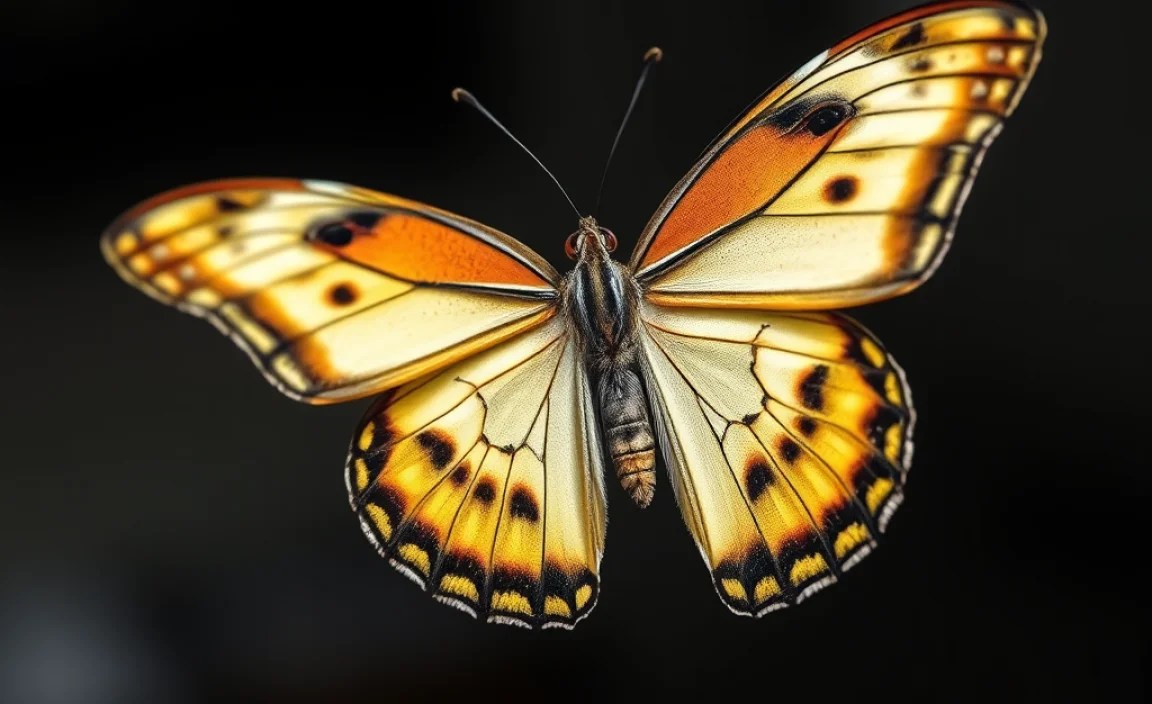
Why are wing veins so important? They help butterflies fly! The veins act like tiny beams. They support the wing membrane. This keeps the wing from tearing. The veins also help the butterfly control its flight. By changing the shape of its wings, the butterfly can steer and maneuver. The arrangement of veins affects the butterfly’s flight performance. Understanding butterfly identification using wing venation is also understanding how the wings help the butterfly fly.
- Veins provide structural support to the wings.
- Veins help butterflies control their flight.
- Vein patterns affect flight performance.
- Stronger veins allow for more powerful flight.
- Flexible veins allow for better maneuverability.
Imagine a kite without a frame. It would be floppy and hard to control. Butterfly wings are similar. Without veins, they would be too flimsy to fly. The veins give the wings their shape and stiffness. They also help the butterfly feel the air. This allows it to adjust its flight as needed. Scientists study the relationship between wing veins and flight. They use wind tunnels to test how different vein patterns affect flight performance. This helps them understand how butterflies have evolved to fly so efficiently.
Fun Fact or Stat: Butterflies can flap their wings from 5 to 20 times per second!
Vein Arrangement and Lift
How do wing veins help butterflies create lift? The arrangement of the veins affects how air flows over the wing. Some vein patterns create more lift than others. Butterflies with these patterns can fly higher and faster. Scientists study these patterns to understand how butterflies have adapted to different environments. They use computer models to simulate airflow over the wings. This helps them see how the veins are affecting lift.
Vein Flexibility and Maneuverability
Wing veins also allow butterflies to be very maneuverable. The veins are not completely rigid. They can bend and flex slightly. This allows the butterfly to change the shape of its wings. By changing the shape, the butterfly can turn quickly and easily. Scientists study the flexibility of wing veins. They use special cameras to record how the wings move during flight. This helps them understand how butterflies are able to perform such amazing aerial maneuvers.
Vein Strength and Flight Speed
The strength of wing veins affects how fast a butterfly can fly. Stronger veins can withstand higher airspeeds. Butterflies with strong veins can fly faster and longer. Scientists study the strength of wing veins. They use special machines to measure how much force the veins can withstand. This helps them understand how butterflies have adapted to different flight speeds.
Tools and Techniques for Venation Analysis
How do scientists study butterfly identification using wing venation? They use many tools and techniques. One tool is a microscope. This lets them see the veins up close. Another tool is a digital camera. This lets them take pictures of the veins. They also use computer software. This software can measure the length and angle of the veins. By combining these tools, scientists can get a detailed picture of the wing venation. They can use this information to identify different species of butterflies.
- Microscopes allow for close-up examination of veins.
- Digital cameras capture detailed images of wings.
- Computer software measures vein length and angles.
- Special lighting techniques enhance vein visibility.
- Dissection tools are used to prepare wings for study.
Preparing a butterfly wing for study takes time and care. First, the scientist must carefully remove the wing from the butterfly. Then, they must clean the wing. This removes any dirt or debris. Next, they must flatten the wing. This makes it easier to see the veins. Finally, they must mount the wing on a slide. This protects the wing and allows it to be viewed under a microscope. This process ensures the wing is in the best condition for butterfly identification using wing venation.
Fun Fact or Stat: Some scientists use X-rays to study the internal structure of wing veins!
Microscopy Techniques
Microscopes are essential for studying wing veins. There are different types of microscopes. Some microscopes use light to magnify the image. Others use electrons. Electron microscopes can see even smaller details. Scientists use different types of microscopes depending on what they are studying. Light microscopes are good for seeing the overall pattern of the veins. Electron microscopes are good for seeing the fine details of the veins.
Imaging Software
Computer software is very helpful for analyzing wing venation. The software can measure the length and angle of the veins. It can also create maps of the vein patterns. This helps scientists compare different butterflies. Some software can even identify butterflies automatically. The scientist simply uploads a picture of the wing. The software then analyzes the wing venation and identifies the butterfly.
Vein Staining Techniques
Sometimes, it can be hard to see the wing veins clearly. This is especially true for butterflies with dark wings. To make the veins more visible, scientists use staining techniques. They apply a special dye to the wing. The dye stains the veins. This makes them stand out from the rest of the wing. There are many different types of dyes that can be used. The scientist chooses the dye that works best for the particular butterfly they are studying.
Challenges in Wing Venation Identification
Butterfly identification using wing venation can be difficult. Sometimes, the veins are damaged. This can make it hard to see the pattern. Other times, the veins are very similar in different species. This can make it hard to tell them apart. Scientists must be very careful when identifying butterflies using wing venation. They must use all the tools and techniques available to them. They must also consult with other experts to confirm their identifications.
- Vein damage can obscure identification.
- Similar vein patterns can be confusing.
- Variation within a species can complicate things.
- Lighting and image quality can affect analysis.
- Rare or unusual species pose extra challenges.
Even with the best tools and techniques, mistakes can happen. That is why it is important to double-check your work. Compare your identification to other sources. Ask other experts for their opinion. The more information you have, the more confident you can be in your identification. Remember, even experts make mistakes sometimes. The key is to learn from your mistakes and keep improving. With practice, you can become a skilled butterfly identifier. Always remember to be careful and patient!
Fun Fact or Stat: Some butterfly species have wing veins that change color depending on the light!
Damage to Wing Veins
One of the biggest challenges in butterfly identification using wing venation is damage to the veins. Butterflies can damage their wings in many ways. They can tear them on branches. They can be attacked by predators. They can even damage them during handling. When the veins are damaged, it can be hard to see the pattern. This can make it difficult to identify the butterfly. Scientists must be very careful when handling butterflies. They must also be able to recognize damaged veins.
Variation Within Species
Another challenge is that wing venation can vary within a species. This means that not all butterflies of the same species have the exact same vein pattern. There can be slight differences in the length, angle, and number of veins. This variation can make it hard to identify butterflies. Scientists must be aware of this variation. They must look at many different butterflies of the same species. This helps them get a better understanding of the range of variation.
Rare and Unusual Species
Identifying rare and unusual species can be especially challenging. These species are not well-studied. There may not be much information available about their wing venation. Scientists must rely on their own observations. They must also compare the butterfly to other species. This can be a difficult and time-consuming process. But it can also be very rewarding. By identifying rare and unusual species, scientists can learn more about the diversity of life on Earth.
Conservation Implications of Butterfly ID
Why is butterfly identification using wing venation important for conservation? Knowing which butterflies live where helps us protect them. If we know what species are present, we can make sure their habitats are safe. We can also track how butterfly populations are changing over time. This helps us see if they are threatened by habitat loss, climate change, or other factors. By understanding butterflies, we can take steps to protect them for future generations.
- Accurate ID helps monitor butterfly populations.
- ID helps assess the impact of habitat loss.
- ID helps track the effects of climate change.
- ID supports conservation efforts.
- ID promotes public awareness and education.
Imagine a world without butterflies. It would be a sad and colorless place. Butterflies are important pollinators. They help flowers reproduce. They are also an important food source for birds and other animals. If butterflies disappear, it would have a ripple effect on the entire ecosystem. That is why it is so important to protect them. By learning about butterflies and their habitats, we can help ensure their survival. We can also help protect the other plants and animals that depend on them. Butterfly identification using wing venation is the start.
Fun Fact or Stat: Butterflies are important pollinators, helping to spread pollen from flower to flower!
Habitat Protection
One of the most important things we can do to protect butterflies is to protect their habitats. Butterflies need specific plants to survive. These plants provide food for the caterpillars. They also provide nectar for the adult butterflies. When these plants are destroyed, the butterflies disappear. We can protect butterfly habitats by creating parks and reserves. We can also encourage people to plant butterfly-friendly gardens.
Monitoring Populations
Monitoring butterfly populations is another important conservation tool. By tracking how butterfly populations are changing, we can see if they are threatened. If we see that a population is declining, we can take steps to protect it. There are many ways to monitor butterfly populations. One way is to count butterflies in a specific area. Another way is to track the number of caterpillars on a specific plant.
Raising Awareness
Raising awareness about butterflies is also important. The more people know about butterflies, the more likely they are to support conservation efforts. We can raise awareness by giving presentations. We can also write articles and blog posts. We can even create websites and social media pages. By sharing our knowledge with others, we can help protect butterflies for future generations.
Case Studies: Venation in Research
Scientists use butterfly identification using wing venation in many research projects. For example, they use it to study how butterflies evolve. They can compare the wing venation of different species. This helps them understand how the species are related. They also use it to study how butterflies adapt to different environments. They can compare the wing venation of butterflies from different habitats. This helps them understand how the environment affects the veins.
- Venation helps study evolutionary relationships.
- Venation helps understand adaptation to environments.
- Venation aids in tracking migration patterns.
- Venation assists in assessing the impact of pollution.
- Venation helps in developing new conservation strategies.
Imagine a scientist studying monarch butterflies. They want to know how the butterflies are affected by climate change. They collect butterflies from different areas. They carefully examine their wing venation. They compare the venation of butterflies from different years. They find that the venation is changing over time. This suggests that the butterflies are adapting to the changing climate. The scientist can use this information to develop conservation strategies. This helps protect the monarch butterflies.
Fun Fact or Stat: Some research shows that changes in wing venation can indicate environmental stress!
Evolutionary Studies
Wing venation is a valuable tool for studying evolution. Scientists can compare the wing venation of different species. This helps them understand how the species are related. For example, they can compare the wing venation of butterflies and moths. This helps them understand how these two groups of insects are related. They can also compare the wing venation of different butterfly families. This helps them understand how the families are related.
Adaptation Studies
Wing venation can also be used to study how butterflies adapt to different environments. Scientists can compare the wing venation of butterflies from different habitats. This helps them understand how the environment affects the veins. For example, they can compare the wing venation of butterflies from hot and cold climates. This helps them understand how temperature affects the veins. They can also compare the wing venation of butterflies from dry and wet climates. This helps them understand how humidity affects the veins.
Migration Studies
Wing venation can even be used to study butterfly migration. Scientists can compare the wing venation of butterflies from different locations. This helps them track the migration patterns of the butterflies. For example, they can compare the wing venation of monarch butterflies from Canada and Mexico. This helps them understand how the butterflies migrate between these two countries.
Future Directions in Venation Research
What is next for butterfly identification using wing venation? Scientists are developing new tools and techniques. These will make it easier to study wing venation. They are also using wing venation to answer new questions. They are learning more about how butterflies evolve and adapt. They are also using this knowledge to protect butterflies. The future of venation research is bright. It will help us understand and protect these amazing creatures.
- Developing automated venation analysis tools.
- Using venation to predict climate change impacts.
- Exploring the genetic basis of venation patterns.
- Integrating venation data with other datasets.
- Promoting citizen science contributions to research.
Imagine a future where anyone can identify a butterfly just by taking a picture of its wing. This is the goal of automated venation analysis. Scientists are developing computer programs that can automatically identify butterflies based on their wing venation. These programs will make it easier for scientists and citizens to study butterflies. They will also help us track butterfly populations and protect them from threats. This future is within our reach. Butterfly identification using wing venation will be more accessible than ever.
Fun Fact or Stat: Scientists are using artificial intelligence to analyze wing venation patterns!
Automated Analysis Tools
Automated analysis tools are the future of venation research. These tools use computers to analyze wing venation patterns. This makes the process faster and more accurate. Scientists are developing different types of automated analysis tools. Some tools can automatically measure the length and angle of veins. Other tools can automatically identify butterflies based on their venation patterns. These tools will revolutionize the field of venation research.
Genetic Basis of Venation
Scientists are also interested in the genetic basis of venation patterns. They want to know which genes control the development of wing veins. By understanding these genes, they can learn more about how butterflies evolve and adapt. They can also use this knowledge to protect butterflies. For example, they can identify genes that make butterflies resistant to climate change.
Citizen Science
Citizen science is another important part of the future of venation research. Citizen scientists are people who volunteer their time to collect data. They can help scientists study butterflies in many ways. They can take pictures of butterfly wings. They can also collect data on butterfly populations. This data can be used to track butterfly populations and protect them from threats. Anyone can be a citizen scientist. All you need is an interest in butterflies and a willingness to learn.
Summary
Butterfly identification using wing venation is a fascinating and important field. It helps scientists understand the diversity of butterflies. Wing veins support the wings and aid in flight. The patterns of veins are unique to each species. This allows scientists to identify different butterflies. They can study relationships and adaptations. Tools like microscopes and computer software are used. These tools analyze vein patterns. Challenges include damage to veins and variations within species. Conservation efforts rely on accurate identification. It protects butterfly habitats. Future research includes automated analysis and genetic studies.
By understanding butterfly identification using wing venation, we can help protect these beautiful creatures. We can also learn more about the natural world.
Conclusion
Butterfly identification using wing venation is a powerful tool. It helps us understand the evolution and adaptation of butterflies. It also helps us protect these important pollinators. By studying wing veins, we can learn about the relationships between different species. We can track the effects of climate change. We can also develop new conservation strategies. As technology advances, we will continue to learn more about butterflies. This will help us protect them for future generations.
Frequently Asked Questions
Question No 1: What is wing venation?
Answer: Wing venation is the pattern of veins on a butterfly’s wing. These veins are like tiny tubes. They support the wing and help the butterfly fly. They also carry fluids that help the wing grow. The pattern of veins is different for each species of butterfly. This is like a fingerprint. Scientists use these patterns to identify different types of butterflies. Understanding wing venation is key to butterfly identification using wing venation. It is a reliable way to tell them apart, even if their colors are similar.
Question No 2: How do scientists use wing venation to identify butterflies?
Answer: Scientists use microscopes and computer software to study wing venation. They look at the length, angle, and number of veins. They also look at how the veins connect to each other. This creates a detailed map of the wing venation pattern. They compare this map to known patterns for different species. This helps them identify the butterfly. Butterfly identification using wing venation is a precise method. It helps scientists understand the relationships between different butterfly species.
Question No 3: Why is it important to identify butterflies?
Answer: Identifying butterflies is important for many reasons. Butterflies are important pollinators. They help flowers reproduce. They are also an important part of the food chain. By identifying butterflies, we can track their populations. This helps us see if they are threatened by habitat loss or climate change. We can also learn more about their behavior and ecology. This knowledge helps us protect them. If we know how to do butterfly identification using wing venation, it can help us protect them.
Question No 4: Can anyone learn to identify butterflies using wing venation?
Answer: Yes, anyone can learn to identify butterflies using wing venation! It takes practice and patience. Start by learning the basic vein patterns. Use a field guide or online resources. Look at pictures of different butterfly wings. Compare the vein patterns. Use a magnifying glass to see the veins more clearly. With practice, you will become better at identifying butterflies. Citizen science projects can also help you get involved. You can contribute to real research.
Question No 5: What are some challenges in butterfly identification using wing venation?
Answer: There are some challenges. Sometimes the wing veins can be damaged. This can make it hard to see the pattern. Other times, the vein patterns can be very similar in different species. This can make it hard to tell them apart. Also, there can be variation in the vein patterns within a species. This means that not all butterflies of the same species will have the exact same vein pattern. These challenges can make butterfly identification using wing venation tricky.
Question No 6: How can I help protect butterflies?
Answer: There are many ways to help protect butterflies. You can plant butterfly-friendly gardens. Use native plants. Avoid using pesticides. Support organizations that protect butterfly habitats. Reduce your carbon footprint. This helps reduce climate change. Educate others about the importance of butterflies. Learn about butterfly identification using wing venation. Then share your knowledge with others. Every little bit helps. Together, we can make a difference.
| Butterfly Family | Wing Venation Characteristics | Example Species | Habitat |
|---|---|---|---|
| Nymphalidae | Reduced forelegs, varied vein patterns | Monarch Butterfly | Fields, gardens, and meadows |
| Papilionidae | Elongated wings, distinctive tails | Eastern Tiger Swallowtail | Woodlands, gardens, and river valleys |
| Pieridae | White, yellow, or orange wings, forked veins | Cabbage White | Gardens, fields, and urban areas |
| Lycaenidae | Small size, often brightly colored | Spring Azure | Woodlands, meadows, and gardens |