
Monarch Butterfly Larval Behavior: The Ultimate Guide

Monarch butterfly larvae, or caterpillars, are eating machines! They munch almost constantly on milkweed to grow quickly. You’ll see them resting, molting (shedding their skin), and creating silk mats to hold onto leaves. Keep an eye out for their color changes as they go through different instars (growth stages), and watch how they defend themselves from predators!
Have you ever wondered what those cute, stripy monarch caterpillars are really up to as they munch away on milkweed? It’s more than just eating! Understanding monarch butterfly larval behavior helps us protect these amazing creatures during their most vulnerable stage. It might seem tricky, but it’s actually quite fascinating. You can learn a lot just by observing them in your garden.
In this guide, we’ll explore the daily lives of monarch caterpillars, step by step. We’ll cover their eating habits, molting process, defense mechanisms, and how to spot different behaviors. Get ready to uncover the secret lives of monarch larvae!
Frequently Asked Questions About Monarch Butterfly Larval Behavior
Here are some common questions about monarch caterpillar behavior:
What do monarch caterpillars eat?
Monarch caterpillars exclusively eat milkweed leaves. Different milkweed species exist, but as long as it’s milkweed, they’ll happily munch away!
How fast do monarch caterpillars grow?
Very fast! They can increase in size dramatically within a couple of weeks, molting several times as they grow.
Why do monarch caterpillars shed their skin?
Monarch caterpillars shed their skin because their skin doesn’t stretch. As they grow, they need to get rid of their old skin and reveal a new, larger one underneath.
How do monarch caterpillars protect themselves?
They use a few strategies: their bright colors warn predators they taste bad (thanks to the milkweed), and they can also flick their heads or drop off the leaf to escape.
What are the different stages of a monarch caterpillar called?
The stages between molts are called instars. Monarch caterpillars go through five instars before forming a chrysalis.
Do monarch caterpillars move around a lot?
It depends. They move to find fresh milkweed or a safe place to molt or pupate, but otherwise, they stay put and eat.
How can I help monarch caterpillars in my garden?
Plant plenty of milkweed, avoid using pesticides, and provide a safe habitat free from predators like birds or wasps.
The Daily Life of a Monarch Caterpillar: A Step-by-Step Guide

Let’s dive into the fascinating world of monarch caterpillars and explore their common behaviors. Understanding these behaviors can help you better care for them and appreciate their incredible journey.
Step 1: Hatching and First Meal
The monarch caterpillar’s life begins when it hatches from a tiny egg, usually laid on the underside of a milkweed leaf. The first thing the newly hatched larva does? Eats its own eggshell! This provides it with essential nutrients to start its growth.
- What to look for: Tiny caterpillars (about 2-6 mm long) munching on the milkweed leaf where they hatched.
- Fun Fact: The eggshell meal is like a baby’s first vitamins!
After finishing its eggshell, the tiny caterpillar immediately starts feeding on milkweed. It takes small bites at first, gradually consuming more and more as it grows.
Step 2: The Eating Phase
Monarch caterpillars are voracious eaters. Their primary activity is consuming milkweed leaves to fuel their rapid growth. They eat almost constantly, pausing only to rest or molt.
- Milkweed Specificity: Monarch caterpillars are specialists. They only eat milkweed. This is because they have evolved to tolerate the toxins in milkweed, which actually make them poisonous to many predators.
- Eating Habits: They start by skeletonizing the leaves, eating the tissue between the veins. As they grow, they can consume entire leaves.
- What to look for: Noticeable feeding damage on milkweed leaves, caterpillar frass (poop) on the leaves and ground below.
Step 3: Molting (Ecdysis)
As the caterpillar grows, its skin becomes too tight. To accommodate its increasing size, it must shed its skin in a process called molting or ecdysis.
- The Process: Before molting, the caterpillar stops eating and becomes still. It attaches itself to a leaf or stem with a silk pad.
- The Split: The old skin splits behind the head, and the caterpillar wiggles out of it.
- Instars: Monarch caterpillars go through five stages between molts, called instars. Each instar is larger and has slightly different markings.
Here’s a table showing the key differences between the five instar stages:
| Instar | Size (approximate) | Appearance | Duration |
|---|---|---|---|
| 1st Instar | 2-6 mm | Pale white/yellow with a black head | 2-5 days |
| 2nd Instar | 6-9 mm | Black, white, and yellow stripes become more defined | 1-3 days |
| 3rd Instar | 9-14 mm | More distinct black, white, and yellow bands; develops small tubercles (fleshy projections) | 1-3 days |
| 4th Instar | 14-22 mm | Tubercles become more prominent; prolegs (false legs) become stronger | 2-4 days |
| 5th Instar | 22-45 mm | Fully developed stripes; black filaments at the front and rear are longer | 4-9 days |
- What to look for:
- Still caterpillars attached to leaves
- Shed skins nearby
- Noticeable size increases after each molt
Step 4: Silk Mat Creation
Monarch caterpillars create silk mats for a few reasons:
- Grip: The silk helps them grip the leaf surface, preventing them from falling off, especially during windy conditions.
- Molting Support: They use silk to anchor themselves during molting.
- Pupation Site: The final silk mat is used to hang upside down when they transform into a chrysalis.
How they do it: Caterpillars have a spinneret located near their mouth. They move their head back and forth, laying down a thin layer of silk.
- What to look for: Small, shiny patches of silk on milkweed leaves or stems.
Step 5: Defense Mechanisms
Monarch caterpillars have several defense mechanisms to protect themselves from predators:
- Aposematism (Warning Coloration): Their bright orange, black, and white stripes warn predators that they are toxic and distasteful. This is a classic example of aposematism.
- Sequestration of Toxins: Milkweed contains toxic compounds called cardiac glycosides. Monarch caterpillars store these toxins in their bodies, making them poisonous to many birds and other predators.
- Head Flicking: When disturbed, caterpillars will sometimes flick their heads violently, potentially deterring small predators.
- Dropping Off Leaves: They may drop off the leaf to escape predators, relying on their camouflage to blend in with the surrounding environment.
Predators to watch out for: Birds, wasps, spiders, and some types of flies.
List of monarch larval defense mechanisms:
- Aposematism (warning coloration)
- Sequestration of toxins
- Head flicking
- Dropping off leaves
Step 6: Wandering and Pupation
Once a caterpillar reaches its final (5th) instar, it stops eating and begins to wander, searching for a suitable place to pupate (transform into a chrysalis).
- Finding a Spot: They may move away from the milkweed plant, seeking a sheltered location on a nearby plant, fence, or even a building.
- Hanging Upside Down: Once they find a suitable spot, they create a silk pad and hang upside down in a J-shape.
- Transformation: Over the next 12-24 hours, the caterpillar’s skin splits one last time, revealing the green chrysalis.
What to look for: Caterpillars moving restlessly, hanging in a J-shape, or a newly formed green chrysalis.
Step 7: Recognizing Unhealthy Behavior
Sometimes, monarch caterpillars exhibit behaviors that indicate they are unhealthy or stressed. Here are some signs to watch out for:
- Lack of Appetite: A healthy caterpillar eats almost constantly. If it stops eating for an extended period, something might be wrong.
- Lethargy: Healthy caterpillars are active and responsive. If a caterpillar is unusually sluggish or unresponsive, it could be a sign of illness or parasitism.
- Discoloration: Any unusual spots or discoloration on the caterpillar’s body could indicate disease or infection.
- Black Death: This is a common bacterial infection that causes the caterpillar to turn black and die. Remove infected caterpillars immediately to prevent the spread of the disease.
- Tachinid Flies: These parasitic flies lay their eggs on caterpillars. The larvae hatch inside the caterpillar and eventually kill it. Look for small white eggs on the caterpillar’s body.
What to do: If you suspect a caterpillar is unhealthy, isolate it from other caterpillars to prevent the spread of disease. Contact a local butterfly expert or extension office for advice.
Here are some common signs of unhealthy behavior and what they might indicate:
| Symptom | Possible Cause | Action |
|---|---|---|
| Lack of appetite | Illness, stress, or lack of suitable milkweed | Isolate the caterpillar, provide fresh milkweed, and monitor closely. |
| Lethargy | Parasites, disease, or pesticide exposure | Isolate the caterpillar and contact a butterfly expert for advice. |
| Discoloration | Bacterial or viral infection | Isolate and remove the infected caterpillar to prevent spread. |
| Black Death | Bacterial infection | Immediately remove and dispose of the infected caterpillar. |
| White eggs on body | Tachinid fly parasitism | Unfortunately, there is no treatment. Isolate the caterpillar. |
Tips for Observing Monarch Caterpillar Behavior
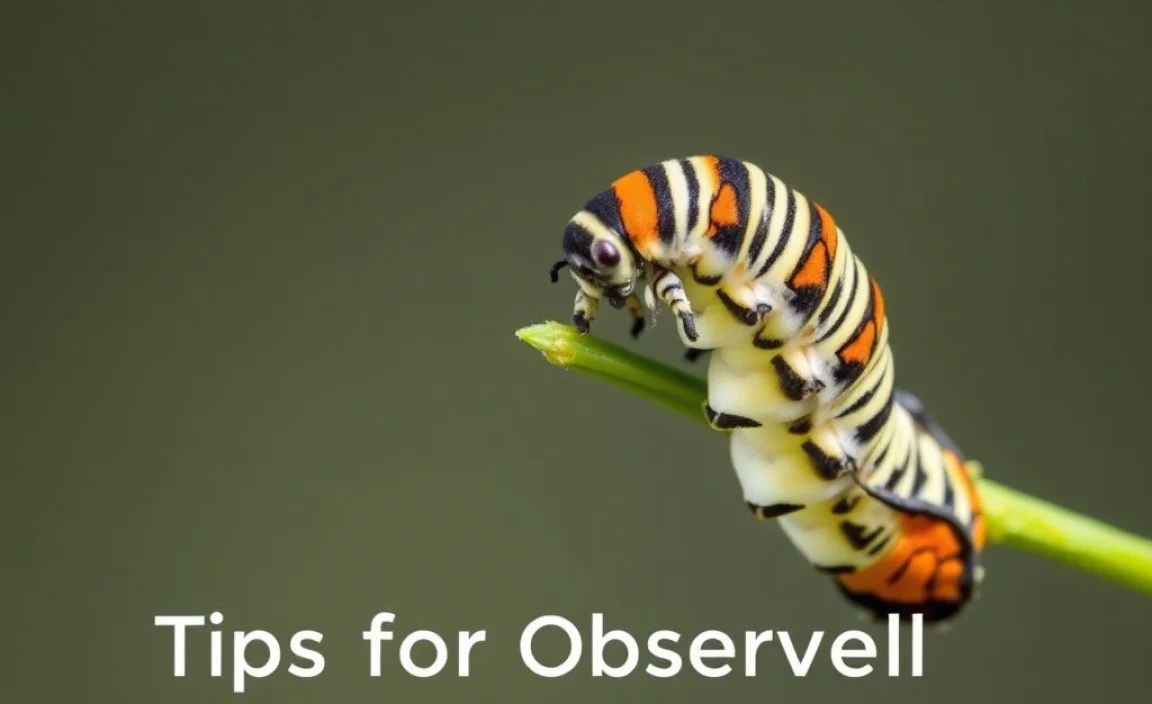
Observing monarch caterpillars can be a rewarding experience. Here are some tips to make the most of your observations:
- Plant Milkweed: The best way to observe monarch caterpillars is to plant milkweed in your garden. This provides a natural habitat for them to thrive. You can find milkweed seeds or plants at local nurseries or online. The Xerces Society is a great resource for finding native milkweed species.
- Check Regularly: Visit your milkweed plants regularly to look for eggs and caterpillars. Check both the upper and lower surfaces of the leaves.
- Use a Magnifying Glass: A magnifying glass can help you see the tiny eggs and newly hatched caterpillars more easily.
- Take Notes: Keep a notebook to record your observations. Note the date, time, location, and any interesting behaviors you observe.
- Take Photos: Photos can help you document the caterpillars’ growth and development.
- Be Patient: Observing monarch caterpillars takes patience. Spend time quietly observing their behavior and you will be rewarded with fascinating insights into their lives.
By following these steps, you can gain a deeper understanding of monarch caterpillar behavior and contribute to their conservation. Happy observing!
The Importance of Understanding Monarch Butterfly Larval Behavior

Understanding monarch butterfly larval behavior is crucial for several reasons:
- Conservation Efforts: By understanding their needs and behaviors, we can better protect them and their habitat. Monarch butterfly populations have declined significantly in recent years, so every effort to support them is important.
- Creating Suitable Habitats: Knowing what they eat, where they lay eggs, and how they protect themselves helps us create butterfly-friendly gardens and habitats.
- Education and Awareness: Sharing knowledge about monarch caterpillars can inspire others to appreciate and protect these amazing creatures. Educating others on the importance of protecting these creatures can have a positive impact on their conservation.
Here are some additional resources to deepen your understanding of monarch butterfly larval behavior and conservation:
- The Xerces Society: Offers extensive information on monarch butterfly conservation and habitat creation.
- Monarch Joint Venture: A partnership of organizations dedicated to protecting monarch butterflies and their migration.
- Journey North: A citizen science project that tracks monarch butterfly migration.
Conclusion
Monarch caterpillars lead fascinating lives, filled with constant eating, molting, and preparing for their incredible transformation. By understanding their behaviors, we can better appreciate and protect these vulnerable creatures. From planting milkweed to recognizing signs of illness, every action we take can make a difference in their survival. So, get outside, observe these amazing larvae, and become a part of the monarch’s incredible journey!


