
Monarch Butterfly Identification: Your Easy Guide

Quick Summary:
Monarch butterfly identification is easy once you know what to look for! These iconic orange and black butterflies have distinct wing patterns: males have thinner wing veins, while females have thicker ones. Caterpillars are striped yellow, black, and white. Spotting these beauties helps track their populations and protect their migration.
Have you ever seen a flash of orange in your garden and wondered if it was a Monarch butterfly? Identifying butterflies can seem tricky, but with a few simple clues, you can confidently tell a Monarch from other similar species. Many people want to attract these beautiful creatures to their gardens, but aren’t sure how to identify them first. Don’t worry, it’s easier than you think! This guide will walk you through the key features to look for, from wing patterns to caterpillar markings. Get ready to become a Monarch expert!
Why Monarch Butterfly Identification Matters
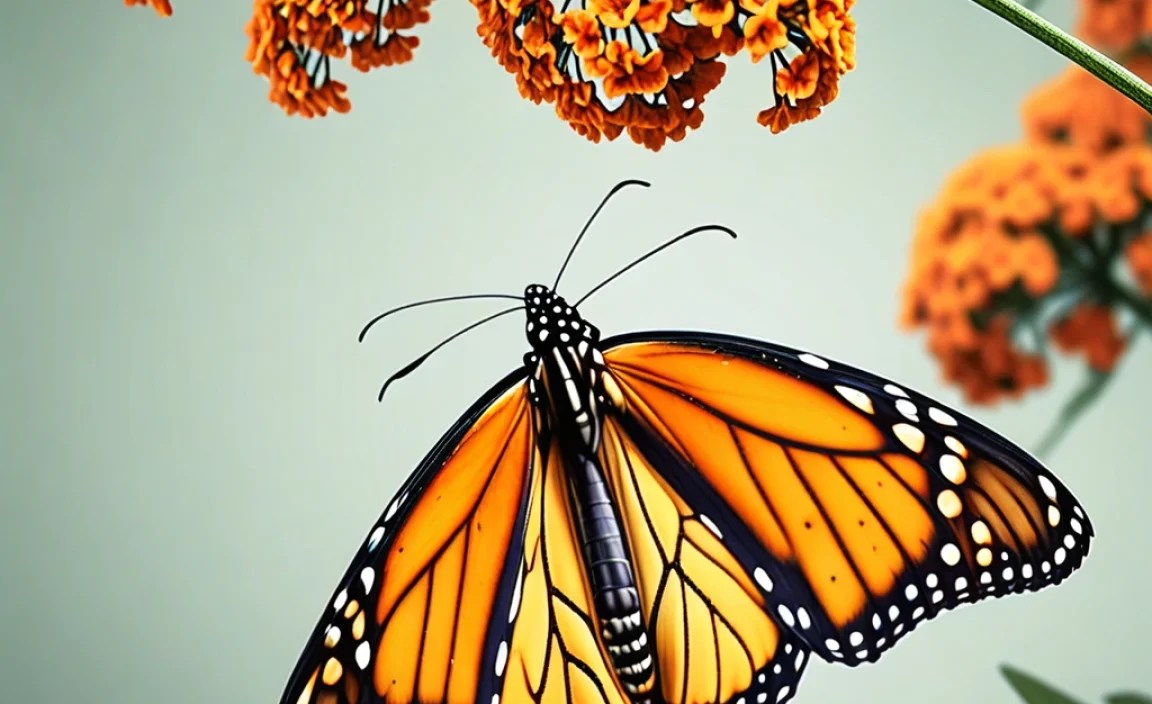
Being able to correctly identify a Monarch butterfly is more than just a fun fact – it’s vital for conservation efforts. By distinguishing Monarchs from similar species like the Viceroy, you help contribute to citizen science initiatives that track Monarch populations and migration patterns. This information is crucial for understanding the health of their habitats and implementing effective conservation strategies.
- Conservation: Accurate identification helps track Monarch populations.
- Education: Learning about Monarchs fosters appreciation for nature.
- Citizen Science: Your observations contribute to valuable research.
Distinguishing Features of Monarch Butterflies

Monarch butterflies possess unique characteristics that set them apart. Understanding these features is key to accurate identification. Here’s what to look for:
1. Wing Patterns
The wing patterns are the most recognizable feature of Monarch butterflies. Both males and females have orange wings with black borders and white spots. However, there are subtle differences:
- Male Monarchs: Have thinner veins on their wings and a noticeable black spot on each hind wing. These spots are called scent patches and are used to attract females.
- Female Monarchs: Have thicker veins on their wings and lack the black scent patches.
2. Body Characteristics
The body of a Monarch butterfly is also distinct. It is primarily black with white spots. The thorax (middle section) is covered in fine hairs, and the abdomen (rear section) is striped with black and orange.
3. Size and Shape
Monarchs are relatively large butterflies, with a wingspan ranging from 3.5 to 4 inches (8.9 to 10.2 cm). Their wings are generally rounded, which helps distinguish them from other butterfly species with more angular wings.
4. Caterpillar Identification
Identifying Monarch caterpillars is just as important as identifying the adults. Monarch caterpillars have a distinctive appearance:
- Color: They are striped with yellow, black, and white bands.
- Appendages: They have two black filaments at both the front and back ends of their body.
- Feeding Habits: Monarch caterpillars feed exclusively on milkweed plants, making milkweed a key indicator of their presence.
Spotting these caterpillars on milkweed is a sure sign that Monarchs are in your area.
Monarch vs. Viceroy: Spotting the Differences
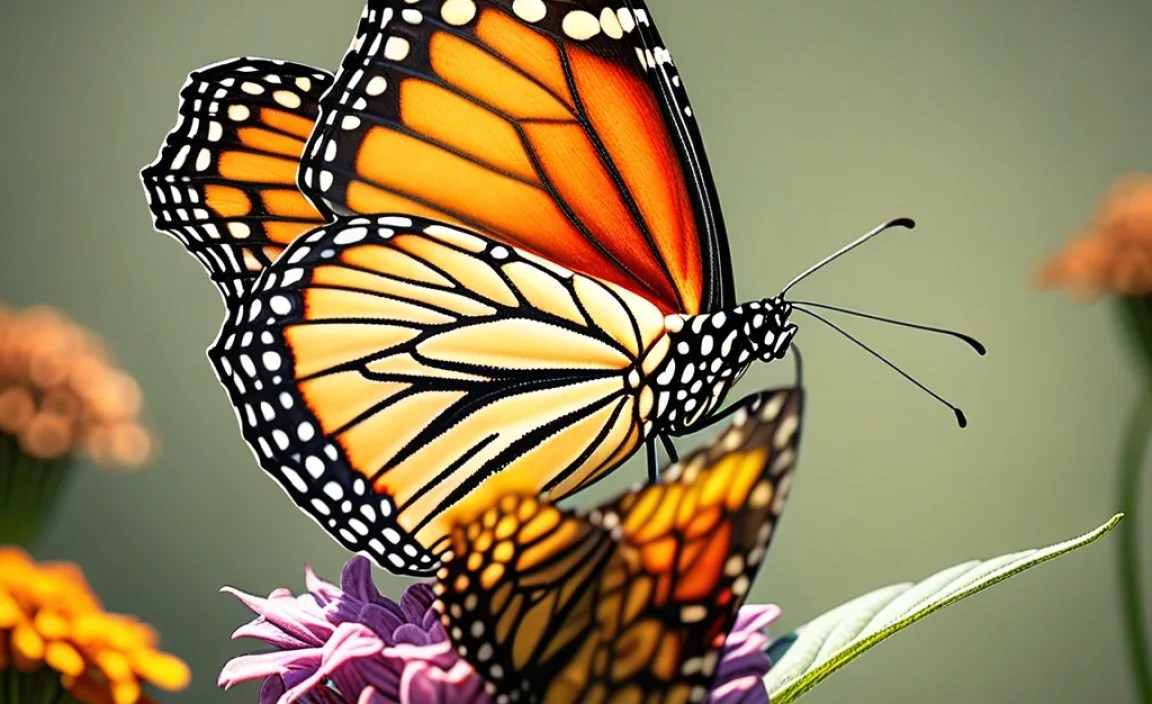
The Viceroy butterfly is often mistaken for the Monarch, as it mimics the Monarch’s coloring to avoid predation. However, there are several key differences to help you tell them apart:
| Feature | Monarch Butterfly | Viceroy Butterfly |
|---|---|---|
| Wing Pattern | Orange with black borders and white spots; males have black scent patches | Orange with black borders and white spots, plus a black line across the hind wings |
| Size | Wingspan of 3.5 – 4 inches | Slightly smaller, wingspan of 2.5 – 3 inches |
| Flight Pattern | Gliding flight | More erratic, flapping flight |
| Habitat | Open fields, meadows, and gardens with milkweed | Wet areas such as marshes, swamps, and willow thickets |
The most obvious difference is the black line across the hind wings of the Viceroy. Additionally, the Viceroy’s flight is more erratic and flapping compared to the Monarch’s graceful gliding.
Step-by-Step Guide to Monarch Butterfly Identification
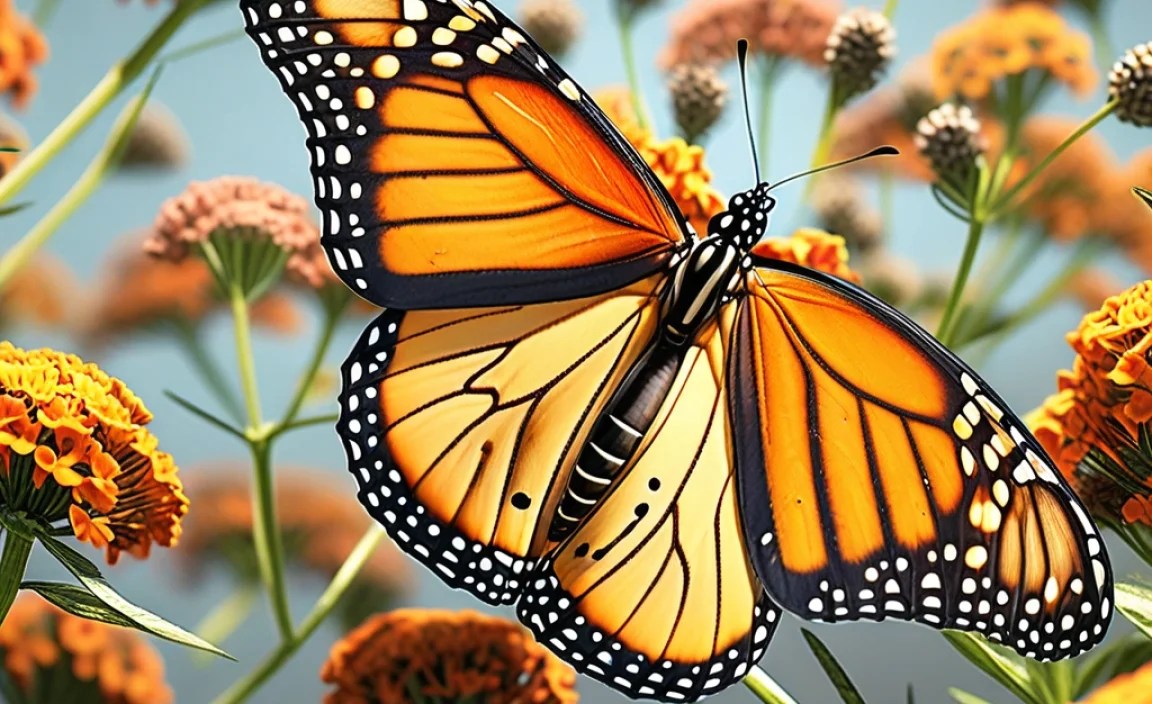
Follow these simple steps to confidently identify Monarch butterflies:
Step 1: Observe the Wing Pattern
Start by looking at the wing pattern. Note the orange color, black borders, and white spots. Check for the presence of a black line across the hind wings. If it’s there, you’re likely looking at a Viceroy, not a Monarch.
Step 2: Check for Black Scent Patches
If the butterfly lacks the black line on the hind wings, look for black scent patches on the hind wings. These are only present on male Monarchs.
Step 3: Assess the Size and Flight
Consider the size of the butterfly. Monarchs are relatively large. Observe its flight pattern. Monarchs tend to glide more than flap.
Step 4: Look for Monarch Caterpillars on Milkweed
If you see caterpillars, check if they are feeding on milkweed. Look for the distinctive yellow, black, and white stripes and the black filaments. Milkweed is the host plant for Monarchs, so finding caterpillars on milkweed is a strong indicator.
Step 5: Consider the Habitat
Monarchs prefer open fields, meadows, and gardens, especially those with milkweed. If you’re in a different type of habitat, such as a marsh, you might be seeing a Viceroy instead.
Tools for Monarch Butterfly Identification
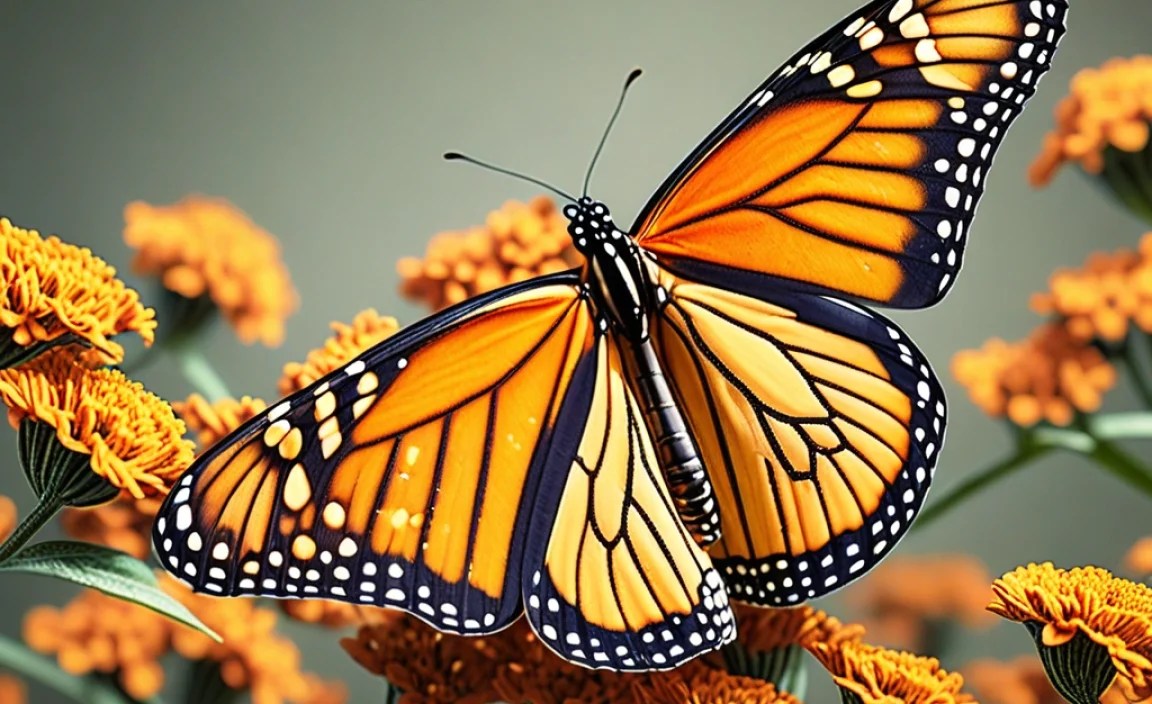
Several tools can aid in Monarch butterfly identification:
- Butterfly Field Guides: These guides provide detailed descriptions and illustrations of various butterfly species, including Monarchs.
- Online Resources: Websites like the U.S. Forest Service and National Wildlife Federation offer valuable information and images.
- Butterfly Identification Apps: Many smartphone apps can help identify butterflies based on photos.
- Binoculars: Binoculars can help you get a closer look at the butterfly’s features without disturbing it.
Attracting Monarch Butterflies to Your Garden
Attracting Monarch butterflies to your garden not only provides a beautiful sight but also supports their conservation. Here’s how you can create a Monarch-friendly habitat:
1. Plant Milkweed
Milkweed is essential for Monarchs. It is the only plant that Monarch caterpillars can eat. Plant several varieties of milkweed native to your area to provide a continuous food source.
2. Provide Nectar Sources
Plant a variety of nectar-rich flowers that bloom throughout the Monarchs’ migration season. Some good options include:
- Asters
- Zinnias
- Coneflowers
- Butterfly Bush
3. Avoid Pesticides
Pesticides can harm Monarch butterflies and other beneficial insects. Use organic gardening practices to protect your garden’s ecosystem.
4. Provide a Water Source
Butterflies need water to stay hydrated. Provide a shallow dish of water with pebbles or marbles for them to land on.
5. Create a Shelter
Plant shrubs and trees to provide shelter from wind and predators.
The Monarch Butterfly Life Cycle
Understanding the Monarch butterfly life cycle can deepen your appreciation for these amazing creatures. The life cycle consists of four stages:
- Egg: Monarchs lay their eggs on milkweed plants. The eggs are small, cream-colored, and oval-shaped.
- Larva (Caterpillar): The caterpillar hatches from the egg and feeds on milkweed. It molts (sheds its skin) several times as it grows.
- Pupa (Chrysalis): After reaching full size, the caterpillar forms a green chrysalis. Inside the chrysalis, the caterpillar transforms into a butterfly.
- Adult Butterfly: The adult butterfly emerges from the chrysalis. It flies off to reproduce and continue the cycle.
The Amazing Monarch Migration
Monarch butterflies are famous for their incredible migration. Every year, Monarchs from eastern North America migrate thousands of miles to overwintering sites in Mexico. Western Monarchs migrate to California.
- Eastern Monarchs: Migrate to the oyamel fir forests in the mountains of central Mexico.
- Western Monarchs: Migrate to groves of trees along the California coast.
This migration is one of the most spectacular natural events on Earth. The Monarchs return north in the spring to breed and lay eggs, continuing the cycle.
Sadly, Monarch populations have declined in recent years due to habitat loss, pesticide use, and climate change. Conservation efforts are crucial to protect these iconic butterflies and their migration.
Conservation Efforts for Monarch Butterflies
Many organizations are working to protect Monarch butterflies. Here are some ways you can get involved:
- Plant Milkweed: Provide habitat for Monarch caterpillars.
- Reduce Pesticide Use: Protect Monarchs and other beneficial insects.
- Support Conservation Organizations: Donate to organizations like World Wildlife Fund and The Xerces Society.
- Participate in Citizen Science Projects: Help track Monarch populations by reporting your sightings to programs like Journey North.
Monarch Butterflies in Culture and Symbolism
Monarch butterflies hold special significance in many cultures. They are often seen as symbols of:
- Transformation: Representing the metamorphosis from caterpillar to butterfly.
- Resilience: Symbolizing the strength to undergo long migrations.
- Hope: Bringing a message of beauty and renewal.
- Spiritual Connection: Seen as messengers from loved ones who have passed.
In Mexican culture, Monarch butterflies are associated with the souls of ancestors returning to visit their families during Día de los Muertos (Day of the Dead).
FAQ: Monarch Butterfly Identification
What is the easiest way to tell a Monarch from a Viceroy?
Look for a black line across the hind wings. Monarchs don’t have it, but Viceroys do!
Do male and female Monarchs look different?
Yes! Males have black spots on their hind wings (scent patches), while females have thicker wing veins.
What do Monarch caterpillars eat?
Monarch caterpillars exclusively eat milkweed plants. If you see a caterpillar on milkweed, it’s likely a Monarch!
Are Monarch butterflies poisonous?
Not poisonous, but Monarchs are distasteful to predators because they consume milkweed, which contains toxins.
Why are Monarch butterfly populations declining?
Habitat loss, pesticide use, and climate change are major factors contributing to the decline of Monarch populations.
How can I help Monarch butterflies in my garden?
Plant milkweed and nectar-rich flowers, avoid pesticides, and provide a water source.
What time of year are Monarch butterflies most active?
Monarchs are most active during their breeding and migration seasons, which vary depending on the region but generally occur in the spring and fall.
Conclusion
Identifying Monarch butterflies is a rewarding experience that connects you with nature and contributes to conservation efforts. By learning the key features of Monarchs and distinguishing them from look-alikes like the Viceroy, you can confidently identify these beautiful creatures and appreciate their unique role in our ecosystem. Whether you’re a seasoned naturalist or a beginner, understanding Monarch butterfly identification is a step towards protecting these iconic insects for future generations. So, get outside, observe, and celebrate the wonder of Monarch butterflies!


