
Glasswing Butterfly Dorsal View: Stunning Close-Ups

The dorsal view of a glasswing butterfly reveals the intricate details of its wing structure. While the wings appear transparent, you can observe delicate veins and sometimes subtle colored scales along the edges. This perspective is key for identifying different glasswing species and understanding how their unique wing structure helps them camouflage in their natural habitat.
Have you ever struggled to identify a butterfly flitting through your garden, its wings seemingly invisible? Many people find it tricky to spot and identify glasswing butterflies, especially when trying to understand how their transparent wings work. It’s a common challenge for nature lovers. Don’t worry! This guide breaks down everything you need to know about observing and appreciating the glasswing butterfly from a dorsal view. We’ll explore what makes their wings so special and how to identify different species. Get ready to see these amazing creatures in a whole new light!
What is the Dorsal View of a Glasswing Butterfly?

The dorsal view refers to looking at the butterfly from above, focusing on the upper side of its wings and body. This perspective is crucial for identification because it often reveals key markings, vein patterns, and subtle color variations that aren’t visible from other angles. For glasswing butterflies, the dorsal view highlights the fascinating contrast between their transparent wing panels and the more opaque borders or patterns.
Why is the Dorsal View Important?
- Identification: Markings and patterns on the dorsal side are vital for distinguishing between different glasswing species.
- Camouflage Understanding: Observing the dorsal view helps you appreciate how their transparent wings blend with the environment, providing camouflage.
- Scientific Study: Researchers use dorsal images to study wing structure, vein patterns, and evolutionary adaptations.
Understanding Glasswing Butterfly Wing Structure
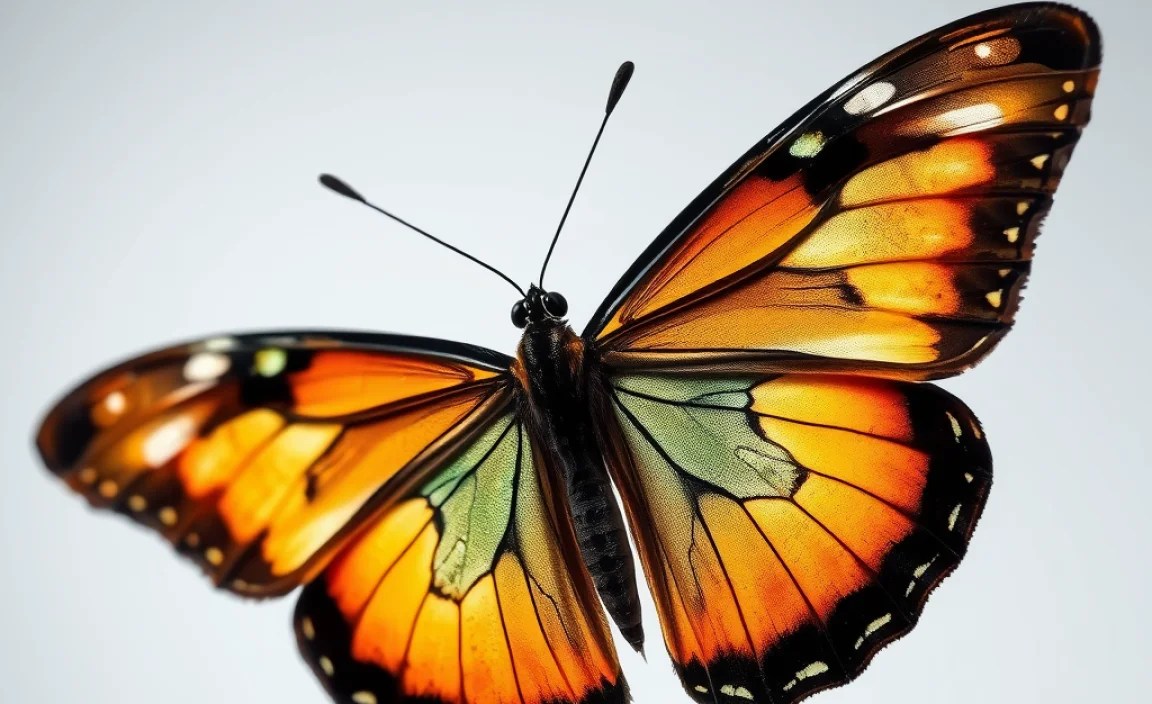
Glasswing butterflies (Greta oto) are renowned for their transparent wings, a rare and remarkable adaptation in the butterfly world. This transparency isn’t due to a lack of wing structure, but rather a unique arrangement of nanoscale features that minimize light reflection and scattering.
The Science Behind Transparency
The wings of glasswing butterflies are composed of:
- Cuticle: A thin, multi-layered membrane.
- Scales: Unlike most butterflies, glasswings have fewer scales, and those present are nano-structured.
- Veins: These provide structural support and carry hemolymph (butterfly blood).
The transparency is achieved because the scales, which typically give butterfly wings their color, are modified to reduce light scattering. These scales are smaller, less dense, and arranged in a way that minimizes reflection. The cuticle itself also has features that enhance transparency. According to research published in the Journal of the Royal Society Interface, the nanostructures on the wing surface act as an anti-reflective coating, allowing light to pass through the wings instead of bouncing off.
Key Features Visible from the Dorsal View
When examining a glasswing butterfly from above, pay attention to these features:
- Vein Patterns: The network of veins provides structural support and is easily visible through the transparent sections.
- Opaque Borders: Most glasswing species have colored or patterned borders around their wings, which can be red, brown, black, or orange.
- Scale Distribution: Notice how the scales are concentrated along the wing edges and veins, contributing to the overall pattern.
Glasswing Butterfly Species and Identification Tips

Several species of glasswing butterflies exist, each with unique characteristics. Here are a few notable ones:
Greta oto
The most well-known glasswing species, Greta oto, is found in Central and South America. Its wings feature transparent panels bordered by a dark brown or black margin, often with white or reddish spots.
Greta andromica
This species has a similar appearance to Greta oto but can be distinguished by subtle differences in the wing shape and the pattern of the opaque borders. It is also found in Central and South America.
Greta morgane
Another glasswing species, Greta morgane, also exhibits transparent wings with varying border patterns. Each species’ unique markings are best observed from the dorsal view.
Identification Table
| Species | Geographic Location | Key Features (Dorsal View) |
|---|---|---|
| Greta oto | Central and South America | Transparent wings with dark brown or black borders, often with white or reddish spots. |
| Greta andromica | Central and South America | Similar to Greta oto, but with slight variations in wing shape and border patterns. |
| Greta morgane | Varies | Transparent wings with diverse border patterns specific to its subspecies. |
Tips for Identifying Glasswing Butterflies from the Dorsal View:
- Observe the Wing Borders: Note the color, width, and pattern of the opaque borders.
- Examine Vein Patterns: Look at how the veins are distributed across the transparent sections.
- Check for Spots or Markings: Pay attention to any spots, lines, or other markings on the wings.
- Consider Location: Different species are found in specific geographic regions.
- Use a Field Guide: Consult a butterfly field guide or online resources with detailed images.
Observing Glasswing Butterflies in Their Natural Habitat

Glasswing butterflies are primarily found in the tropical rainforests of Central and South America. To observe them in their natural habitat, consider these tips:
Where to Look
- Tropical Rainforests: Glasswings thrive in humid, shaded environments.
- Host Plants: Look near plants like Cestrum and other members of the nightshade family (Solanaceae), which serve as larval food sources.
- Nectar Sources: Observe flowering plants where adult butterflies feed.
Best Time to Observe
Glasswing butterflies are most active during the warmer parts of the day, especially in the late morning and early afternoon. They prefer sunny breaks within the forest canopy.
Essential Equipment
- Binoculars: Help you get a closer look without disturbing the butterflies.
- Camera: Capture detailed images for later identification and appreciation.
- Field Guide: A reliable reference for identifying different species.
- Notebook: Record your observations, including location, time, and behavior.
The Role of Camouflage in Glasswing Butterfly Survival

The transparent wings of glasswing butterflies serve as an exceptional form of camouflage. This adaptation helps them avoid predators by making them less visible in their natural environment.
How Camouflage Works
The transparency allows the background to be seen through the wings, effectively making the butterfly blend in with its surroundings. This is particularly useful in the dappled light of the rainforest, where shadows and foliage create a complex visual environment.
Predator Avoidance
By being difficult to detect, glasswing butterflies reduce their risk of being preyed upon by birds, reptiles, and other insectivorous animals. The opaque borders on their wings may also play a role in breaking up their outline, further enhancing their camouflage.
Evolutionary Advantages
Camouflage is a powerful evolutionary adaptation that increases the survival rate of glasswing butterflies. It allows them to reproduce more successfully, passing on their unique traits to future generations. According to a study in the journal Science, camouflage is a key factor in the diversification and persistence of many insect species.
Attracting Glasswing Butterflies to Your Garden
While glasswing butterflies are native to tropical regions, you can still create a garden that attracts similar butterfly species and supports local pollinators. Here’s how:
Planting the Right Flowers
Choose nectar-rich flowers that attract butterflies. Some excellent choices include:
- Butterfly Bush (Buddleja davidii): A popular choice for attracting a wide variety of butterflies.
- Zinnia (Zinnia elegans): Provides bright, colorful blooms that butterflies love.
- Lantana (Lantana camara): Offers clusters of small, vibrant flowers.
- Milkweed (Asclepias species): Essential for Monarch butterflies, but also attracts other species.
Providing Host Plants
If you live in an area where glasswing butterflies can survive (such as South Florida), consider planting their host plants. Otherwise, focus on host plants for local butterfly species.
- Cestrum species: Host plants for glasswing butterfly larvae.
- Citrus Trees: Host plants for Giant Swallowtail butterflies.
- Passionflower (Passiflora species): Host plants for Gulf Fritillary butterflies.
Creating a Butterfly-Friendly Environment
- Sunlight: Butterflies need sunny spots to warm their bodies.
- Shelter: Provide shrubs and trees for protection from wind and rain.
- Water Source: A shallow dish of water with pebbles can provide a place for butterflies to drink.
- Avoid Pesticides: Pesticides can harm or kill butterflies and other beneficial insects.
Conservation Efforts for Glasswing Butterflies
Glasswing butterflies, like many other butterfly species, face threats from habitat loss, climate change, and pesticide use. Conservation efforts are essential to protect these delicate creatures and their ecosystems.
Habitat Preservation
Protecting and restoring tropical rainforests is crucial for the survival of glasswing butterflies. This involves establishing protected areas, promoting sustainable land use practices, and combating deforestation.
Sustainable Practices
Supporting eco-friendly agriculture and tourism can help reduce the impact of human activities on butterfly habitats. This includes promoting organic farming, responsible ecotourism, and community-based conservation initiatives.
Citizen Science
Participating in citizen science projects can contribute valuable data on butterfly populations and distribution. Organizations like the Xerces Society offer opportunities to get involved in butterfly monitoring and conservation efforts.
Glasswing Butterfly Symbolism and Cultural Significance
Butterflies, in general, hold significant symbolic meaning across various cultures, often representing transformation, hope, and new beginnings. The glasswing butterfly, with its unique transparency, adds another layer to this symbolism.
Transformation and Adaptability
The glasswing’s ability to seemingly disappear into its surroundings can symbolize adaptability and the power of transformation. It reminds us of the importance of being flexible and resilient in the face of change.
Clarity and Transparency
The clear wings of the glasswing butterfly can represent clarity, honesty, and transparency. They encourage us to see things as they truly are and to communicate openly and honestly with others.
Spiritual Significance
In some spiritual traditions, butterflies are seen as messengers from the spirit world. The glasswing butterfly, with its ethereal appearance, may be viewed as a particularly potent symbol of spiritual connection and guidance.
Capturing the Beauty: Photographing Glasswing Butterflies
Photographing glasswing butterflies can be a rewarding experience, allowing you to capture their delicate beauty and unique features. Here are some tips for getting great shots:
Equipment
- Macro Lens: Essential for capturing close-up details of the wings and body.
- Camera: A DSLR or mirrorless camera with good image quality is ideal.
- Tripod: Provides stability for sharp images, especially in low light.
- External Flash: Can help illuminate the butterfly and bring out details, but use it sparingly to avoid disturbing the insect.
Techniques
- Focus: Ensure your focus is sharp on the butterfly’s eyes or other key features.
- Composition: Use the rule of thirds to create visually appealing compositions.
- Lighting: Shoot in natural light whenever possible, avoiding harsh sunlight that can create strong shadows.
- Patience: Butterflies can be unpredictable, so be patient and wait for the right moment.
Ethical Considerations
- Do Not Disturb: Avoid touching or handling the butterfly.
- Respect Habitat: Stay on marked trails and avoid damaging the surrounding vegetation.
- Minimize Flash: Use flash sparingly to avoid startling or harming the butterfly.
Frequently Asked Questions (FAQ)
What makes glasswing butterflies’ wings transparent?
Glasswing butterflies have transparent wings because of special nanostructures that reduce light reflection and scattering. Their scales are smaller and less dense than those of other butterflies, allowing light to pass through.
Where can I find glasswing butterflies?
Glasswing butterflies are primarily found in the tropical rainforests of Central and South America. They prefer humid, shaded environments near their host plants and nectar sources.
What do glasswing butterfly larvae eat?
Glasswing butterfly larvae primarily feed on plants in the nightshade family (Solanaceae), such as Cestrum species. These plants provide the nutrients necessary for their growth and development.
How can I attract butterflies to my garden?
You can attract butterflies to your garden by planting nectar-rich flowers like butterfly bush, zinnia, and lantana. Also, provide host plants for local butterfly species and create a butterfly-friendly environment with sunlight, shelter, and water.
Are glasswing butterflies endangered?
While not currently listed as endangered, glasswing butterflies face threats from habitat loss, climate change, and pesticide use. Conservation efforts are essential to protect their populations and habitats.
What is the dorsal view of a butterfly?
The dorsal view is looking at the butterfly from above, focusing on the upper side of its wings and body. This perspective is crucial for identifying markings, vein patterns, and color variations.
How do glasswing butterflies use camouflage?
Glasswing butterflies use their transparent wings as camouflage, allowing them to blend in with their surroundings. This adaptation helps them avoid predators by making them less visible in their natural environment.
Conclusion
Exploring the dorsal view of the glasswing butterfly unveils a world of intricate beauty and evolutionary marvels. From understanding the science behind their transparent wings to appreciating their role in the ecosystem, these delicate creatures offer endless fascination. By observing them in their natural habitat, supporting conservation efforts, and sharing your knowledge with others, you can help protect glasswing butterflies and their precious rainforest homes for generations to come. So, grab your binoculars, venture into nature, and discover the magic of the glasswing butterfly!


