
Butterfly Transparency Evolution: The Secret is Out!

Quick Summary:
Butterfly transparency evolved as a clever camouflage tactic to avoid predators. By having clear wings, butterflies can blend seamlessly into their surroundings, making it harder for birds and other hunters to spot them. This adaptation helps butterflies survive by reducing their risk of being eaten. Selective pressures favored butterflies with clearer wings, leading to the development of complex nanostructures that minimize light reflection and create the illusion of invisibility.
Have you ever marveled at a butterfly and wondered how its wings could appear almost invisible? It’s a fascinating trick of nature! Some butterflies have evolved clear wings as a way to hide from predators. It might seem like a superpower, but it’s all thanks to science.
Understanding how butterfly transparency works can deepen your appreciation for these delicate creatures. In this guide, we’ll explore the step-by-step evolution of butterfly transparency, discover the science behind it, and learn why it’s so important for survival. Get ready to uncover the secrets of these masters of disguise!
What is Butterfly Transparency?

Butterfly transparency refers to the unique adaptation where a butterfly’s wings appear clear or see-through. This isn’t just a random occurrence; it’s a carefully evolved trait that helps these insects survive in their environments. The primary purpose of transparent wings is camouflage, allowing butterflies to blend seamlessly with their surroundings and evade predators.
Unlike the vibrant colors and patterns seen in many butterfly species, transparency offers a more subtle form of protection. By reducing the visibility of their wings, butterflies can move more freely without attracting unwanted attention. This adaptation is particularly useful in habitats where bright colors might make them stand out.
Why is Transparency Important for Butterflies?
- Camouflage: Transparent wings make it harder for predators to spot butterflies.
- Predator Avoidance: Butterflies can move more safely in their environment.
- Survival: Increased camouflage leads to a higher chance of survival and reproduction.
The Evolution of Butterfly Transparency: A Step-by-Step Guide

The evolution of butterfly transparency is a fascinating story of natural selection and adaptation. Over millions of years, butterflies with clearer wings had a better chance of surviving and passing on their genes. Here’s how it happened:
Step 1: Initial Ancestral Forms
Long ago, butterflies likely had wings covered in scales, similar to most of today’s species. These scales provided color and pattern but also made the butterflies more visible. In certain environments, being less visible offered a survival advantage.
Step 2: Genetic Mutations
Random genetic mutations occurred, leading to variations in wing structure. Some butterflies were born with fewer scales or scales that were shaped differently. These changes could result in slightly more transparent wings.
Step 3: Natural Selection
Butterflies with slightly clearer wings were better at avoiding predators. They lived longer and had more opportunities to reproduce. Over time, the genes for clearer wings became more common in the population. This is a classic example of natural selection at work.
Step 4: Development of Nanostructures
As the process continued, more complex nanostructures evolved on the wings of some butterfly species. These tiny structures manipulate light in a way that reduces reflection, making the wings appear even more transparent. This is where the science gets really interesting!
Step 5: Specialization and Adaptation
Different species of transparent-winged butterflies adapted to specific environments. Some developed clearer wings to blend in with foliage, while others evolved to mimic the appearance of empty space. This specialization allowed them to thrive in diverse habitats.
The Science Behind Butterfly Transparency
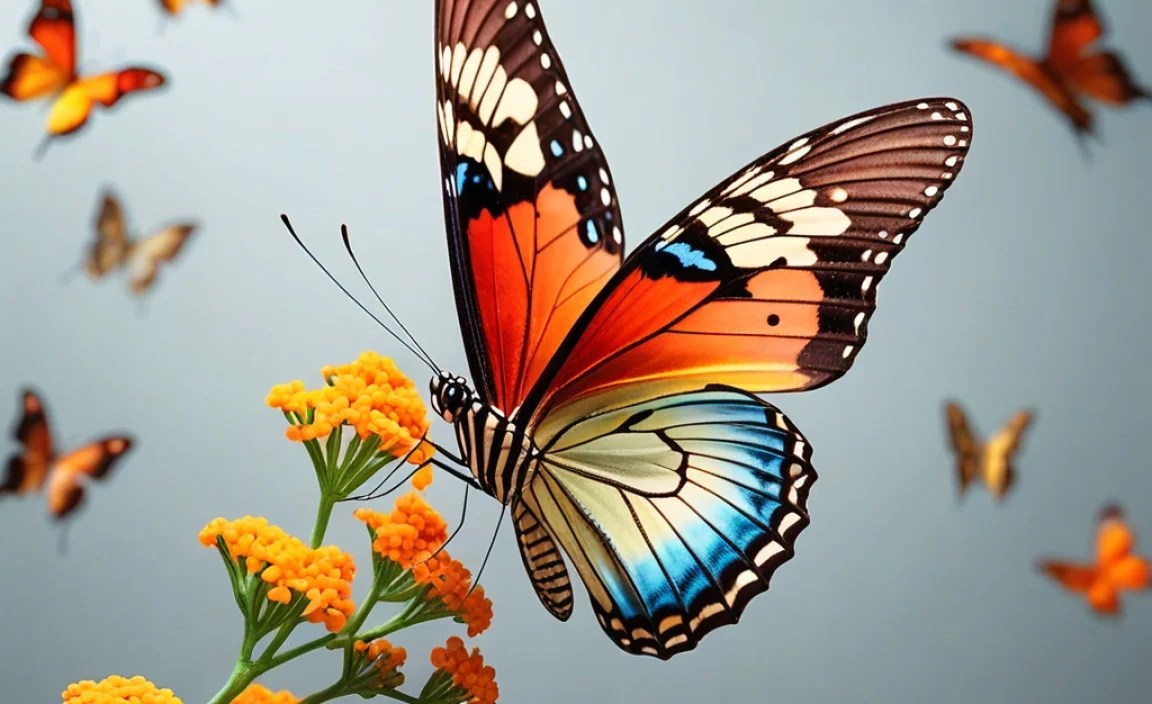
The science of butterfly transparency is rooted in the way light interacts with the nanostructures on their wings. These structures are incredibly small, often measured in nanometers (a nanometer is one-billionth of a meter). Understanding how they work requires a basic knowledge of optics and materials science.
Nanostructures and Light
The wings of transparent butterflies are covered in tiny pillars or bumps. These structures are arranged in a way that minimizes light reflection. When light hits the wing, it passes through instead of bouncing back, creating the illusion of transparency.
The arrangement and size of these nanostructures are crucial. They need to be smaller than the wavelength of visible light to prevent scattering. This is why the wings appear clear rather than cloudy or opaque.
Materials and Composition
The material that makes up the wing also plays a role. The cuticle, a hard outer layer, is composed of chitin, a complex carbohydrate. The specific composition and arrangement of chitin molecules contribute to the wing’s transparency.
Examples of Transparent-Winged Butterflies
Several butterfly species have evolved transparent wings independently. Here are a few notable examples:
- Glasswing Butterfly (Greta oto): Found in Central and South America, this butterfly is famous for its almost completely transparent wings.
- Several Clearwing Swallowtail Species: Species in the genera Papilio and Graphium, found in Asia and Africa, also exhibit transparent wings to varying degrees.
- Some Moth Species: While less commonly known, certain moth species also have transparent wings, employing similar camouflage strategies.
Benefits of Transparency for Butterfly Survival

Transparency offers numerous benefits for butterflies, enhancing their survival and reproductive success. Here are some key advantages:
Enhanced Camouflage
The primary benefit of transparency is improved camouflage. Transparent wings make it much harder for predators to see the butterfly against its background. This is especially useful in environments with dense foliage or dappled light.
Reduced Predator Detection
By blending in with their surroundings, butterflies reduce their chances of being detected by predators. This is crucial for avoiding attacks from birds, lizards, and other insect-eating animals. Transparent wings give butterflies a significant advantage in the ongoing evolutionary arms race.
Increased Mobility
Butterflies with transparent wings can move more freely without attracting attention. This allows them to forage for food, find mates, and lay eggs with less risk. Increased mobility translates to better resource acquisition and reproductive success.
Energy Conservation
While not a direct benefit of transparency, the reduced need for bright colors and patterns can save energy. Producing colorful pigments requires metabolic resources. Butterflies with transparent wings can allocate those resources to other essential functions, such as flight and reproduction.
Challenges and Trade-offs

While transparency offers many advantages, it also presents certain challenges and trade-offs. Butterflies with transparent wings may face different environmental pressures compared to their colorful counterparts.
UV Protection
Colorful scales provide some degree of UV protection. Transparent wings lack this protection, potentially making butterflies more vulnerable to harmful radiation. However, some species have evolved other mechanisms to mitigate this risk, such as UV-absorbing compounds in their bodies.
Thermoregulation
Scales also play a role in thermoregulation, helping butterflies control their body temperature. Transparent wings may not be as effective at regulating temperature, requiring butterflies to seek out specific microclimates to stay warm or cool.
Mate Attraction
Bright colors and patterns are often used to attract mates. Butterflies with transparent wings may need to rely on other cues, such as pheromones or courtship behaviors, to find partners. This can add complexity to their mating rituals.
How to Observe Transparent-Winged Butterflies in the Wild
If you’re interested in observing transparent-winged butterflies in their natural habitats, here are some tips to increase your chances of spotting them:
Visit Tropical and Subtropical Regions
Many transparent-winged butterfly species are found in tropical and subtropical regions. Central and South America, Southeast Asia, and parts of Africa are good places to start your search.
Explore Butterfly Gardens and Nature Reserves
Butterfly gardens and nature reserves often house a variety of butterfly species, including those with transparent wings. These controlled environments provide a safe and accessible way to observe these fascinating insects.
Look for Specific Habitats
Different species of transparent-winged butterflies prefer different habitats. Some are found in rainforests, while others inhabit open woodlands or meadows. Research the specific habitat preferences of the species you’re interested in observing.
Use Binoculars and a Camera
Binoculars can help you spot butterflies from a distance, while a camera allows you to capture detailed images for later study. Be sure to use a macro lens for close-up shots of their wings.
Be Patient and Observant
Observing butterflies in the wild requires patience and a keen eye. Take your time, move slowly, and pay attention to the details of your surroundings. With practice, you’ll become better at spotting these elusive creatures.
Conservation Efforts and Importance
Conserving transparent-winged butterflies and their habitats is crucial for maintaining biodiversity and ecological balance. Many of these species face threats from habitat loss, climate change, and pollution. Here are some ways to support conservation efforts:
Support Habitat Preservation
Protecting and restoring natural habitats is essential for the survival of transparent-winged butterflies. Support organizations that work to conserve rainforests, woodlands, and other ecosystems.
Promote Sustainable Practices
Encourage sustainable farming, forestry, and tourism practices that minimize environmental impact. This can help reduce habitat destruction and pollution.
Educate Others
Share your knowledge and passion for butterflies with others. Educate your friends, family, and community about the importance of conservation and the threats facing these delicate creatures.
Participate in Citizen Science Projects
Get involved in citizen science projects that monitor butterfly populations and habitats. Your observations can contribute valuable data to conservation efforts. A good place to start is the Xerces Society, which has many conservation projects available for volunteers.
Reduce Pesticide Use
Pesticides can harm butterflies and other beneficial insects. Reduce or eliminate pesticide use in your garden and encourage others to do the same. Instead, opt for natural pest control methods.
Table: Examples of Transparent-Winged Butterflies
| Species | Habitat | Notable Features |
|---|---|---|
| Glasswing Butterfly (Greta oto) | Central and South America | Almost completely transparent wings, allowing for exceptional camouflage in rainforests. |
| Clearwing Swallowtail (Graphium agamemnon) | Southeast Asia, Australia | Partially transparent wings with green and black markings, blending with foliage. |
| Clearwing Butterfly (Cithaerias pireta) | Amazon Rainforest | Nearly invisible wings that help it disappear against the shaded understory. |
| Rice Paper Butterfly (Idea leuconoe) | Southeast Asia | Semi-transparent white wings with black spots, creating a ghostly appearance. |
Table: Comparison of Butterfly Wing Types
| Wing Type | Transparency | Camouflage | UV Protection | Thermoregulation |
|---|---|---|---|---|
| Transparent | High | Excellent | Low to Moderate | Moderate |
| Opaque (Colored) | Low | Variable | Moderate to High | High |
FAQ: Butterfly Transparency
What makes butterfly wings transparent?
Butterfly wings become transparent due to specialized nanostructures that minimize light reflection. These tiny structures, smaller than the wavelength of visible light, allow light to pass through instead of bouncing back, creating a see-through effect.
Why do some butterflies have transparent wings?
Transparent wings primarily serve as camouflage. By blending in with their surroundings, butterflies can evade predators more effectively. This adaptation is particularly useful in environments with dense foliage.
Are transparent-winged butterflies rare?
While not as common as colorful butterflies, transparent-winged species can be found in various parts of the world, especially in tropical and subtropical regions. The Glasswing butterfly is one of the most well-known examples.
How can I attract transparent-winged butterflies to my garden?
Transparent-winged butterflies often prefer specific host plants and nectar sources. Research the species in your area and plant their preferred plants to attract them. Providing a pesticide-free environment is also crucial.
Do transparent wings affect a butterfly’s ability to fly?
No, transparent wings do not negatively affect a butterfly’s ability to fly. The wings are still strong and lightweight, allowing the butterfly to maneuver effectively. The nanostructures actually help improve aerodynamic efficiency.
What are the main threats to transparent-winged butterflies?
The main threats include habitat loss, climate change, and pesticide use. Protecting their natural habitats and reducing pesticide use are essential for their survival.
Can other insects have transparent wings?
Yes, many other insects, such as certain moths, flies, and dragonflies, also exhibit transparent wings. This adaptation is a common evolutionary solution for camouflage and predator avoidance in the insect world. You can also find information on insect adaptations from the Smithsonian Institute.
Conclusion
The evolution of butterfly transparency is a testament to the power of natural selection and adaptation. These delicate creatures have evolved a remarkable strategy for survival, using their almost invisible wings to blend seamlessly into their environment. By understanding the science behind butterfly transparency and appreciating the challenges these butterflies face, we can better support conservation efforts and protect these amazing insects for generations to come.
So, the next time you spot a transparent-winged butterfly, take a moment to marvel at its evolutionary journey and the intricate nanostructures that make its wings so unique. It’s a reminder of the incredible diversity and beauty of the natural world, and the importance of preserving it. I hope this guide has sparked your curiosity and inspired you to learn more about these fascinating creatures!


