
European Butterflies Coloration Types: Ultimate Guide

European butterflies show off their beauty through a stunning range of colors and patterns. These colors aren’t just for show; they help butterflies attract mates, hide from predators, and even control their body temperature. From the vibrant wings of the Peacock butterfly to the subtle camouflage of the Speckled Wood, each species has its own unique coloration strategy.
Have you ever wondered how butterflies get their amazing colors? Or why some butterflies are brightly colored while others blend in with their surroundings? It’s a question that has fascinated nature lovers for centuries! Understanding the different types of coloration in European butterflies can deepen your appreciation for these delicate creatures and the vital roles they play in our ecosystems.
In this article, we’ll explore the fascinating world of butterfly coloration. We’ll explore the different types of coloration found in European butterflies, explaining the science behind their colors and the purposes they serve. Get ready to discover the secrets behind these beautiful wings!
Understanding Butterfly Coloration
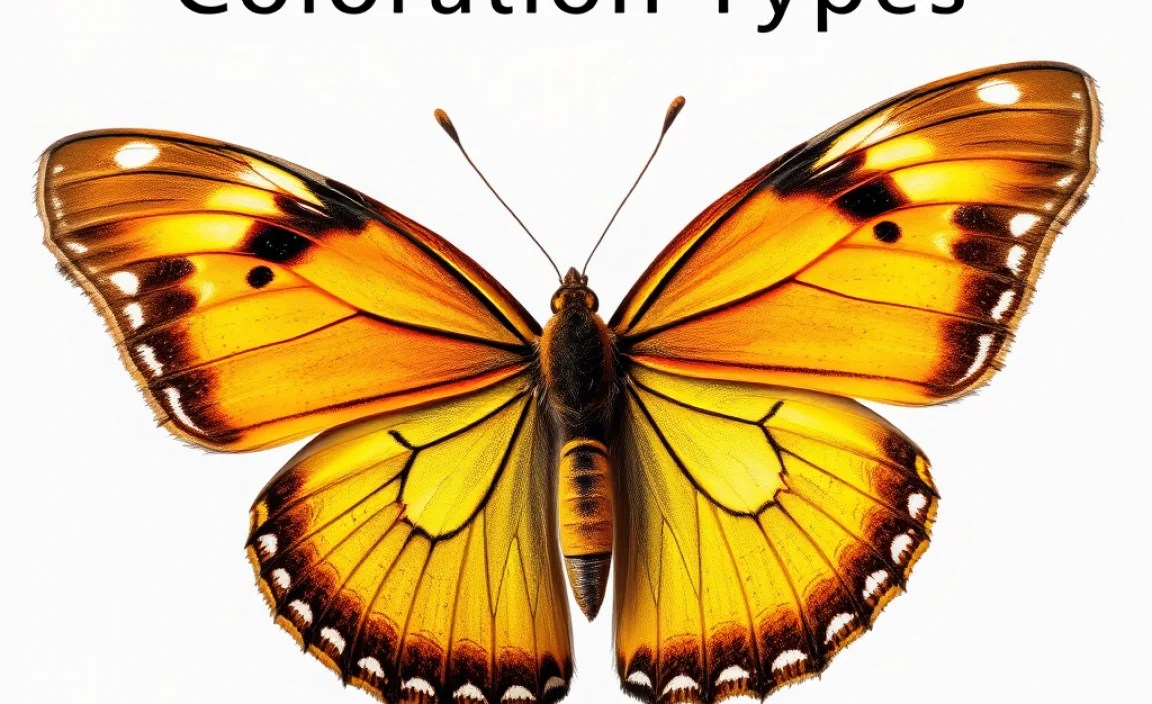
Butterfly coloration is a fascinating subject that combines biology, ecology, and even a bit of art! The colors and patterns we see on a butterfly’s wings are created by a combination of pigments and structural features. These colors aren’t just pretty; they play crucial roles in the butterfly’s survival.
Pigments vs. Structural Colors
Butterfly wings get their colors in two main ways:
- Pigments: These are chemical compounds that absorb certain wavelengths of light and reflect others. The reflected light is what we see as color. For example, melanin creates black and brown colors, while other pigments produce yellows, oranges, and reds.
- Structural Colors: These colors are created by the microscopic structure of the butterfly’s wing scales. These structures interfere with light, causing certain wavelengths to be reflected more strongly than others. This is how butterflies get their iridescent blues, greens, and purples.
The Role of Wing Scales
Butterfly wings are covered in thousands of tiny scales, much like roof shingles. These scales are responsible for the colors and patterns we see. Each scale contains pigments or structural features that contribute to the overall appearance of the wing. If you touch a butterfly’s wing, some of these scales might come off – that’s why it’s important to be gentle!
Types of Butterfly Coloration in Europe

European butterflies display a wide range of coloration types, each serving a specific purpose. Let’s take a look at some of the most common ones.
Aposematism (Warning Coloration)
Aposematism, or warning coloration, is a strategy used by some butterflies to advertise their toxicity to potential predators. These butterflies are often brightly colored and patterned, making them easily recognizable. The bright colors serve as a warning signal: “I taste bad, so don’t eat me!”
Examples of Aposematic Butterflies:
- Monarch Butterfly (Danaus plexippus): While not native to Europe, the Monarch butterfly is a classic example of aposematism. The caterpillars feed on milkweed, which contains toxic compounds called cardiac glycosides. These compounds are stored in the butterfly’s body, making it poisonous to predators.
- Six-spot Burnet Moth (Zygaena filipendulae): While technically a moth, this species uses the same strategy. Its bright red spots on a black background warn predators of its cyanide-based defenses.
Camouflage (Cryptic Coloration)
Camouflage, or cryptic coloration, is the opposite of aposematism. Instead of standing out, these butterflies blend in with their surroundings. Their colors and patterns mimic leaves, bark, or other natural elements, making them difficult for predators to spot.
Examples of Camouflaged Butterflies:
- Speckled Wood (Pararge aegeria): This butterfly has a mottled brown and yellow pattern that resembles dappled sunlight filtering through the trees. This helps it blend in with the woodland environment.
- Willow Emerald (Chalcolestes viridis): This butterfly mimics the appearance of green leaves, making it nearly invisible when resting among foliage.
Mimicry
Mimicry is when one species evolves to resemble another species. In butterflies, mimicry often involves a harmless species resembling a toxic or unpalatable one. This provides the mimic with protection from predators who have learned to avoid the toxic species.
There are two main types of mimicry:
- Batesian Mimicry: A harmless species mimics a harmful one.
- Müllerian Mimicry: Two or more harmful species mimic each other, reinforcing the warning signal to predators.
Examples of Mimicry in European Butterflies:
- The White Admiral (Limenitis camilla) is thought to be a Batesian mimic of the poisonous butterfly species.
Sexual Dimorphism
Sexual dimorphism refers to differences in appearance between males and females of the same species. In butterflies, this often involves differences in color, size, or wing shape. These differences can play a role in mate selection.
Examples of Sexual Dimorphism in European Butterflies:
- Orange-tip (Anthocharis cardamines): The male has bright orange tips on its forewings, while the female lacks this coloration.
- Brimstone (Gonepteryx rhamni): The male is a bright sulphur yellow, while the female is a paler greenish-white.
Thermoregulation
Butterfly wings can also play a role in thermoregulation, or controlling body temperature. Darker colors absorb more heat from the sun, while lighter colors reflect heat. Some butterflies have dark wing bases to help them warm up quickly in the morning, or pale wings to avoid overheating in the midday sun.
Examples of Butterflies Using Color for Thermoregulation:
- Clouded Yellow (Colias croceus): The dark borders on the wings help to absorb heat, allowing the butterfly to be active even on cooler days.
Specific Examples of Butterfly Coloration
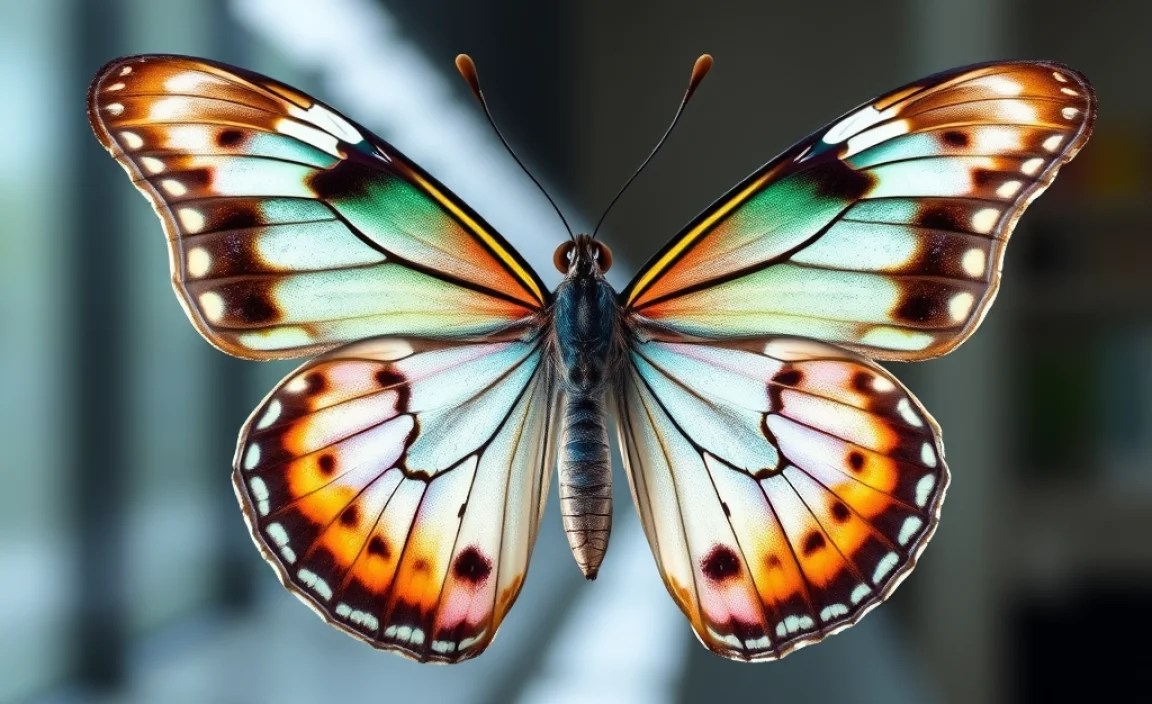
Let’s take a closer look at some specific examples of European butterflies and their unique coloration strategies.
The Peacock Butterfly (Aglais io)
The Peacock butterfly is one of the most recognizable butterflies in Europe, thanks to its striking eyespots. These eyespots are thought to startle predators, giving the butterfly a chance to escape. The Peacock butterfly also has cryptic coloration on the underside of its wings, allowing it to blend in with tree bark when at rest.
The Red Admiral (Vanessa atalanta)
The Red Admiral is a migratory butterfly with a bold pattern of black, red, and white. This striking coloration may serve as a warning to predators, although the Red Admiral is not known to be toxic. It’s a strong flier and can be seen in a variety of habitats, from gardens to woodlands.
The Common Blue (Polyommatus icarus)
The Common Blue is a widespread butterfly with iridescent blue wings in the male, while the female is usually brown with some blue scaling. This is a classic example of sexual dimorphism. The Common Blue is found in grasslands and meadows throughout Europe.
Swallowtail (Papilio machaon)
The Swallowtail is one of Europe’s largest and most striking butterflies. The yellow wings are marked with black veins and spots, and each hindwing has a distinctive tail. This species uses a combination of bright colours and patterns to startle predators and attract mates.
The Science Behind Butterfly Colors

The science behind butterfly coloration is complex and fascinating. Researchers are still learning about the genetic and developmental processes that control wing patterns. Here’s a glimpse into some of the key scientific concepts:
Melanin and Other Pigments
Melanin is a pigment that produces black and brown colors. It’s found in many animals, including butterflies. Other pigments, such as carotenoids and pteridines, produce yellows, oranges, and reds. The specific combination of pigments in a butterfly’s wings determines its overall color.
Structural Coloration Mechanisms
Structural colors are created by the way light interacts with the microscopic structures on the butterfly’s wing scales. These structures can be arranged in different ways to produce different colors. For example, some butterflies have layered structures that reflect blue light, while others have structures that scatter light to create iridescent effects.
Genetic Control of Wing Patterns
The development of butterfly wing patterns is controlled by a complex network of genes. These genes determine the size, shape, and color of the wing scales. Researchers have identified several key genes that play a role in wing pattern development, and they are continuing to unravel the genetic basis of butterfly coloration.
How to Observe and Identify Butterfly Coloration
Observing and identifying butterfly coloration can be a rewarding experience. Here are some tips for getting started:
- Get a Good Field Guide: A field guide will help you identify different butterfly species and learn about their coloration patterns.
- Use Binoculars: Binoculars can help you get a closer look at butterfly wings without disturbing them.
- Take Photos: Taking photos can help you remember the details of a butterfly’s coloration and patterns.
- Observe in Different Light Conditions: The appearance of butterfly colors can change depending on the lighting. Observe butterflies in different light conditions to see the full range of their colors.
- Join a Butterfly Watching Group: Joining a butterfly watching group can help you learn from experienced observers and discover new butterfly species.
Here’s a table showing common European butterflies and their coloration types:
| Butterfly Species | Coloration Type | Description |
|---|---|---|
| Peacock Butterfly (Aglais io) | Aposematism & Cryptic | Bright eyespots for warning; underside blends with bark. |
| Speckled Wood (Pararge aegeria) | Camouflage | Mottled brown and yellow to resemble dappled sunlight. |
| Orange-tip (Anthocharis cardamines) | Sexual Dimorphism | Male has orange wing tips; female lacks this coloration. |
| Red Admiral (Vanessa atalanta) | Warning Coloration | Bold pattern of black, red, and white. |
| Common Blue (Polyommatus icarus) | Sexual Dimorphism | Male is iridescent blue; female is usually brown. |
| Brimstone (Gonepteryx rhamni) | Sexual Dimorphism | Male is bright yellow; female is pale greenish-white. |
| Swallowtail (Papilio machaon) | Warning Coloration | Yellow wings with black veins and distinctive tails. |
The Evolutionary Significance of Butterfly Coloration
Butterfly coloration is not just a beautiful accident; it’s the result of millions of years of evolution. The colors and patterns we see on butterfly wings have been shaped by natural selection to increase their chances of survival and reproduction.
Here are some of the key evolutionary drivers of butterfly coloration:
- Predator Avoidance: Butterflies with effective camouflage or warning coloration are more likely to survive and pass on their genes.
- Mate Attraction: Butterflies with attractive colors and patterns are more likely to find mates and reproduce.
- Thermoregulation: Butterflies with colors that help them regulate their body temperature are better able to survive in their environment.
The evolution of butterfly coloration is an ongoing process, and butterflies continue to adapt to their environment. By studying butterfly coloration, we can learn a lot about the principles of evolution and the power of natural selection.
Conservation Implications
Understanding butterfly coloration can also help us protect these delicate creatures. Butterfly habitats are threatened by habitat loss, pollution, and climate change. By understanding how butterflies use color to survive, we can better protect their habitats and ensure their survival for future generations.
Here are some ways you can help protect butterflies:
- Plant Butterfly-Friendly Plants: Plant native plants that provide food and shelter for butterflies.
- Avoid Using Pesticides: Pesticides can harm butterflies and other beneficial insects.
- Create a Butterfly Garden: Create a butterfly garden in your yard or community.
- Support Butterfly Conservation Organizations: Donate to organizations that are working to protect butterfly habitats.
FAQ About Butterfly Coloration
Here are some frequently asked questions about butterfly coloration:
1. What is the main purpose of butterfly coloration?
Butterfly coloration serves several purposes, including attracting mates, camouflaging from predators, warning predators of toxicity, and regulating body temperature.
2. How do butterflies get their iridescent colors?
Iridescent colors are created by the microscopic structure of the butterfly’s wing scales, which interfere with light to produce shimmering effects.
3. What is aposematism?
Aposematism is warning coloration, where bright colors signal to predators that the butterfly is toxic or unpalatable.
4. What is the difference between Batesian and Müllerian mimicry?
In Batesian mimicry, a harmless species mimics a harmful one. In Müllerian mimicry, two or more harmful species mimic each other.
5. How does sexual dimorphism affect butterfly coloration?
Sexual dimorphism refers to differences in appearance between males and females of the same species, which can include differences in color, size, or wing shape.
6. Can butterfly colors change over time?
Yes, butterfly colors can change over time through evolution, as natural selection favors certain color patterns that increase survival and reproduction.
7. How can I attract more colorful butterflies to my garden?
Planting a variety of native flowering plants that provide nectar and host plants for caterpillars can attract more colorful butterflies to your garden.
Conclusion
The world of butterfly coloration is a dazzling display of nature’s artistry and evolutionary ingenuity. From the vibrant warnings of aposematic species to the subtle camouflage of cryptic butterflies, each color and pattern tells a story of survival, adaptation, and the intricate relationships within our ecosystems. By understanding the science behind butterfly coloration, we gain a deeper appreciation for these delicate creatures and the importance of protecting their habitats.
So, the next time you see a butterfly flitting through your garden, take a moment to admire its colors and patterns. Remember that those colors are not just for show; they are essential for the butterfly’s survival. And by supporting butterfly conservation efforts, you can help ensure that these beautiful creatures continue to brighten our world for generations to come.


