
Behavioral Adaptation Butterflies: Discover Secrets!

Butterflies use behavioral adaptations to survive. These include migration to avoid harsh weather, camouflage to hide from predators, mimicry to appear dangerous, and specialized feeding habits. They also have unique mating behaviors and thermoregulation techniques to stay alive and thrive.
Have you ever wondered how butterflies manage to survive in a world full of dangers? It’s not just about their beautiful wings! Butterflies have developed some amazing tricks and habits to stay safe, find food, and raise their young. From flying thousands of miles to blending in with leaves, these creatures are full of surprises. Understanding these behaviors can help us appreciate and protect these delicate insects.
In this guide, we’ll explore the fascinating world of butterfly behavior. We’ll cover how they migrate, how they hide, what they eat, and even how they find a mate. Get ready to discover the secrets of butterfly survival!
Understanding Behavioral Adaptations in Butterflies

Butterflies have evolved a wide range of behaviors that help them survive in different environments. These adaptations are crucial for finding food, avoiding predators, and reproducing. Let’s dive into some of the most fascinating examples.
Migration: A Journey for Survival
Migration is one of the most impressive behavioral adaptations in butterflies. Some species, like the Monarch butterfly, undertake long journeys to escape harsh weather conditions. This incredible feat allows them to find suitable breeding grounds and food sources.
Monarch Butterfly Migration
The Monarch butterfly migration is one of the most well-known examples. These butterflies travel thousands of miles from Canada and the United States to overwintering sites in Mexico and California. The journey is so long that several generations of butterflies complete it.
- Triggers: Changes in temperature and daylight hours signal the start of the migration.
- Navigation: Monarchs use a combination of the sun’s position and the Earth’s magnetic field to navigate.
- Challenges: Habitat loss, climate change, and pesticide use threaten the Monarch migration. World Wildlife Fund is actively involved in Monarch conservation.
Camouflage: The Art of Disguise
Camouflage is another essential behavioral adaptation. Butterflies use their colors and patterns to blend in with their surroundings, making it harder for predators to spot them. This helps them avoid being eaten by birds, lizards, and other animals.
Leaf Mimicry
Some butterflies, like the Indian Leaf butterfly, have evolved to look like dead leaves. When they land on a branch, they are almost impossible to see. This remarkable camouflage is a result of natural selection favoring individuals that were better at blending in.
- Appearance: These butterflies have brown and gray wings with patterns that mimic the veins and textures of leaves.
- Behavior: They often sit still with their wings closed, further enhancing their camouflage.
- Effectiveness: Leaf mimicry is highly effective at deterring predators, especially in forested areas.
Mimicry: Copying Danger
Mimicry is a behavioral adaptation where one species evolves to resemble another species, often to gain protection from predators. There are two main types of mimicry in butterflies: Batesian and Müllerian.
Batesian Mimicry
In Batesian mimicry, a harmless species mimics a harmful one. For example, the Viceroy butterfly mimics the Monarch butterfly. Monarchs are poisonous to many predators because they feed on milkweed as caterpillars. By looking like a Monarch, the Viceroy gains protection from predators that have learned to avoid Monarchs.
- Model: The Monarch butterfly, which is toxic to predators.
- Mimic: The Viceroy butterfly, which is not toxic but looks similar to the Monarch.
- Benefit: Predators avoid the Viceroy because they mistake it for the toxic Monarch.
Müllerian Mimicry
In Müllerian mimicry, multiple harmful species resemble each other. This benefits all the species involved because predators learn to avoid the shared warning pattern more quickly. For example, several species of brightly colored butterflies may all be toxic and share similar patterns.
- Shared Warning: Bright colors and patterns that signal toxicity.
- Mutual Benefit: Predators learn to avoid the pattern, protecting all species that share it.
- Examples: Several species of Heliconius butterflies in South America exhibit Müllerian mimicry.
Feeding Habits: Finding Food
Butterflies have specialized feeding habits that help them obtain the nutrients they need to survive. They use their proboscis, a long, straw-like tongue, to drink nectar from flowers. Some species also feed on other sources, such as tree sap, rotting fruit, and even animal dung.
Nectar Feeding
Nectar is the primary food source for most adult butterflies. They visit flowers to drink nectar, which provides them with energy. Butterflies are important pollinators because they transfer pollen from flower to flower as they feed.
- Proboscis: A long, flexible tube that uncoils to reach nectar inside flowers.
- Flower Preferences: Different butterfly species prefer different types of flowers based on color, shape, and nectar content.
- Pollination: Butterflies play a crucial role in pollinating many plant species.
Other Food Sources
Some butterflies supplement their diet with other food sources. These can provide them with additional nutrients that are not found in nectar. For example, some butterflies feed on tree sap, which is rich in minerals and sugars. Others feed on rotting fruit, which provides them with vitamins and minerals. Some even feed on animal dung, which is a source of nitrogen.
- Tree Sap: Provides minerals and sugars.
- Rotting Fruit: Provides vitamins and minerals.
- Animal Dung: Provides nitrogen.
Mating Behavior: Finding a Partner
Mating behavior is crucial for reproduction. Butterflies have elaborate courtship rituals to attract a mate. These rituals often involve visual displays, such as wing patterns and flight patterns, as well as chemical signals, such as pheromones.
Courtship Rituals
Male butterflies often perform elaborate courtship rituals to attract females. These rituals can involve flying around the female, displaying their wing patterns, and releasing pheromones. The female will choose a mate based on the quality of his display.
- Visual Displays: Wing patterns and flight patterns.
- Chemical Signals: Pheromones.
- Female Choice: Females choose mates based on the quality of their display.
Pheromones
Pheromones are chemical signals that butterflies use to communicate with each other. Male butterflies release pheromones to attract females. These pheromones can travel long distances and are highly specific, ensuring that only females of the same species are attracted.
- Long Distance: Pheromones can travel long distances.
- Species Specific: Pheromones are specific to each species.
- Attraction: Females are attracted to the pheromones released by males.
Thermoregulation: Staying Warm
Thermoregulation is the ability to control body temperature. Butterflies are cold-blooded, meaning that their body temperature depends on the temperature of their environment. They use behavioral adaptations to regulate their body temperature, such as basking in the sun to warm up and seeking shade to cool down.
Basking
Basking is a common behavior in butterflies. They will sit in the sun with their wings open, absorbing heat from the sun. This helps them raise their body temperature so they can fly and feed.
- Wing Position: Butterflies open their wings to expose as much surface area as possible to the sun.
- Dark Colors: Dark-colored butterflies absorb more heat than light-colored butterflies.
- Time of Day: Butterflies often bask in the morning when the air is cool.
Seeking Shade
When butterflies get too hot, they will seek shade to cool down. They may sit under leaves or in other shaded areas to avoid the direct sun. This helps them prevent overheating, which can be fatal.
- Leaf Cover: Butterflies seek shelter under leaves and branches.
- Reduced Activity: They reduce their activity during the hottest parts of the day.
- Orientation: Butterflies may orient their bodies to minimize sun exposure.
Examples of Behavioral Adaptations in Different Butterfly Species
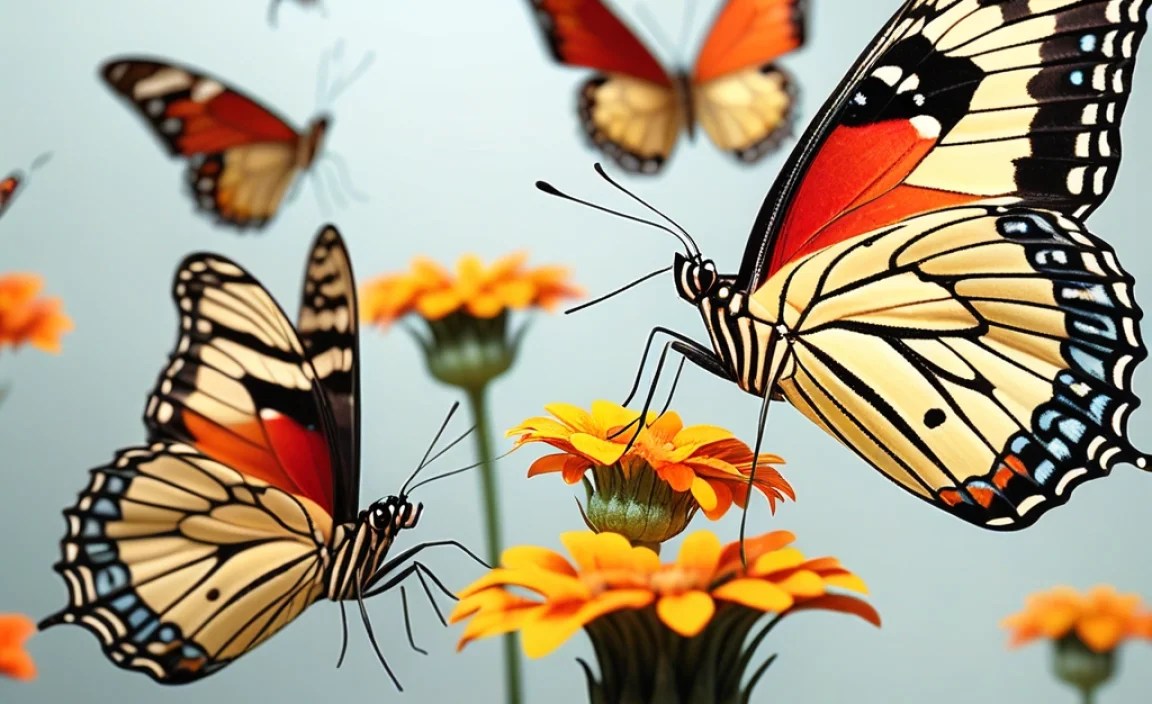
Different butterfly species have evolved unique behavioral adaptations to suit their specific environments and lifestyles. Here are some examples of how various species use these adaptations to survive:
Swallowtail Butterflies
Swallowtail butterflies are known for their distinctive tails and vibrant colors. They exhibit several interesting behavioral adaptations.
- Host Plant Selection: Female swallowtails are very selective about where they lay their eggs. They choose specific host plants that their caterpillars can feed on. This behavior ensures that their offspring have a reliable food source.
- Puddling: Male swallowtails often gather in groups to drink from puddles or damp soil. This behavior, known as puddling, allows them to obtain minerals and salts that are essential for reproduction.
Monarch Butterflies
As mentioned earlier, Monarch butterflies are famous for their long-distance migration. This behavior is crucial for their survival.
- Overwintering: Monarchs migrate to specific overwintering sites in Mexico and California. These sites provide a suitable climate and protection from predators.
- Roosting: During migration, Monarchs gather in large groups to roost overnight. This behavior helps them conserve energy and stay warm.
Skipper Butterflies
Skipper butterflies are small, fast-flying butterflies with a distinctive skipping flight pattern. They have several adaptations that help them thrive.
- Nectar Feeding: Skippers have a long proboscis that allows them to feed on nectar from flowers with long, tubular shapes.
- Camouflage: Many skippers have brown or gray wings that help them blend in with their surroundings.
| Butterfly Species | Behavioral Adaptation | Description |
|---|---|---|
| Monarch | Migration | Travels thousands of miles to overwintering sites. |
| Indian Leaf Butterfly | Camouflage | Mimics dead leaves to avoid predators. |
| Viceroy | Batesian Mimicry | Mimics the toxic Monarch to deter predators. |
| Swallowtail | Puddling | Males gather at puddles to obtain minerals. |
| Skipper | Nectar Feeding | Feeds on flowers with long, tubular shapes. |
How Environmental Factors Influence Butterfly Behavior

Environmental factors play a significant role in shaping butterfly behavior. Temperature, rainfall, and habitat availability can all influence how butterflies behave and adapt to their surroundings.
Temperature
Temperature is one of the most important environmental factors affecting butterfly behavior. Butterflies are cold-blooded, so their body temperature is directly influenced by the temperature of their environment. This affects their ability to fly, feed, and reproduce.
- Activity Levels: Butterflies are most active in warm weather. They need to maintain a certain body temperature to fly and feed.
- Basking: Butterflies bask in the sun to raise their body temperature on cool days.
- Shade Seeking: Butterflies seek shade to avoid overheating on hot days.
Rainfall
Rainfall can also affect butterfly behavior. Heavy rain can damage their wings and make it difficult for them to fly. Drought can reduce the availability of nectar and host plants.
- Shelter: Butterflies seek shelter during heavy rain to protect their wings.
- Nectar Availability: Drought can reduce the availability of nectar, forcing butterflies to travel further to find food.
- Host Plant Growth: Drought can also affect the growth of host plants, reducing the availability of food for caterpillars.
Habitat Availability
Habitat availability is crucial for butterfly survival. Butterflies need access to suitable habitats that provide them with food, shelter, and breeding sites. Habitat loss and fragmentation can have a devastating impact on butterfly populations.
- Food Sources: Butterflies need access to a variety of nectar-rich flowers and host plants.
- Shelter: Butterflies need access to sheltered areas where they can hide from predators and harsh weather.
- Breeding Sites: Butterflies need access to suitable breeding sites where they can lay their eggs.
Conserving Butterfly Habitats to Support Behavioral Adaptations
Conserving butterfly habitats is essential for supporting their behavioral adaptations and ensuring their survival. By protecting and restoring butterfly habitats, we can help these beautiful creatures thrive.
Creating Butterfly Gardens
Creating butterfly gardens is a great way to provide butterflies with the resources they need to survive. Butterfly gardens should include a variety of nectar-rich flowers and host plants.
- Nectar Plants: Plant a variety of flowers that bloom at different times of the year to provide a continuous source of nectar.
- Host Plants: Plant host plants that caterpillars can feed on.
- Water Source: Provide a shallow dish of water with pebbles for butterflies to drink from.
Protecting Natural Habitats
Protecting natural habitats is also crucial for butterfly conservation. This includes preserving forests, meadows, and wetlands that provide butterflies with food, shelter, and breeding sites. Organizations like The Nature Conservancy work to protect these natural habitats.
- Forest Conservation: Protect forests from logging and development.
- Meadow Preservation: Preserve meadows from being converted into agricultural land or housing developments.
- Wetland Restoration: Restore wetlands that have been damaged by pollution or drainage.
Reducing Pesticide Use
Pesticide use can have a devastating impact on butterfly populations. Pesticides can kill butterflies directly or indirectly by poisoning their food sources. Reducing pesticide use is essential for protecting butterflies.
- Organic Gardening: Use organic gardening practices to avoid using pesticides.
- Targeted Pesticide Use: If you must use pesticides, use them sparingly and target them to specific pests.
- Avoid Spraying Flowers: Avoid spraying pesticides on flowers that butterflies visit.
FAQ: Behavioral Adaptations of Butterflies
Here are some frequently asked questions about the behavioral adaptations of butterflies:
What is a behavioral adaptation?
A behavioral adaptation is something an animal *does* to survive, like migrating to a warmer place or pretending to be something dangerous to scare away predators.
Why do Monarch butterflies migrate?
Monarch butterflies migrate to escape cold winters in North America. They fly south to warmer climates in Mexico and California, where they can survive and reproduce.
How do butterflies use camouflage?
Butterflies use camouflage by blending in with their surroundings. Their colors and patterns help them hide from predators, like birds, by making them look like leaves or bark.
What is the difference between Batesian and Müllerian mimicry?
Batesian mimicry is when a harmless butterfly looks like a harmful one to avoid predators. Müllerian mimicry is when several harmful butterfly species look alike, so predators learn to avoid them all more quickly.
What do butterflies eat besides nectar?
While nectar is their main food, some butterflies also eat tree sap, rotting fruit, and even animal dung to get extra nutrients and minerals.
How do butterflies stay warm?
Butterflies stay warm by basking in the sun. They open their wings to absorb sunlight, which raises their body temperature so they can fly and be active.
How can I help butterflies in my backyard?
You can help butterflies by planting nectar-rich flowers and host plants, providing a water source, and avoiding the use of pesticides in your garden.
Conclusion
Butterflies are truly remarkable creatures with a fascinating array of behavioral adaptations. From their incredible migrations to their clever camouflage and mimicry, these adaptations help them survive in a challenging world. By understanding and appreciating these behaviors, we can better protect butterflies and their habitats. Creating butterfly gardens, protecting natural habitats, and reducing pesticide use are all important steps we can take to ensure that future generations can enjoy the beauty and wonder of butterflies. Let’s continue to learn about these amazing insects and work together to conserve them for years to come.


