
Butterflies of Australia East Coast: Ultimate Guide

The East Coast of Australia boasts a stunning array of butterflies! This region is home to vibrant species like the Ulysses Butterfly, the Monarch, and the Blue Triangle. Spotting these beauties is easier than you think. We’ll guide you through identifying common types, attracting them to your garden, and understanding their importance to our ecosystem.
Have you ever been mesmerized by the sight of a butterfly fluttering through your garden? The East Coast of Australia is a hotspot for these winged wonders, but identifying them can feel like a daunting task. Don’t worry, you’re not alone! Many people struggle to tell one butterfly from another. In this guide, we’ll explore the fascinating world of East Coast butterflies, giving you the knowledge and confidence to identify these beautiful creatures and even attract them to your own backyard. Get ready to discover the secrets of these fluttering jewels!
A Beginner’s Guide to Butterflies of Australia’s East Coast

Australia’s East Coast is a butterfly paradise, offering a rich tapestry of species adapted to diverse habitats, from lush rainforests to sunny coastal gardens. Understanding the butterflies in this region is not just a fun hobby, but also a vital step in appreciating and protecting our natural world.
Why are Butterflies Important?
Butterflies are more than just pretty faces! They play a crucial role in our ecosystem:
- Pollination: They are important pollinators, helping plants reproduce.
- Food Source: They serve as a food source for birds, lizards, and other animals.
- Indicators of Environmental Health: Their presence or absence can indicate the health of an ecosystem.
Common Butterfly Families on the East Coast
To start your butterfly identification journey, let’s look at some of the most common butterfly families found on the East Coast:
- Nymphalidae (Brush-footed Butterflies): This is a large and diverse family, including many brightly colored butterflies. They are called brush-footed because their front legs are reduced and used for sensing rather than walking.
- Papilionidae (Swallowtail Butterflies): These are usually large, striking butterflies with distinctive “tails” on their hindwings.
- Pieridae (Whites and Yellows): As the name suggests, these butterflies are typically white or yellow, often with black markings.
- Lycaenidae (Blues, Coppers, and Hairstreaks): These are small, often brightly colored butterflies. Many have intricate patterns and iridescent scales.
- Hesperiidae (Skippers): Skippers are small, stout-bodied butterflies with hooked antennae. They have a rapid, darting flight.
Identifying Common East Coast Butterflies

Let’s dive into some of the most frequently seen butterfly species on the East Coast.
Ulysses Butterfly (Papilio ulysses)
The Ulysses Butterfly is perhaps one of Australia’s most iconic butterflies. Its vibrant blue wings make it a truly unforgettable sight.
- Appearance: Brilliant iridescent blue wings with black borders. The underside is brown and black.
- Habitat: Tropical rainforests of Queensland.
- Food Source: Larvae feed on various species of Euodia. Adults feed on nectar from flowers.
- Fun Fact: The bright blue color is created by microscopic scales that reflect blue light.
Monarch Butterfly (Danaus plexippus)
The Monarch Butterfly is famous for its long migrations. It’s a beautiful and easily recognizable butterfly.
- Appearance: Bright orange wings with black veins and white spots along the edges.
- Habitat: Found throughout the East Coast in areas with milkweed.
- Food Source: Larvae feed exclusively on milkweed. Adults feed on nectar from various flowers.
- Fun Fact: Monarchs undertake an incredible multi-generational migration across North America. While Australian Monarchs don’t migrate as far, they still move in response to changing conditions.
Blue Triangle Butterfly (Graphium sarpedon)
The Blue Triangle Butterfly is a common sight in gardens and parks. Its distinctive blue triangles make it easy to identify.
- Appearance: Black wings with striking blue triangles.
- Habitat: Rainforests, urban gardens, and parks.
- Food Source: Larvae feed on trees in the laurel family. Adults feed on nectar.
- Fun Fact: The Blue Triangle is a fast flyer and is often seen flitting around flowers.
Cairns Birdwing Butterfly (Ornithoptera euphorion)
This is Australia’s largest butterfly species, a striking sight in the rainforests of North Queensland.
- Appearance: Females are larger than males, with a wingspan up to 16cm. They have dark brown wings with cream and yellow markings. Males have vibrant green and black wings.
- Habitat: Tropical rainforests of northern Queensland.
- Food Source: The larvae feed on native Aristolochia vines. Adults feed on nectar from flowering plants.
- Fun Fact: The Cairns Birdwing is protected in Australia due to habitat loss and over-collection.
Richmond Birdwing Butterfly (Ornithoptera richmondia)
A stunning, endangered butterfly found in Southeast Queensland and Northern New South Wales, with a vital conservation story.
- Appearance: Similar to the Cairns Birdwing, but slightly smaller. Males have iridescent green and black wings, while females are dark brown with cream and yellow markings.
- Habitat: Subtropical rainforests of Southeast Queensland and Northern New South Wales.
- Food Source: The larvae feed exclusively on the Richmond Birdwing Butterfly Vine (Pararistolochia praevenosa).
- Fun Fact: The Richmond Birdwing is threatened due to habitat loss and the decline of its host plant. Conservation efforts are underway to protect this species.
Checkered Swallowtail (Papilio demoleus)
An adaptable butterfly found across Australia, known for its striking black and white patterns.
- Appearance: Predominantly black wings with distinctive white spots and checkered patterns along the edges. A red eyespot is often present on the hindwing.
- Habitat: A wide range of habitats, including gardens, open woodlands, and urban areas.
- Food Source: The larvae feed on citrus trees and other plants in the Rutaceae family. Adults feed on nectar from various flowers.
- Fun Fact: The Checkered Swallowtail is a relatively new arrival to Australia, having spread rapidly across the continent in recent decades.
Australian Painted Lady (Vanessa kershawi)
A migratory butterfly with beautiful orange and brown patterns, often seen in large numbers.
- Appearance: Orange-brown wings with black markings and white spots. The underside of the hindwing has a distinctive pattern of eyespots.
- Habitat: Found throughout Australia in a variety of habitats, including gardens, open woodlands, and grasslands.
- Food Source: The larvae feed on various plants in the Asteraceae family, including daisies and thistles. Adults feed on nectar.
- Fun Fact: The Australian Painted Lady is known for its migratory behavior, with large numbers of butterflies sometimes traveling long distances.
Meadow Argus (Junonia villida)
A common butterfly with distinctive eyespots on its wings, often seen in grassy areas.
- Appearance: Brown wings with prominent eyespots. The intensity of the colors can vary depending on the season and location.
- Habitat: Open grasslands, meadows, and gardens.
- Food Source: The larvae feed on various plants in the Plantaginaceae family. Adults feed on nectar from low-growing flowers.
- Fun Fact: The eyespots on the wings are thought to deter predators by mimicking the eyes of a larger animal.
Sample Butterfly Identification Table
Here is a table summarizing the key features of some of the butterflies we’ve discussed:
| Butterfly | Appearance | Habitat | Larval Food Source |
|---|---|---|---|
| Ulysses Butterfly | Bright blue wings with black borders | Tropical rainforests | Euodia species |
| Monarch Butterfly | Orange wings with black veins and white spots | Areas with milkweed | Milkweed |
| Blue Triangle Butterfly | Black wings with blue triangles | Rainforests, gardens, parks | Laurel family trees |
| Cairns Birdwing | Large; Males: green and black, Females: dark brown with cream and yellow | Tropical rainforests | Native Aristolochia vines |
| Richmond Birdwing | Similar to Cairns; Males: iridescent green and black, Females: dark brown with cream and yellow | Subtropical rainforests | Richmond Birdwing Butterfly Vine (Pararistolochia praevenosa) |
Attracting Butterflies to Your Garden

Want to see more butterflies in your backyard? Here’s how to create a butterfly-friendly garden:
Plant Host Plants
Host plants are essential for butterflies because they provide food for their caterpillars. Some popular host plants include:
- Milkweed: For Monarch Butterflies.
- Citrus Trees: For Checkered Swallowtails.
- Euodia species: For Ulysses Butterflies.
- Richmond Birdwing Butterfly Vine (Pararistolochia praevenosa): For Richmond Birdwing Butterflies.
Provide Nectar Sources
Adult butterflies need nectar for energy. Choose a variety of flowering plants that bloom at different times of the year. Some good options include:
- Lantana
- Bottlebrush
- Butterfly Bush (Buddleja davidii)
- Salvia
Offer a Water Source
Butterflies need water to stay hydrated. Provide a shallow dish of water with pebbles or stones for them to land on.
Avoid Pesticides
Pesticides can harm or kill butterflies and other beneficial insects. Opt for natural pest control methods instead.
Provide Shelter
Butterflies need shelter from wind and rain. Plant shrubs and trees to provide them with protection.
Understanding Butterfly Behavior
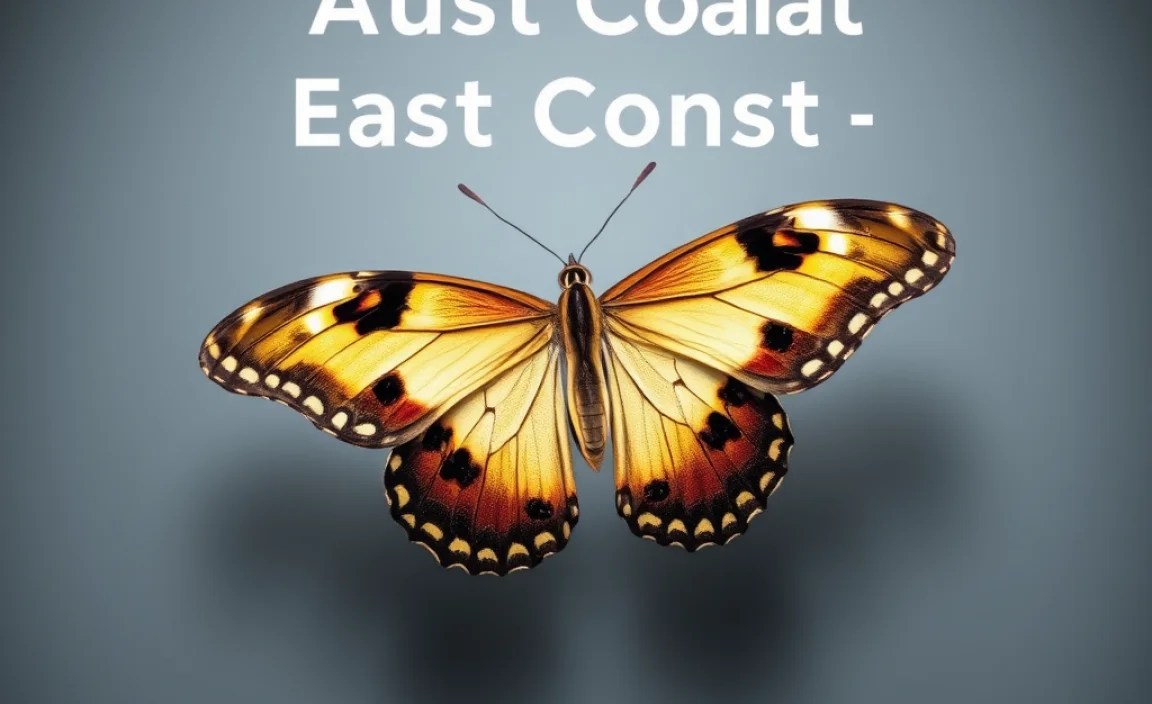
Observing butterfly behavior can be just as fascinating as identifying them. Here are a few things to watch for:
Flight Patterns
Each butterfly species has its own unique flight pattern. Some flutter gently, while others dart quickly from flower to flower. Watch how they move to help with identification.
Feeding Habits
Butterflies use their proboscis (a long, straw-like tongue) to sip nectar from flowers. Observe which flowers they prefer to feed on.
Courtship Rituals
During mating season, you may see butterflies engaging in courtship rituals, such as aerial displays or elaborate dances.
Camouflage
Many butterflies use camouflage to protect themselves from predators. Some blend in with leaves or bark, while others have patterns that mimic the eyes of larger animals.
Conservation Efforts
Many butterfly species are threatened by habitat loss, climate change, and pesticide use. Here are some ways you can help protect butterflies:
- Create a butterfly-friendly garden.
- Support organizations that work to conserve butterfly habitats.
- Reduce your use of pesticides.
- Educate others about the importance of butterflies.
Organizations to Support
Consider supporting these organizations that are dedicated to butterfly conservation:
- Butterfly Conservation Australia
- NSW Department of Planning and Environment
- Queensland Department of Environment and Science
The Butterfly Life Cycle
Understanding the butterfly life cycle is key to appreciating these insects. Butterflies undergo complete metamorphosis, with four distinct stages:
- Egg: Butterflies lay their eggs on or near their host plants.
- Larva (Caterpillar): The larva hatches from the egg and spends its time eating and growing. It molts its skin several times as it grows larger.
- Pupa (Chrysalis): When the larva is fully grown, it forms a pupa, or chrysalis. Inside the chrysalis, the larva transforms into a butterfly.
- Adult: The adult butterfly emerges from the chrysalis. It spends its time feeding, mating, and laying eggs.
Photographing Butterflies
Photographing butterflies can be a rewarding experience. Here are some tips for capturing stunning butterfly photos:
- Use a macro lens: A macro lens will allow you to capture close-up details of the butterfly.
- Shoot in natural light: Avoid using flash, as it can scare the butterfly and wash out the colors.
- Be patient: Butterflies are often on the move, so be patient and wait for the perfect shot.
- Focus on the eyes: Sharp focus on the butterfly’s eyes will make the photo more engaging.
- Get low: Shooting from a low angle can create a more dramatic perspective.
Butterflies in Culture and Symbolism
Butterflies have long held symbolic meaning in various cultures around the world:
- Transformation: Butterflies are often seen as symbols of transformation and rebirth, due to their metamorphosis from caterpillar to butterfly.
- Hope: In some cultures, butterflies represent hope and new beginnings.
- Soul: In ancient Greece, butterflies were believed to represent the human soul.
- Beauty: Butterflies are universally admired for their beauty and grace.
FAQ: Butterflies of Australia East Coast
What is the most common butterfly on the East Coast of Australia?
The Blue Triangle Butterfly is one of the most commonly seen butterflies on the East Coast, often found in gardens and rainforests.
What do butterfly caterpillars eat?
Butterfly caterpillars eat the leaves of specific host plants. For example, Monarch caterpillars eat milkweed, while Ulysses caterpillars eat Euodia species.
How can I attract Monarch butterflies to my garden?
Plant milkweed in your garden. This is the only food source for Monarch caterpillars.
Are butterflies endangered in Australia?
Some butterfly species, such as the Richmond Birdwing, are endangered due to habitat loss and other factors. Conservation efforts are underway to protect these species.
What is the lifespan of a butterfly?
The lifespan of a butterfly varies depending on the species. Some butterflies live only a few weeks, while others can live for several months.
Do butterflies migrate in Australia?
Yes, some butterflies in Australia migrate, including the Australian Painted Lady. Monarch butterflies in Australia also move, but their migrations are less extensive than those in North America.
What is the best time of year to see butterflies?
The best time of year to see butterflies on the East Coast of Australia is during the warmer months (spring and summer), when flowers are in bloom and butterflies are most active.
Conclusion
Exploring the world of butterflies on Australia’s East Coast is a journey filled with beauty, wonder, and a deeper appreciation for our natural world. By learning to identify these fascinating creatures, creating butterfly-friendly gardens, and supporting conservation efforts, we can all play a part in protecting these delicate and important insects for generations to come. So, grab your binoculars, head outside, and start your butterfly adventure today! You’ll be amazed by what you discover.


