
How to Read Butterfly Wing Spots Europe: Easy Guide

Reading butterfly wing spots in Europe involves observing the size, shape, color, and arrangement of these spots to identify different species. Key features include eyespots, marginal spots, and central wing patterns. Using field guides and online resources can significantly aid in accurate identification, helping you appreciate the diversity of European butterflies.
Have you ever watched a butterfly flitting through your garden and wondered what secrets its wing patterns hold? Butterfly wings are like nature’s artwork, and those spots aren’t just for show. They’re crucial for identifying different species! But let’s face it, figuring out which spot belongs to which butterfly can be tricky. It’s a bit like learning a new language, isn’t it?
Don’t worry, it’s easier than you think! In this guide, we’ll explore how to decipher the wing patterns of European butterflies, focusing on their spots. We’ll break down what to look for and how to use that information to identify these beautiful creatures. Get ready to unlock the secrets hidden in those delicate wings!
Understanding Butterfly Wing Anatomy
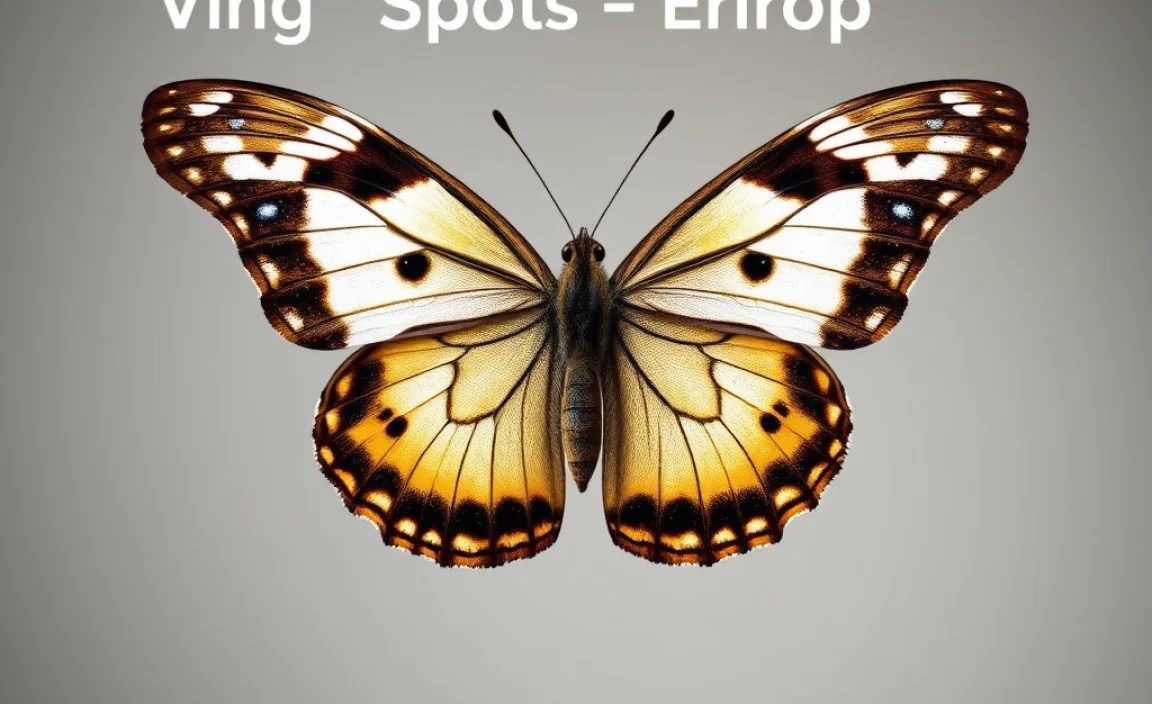
Before diving into the specifics of spot identification, let’s get familiar with the basic anatomy of a butterfly’s wing. Knowing the different regions and terms will make identifying spots much easier. Think of it as learning the map before you start your journey.
Key Wing Regions
- Forewing: The larger, triangular wing located at the front of the butterfly.
- Hindwing: The wing located at the back of the butterfly, often rounder in shape.
- Marginal Area: The outer edge of the wing.
- Submarginal Area: The area just inside the marginal area.
- Discal Area: The central area of the wing.
Common Spot Types
- Eyespots (Ocelli): Circular spots that often resemble eyes, used for defense.
- Marginal Spots: Spots located along the edge of the wing.
- Basal Spots: Spots located near the base of the wing (where it attaches to the body).
- Discal Spots: Spots located in the central area of the wing.
Understanding these terms will help you follow along as we discuss specific butterfly species and their unique spot patterns.
Step-by-Step Guide to Reading Butterfly Wing Spots

Now, let’s get into the practical steps for reading butterfly wing spots. This process involves careful observation and a bit of detective work. Remember, patience is key! Think of yourself as a butterfly detective, uncovering clues to solve the mystery of their identity.
Step 1: Observe the Butterfly Closely
The first step is to get a good look at the butterfly. This might require some patience, as butterflies don’t always cooperate. Try to observe the butterfly while it’s resting or feeding on a flower. Use binoculars if necessary to get a closer view without disturbing it.
- Color: Note the primary colors of the wings. Are they bright and vibrant, or muted and earthy?
- Size: Estimate the wingspan. Is it a small butterfly or a larger one?
- Shape: Pay attention to the overall shape of the wings. Are they rounded, angular, or elongated?
- Behavior: Observe how the butterfly flies and behaves. Does it flutter quickly or glide gracefully?
Step 2: Identify the Types of Spots
Once you have a general impression of the butterfly, focus on the spots. Identify the types of spots present on the wings. Are there eyespots, marginal spots, or a combination of both? Where are they located on the wing – marginal, submarginal, basal, or discal areas?
- Eyespots: Look for circular spots that resemble eyes. Note their size, color, and number.
- Marginal Spots: Check for spots along the outer edge of the wing. Are they distinct and well-defined, or faint and blurry?
- Basal and Discal Spots: Examine the central areas of the wing for additional spots. Note their shape, size, and arrangement.
Step 3: Note the Arrangement and Patterns
The arrangement and patterns of the spots are crucial for identification. Pay attention to how the spots are organized on the wings. Do they form a distinct pattern, or are they scattered randomly?
- Symmetrical Patterns: Look for patterns that are the same on both wings.
- Asymmetrical Patterns: Note any differences between the patterns on the left and right wings.
- Lines and Bands: Check for lines or bands of spots that run across the wings.
Step 4: Use a Field Guide or Online Resource
Now that you have a detailed description of the butterfly and its spots, it’s time to consult a field guide or online resource. These resources provide images and descriptions of different butterfly species, making it easier to match your observations with a specific species.
- Field Guides: A good field guide is an essential tool for butterfly identification. Look for guides specific to European butterflies, such as “Butterflies of Britain and Europe” by Higgins and Riley.
- Online Resources: Websites like Butterfly Conservation and Euro Butterflies offer extensive databases of butterfly species with detailed images and descriptions.
Step 5: Compare and Confirm
Once you’ve narrowed down the possibilities, compare your observations with the images and descriptions in your field guide or online resource. Pay close attention to the details of the spots and patterns. Confirm your identification by checking multiple sources and comparing different images.
- Cross-Reference: Use multiple sources to confirm your identification.
- Consider Location: Keep in mind the geographic location where you observed the butterfly. Some species are more common in certain regions than others.
- Check Similar Species: Be aware of similar species that might be easily confused. Pay attention to subtle differences in spot patterns and colors.
Examples of Butterfly Wing Spots in Europe

Let’s look at some specific examples of European butterflies and their unique wing spot patterns. These examples will help you understand how to apply the steps we’ve discussed and improve your identification skills.
The Meadow Brown (Maniola jurtina)
The Meadow Brown is a common European butterfly with distinctive eyespots on its wings. The number and size of these eyespots can vary, but they are a key feature for identification.
| Feature | Description |
|---|---|
| Color | Brown with orange patches |
| Eyespots | Usually one large eyespot on the forewing and several smaller eyespots on the hindwing |
| Location | Eyespots are located in the submarginal area of the wings |
The Small Tortoiseshell (Aglais urticae)
The Small Tortoiseshell is a brightly colored butterfly with a distinctive pattern of spots and markings. It’s one of the most recognizable butterflies in Europe.
| Feature | Description |
|---|---|
| Color | Orange with black and yellow markings |
| Marginal Spots | Blue marginal spots along the edge of the hindwing |
| Discal Spots | Black spots in the central area of the forewing |
The Peacock Butterfly (Aglais io)
The Peacock Butterfly is known for its large, prominent eyespots that resemble peacock feathers. These eyespots are used for defense, startling potential predators.
| Feature | Description |
|---|---|
| Color | Reddish-brown with black and yellow markings |
| Eyespots | Large, colorful eyespots on both the forewing and hindwing |
| Location | Eyespots are located in the submarginal area of the wings |
The Common Blue (Polyommatus icarus)
The Common Blue is a small, delicate butterfly with blue wings (in males) and brown wings with orange spots (in females). The spots on the hindwing are a key feature for distinguishing it from other blue butterflies.
| Feature | Description |
|---|---|
| Color | Males are blue, females are brown with orange spots |
| Marginal Spots | Orange marginal spots on the hindwing |
| Discal Spots | Small black spots in the central area of the wings |
Tips for Accurate Butterfly Identification

Identifying butterflies can be challenging, especially when dealing with similar species. Here are some tips to help you improve your accuracy and avoid common mistakes.
- Practice Regularly: The more you observe and identify butterflies, the better you’ll become.
- Take Photos: Taking photos of butterflies can help you review their features later and compare them with images in field guides or online resources.
- Join a Butterfly Group: Joining a local butterfly group or conservation organization can provide opportunities to learn from experienced enthusiasts and participate in guided walks.
- Consider the Season: Some butterfly species are only active during certain times of the year. Knowing the flight periods of different species can help you narrow down the possibilities.
- Learn About Habitat: Different butterfly species prefer different habitats. Knowing the habitat where you observed the butterfly can provide valuable clues about its identity.
- Use a Butterfly Net (Responsibly): If you’re having trouble identifying a butterfly from a distance, you can use a butterfly net to catch it temporarily for closer examination. Be sure to handle the butterfly gently and release it as soon as possible.
The Role of Wing Spots in Butterfly Life

Butterfly wing spots aren’t just for identification; they also play important roles in the butterfly’s life. Understanding these roles can deepen your appreciation for these fascinating creatures.
Defense Mechanisms
Eyespots are a common defense mechanism used by butterflies to deter predators. The large, prominent eyespots on the wings of the Peacock Butterfly, for example, can startle birds and other predators, giving the butterfly a chance to escape. Some butterflies also have cryptic patterns that help them blend in with their surroundings, making them less visible to predators.
Mate Recognition
Wing spots can also play a role in mate recognition. Male and female butterflies often have different wing patterns, which help them identify potential mates of the same species. These patterns can also be used to signal sexual maturity and attract mates.
Thermoregulation
The dark spots on butterfly wings can help them absorb heat from the sun, allowing them to warm up more quickly. This is particularly important for butterflies that live in cooler climates. By basking in the sun with their wings open, they can raise their body temperature and become more active.
Camouflage
Some butterfly wing spots help them blend in with their surroundings, providing camouflage. For example, the Comma butterfly has a distinctive comma-shaped mark on its hindwing that helps it resemble a dead leaf when its wings are closed. This camouflage makes it more difficult for predators to spot.
Tools and Resources for Butterfly Identification
Identifying butterflies requires the right tools and resources. Here’s a list of essential items to help you on your butterfly identification journey.
- Field Guide: A comprehensive field guide to European butterflies is a must-have. Look for guides with detailed images and descriptions of different species.
- Binoculars: A good pair of binoculars will allow you to observe butterflies from a distance without disturbing them.
- Camera: A camera with a macro lens is useful for taking close-up photos of butterfly wings and spots.
- Butterfly Net: A butterfly net can be used to catch butterflies temporarily for closer examination (use responsibly).
- Magnifying Glass: A magnifying glass can help you see the finer details of butterfly wing spots.
- Notebook and Pen: Keep a notebook and pen handy to record your observations and notes.
- Online Resources: Websites like Butterfly Conservation, Euro Butterflies, and iNaturalist offer valuable information and resources for butterfly identification.
FAQ: Reading Butterfly Wing Spots
1. What are eyespots on butterfly wings?
Eyespots are circular markings that resemble eyes. They are often used as a defense mechanism to startle predators, giving the butterfly a chance to escape.
2. Why do butterflies have different spot patterns?
Different spot patterns help butterflies recognize each other, attract mates, and camouflage themselves from predators. They also play a role in thermoregulation.
3. How can I tell the difference between similar butterfly species?
Pay close attention to the details of the wing spots, their arrangement, and the overall color and pattern of the wings. Use a field guide or online resource to compare your observations with images and descriptions of different species.
4. What is the best time of year to see butterflies?
The best time of year to see butterflies varies depending on the species and location. In general, most butterflies are active during the warmer months of spring and summer.
5. Where can I find butterflies in Europe?
Butterflies can be found in a variety of habitats, including meadows, gardens, woodlands, and wetlands. Look for areas with plenty of wildflowers and nectar sources.
6. Are butterfly wing spots the same on both sides of the wings?
Butterfly wing patterns are usually symmetrical, meaning the patterns are similar on both sides of the wings. However, there can be slight variations between the left and right wings.
7. How can I attract more butterflies to my garden?
Plant a variety of nectar-rich flowers that bloom throughout the growing season. Provide a source of water, such as a shallow dish with pebbles. Avoid using pesticides, which can harm butterflies and other beneficial insects.
Conclusion
Learning how to read butterfly wing spots in Europe opens up a fascinating world of discovery. By understanding the basic anatomy of butterfly wings, identifying different types of spots, and using field guides and online resources, you can unlock the secrets hidden in those delicate patterns. Remember to observe closely, compare carefully, and practice regularly. Each butterfly you identify is a step further into appreciating the beauty and complexity of the natural world. So, grab your binoculars, head out to your nearest garden or meadow, and start exploring the wonderful world of butterfly wing spots!


