
European Butterfly Wing Shape Guide: Ultimate ID

Navigating the world of European butterflies can be wonderfully rewarding! Key to identification is understanding wing shapes: rounded wings often belong to nymphalids or browns, while swallowtails boast distinctive tails, and skippers have uniquely hooked antennae. This guide will help you distinguish these lovely creatures with confidence!
Have you ever been captivated by a butterfly fluttering past, only to struggle to identify it later? It’s a common frustration for nature lovers! With so many species flitting around Europe, telling them apart can feel overwhelming. But don’t worry! This guide simplifies butterfly identification by focusing on a key characteristic: wing shape. We’ll explore the common wing shapes found in European butterflies, giving you the tools to confidently name those beautiful visitors to your garden or local park. Let’s get started and unlock the secrets of butterfly wings!
Understanding Butterfly Wing Shapes: A Visual Guide
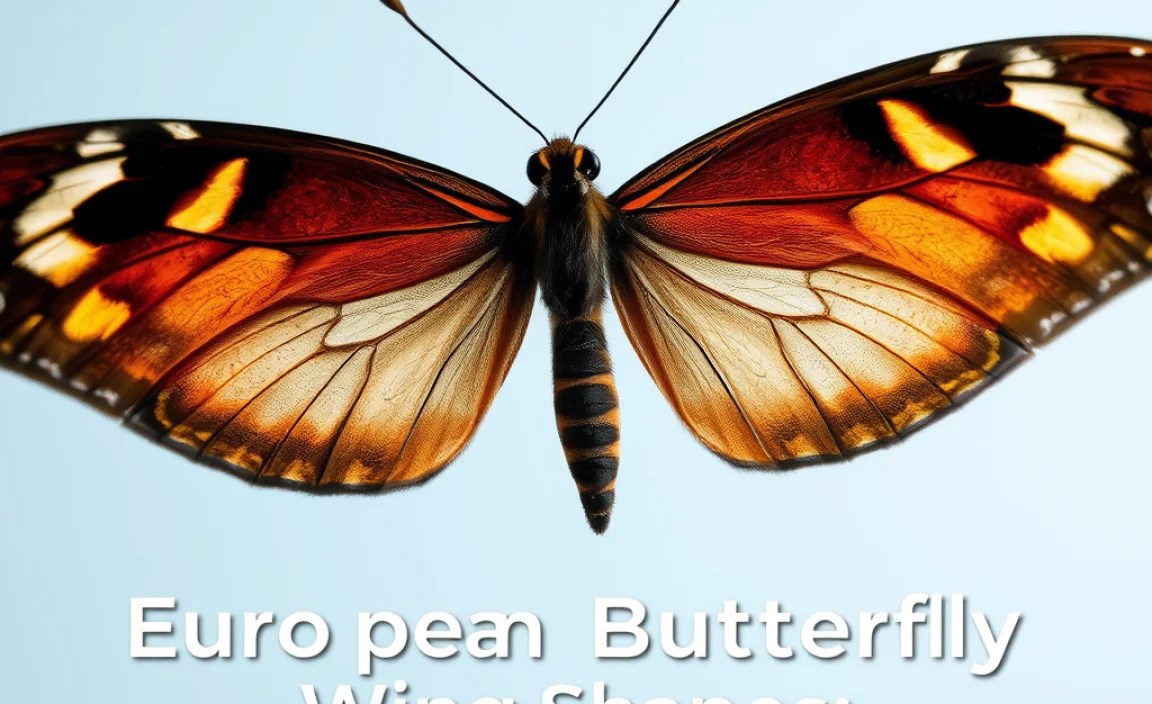
Butterfly wings are more than just pretty patterns; their shapes are clues to a butterfly’s family and often its species. By learning to recognize these shapes, you’ll be well on your way to becoming a butterfly identification expert! Let’s explore some of the most common wing shapes found among European butterflies.
Rounded Wings: The Nymphalidae Family
Many of the most commonly seen butterflies in Europe belong to the Nymphalidae family, also known as the brush-footed butterflies. A key characteristic of this family is their rounded wings. This shape provides excellent maneuverability, allowing them to navigate through complex environments.
Examples of Butterflies with Rounded Wings
- Red Admiral (Vanessa atalanta): A familiar sight in gardens, the Red Admiral has boldly patterned rounded wings, making it easy to spot.
- Peacock Butterfly (Aglais io): Instantly recognizable thanks to the striking eyespots on its rounded wings, the Peacock is a true beauty.
- Painted Lady (Vanessa cardui): A migratory species, the Painted Lady has orange and brown rounded wings with a distinctive pattern.
- Comma (Polygonia c-album): The Comma butterfly’s wings have a jagged outline, but still fall within the rounded wing category. Look for the small white comma mark on the underside of its wings.
Triangular Wings: Pieridae and Lycaenidae Families
While not perfectly triangular, many butterflies in the Pieridae (whites and yellows) and Lycaenidae (blues, coppers, and hairstreaks) families exhibit a more angular, triangular wing shape compared to the rounded wings of nymphalids. These shapes often aid in flight efficiency and camouflage.
Examples of Butterflies with Triangular Wings
- Small White (Pieris rapae): A common garden butterfly, the Small White has predominantly white wings with a subtle triangular shape.
- Brimstone (Gonepteryx rhamni): The male Brimstone has bright yellow, distinctly triangular wings, while the female is a paler greenish-white.
- Common Blue (Polyommatus icarus): The male Common Blue has bright blue wings with a subtle triangular shape, while the female is brown with blue scaling.
- Small Copper (Lycaena phlaeas): A vibrant butterfly, the Small Copper has bright orange wings with dark borders, displaying a noticeable triangular shape.
Swallowtail Wings: The Papilionidae Family
Swallowtail butterflies are among the most striking and easily identifiable butterflies, thanks to the elongated “tails” on their hindwings. These tails may play a role in confusing predators or attracting mates. The Papilionidae family is known for these elegant shapes.
Examples of Butterflies with Swallowtail Wings
- Swallowtail (Papilio machaon): A magnificent butterfly, the Swallowtail has yellow wings with black markings and prominent tails.
- Scarce Swallowtail (Iphiclides podalirius): Similar to the Swallowtail but with longer tails and more defined black stripes, the Scarce Swallowtail is a stunning sight.
- Southern Festoon (Zerynthia polyxena): This butterfly has a more rounded wing shape overall but features small tails on its hindwings, classifying it as a swallowtail.
Hooked Wings: The Hesperiidae Family (Skippers)
Skippers are a unique group of butterflies with a distinct appearance and flight style. Their wings are often more angular than rounded, and many species have hooked tips on their forewings. They also have thicker bodies and a rapid, darting flight, hence their name.
Examples of Butterflies with Hooked Wings
- Large Skipper (Ochlodes sylvanus): A common skipper, the Large Skipper has orange-brown wings with a hooked shape and a distinctive checkered pattern.
- Small Skipper (Thymelicus sylvestris): Similar to the Large Skipper but smaller, the Small Skipper also exhibits the characteristic hooked wing shape.
Table: European Butterfly Wing Shape Guide
This table summarizes the key wing shapes and associated butterfly families to help you quickly identify butterflies in Europe.
| Wing Shape | Butterfly Family | Examples | Key Features |
|---|---|---|---|
| Rounded | Nymphalidae (Brush-footed Butterflies) | Red Admiral, Peacock, Painted Lady, Comma | Smooth, curved wing edges; often brightly colored. |
| Triangular | Pieridae (Whites and Yellows), Lycaenidae (Blues, Coppers, and Hairstreaks) | Small White, Brimstone, Common Blue, Small Copper | More angular than rounded; may have pointed tips. |
| Swallowtail | Papilionidae (Swallowtails) | Swallowtail, Scarce Swallowtail, Southern Festoon | Distinctive “tails” on hindwings. |
| Hooked | Hesperiidae (Skippers) | Large Skipper, Small Skipper | Angular wings with hooked tips; thick bodies. |
Beyond Shape: Other Important Identification Clues
While wing shape is a valuable tool, it’s essential to consider other characteristics for accurate butterfly identification. Color, size, patterns, and behavior all contribute to the puzzle.
Color and Pattern
Butterfly wings display a dazzling array of colors and patterns, from vibrant oranges and yellows to subtle blues and browns. These colors can help attract mates, camouflage the butterfly, or even warn predators of its toxicity.
- Eyespots: Many butterflies, like the Peacock, have eyespots on their wings. These spots can startle predators, giving the butterfly a chance to escape.
- Camouflage: Some butterflies, like the Comma, have intricately patterned undersides that blend in with tree bark, providing excellent camouflage when their wings are closed.
- Mimicry: Certain butterflies mimic the appearance of toxic species to deter predators. For example, the Viceroy butterfly mimics the Monarch butterfly, which is poisonous to many animals.
Size
Butterfly size can vary greatly, even within the same family. Pay attention to the wingspan, which is the distance from the tip of one wing to the tip of the other when the wings are fully extended. This measurement can help narrow down the possibilities when identifying a butterfly.
For example, the Large Blue (Phengaris arion) is one of the largest of the European blues, while the Small Blue (Cupido minimus) is one of the smallest butterflies in Europe.
Behavior
Observing a butterfly’s behavior can also provide valuable clues to its identity. Consider the following:
- Flight Pattern: Does the butterfly have a fast, erratic flight like a skipper, or a more graceful, gliding flight like a swallowtail?
- Feeding Habits: What kind of flowers does the butterfly visit? Some butterflies are specialists, feeding only on certain types of nectar.
- Habitat: Where did you see the butterfly? Certain species are found only in specific habitats, such as grasslands, woodlands, or wetlands.
Tools for Butterfly Identification
With so many butterfly species in Europe, it’s helpful to have some resources at your fingertips. Here are a few tools that can aid in your identification efforts:
- Field Guides: A good field guide is essential for butterfly identification. Look for guides that include detailed descriptions, illustrations, and range maps. Some popular choices include “Butterflies of Britain and Europe” by Higgins and Riley and “Field Guide to the Butterflies of Britain and Europe” by Tolman and Lewington.
- Online Resources: Websites like Butterfly Conservation and UK Butterflies offer a wealth of information on European butterflies, including identification guides, photos, and distribution maps.
- Butterfly Identification Apps: Several mobile apps can help you identify butterflies based on photos or descriptions. These apps can be a convenient tool for quick identification in the field.
- Citizen Science Projects: Participate in citizen science projects, like butterfly monitoring schemes. This is a great way to learn about butterflies, contribute to conservation efforts, and get help with identification from experienced volunteers.
Attracting Butterflies to Your Garden

Once you can identify the butterflies in your area, you might want to attract more of them to your garden! Creating a butterfly-friendly habitat is a rewarding way to enjoy these beautiful creatures up close and support their conservation.
Planting the Right Flowers
Butterflies need nectar for energy, so planting nectar-rich flowers is essential. Choose a variety of flowers that bloom throughout the butterfly season to provide a continuous food source.
- Good nectar sources: Buddlejas (butterfly bushes), lavender, Verbena bonariensis, sedum, and Echinacea.
- Native plants: Whenever possible, choose native plants, as these are often the best food sources for local butterfly species.
- Plant in clumps: Butterflies are more attracted to large groups of the same flower.
Providing Host Plants
Butterflies also need host plants for their caterpillars to feed on. These plants are specific to each butterfly species, so research which butterflies you want to attract and plant their corresponding host plants.
- Host plants for common butterflies: Nettles for Red Admirals and Peacocks, milkweed for Monarchs (if you’re in an area where they migrate), and various grasses for skippers.
- Don’t use pesticides: Pesticides can harm or kill butterfly caterpillars, so avoid using them in your garden.
Creating a Butterfly-Friendly Environment
In addition to food and host plants, butterflies need shelter, water, and basking spots.
- Shelter: Provide shrubs and trees for butterflies to shelter from wind and rain.
- Water: Create a shallow dish of water with pebbles or sand for butterflies to drink from.
- Basking spots: Butterflies need to bask in the sun to warm up their bodies. Provide flat stones or bare patches of ground in sunny locations.
The Importance of Butterfly Conservation

Butterflies are not only beautiful but also play a vital role in our ecosystem. They are important pollinators, helping to fertilize plants and ensure the production of fruits, vegetables, and seeds. They also serve as a food source for birds, bats, and other animals.
Unfortunately, many butterfly species are threatened by habitat loss, climate change, and pesticide use. By learning about butterflies and taking steps to protect them, we can help ensure that these beautiful creatures continue to thrive for generations to come. The Xerces Society is a great resource for learning about invertebrate conservation.
FAQ: European Butterfly Wing Shapes
Here are some frequently asked questions about identifying European butterflies by their wing shapes:
What is the easiest way to start identifying butterflies?
Begin by focusing on wing shape. Is it rounded, triangular, swallow-tailed, or hooked? Then, note the colors and patterns. Use a field guide or online resource to match these characteristics to potential species.
Are there butterflies that don’t fit neatly into these wing shape categories?
Yes, some butterflies have wing shapes that are intermediate or a combination of different shapes. This is where considering other features like color, size, and behavior becomes important.
Can wing shape alone guarantee a correct identification?
No, wing shape is a helpful starting point, but it’s not foolproof. Always consider other characteristics like color, pattern, size, and behavior to confirm your identification.
How can I improve my butterfly identification skills?
Practice, practice, practice! Spend time observing butterflies in your garden or local park. Take photos and compare them to images in field guides or online resources. Join a local butterfly group or participate in citizen science projects to learn from experienced enthusiasts.
What if I can’t identify a butterfly, even with a guide?
Don’t worry! Butterfly identification can be challenging, even for experts. Take a photo of the butterfly and share it with a local butterfly group or online forum for help. There are many experienced enthusiasts who would be happy to assist you.
Why is it important to identify butterflies correctly?
Accurate identification is crucial for monitoring butterfly populations and understanding their distribution. This information is essential for conservation efforts, as it helps us track changes in butterfly populations and identify species that are in need of protection.
Where can I find more resources for learning about European butterflies?
Several excellent resources are available, including field guides, online databases like Lepidoptera.it, and organizations like Butterfly Conservation Europe.
Conclusion: Embrace the Beauty and Diversity of European Butterflies
Learning to identify butterflies by their wing shapes is a rewarding journey that connects you more deeply with the natural world. By understanding the nuances of wing shapes, colors, and behaviors, you can unlock the secrets of these fascinating creatures and appreciate their vital role in our ecosystem. So, grab your field guide, head outdoors, and start exploring the wonderful world of European butterflies! Every fluttering wing tells a story, and with a little practice, you’ll be able to decipher it.


