
Easy Species Identification of Coral Species

Coral reefs are amazing underwater cities. They are full of colorful fish and other sea creatures. Have you ever wondered what all the different types of coral are? Figuring out species identification of coral species can be tricky. But it is also very important for protecting these fragile ecosystems.
Imagine you are a marine biologist diving in the ocean. You see so many different corals. How do you know what they are? Let’s learn about how scientists identify coral species. We can discover the secrets of these underwater wonders.
Key Takeaways
- Species identification of coral species helps us understand and protect coral reefs.
- Coral shape, size, and color are important clues for identification.
- Scientists use DNA and other tools to identify different coral species.
- Protecting coral reefs is important for the health of our oceans.
- Learning about corals helps us appreciate their beauty and importance.
Why is Coral Species Identification Important?

Why should we care about species identification of coral species? It’s like knowing the names of your friends! When we know what types of corals are in a reef, we can better understand how the reef works. Different corals have different jobs in the ecosystem. Some corals grow fast and provide homes for fish. Other corals are slow-growing and form the base of the reef. If we don’t know what corals are there, we can’t protect them properly. Imagine trying to help a sick friend without knowing their name or what they like. It would be very hard! That’s why identifying coral species is so important for conservation. It helps us make good choices to keep our reefs healthy and thriving. We can learn how to protect them from pollution, climate change, and other threats.
- Coral reefs are home to many sea creatures.
- Identifying corals helps protect reef ecosystems.
- Different corals have different roles in the reef.
- Knowing corals helps us understand reef health.
- We can protect reefs from threats like pollution.
Think about a coral reef like a busy city. Each type of coral is like a different building. Some buildings are tall skyscrapers, and others are small houses. Each building has a different purpose. Some are for living, others are for working, and some are for playing. If you didn’t know what each building was, you wouldn’t know how the city works. Species identification of coral species is like knowing what each building is in the coral reef city. It helps us understand how the whole city works together. This knowledge is important for protecting and managing coral reefs. It allows scientists and conservationists to make informed decisions about how to best care for these valuable ecosystems. By understanding the different roles of each coral species, we can ensure the reef continues to thrive for generations to come.
What are the Benefits of Coral ID?
Have you ever wondered why we need to know the names of all the different types of corals? Well, it’s like knowing the names of different types of trees in a forest. Each type of coral plays a special role in the coral reef ecosystem. Some corals are fast growers and provide shelter for fish. Other corals are slow growers and create the structure of the reef. Knowing the species identification of coral species helps us understand how the reef works. It also helps us track changes in the reef over time. For example, if we see that a certain type of coral is disappearing, we know that there is a problem. We can then take steps to fix the problem and protect the reef. Without knowing the names of the corals, it would be much harder to do this.
How Does Coral ID Affect Conservation?
Imagine you are a doctor trying to help a sick patient. You need to know what kind of illness the patient has before you can give them the right medicine. Species identification of coral species is like diagnosing a coral reef. We need to know what types of corals are present in order to understand the health of the reef. If we see that certain types of corals are dying, we can investigate the cause. Maybe there is pollution in the water, or maybe the water is too warm. Once we know the cause, we can take steps to fix the problem and protect the reef. Without knowing the species identification of coral species, it would be much harder to protect coral reefs from threats like climate change and pollution. It allows scientists and conservationists to develop targeted strategies to address specific issues affecting different coral species.
Why is Coral Identification Important for Research?
Have you ever wondered how scientists learn about coral reefs? They spend a lot of time studying the different types of corals that live there. Knowing the species identification of coral species is essential for this research. Scientists can study how different corals grow, how they interact with each other, and how they respond to changes in the environment. This information helps us understand how coral reefs work and how we can protect them. For example, scientists might study how different corals respond to warmer water temperatures. This can help us predict how coral reefs will be affected by climate change. Without knowing the species of the corals, this research would be impossible. It allows scientists to compare data across different reefs and track changes in coral populations over time.
Fun Fact or Stat: There are over 6,000 different species of coral in the world!
What are the Key Characteristics Used?

How do scientists tell one coral species from another? They look at different clues! Think of it like being a detective. You need to find clues to solve a mystery. With corals, the clues are their shape, size, and color. Some corals look like brains, others look like antlers, and some look like fingers. The size of the coral colony can also be a clue. Some corals are tiny, while others can grow to be very large. And of course, the color of the coral can be very helpful. Corals come in all sorts of colors, from bright pink to deep purple. Scientists also look at the tiny structures on the coral’s surface. These structures can be different shapes and sizes, which can help identify the species. By looking at all these clues, scientists can figure out the species identification of coral species.
- Coral shape can be branching or massive.
- Color varies from bright to dull.
- Size ranges from small to very large.
- Surface texture can be smooth or rough.
- Skeletal structure is unique to each species.
Imagine you’re trying to tell the difference between a dog and a cat. You might look at their size, shape, and color. Dogs are usually bigger than cats. Dogs also have different shapes than cats. And dogs come in many different colors, while cats are usually only a few colors. Scientists use the same kind of clues to tell the difference between coral species. They look at the overall shape of the coral colony. Is it branching like a tree, or is it massive like a boulder? They also look at the color of the coral. Is it bright and colorful, or is it dull and brown? They also look at the size of the coral colony. Is it small and delicate, or is it large and sturdy? By looking at all of these clues, scientists can figure out the species identification of coral species. This helps them to understand and protect these important ecosystems.
How Does Coral Shape Help?
Have you ever seen a coral that looks like a brain? Or one that looks like a deer’s antlers? The shape of a coral can be a big clue to its identity. Some corals grow in branching shapes, like trees. These are often called branching corals. Other corals grow in massive shapes, like boulders. These are often called massive corals. The shape of the coral can also tell us something about its environment. Branching corals are often found in shallow, fast-flowing water. Massive corals are often found in deeper, calmer water. By looking at the shape of a coral, we can get a good idea of its species identification of coral species. The shape of a coral is influenced by factors such as water flow, sunlight, and competition with other organisms.
What Role Does Coral Color Play?
Imagine you’re walking through a garden filled with flowers of all different colors. The colors can help you tell the difference between the different types of flowers. The same is true for corals! Corals come in all sorts of colors, from bright pink to deep purple. The color of a coral is determined by the type of algae that live inside its tissues. These algae, called zooxanthellae, provide the coral with food. Different types of algae produce different colors. So, the color of a coral can be a clue to its species identification of coral species. However, it’s important to note that coral color can also be affected by environmental factors. For example, corals can turn white when they are stressed by warm water. This is called coral bleaching.
Why is Coral Size Important?
Have you ever seen a tiny coral that’s only a few inches across? Or a huge coral that’s several feet wide? The size of a coral can be an important clue to its identity. Some corals are always small, while others can grow to be very large. The size of a coral can also tell us something about its age. Larger corals are usually older than smaller corals. The size of a coral is influenced by factors such as its growth rate, its lifespan, and the availability of resources. By looking at the size of a coral, we can get a better understanding of its species identification of coral species. The size of a coral colony can also provide information about the overall health and condition of the reef. Larger colonies may indicate a stable and thriving environment.
Fun Fact or Stat: Some corals can live for hundreds of years!
What Tools and Techniques are Used?
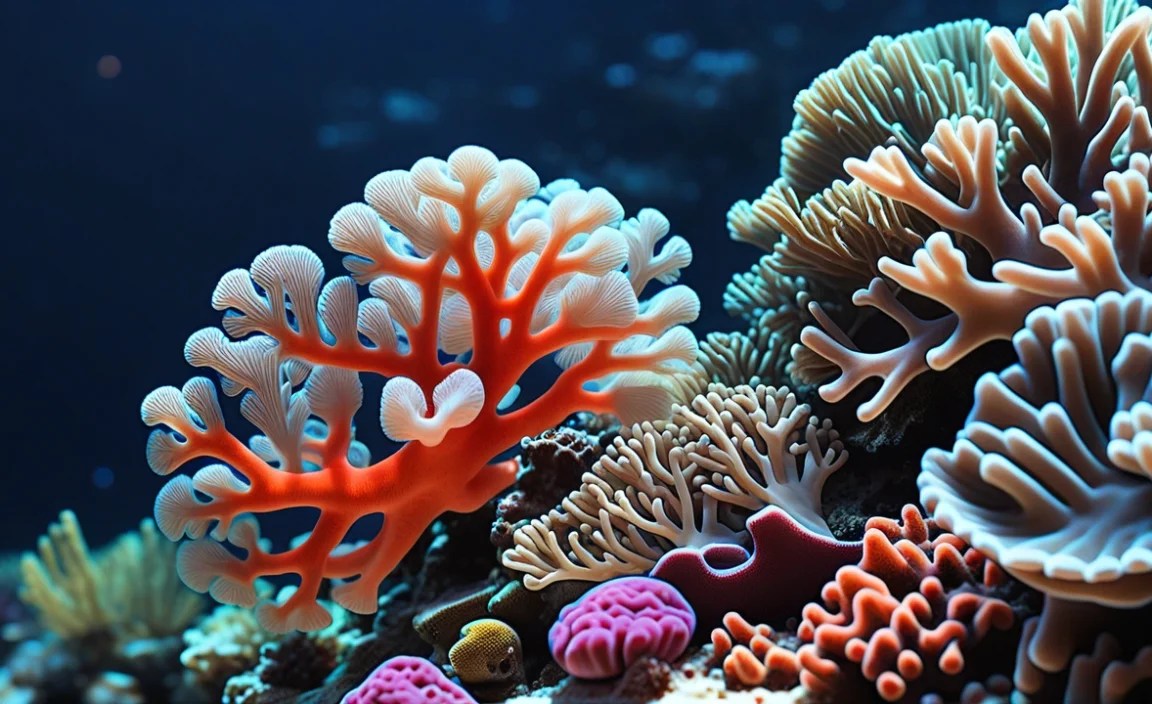
How do scientists really know what type of coral they are looking at? They don’t just guess! They use special tools and techniques. Think of it like being a doctor. A doctor uses tools like X-rays and blood tests to figure out what’s wrong with a patient. Scientists use tools like microscopes and DNA analysis to figure out the species identification of coral species. Microscopes allow scientists to see the tiny structures on the coral’s surface. DNA analysis allows scientists to compare the coral’s genes to those of other corals. These tools help scientists to be sure about their identifications. They can also use these tools to discover new species of coral! It’s like being an explorer discovering a new land.
- Microscopes help see small coral features.
- DNA analysis compares coral genes.
- Underwater cameras document coral reefs.
- Field guides help identify corals in person.
- Expert knowledge is crucial for accuracy.
Imagine you are trying to solve a puzzle with thousands of pieces. It would be very difficult to do without any tools. You might use a magnifying glass to see the small details on the pieces. You might also use a picture of the finished puzzle to help you put the pieces together. Scientists use similar tools to figure out the species identification of coral species. They use microscopes to see the tiny structures on the coral’s surface. They also use DNA analysis to compare the coral’s genes to those of other corals. These tools help them to be sure about their identifications. They can also use these tools to discover new species of coral. This is important for understanding and protecting these important ecosystems. It allows scientists to track changes in coral populations and assess the impact of environmental stressors.
What is Coral DNA Fingerprinting?
Have you ever heard of DNA fingerprinting? It’s a way to identify people by looking at their DNA. Scientists can also use DNA fingerprinting to identify coral species! Each species of coral has a unique DNA fingerprint. By comparing the DNA of a coral to a database of known coral species, scientists can figure out its species identification of coral species. This is a very accurate way to identify corals. It can even be used to identify corals that look very similar to each other. DNA fingerprinting is a powerful tool for coral reef research and conservation. It helps scientists understand the relationships between different coral species and track changes in coral populations over time. It allows for more accurate monitoring of coral reef health and the effectiveness of conservation efforts.
How are Microscopes Used?
Imagine you are trying to build a model airplane. You would need to use a magnifying glass to see the small details on the pieces. Scientists use microscopes in a similar way to study corals. Microscopes allow scientists to see the tiny structures on the coral’s surface. These structures can be very important for identifying the species identification of coral species. For example, some corals have tiny pores on their surface. The size and shape of these pores can be used to identify the coral. Microscopes are also used to study the algae that live inside the coral’s tissues. These algae, called zooxanthellae, give the coral its color. The type of zooxanthellae that live in a coral can also be used to identify the coral.
What is the Role of Underwater Photography?
Have you ever taken a picture of something beautiful that you wanted to remember? Underwater photography plays a similar role in coral reef research. Scientists use underwater cameras to take pictures of coral reefs. These pictures can be used to document the different types of corals that are present. They can also be used to track changes in the reef over time. For example, scientists might take pictures of a reef every year to see if the corals are growing or dying. These pictures can also be used to create maps of coral reefs. These maps can be used to plan conservation efforts. Underwater photography is a valuable tool for understanding and protecting coral reefs. The images captured can be used for educational purposes, raising awareness about the beauty and importance of these ecosystems.
Fun Fact or Stat: Scientists use remotely operated vehicles (ROVs) to explore deep-sea coral reefs!
What are Common Coral Groups?

Corals are not all the same. They belong to different groups. Think of it like animals. Some animals are mammals, some are birds, and some are reptiles. Corals are also divided into groups based on their characteristics. Some common coral groups include brain corals, staghorn corals, and soft corals. Brain corals look like brains. Staghorn corals look like deer antlers. Soft corals are flexible and don’t have a hard skeleton. Knowing these common groups helps with species identification of coral species. It’s like knowing the difference between a dog and a cat. Once you know the basic groups, it’s easier to identify the specific species.
| Coral Group | Description | Common Characteristics | Example Species |
|---|---|---|---|
| Brain Corals | Resemble the shape of a brain. | Grooved surface, hard skeleton. | Diploria labyrinthiformis |
| Staghorn Corals | Branching, like deer antlers. | Fast-growing, delicate branches. | Acropora cervicornis |
| Soft Corals | Flexible, lack a hard skeleton. | Leathery texture, colorful. | Sea Fans (Gorgonians) |
| Mushroom Corals | Solitary corals that resemble mushrooms. | Oval shape, free-living. | Fungia scutaria |
Imagine you are at a zoo. You see lots of different animals. Some animals are big and furry, like bears. Some animals are small and scaly, like lizards. Knowing the difference between mammals and reptiles helps you understand the different types of animals. It’s the same with corals. Knowing the different coral groups helps you understand the different types of corals. Brain corals are like the bears of the coral reef. They are big and strong. Staghorn corals are like the deer of the coral reef. They are fast and graceful. Soft corals are like the snakes of the coral reef. They are flexible and can move around. By learning about the different coral groups, you can become a coral expert. This knowledge is important for understanding and protecting these valuable ecosystems. It allows you to appreciate the diversity and complexity of coral reefs.
What Defines Brain Corals?
Have you ever seen a coral that looks like a human brain? These are called brain corals! They are named for their unique shape, which resembles the folds and grooves of a brain. Brain corals are a type of massive coral, meaning they grow in large, rounded shapes. They are very slow-growing and can live for hundreds of years. Brain corals are important members of the coral reef ecosystem. They provide habitat for many different types of fish and invertebrates. They also help to protect the shoreline from erosion. By learning about brain corals, we can better understand the diversity and importance of coral reefs. Knowing their species identification of coral species helps in conservation efforts.
How Can We Identify Staghorn Corals?
Imagine you are walking through a forest and you see a deer with large, branching antlers. Staghorn corals are named for their similar appearance. They are a type of branching coral, meaning they grow in a tree-like shape. Staghorn corals are very fast-growing and can quickly form large colonies. They are important members of the coral reef ecosystem. They provide habitat for many different types of fish and invertebrates. They also help to protect the shoreline from erosion. Staghorn corals are very sensitive to changes in water temperature and are threatened by climate change. Therefore, species identification of coral species is vital for conservation.
What Makes Soft Corals Unique?
Have you ever touched a coral and found it to be soft and flexible? These are called soft corals! Unlike hard corals, soft corals do not have a hard, calcium carbonate skeleton. Instead, they have a flexible skeleton made of protein. Soft corals come in many different shapes and colors. Some soft corals look like trees, while others look like mushrooms. Soft corals are important members of the coral reef ecosystem. They provide habitat for many different types of fish and invertebrates. They also help to filter the water and keep it clean. Soft corals are often more resistant to changes in water temperature than hard corals. Thus, knowing their species identification of coral species is vital for reef health monitoring.
Fun Fact or Stat: Brain corals can grow up to 6 feet in diameter!
Where Do Different Corals Live?
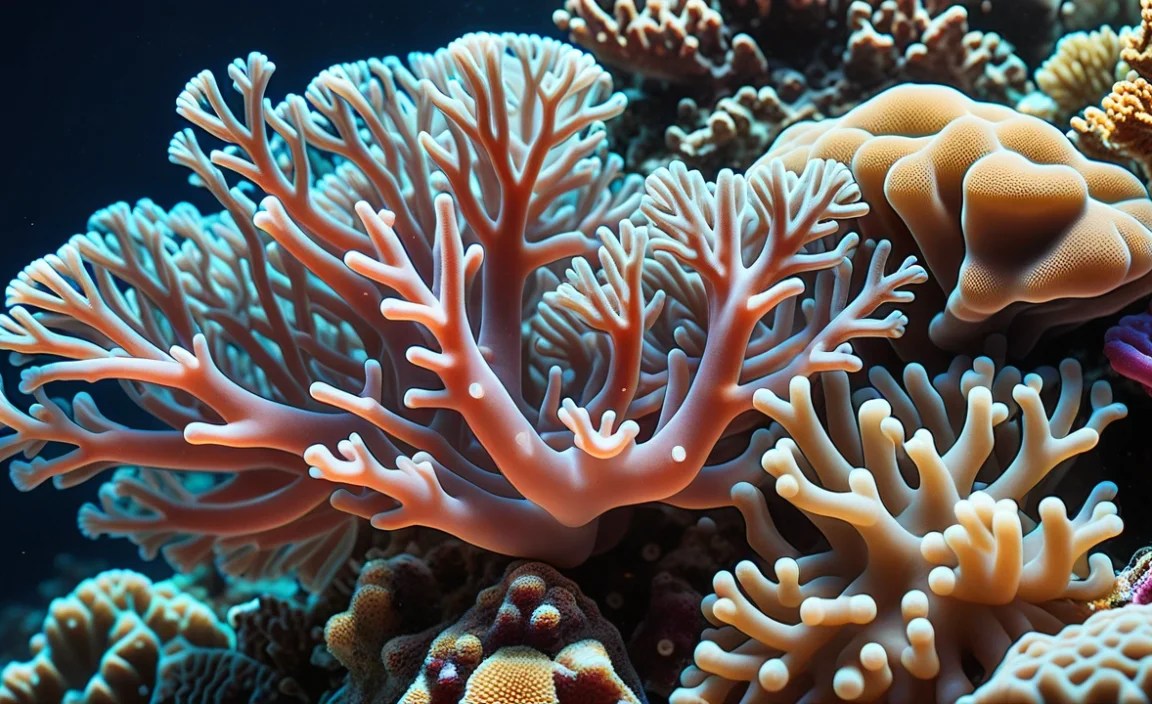
Not all corals live in the same places. It’s like how some animals live in the desert and others live in the jungle. Different corals are adapted to different environments. Some corals prefer shallow water with lots of sunlight. Others prefer deeper water with less sunlight. Some corals prefer warm water, while others prefer cooler water. The location of a coral can be a clue to its species identification of coral species. For example, staghorn corals are often found in shallow, clear water. Brain corals are often found in deeper, more turbid water. By knowing where a coral lives, you can narrow down the possibilities and make it easier to identify.
- Shallow water corals need lots of light.
- Deep water corals adapt to less light.
- Warm water corals thrive in tropics.
- Cold water corals live in dark depths.
- Coral location is a clue to its identity.
Imagine you are trying to find a specific type of bird. You wouldn’t look for a penguin in the desert! You would look for it in a cold, icy environment. Similarly, different corals live in different environments. Some corals prefer shallow water with lots of sunlight. These corals need sunlight to produce food through photosynthesis. Other corals prefer deeper water with less sunlight. These corals rely on other sources of food. Some corals prefer warm water, like the corals found in the Caribbean Sea. Other corals prefer cooler water, like the corals found in the Great Barrier Reef. By knowing where a coral lives, you can narrow down the possibilities and make it easier to identify its species identification of coral species. This knowledge is important for understanding and protecting these valuable ecosystems. It allows scientists to predict how corals will be affected by climate change and other environmental stressors.
Why Does Depth Matter for Coral?
Have you ever gone swimming in a pool and noticed that the water is colder at the bottom? The same is true in the ocean! Water temperature decreases with depth. The amount of sunlight also decreases with depth. These factors affect the types of corals that can live at different depths. Shallow water corals need lots of sunlight to survive. They also need to be able to tolerate warm water temperatures. Deep water corals are adapted to living in low light conditions. They also need to be able to tolerate cold water temperatures. The depth at which a coral lives can be a clue to its species identification of coral species. It helps scientists understand the adaptations that allow different corals to thrive in specific environments.
How Does Water Temperature Affect Coral?
Imagine you are a plant. You need the right temperature to grow. If it’s too cold, you will freeze. If it’s too hot, you will wilt. Corals are the same way! They need the right water temperature to survive. Warm water corals thrive in tropical regions, such as the Caribbean Sea and the Great Barrier Reef. Cold water corals thrive in deeper, cooler waters, such as the waters off the coast of Norway. Changes in water temperature can stress corals and cause them to bleach. Coral bleaching occurs when corals expel the algae that live in their tissues, causing them to turn white. If bleaching is severe, the coral can die. Water temperature is a critical factor in determining the species identification of coral species and their distribution.
What Role Does Light Play for Coral?
Have you ever noticed how plants grow towards the sunlight? Sunlight is essential for plants to produce food through photosynthesis. Corals also rely on sunlight to survive. The algae that live in coral tissues use sunlight to produce food for the coral. This is why shallow water corals need lots of sunlight. They need sunlight to power photosynthesis. Deep water corals receive very little sunlight. They rely on other sources of food, such as plankton. The amount of light that a coral receives can be a clue to its species identification of coral species. It helps scientists understand the adaptations that allow different corals to thrive in specific light environments.
Fun Fact or Stat: Deep-sea corals can live in total darkness!
How Does Pollution Impact Coral ID?
Pollution can make it harder to identify corals. Think of it like trying to read a book with dirty glasses. Pollution can cloud the water, making it harder to see the corals. Pollution can also damage the corals, making them look different than they normally would. For example, pollution can cause corals to bleach, which changes their color. Pollution can also kill corals, which makes it impossible to identify them. That’s why it’s so important to reduce pollution to protect coral reefs. By keeping the water clean, we can make it easier to study and identify corals. We can also help to keep the corals healthy and thriving. Knowing the species identification of coral species is even more critical in polluted areas to monitor the health of different species.
- Pollution clouds water, making ID harder.
- Pollution damages coral appearance.
- Bleaching changes coral color.
- Dead corals cannot be identified.
- Clean water helps coral health and ID.
Imagine you are trying to paint a picture, but your paint is muddy and your canvas is dirty. It would be very difficult to create a beautiful painting! Pollution has a similar effect on coral reefs. Pollution can cloud the water, making it harder for sunlight to reach the corals. This can prevent the corals from producing food through photosynthesis. Pollution can also damage the corals directly, causing them to become stressed and sick. Stressed corals are more likely to bleach, which changes their color and makes them harder to identify. In severe cases, pollution can kill corals. This makes it impossible to study and identify them. That’s why it’s so important to reduce pollution to protect coral reefs. By keeping the water clean, we can help the corals stay healthy and thriving. Accurate species identification of coral species is vital for tracking the impact of pollution on coral reef ecosystems.
How Does Sediment Affect Coral?
Have you ever seen a muddy river after a heavy rain? The mud, or sediment, can cloud the water and make it difficult to see. Sediment pollution can have a similar effect on coral reefs. Sediment can smother corals and prevent them from getting the sunlight they need to survive. Sediment can also carry pollutants that can harm corals. Sediment pollution can make it difficult to identify corals. It can cover up their colors and shapes. It can also damage their tissues. Reducing sediment pollution is important for protecting coral reefs. This can be done by planting trees and grasses to prevent soil erosion. It also includes managing construction and agricultural activities to minimize runoff. Proper species identification of coral species helps monitor the effects of sedimentation.
What is Chemical Pollution’s Role?
Imagine you are drinking a glass of water that has been contaminated with chemicals. The chemicals could make you sick. Chemical pollution can have a similar effect on corals. Chemicals from pesticides, fertilizers, and industrial waste can harm corals. These chemicals can disrupt the coral’s ability to grow, reproduce, and fight off disease. Chemical pollution can also make it difficult to identify corals. It can change their colors and shapes. It can also kill them. Reducing chemical pollution is important for protecting coral reefs. This can be done by using less pesticides and fertilizers. It also includes treating wastewater to remove harmful chemicals. Accurate species identification of coral species is key to assessing the impact of chemical pollutants.
How Does Plastic Impact Coral Identification?
Have you ever seen a piece of plastic floating in the ocean? Plastic pollution is a growing problem for coral reefs. Plastic can entangle corals and prevent them from getting the sunlight they need to survive. Plastic can also leach chemicals that can harm corals. Plastic pollution can also make it difficult to identify corals. It can cover up their colors and shapes. It can also damage their tissues. Reducing plastic pollution is important for protecting coral reefs. This can be done by reducing our use of plastic. It also includes recycling plastic and cleaning up plastic waste from the ocean. Detailed species identification of coral species helps in monitoring plastic pollution impacts.
Fun Fact or Stat: Over 8 million tons of plastic enter the ocean every year!
Summary
Species identification of coral species is very important. It helps us understand and protect coral reefs. Scientists use different clues to identify corals. These clues include shape, size, and color. They also use tools like microscopes and DNA analysis. Different corals live in different places. Some prefer shallow water, while others prefer deep water. Pollution can make it harder to identify corals. It can cloud the water and damage the corals. We must reduce pollution to protect coral reefs. Knowing the different types of corals helps us to protect these amazing ecosystems. By understanding the unique characteristics and habitats of different coral species, we can develop targeted conservation strategies to address the specific threats they face.
Conclusion
Coral reefs are amazing and important ecosystems. Species identification of coral species is key to understanding and protecting them. We can help protect these underwater cities. We can learn about the different types of corals. We can also reduce pollution and protect their homes. By working together, we can keep coral reefs healthy. They will continue to thrive for many years. It is important to help preserve the beauty of the ocean. We must ensure future generations can marvel at these underwater treasures.
Frequently Asked Questions
Question No 1: Why is species identification of coral species important?
Answer: Species identification of coral species is important for several reasons. First, it helps us understand the diversity of life on coral reefs. Second, it helps us track changes in coral populations over time. Third, it helps us develop effective conservation strategies to protect coral reefs from threats such as climate change and pollution. Finally, it allows us to appreciate the beauty and complexity of these amazing ecosystems. Without accurate identification, it would be impossible to monitor the health of coral reefs and implement effective management strategies.
Question No 2: What tools do scientists use to identify corals?
Answer: Scientists use a variety of tools to identify corals. Some of these tools include microscopes, DNA analysis, and underwater cameras. Microscopes allow scientists to see the tiny structures on the coral’s surface. DNA analysis allows scientists to compare the coral’s genes to those of other corals. Underwater cameras allow scientists to document the different types of corals that are present on a reef. All of these tools help scientists to accurately identify coral species and track changes in coral populations over time. They also rely on field guides and expert knowledge to identify corals in their natural habitats.
Question No 3: How does pollution affect coral identification?
Answer: Pollution can have a negative impact on coral identification. Pollution can cloud the water, making it harder to see the corals. Pollution can also damage the corals, making them look different than they normally would. For example, pollution can cause corals to bleach, which changes their color. In severe cases, pollution can kill corals, making it impossible to identify them. That’s why it’s so important to reduce pollution to protect coral reefs. By keeping the water clean, we can make it easier to study and identify corals and to support efforts in species identification of coral species.
Question No 4: Where do different types of corals live?
Answer: Different types of corals live in different places. Some corals prefer shallow water with lots of sunlight. These corals need sunlight to produce food through photosynthesis. Other corals prefer deeper water with less sunlight. These corals rely on other sources of food. Some corals prefer warm water, while others prefer cooler water. The location of a coral can be a clue to its identity. For example, staghorn corals are often found in shallow, clear water, while brain corals are often found in deeper, more turbid water. This knowledge is crucial for accurate species identification of coral species.
Question No 5: What are some common groups of corals?
Answer: There are many different types of corals, but some common groups include brain corals, staghorn corals, and soft corals. Brain corals look like brains. Staghorn corals look like deer antlers. Soft corals are flexible and don’t have a hard skeleton. Knowing these common groups can help you identify corals more easily. Each group has unique characteristics and plays a different role in the coral reef ecosystem. Understanding these groups is essential for accurate species identification of coral species and effective conservation efforts.
Question No 6: Can climate change impact species identification of coral species?
Answer: Yes, climate change can make it more difficult to identify coral species. Rising water temperatures can cause coral bleaching, where corals lose their color. This makes it harder to use color as an identification tool. Ocean acidification, another effect of climate change, can weaken coral skeletons, altering their shape and structure. Extreme weather events like hurricanes can also damage coral reefs, making identification more challenging. These factors can significantly impact the accuracy of species identification of coral species and hinder conservation efforts. Therefore, ongoing monitoring and research are crucial.


