
Painted Lady vs Monarch Butterfly Differences: Easy ID

Have you ever seen a fluttery butterfly? Butterflies are all around us. Two common types are the painted lady and the monarch. But what are the painted lady vs monarch butterfly differences? They look similar but have unique traits.
Imagine you’re an explorer. You see two orange butterflies. One has bold black lines. The other has softer colors. They both sip nectar from flowers. One travels thousands of miles. One stays closer to home. Let’s learn about these amazing insects!
Butterflies play a big role in our world. They help plants grow by carrying pollen. Birds and other animals eat them. Knowing the painted lady vs monarch butterfly differences helps us protect them. It also makes us better nature explorers.
This article will explore the painted lady vs monarch butterfly differences. We will learn about their looks and habits. We will see where they live and what they eat. Get ready to discover the cool world of butterflies!
Key Takeaways
- Monarchs migrate long distances, while painted ladies have shorter migrations.
- Painted lady vs monarch butterfly differences include size, color, and wing patterns.
- Monarch caterpillars eat only milkweed, but painted lady caterpillars eat many plants.
- Painted ladies are found worldwide, but monarchs are mainly in North America.
- Both butterflies are important pollinators and beautiful to observe in nature.
Painted Lady Vs. Monarch: Appearance

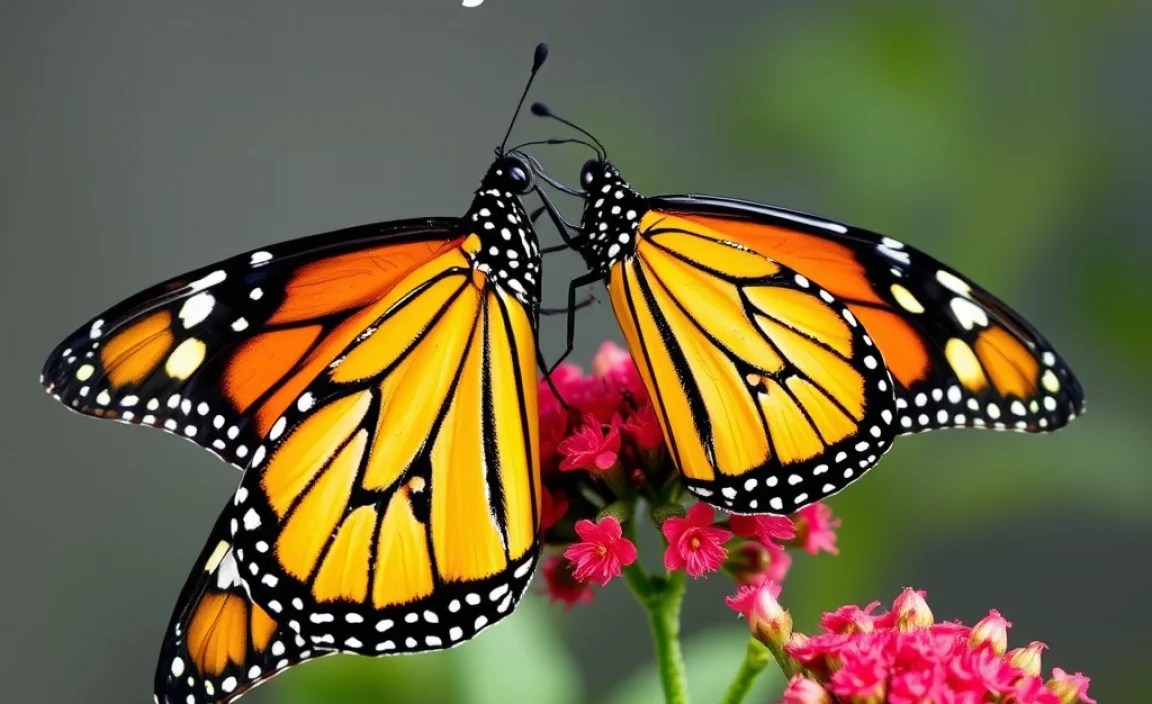
One of the first ways to tell painted lady vs monarch butterfly differences apart is their appearance. Monarchs are famous for their bright orange wings. They have thick black lines and white spots. This bold pattern warns predators that they taste bad. Painted ladies have a mix of orange, brown, and black on their wings. Their patterns are less distinct. They have small blue dots on their hindwings. These dots help to set them apart. Both butterflies are beautiful, but their colors and patterns tell different stories about survival.
- Monarchs have bright orange wings.
- Painted ladies have a mix of colors.
- Monarchs have thick black lines.
- Painted ladies have blue dots.
- Color warns predators.
The size of the butterflies also differs slightly. Monarchs are usually larger than painted ladies. A monarch’s wingspan can be up to four inches. A painted lady’s wingspan is usually around two inches. The shape of their wings is also different. Monarchs have more rounded wings. Painted ladies have slightly more angular wings. Look closely at the colors, patterns, size, and shape. These small details help you tell them apart. Nature has given each butterfly unique features.
What Wing Patterns Do They Have?
Have you ever noticed how each butterfly wing seems like a tiny painting? Monarch wings have orange scales. Bold black veins run across them. The edges are marked with white spots. This pattern acts as a warning. Painted lady wings are more mottled. They have patches of orange, brown, and black. Small blue eyespots decorate the hindwings. These spots can confuse predators. The wing patterns are essential for survival. They help the butterflies hide or warn enemies. Each pattern is a work of art.
What Are Their Sizes?
Imagine holding both butterflies in your hands. The monarch would feel larger and more substantial. Its wingspan can reach up to four inches. The painted lady feels more delicate. Its wingspan is around two inches. Size is an important factor. It affects how well they fly. It also affects how easily they can be seen by predators. Larger size can help monarchs travel long distances. Smaller size can help painted ladies hide in smaller spaces. Every detail matters in the butterfly world.
How Do Their Colors Differ?
Colors are like a butterfly’s language. Monarchs use bright orange to say, “I’m poisonous!” Predators learn to avoid them. Painted ladies use a mix of colors. These help them blend in with their surroundings. The orange in painted lady wings is more muted. It is mixed with browns and blacks. The blue spots on their hindwings add a touch of surprise. Color differences show how each butterfly has adapted. They have adapted to its environment and its predators. What a colorful way to survive!
These differences in appearance help the butterflies survive in different ways. Monarchs use their bright colors to warn predators. Painted ladies use their mixed colors to blend in. Both strategies are effective. The painted lady vs monarch butterfly differences in appearance are fascinating. They show how nature adapts to protect its creatures. These differences are vital for butterfly survival.
Fun Fact or Stat: Monarch butterflies’ bright orange color comes from the milkweed they eat as caterpillars!
Habitat: Where Do They Live?
Another key painted lady vs monarch butterfly differences is where they live. Monarchs are mainly found in North America. They migrate between Canada, the United States, and Mexico. Painted ladies have a much wider range. They can be found on almost every continent. This includes North America, Europe, Asia, and Africa. Painted ladies are one of the most widespread butterflies in the world. Their ability to live in different climates and eat various plants helps them thrive. Monarchs depend on milkweed. Painted ladies are not as picky. This difference in habitat makes them unique.
- Monarchs live in North America.
- Painted ladies live worldwide.
- Monarchs migrate long distances.
- Painted ladies have shorter migrations.
- Painted ladies eat many plants.
- Monarchs eat only milkweed.
The migration patterns of these butterflies also differ. Monarchs undertake one of the most impressive migrations in the insect world. They travel thousands of miles to overwinter in warmer climates. Painted ladies do not migrate as far. They move to find suitable habitats. They move to find food sources. Their migration is more opportunistic. Monarchs have a fixed destination. Painted ladies go where the conditions are best. The painted lady vs monarch butterfly differences in migration are linked to their habitat preferences.
Do They Live in the Same Places?
Imagine you’re hiking in a field of wildflowers. Could you see both monarchs and painted ladies? Yes, in some places! Both butterflies can be found in North America. They share habitats like meadows and gardens. However, their overall ranges are very different. Monarchs are mostly in North America. Painted ladies are all over the world. So, you’re more likely to see a painted lady in Europe or Asia. While they can share some spaces, their global homes are quite different.
What Climates Do They Prefer?
Climate plays a big role in where butterflies can live. Monarchs need warm summers to breed. They need mild winters to survive. That’s why they migrate to warmer regions. Painted ladies are tougher. They can handle a wider range of temperatures. They can live in hot deserts and cool mountains. Their adaptability helps them live in many places. Climate preference is a key painted lady vs monarch butterfly differences. It explains why their ranges are so different.
How Far Do They Migrate?
Migration is like a butterfly’s road trip. Monarchs are famous for their long journeys. Some travel over 3,000 miles! They fly from Canada to Mexico. Painted ladies take shorter trips. They move to find food or better weather. Their migrations are less predictable. The monarch migration is a multi-generational event. It takes several generations to complete the cycle. The painted lady migration is more flexible. It depends on local conditions. The painted lady vs monarch butterfly differences in migration are truly remarkable.
The habitat and migration patterns of each butterfly reflect their needs. Monarchs depend on specific conditions. Painted ladies can adapt to a wider range. These painted lady vs monarch butterfly differences show how butterflies have adapted to survive. They have adapted in different parts of the world. Understanding these differences helps us protect them.
Fun Fact or Stat: Monarch butterflies are the only butterfly species that migrates like birds!
Diet: What Do They Eat?

Another way to see the painted lady vs monarch butterfly differences is in their diet. Monarch caterpillars are very picky eaters. They only eat milkweed plants. Milkweed contains toxins that make the caterpillars and butterflies taste bad to predators. Adult monarchs also feed on nectar from milkweed and other flowers. Painted lady caterpillars are much less picky. They eat a wide variety of plants. This includes thistles, mallows, and sunflowers. Adult painted ladies also feed on nectar from many different flowers. The diet of each butterfly is closely linked to its habitat and survival.
- Monarch caterpillars eat only milkweed.
- Painted lady caterpillars eat many plants.
- Monarchs get toxins from milkweed.
- Painted ladies don’t eat toxins.
- Adults feed on flower nectar.
The specific diet of monarch caterpillars makes them very vulnerable. Milkweed is becoming less common due to habitat loss and pesticide use. This threatens the monarch population. Painted ladies are less vulnerable. They can eat many different plants. This helps them survive in changing environments. The painted lady vs monarch butterfly differences in diet are a key factor. This affects their conservation status. Protecting milkweed is essential for monarchs. Providing a variety of plants helps painted ladies.
What Do the Caterpillars Eat?
Imagine you’re a hungry caterpillar. For a monarch, the only choice is milkweed. It’s like having only one dish on the menu. Painted lady caterpillars have a huge buffet! They can munch on thistles, mallows, sunflowers, and more. This difference in diet is important. Monarchs depend on one plant. Painted ladies can adapt to many. This affects their ability to survive in different places.
What Do Adult Butterflies Eat?
Adult butterflies sip nectar from flowers. It’s like drinking a sweet juice. Monarchs and painted ladies both enjoy nectar. However, they visit different flowers. Monarchs often feed on milkweed flowers. Painted ladies visit a wider range of flowers. This includes daisies, asters, and zinnias. The adult diet is less specific than the caterpillar diet. Both butterflies are important pollinators. They help flowers make seeds.
Why Is Diet Important?
Diet is like fuel for butterflies. It gives them energy to fly. It also provides nutrients to grow and reproduce. For monarchs, milkweed is essential. It provides toxins that protect them from predators. For painted ladies, a varied diet is helpful. It allows them to survive in different environments. Diet plays a big role in butterfly survival. It affects their health and their ability to reproduce.
The painted lady vs monarch butterfly differences in diet are important for their survival. Monarchs rely on milkweed. Painted ladies can eat many plants. These differences affect their conservation needs. They also affect their ability to adapt to change. Understanding their diet helps us protect them.
Fun Fact or Stat: Monarch caterpillars can eat an entire milkweed leaf in just a few minutes!
Life Cycle: How Do They Grow?

The life cycle is another area where we see painted lady vs monarch butterfly differences. Both butterflies go through metamorphosis. This means they change from an egg to a caterpillar to a pupa to an adult butterfly. However, the details of each stage are different. Monarch eggs are usually laid on milkweed plants. Painted lady eggs are laid on various plants. Monarch caterpillars are striped. Painted lady caterpillars are spiky. The pupa stage also looks different. Monarch pupae are green. Painted lady pupae are brown and spiky. These differences in the life cycle are fascinating to observe.
- Both go through metamorphosis.
- Monarch eggs on milkweed.
- Painted lady eggs on many plants.
- Monarch caterpillars are striped.
- Painted lady caterpillars are spiky.
The time it takes to complete each stage also varies. Monarchs typically complete their life cycle in about a month. Painted ladies can complete their life cycle in as little as three weeks. This faster development allows them to have more generations per year. Monarchs usually have one to two generations per year in the north. They have multiple generations in the south. Painted ladies can have several generations per year, depending on the climate. The painted lady vs monarch butterfly differences in life cycle speed affect their population size.
What Do the Eggs Look Like?
Imagine finding tiny butterfly eggs on a leaf. Monarch eggs are small and creamy white. They look like tiny pearls. Painted lady eggs are also small. They are greenish-white and have ridges. The location of the eggs differs. Monarch eggs are always on milkweed. Painted lady eggs are on many plants. The eggs are the start of a beautiful transformation. They hold the promise of a new butterfly.
What Does the Pupa Look Like?
The pupa is like a butterfly’s sleeping bag. Monarch pupae are a beautiful jade green. They have tiny gold dots. Painted lady pupae are brown and spiky. They look like dried leaves. The pupa is a time of great change. Inside, the caterpillar is transforming. It is turning into a butterfly. The pupa stage is a hidden miracle of nature.
How Long Does Each Stage Last?
Time moves differently for butterflies. Monarch eggs hatch in about 3–5 days. The caterpillar stage lasts about two weeks. The pupa stage lasts about 10–14 days. Painted lady eggs hatch in about a week. The caterpillar stage is shorter. It lasts about 1–2 weeks. The pupa stage is also shorter. It lasts about a week. The painted lady vs monarch butterfly differences in timing are significant. Painted ladies grow faster. They have more generations per year.
The painted lady vs monarch butterfly differences in life cycle are fascinating. They show how each butterfly has adapted. They have adapted to its environment. Monarchs have a longer life cycle. Painted ladies have a faster life cycle. Both strategies are successful. They both help the butterflies survive. Understanding these differences helps us appreciate them.
Fun Fact or Stat: A monarch caterpillar can increase its weight by 2,000 times during its larval stage!
Conservation Status: Are They Endangered?
The painted lady vs monarch butterfly differences extend to their conservation status. Monarch butterflies are facing serious threats. Their population has declined dramatically in recent years. This is due to habitat loss, pesticide use, and climate change. They are listed as endangered or threatened in many areas. Conservation efforts are underway. These efforts are to protect their habitat. They also aim to reduce pesticide use. Painted ladies are not currently considered to be threatened or endangered. Their wide range and varied diet help them survive. However, they still face threats from habitat loss and pesticide use.
- Monarchs are endangered.
- Painted ladies are not endangered.
- Monarchs face habitat loss.
- Pesticides threaten both.
- Climate change affects both.
Protecting monarch butterflies requires a multi-faceted approach. This includes restoring milkweed habitat. It also means reducing pesticide use. It means addressing climate change. Supporting organizations that work to protect monarchs is also important. Painted ladies do not require as much specific conservation action. However, protecting their habitat and reducing pesticide use is still beneficial. The painted lady vs monarch butterfly differences in conservation status highlight the importance of understanding their needs. This helps us protect each species.
What Threats Do They Face?
Imagine being a tiny butterfly facing big dangers. Monarchs face habitat loss. Milkweed is disappearing. They also face pesticide use. These chemicals can kill them. Climate change is also a threat. It disrupts their migration. Painted ladies face similar threats. Habitat loss and pesticides affect them too. While they are more adaptable, they are not immune. Protecting butterflies means addressing these dangers.
What Can We Do to Help?
Even kids can help butterflies! Plant milkweed in your garden for monarchs. Plant a variety of flowers for painted ladies. Avoid using pesticides. Support organizations that protect butterflies. Educate others about the importance of butterflies. Every little bit helps. Together, we can make a difference. We can help butterflies thrive.
Why Is Conservation Important?
Butterflies are important pollinators. They help plants grow. They are also a food source for other animals. Losing butterflies would affect the whole ecosystem. Conservation is about protecting our planet. It’s about ensuring a healthy future for all. Protecting butterflies is part of that effort. It’s a way to show we care about nature. It’s a way to make a positive impact.
The painted lady vs monarch butterfly differences in conservation status are significant. Monarchs need urgent help. Painted ladies are more stable. However, both face threats. By understanding their needs, we can take action. We can protect these beautiful creatures. We can ensure they thrive for generations to come.
Fun Fact or Stat: Monarch populations have declined by as much as 90% in recent decades!
How to Identify: Quick Comparison
Knowing how to identify them quickly helps you spot the painted lady vs monarch butterfly differences. Here’s a simple table that summarizes their key features. This table will help you tell them apart in the field. Remember to look at the colors, patterns, size, and location. These clues will help you become a butterfly expert!
| Feature | Monarch Butterfly | Painted Lady Butterfly |
|---|---|---|
| Color | Bright orange with black lines | Orange, brown, and black |
| Wing Pattern | Thick black lines, white spots | Mottled, blue eyespots |
| Size | Up to 4 inches wingspan | Around 2 inches wingspan |
| Habitat | North America | Worldwide |
| Caterpillar Diet | Milkweed only | Many plants |
| Migration | Long distances | Shorter distances |
This table provides a quick reference guide. Use it when you’re out exploring. It will help you identify these butterflies. Remember to observe carefully. Note the details. With practice, you’ll become an expert. You’ll be able to tell them apart easily. Enjoy the beauty of these amazing creatures!
What Key Features to Look For?
Imagine you’re on a butterfly treasure hunt. What clues should you look for? First, check the color. Is it bright orange or a mix of colors? Then, look at the wing patterns. Are there bold black lines or mottled patches? Next, estimate the size. Is it a large butterfly or a small one? Finally, consider the location. Are you in North America or elsewhere? These clues will help you solve the mystery.
How Can You Tell Them Apart in Flight?
Butterflies are fast fliers! How can you identify them on the move? Watch their flight pattern. Monarchs have a strong, steady flight. Painted ladies are more erratic. They dart around quickly. Also, notice their size. Monarchs are larger and more noticeable. Painted ladies are smaller and more camouflaged. With practice, you’ll recognize their flight styles. You’ll be able to identify them even in flight.
Why Is Identification Important?
Knowing how to identify butterflies is more than just fun. It’s important for conservation. It helps us track their populations. It helps us understand their needs. By identifying butterflies, we can contribute to their protection. We can also appreciate their beauty. Identification is a key skill. It helps us connect with nature.
This quick comparison guide provides the tools you need. You can now identify the painted lady vs monarch butterfly differences. Use this knowledge to explore the world around you. Appreciate the beauty and diversity of butterflies. Contribute to their conservation. Every observation counts.
Fun Fact or Stat: Butterfly wings are covered in tiny scales that give them their color and pattern!
Summary
The painted lady vs monarch butterfly differences are fascinating. Monarchs are known for their bright orange color. They have long migrations and eat only milkweed. Painted ladies have a mix of colors. They live worldwide and eat many plants. Understanding these differences helps us appreciate their unique adaptations. It also helps us protect them. Both butterflies are important pollinators. They add beauty to our world. They are worth protecting.
Monarchs face habitat loss and are endangered. Painted ladies are more adaptable. However, they still face threats. By planting milkweed and reducing pesticide use, we can help both. Knowing the painted lady vs monarch butterfly differences empowers us to take action. We can make a difference in their survival. We can help these beautiful creatures thrive. They can continue to flutter in our gardens and fields.
Conclusion
Exploring the painted lady vs monarch butterfly differences shows the diversity of nature. Each butterfly has unique adaptations. These adaptations help them survive in their environment. Monarchs are specialized. Painted ladies are adaptable. Both are important. By learning about them, we can appreciate their beauty. We can also contribute to their conservation. Let’s protect these amazing creatures. Let’s ensure they continue to thrive.
Frequently Asked Questions
Question No 1: What is the biggest difference between a painted lady and a monarch butterfly?
Answer: The biggest difference lies in their migration patterns. Monarch butterflies undertake a long, multi-generational migration across North America. Some travel thousands of miles to overwinter in warmer climates like Mexico. Painted ladies have much shorter and less predictable migrations. They move to find suitable habitats and food sources but don’t have a fixed destination or overwintering site. This difference in migratory behavior is a key painted lady vs monarch butterfly differences.
Question No 2: Do painted lady and monarch caterpillars eat the same things?
Answer: No, their diets are very different. Monarch caterpillars are specialists. They only eat milkweed plants. Milkweed contains toxins that make the caterpillars and butterflies taste bad to predators. Painted lady caterpillars are generalists. They can eat a wide variety of plants, including thistles, mallows, and sunflowers. This difference in diet affects their distribution and conservation needs. This is another key painted lady vs monarch butterfly differences.
Question No 3: Are painted lady butterflies poisonous like monarch butterflies?
Answer: Monarch butterflies are not poisonous in the sense of injecting venom. However, they are toxic to predators. This is because they eat milkweed as caterpillars. Milkweed contains toxins that the caterpillars store in their bodies. These toxins make the butterflies taste bad. They can even make predators sick. Painted lady butterflies do not eat milkweed. They do not contain these toxins. They are not toxic to predators. This is a key difference that affects their survival strategies.
Question No 4: Where can I find painted lady and monarch butterflies?
Answer: Monarch butterflies are primarily found in North America. They migrate between Canada, the United States, and Mexico. Painted lady butterflies have a much wider distribution. They can be found on almost every continent. This includes North America, Europe, Asia, and Africa. If you are in North America, you might see both. But you are more likely to see a painted lady in other parts of the world. Knowing their habitat is key when observing the painted lady vs monarch butterfly differences.
Question No 5: Are painted lady butterflies endangered?
Answer: No, painted lady butterflies are not currently considered to be endangered. Their wide distribution and varied diet help them to thrive. They can adapt to different environments. They can eat many different plants. Monarch butterflies, on the other hand, are facing serious threats. Their population has declined dramatically in recent years. They are listed as endangered or threatened in many areas. The painted lady vs monarch butterfly differences in conservation status are significant.
Question No 6: How can I tell a painted lady from a monarch butterfly?
Answer: Look at their colors and patterns. Monarchs are bright orange with thick black lines and white spots. Painted ladies have a mix of orange, brown, and black. They have small blue eyespots on their hindwings. Also, consider their size. Monarchs are larger, with a wingspan up to four inches. Painted ladies are smaller, with a wingspan around two inches. These visual cues help you differentiate. Remember these points to observe the painted lady vs monarch butterfly differences.


