
Butterfly Ecological Indicators: A Powerful Guide

Butterflies are fantastic ecological indicators because they react quickly to environmental changes. By monitoring butterfly populations, we can learn a lot about the health of our ecosystems. A decline in butterfly numbers can signal problems like habitat loss, pesticide use, or climate change, prompting us to take action to protect our environment.
Have you ever wondered how we know if an ecosystem is healthy? It’s a big question, but luckily, nature gives us clues! Butterflies, those beautiful, fluttering creatures, are more than just pretty. They are like tiny environmental detectives, constantly giving us information about the world around us. If butterflies are thriving, it’s often a sign that their habitat is in good shape. But if their numbers dwindle, it can be a warning that something is wrong.
In this guide, I’ll show you how butterflies act as ecological indicators. We’ll explore what their presence (or absence) can tell us about the health of our environment. You’ll learn how monitoring butterflies can help us protect our planet. Let’s dive in and discover the fascinating world of butterflies and their important role in our ecosystem!
What Are Ecological Indicators?
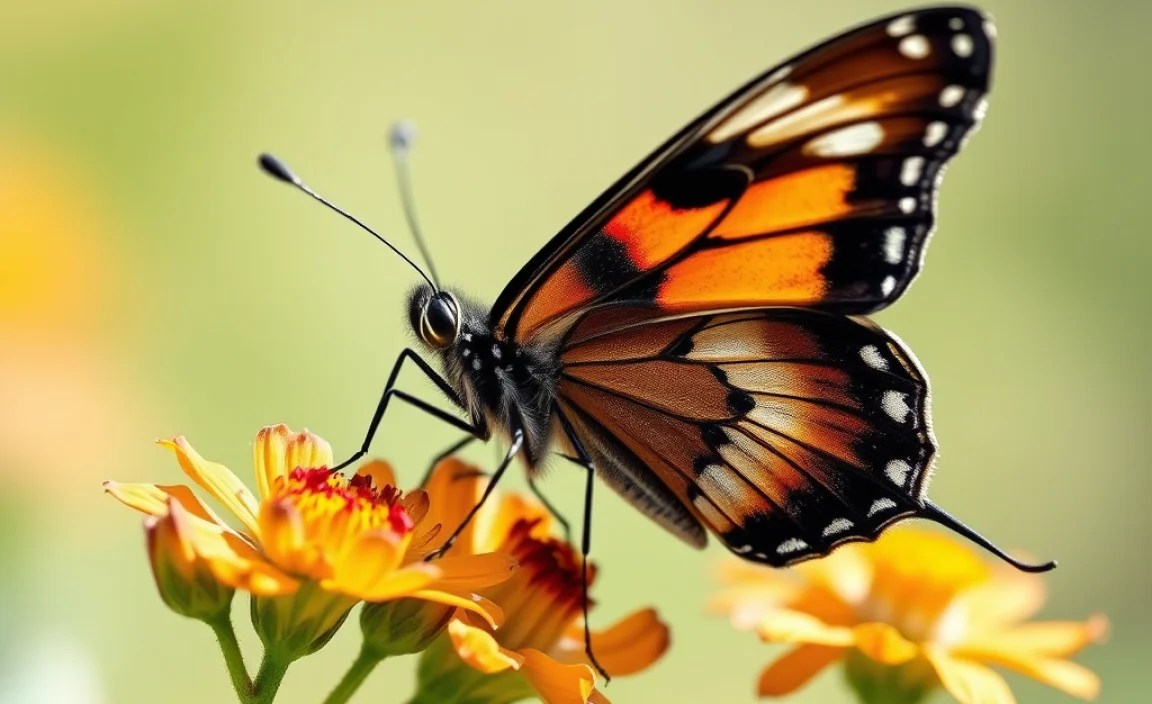
Ecological indicators are like nature’s report cards. They are species or environmental factors that tell us about the health of an ecosystem. These indicators help us understand how well an ecosystem is functioning and whether it is under stress. By monitoring these indicators, we can detect changes early and take steps to protect the environment.
Why Use Ecological Indicators?
Using ecological indicators is essential for several reasons:
- Early Warning: Indicators provide early warnings of environmental problems.
- Monitoring: They help us track changes in the environment over time.
- Assessment: Indicators assist in assessing the effectiveness of conservation efforts.
- Decision Making: They provide valuable information for making informed decisions about environmental management.
Characteristics of Good Ecological Indicators
Not everything can be a good ecological indicator. The best ones share certain characteristics:
- Sensitive: They respond quickly to environmental changes.
- Measurable: They are easy to monitor and measure.
- Relevant: They provide information about important ecosystem processes.
- Cost-effective: Monitoring them should be practical and affordable.
Why Butterflies Are Excellent Ecological Indicators
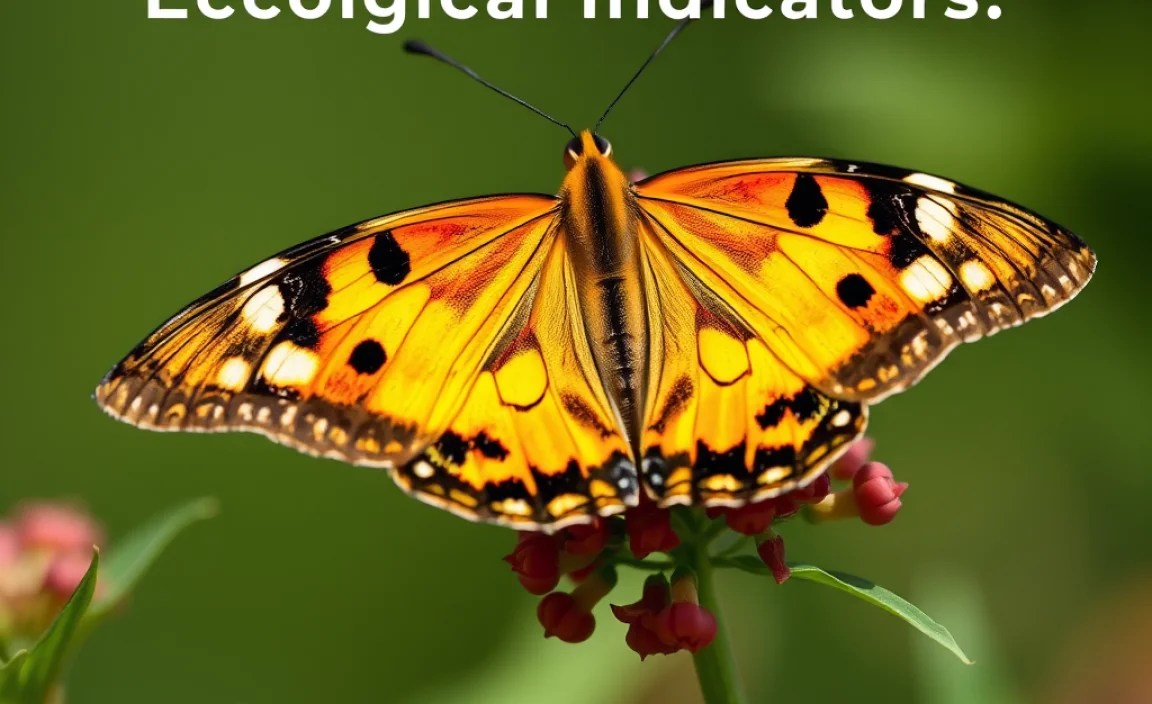
Butterflies stand out as exceptional ecological indicators for several reasons. Their sensitivity to environmental changes, combined with their visibility and well-documented life cycles, makes them invaluable tools for assessing ecosystem health. Here’s why:
Sensitivity to Environmental Changes
Butterflies are highly sensitive to changes in their environment. Even slight alterations in habitat, climate, or food availability can affect their populations. This sensitivity means that butterflies can act as an early warning system, alerting us to potential problems before they become severe. According to the Xerces Society, butterfly populations can reflect the overall health of terrestrial ecosystems, making them vital indicators for conservation efforts.
Specific Habitat Requirements
Each butterfly species has specific habitat requirements, including particular host plants for their caterpillars and nectar sources for adults. This specificity means that the presence or absence of certain butterfly species can indicate the availability and quality of these resources. For example, if a butterfly species that relies on a specific plant disappears from an area, it suggests that the plant is also declining, signaling habitat degradation.
Rapid Life Cycle
Butterflies have a relatively short life cycle, allowing them to respond quickly to environmental changes. This rapid turnover means that population declines or increases can be observed in a shorter timeframe compared to species with longer lifespans. This quick response time is crucial for timely intervention and conservation efforts.
Ease of Monitoring
Butterflies are diurnal, meaning they are active during the day, and their bright colors make them relatively easy to identify and monitor. Citizen science programs often rely on volunteers to count butterflies, making large-scale monitoring efforts feasible and cost-effective. These monitoring programs provide valuable data on population trends and distribution patterns.
Indicator of Overall Biodiversity
Butterflies are often indicative of overall biodiversity. A healthy butterfly population usually suggests a healthy ecosystem with a variety of plant and animal species. Conversely, a decline in butterfly numbers can indicate a broader loss of biodiversity, signaling the need for conservation action.
How Butterflies Indicate Environmental Health

Butterflies provide valuable insights into various aspects of environmental health. By monitoring their populations and behaviors, we can gain a better understanding of the impacts of habitat loss, climate change, pollution, and other environmental stressors.
Habitat Loss and Fragmentation
Habitat loss and fragmentation are major threats to butterfly populations. When habitats are destroyed or broken up, butterflies lose their food sources, breeding sites, and shelter. The presence or absence of specific butterfly species can indicate the extent of habitat degradation. For example, specialist species that rely on particular habitats are often the first to disappear when those habitats are altered.
Climate Change Impacts
Climate change can significantly impact butterfly populations by altering their distribution, phenology (timing of life cycle events), and behavior. Changes in temperature and precipitation patterns can affect the availability of host plants and nectar sources, leading to population declines. Monitoring butterfly populations can help us track these climate-related impacts and assess the vulnerability of different species.
Pesticide Use and Pollution
Pesticides and other pollutants can directly harm butterflies and their caterpillars. Exposure to pesticides can lead to mortality, reduced reproduction, and developmental abnormalities. The presence of butterflies in an area can indicate the level of pesticide contamination, with lower butterfly numbers suggesting higher levels of pollution. According to a study by the U.S. Environmental Protection Agency (EPA), pesticide exposure can have significant negative effects on butterfly populations and biodiversity.
Changes in Plant Communities
Butterflies rely on specific host plants for their caterpillars and nectar sources for adults. Changes in plant communities can therefore have a direct impact on butterfly populations. Monitoring butterfly species can help us detect changes in plant communities, such as the spread of invasive species or the loss of native plants. These changes can have cascading effects on the entire ecosystem.
Overall Ecosystem Health
The overall health of an ecosystem is reflected in its butterfly populations. A diverse and abundant butterfly community typically indicates a healthy and functioning ecosystem. Conversely, a decline in butterfly numbers or a loss of species diversity can signal broader environmental problems, such as habitat degradation, pollution, or climate change.
Examples of Butterflies as Ecological Indicators

Several butterfly species serve as excellent ecological indicators due to their sensitivity and specific habitat requirements. Here are a few notable examples:
Monarch Butterfly (Danaus plexippus)
The Monarch butterfly is perhaps the most well-known butterfly in North America. Its populations have declined dramatically in recent years due to habitat loss, pesticide use, and climate change. Monarchs rely on milkweed plants as host plants for their caterpillars and nectar from various flowers as adults. The decline in milkweed availability, largely due to herbicide use, has had a significant impact on Monarch populations. Monitoring Monarch numbers and milkweed availability can provide valuable insights into the health of grassland ecosystems.
Karner Blue Butterfly (Lycaeides melissa samuelis)
The Karner Blue butterfly is a federally endangered species that relies on wild lupine plants as its sole host plant. Habitat loss and fire suppression have led to a decline in wild lupine populations, threatening the survival of the Karner Blue. Monitoring Karner Blue populations and lupine habitats can help us assess the health of oak savanna and pine barren ecosystems.
Quino Checkerspot Butterfly (Euphydryas editha quino)
The Quino Checkerspot butterfly is a federally endangered species found in Southern California and Baja California. It relies on specific host plants, including dwarf plantain, for its caterpillars. Habitat loss and fragmentation due to urbanization and agriculture have led to a decline in Quino Checkerspot populations. Monitoring Quino Checkerspot numbers and host plant availability can help us assess the health of coastal sage scrub ecosystems.
Silver-spotted Skipper (Epargyreus clarus)
The Silver-spotted Skipper is a common butterfly found throughout North America. Its caterpillars feed on a variety of leguminous plants, including black locust and wisteria. The presence of Silver-spotted Skippers can indicate the availability of these host plants and the overall health of woodland and edge habitats. A decline in Silver-spotted Skipper numbers may suggest habitat degradation or the loss of host plants.
West Virginia White Butterfly (Pieris virginiensis)
The West Virginia White butterfly is a woodland species that relies on toothwort plants as its host plant. It is sensitive to habitat disturbance and forest fragmentation. Monitoring West Virginia White populations can help us assess the health of forest ecosystems and the impacts of logging, development, and other disturbances. According to the U.S. Forest Service, the West Virginia White butterfly is an indicator of forest health and biodiversity.
How to Monitor Butterflies as Ecological Indicators

Monitoring butterflies is a valuable way to assess environmental health and track changes in ecosystems. Here are some steps you can take to monitor butterflies effectively:
1. Identify Key Butterfly Species
Start by identifying the key butterfly species in your area that are known to be good ecological indicators. These species should be sensitive to environmental changes and relatively easy to identify. Research their specific habitat requirements and host plants to understand their ecological role.
2. Establish Monitoring Sites
Choose representative monitoring sites in different habitats, such as forests, grasslands, and wetlands. Select sites that are accessible and safe to visit regularly. Mark the boundaries of each site and record its GPS coordinates.
3. Conduct Regular Butterfly Surveys
Conduct regular butterfly surveys at your monitoring sites, ideally during the peak butterfly season. Use a standardized survey method, such as the Pollard walk, to count butterflies along a fixed transect. Record the number of individuals of each species observed.
4. Monitor Habitat Conditions
In addition to counting butterflies, monitor habitat conditions at your monitoring sites. Record data on plant species composition, vegetation cover, and the presence of host plants and nectar sources. Also, note any signs of habitat disturbance, such as logging, development, or pollution.
5. Record and Analyze Data
Keep detailed records of your butterfly surveys and habitat monitoring data. Use a spreadsheet or database to organize your data. Analyze the data to identify trends in butterfly populations and habitat conditions. Look for declines in butterfly numbers, changes in species composition, or signs of habitat degradation.
6. Report Your Findings
Share your findings with local conservation organizations, government agencies, and other stakeholders. Your data can help inform conservation planning and management decisions. Consider participating in citizen science programs, such as the North American Butterfly Association (NABA) butterfly counts, to contribute to larger-scale monitoring efforts.
Tools for Monitoring Butterflies
Here are some tools that can help you monitor butterflies effectively:
- Butterfly Identification Guides: Field guides and online resources for identifying butterfly species.
- Binoculars: For observing butterflies from a distance.
- GPS Device: For recording the location of monitoring sites.
- Data Sheets: For recording butterfly survey and habitat monitoring data.
- Camera: For documenting butterfly sightings and habitat conditions.
Conservation Strategies Based on Butterfly Monitoring
Monitoring butterflies as ecological indicators is not just about collecting data; it’s about using that information to inform conservation strategies and protect our environment. Here are some conservation strategies that can be implemented based on butterfly monitoring data:
Habitat Restoration and Management
Habitat restoration and management are crucial for supporting butterfly populations. Monitoring data can help identify areas where habitat restoration is needed. Restoration efforts may include planting native host plants and nectar sources, removing invasive species, and restoring natural hydrology. Management practices, such as prescribed burning and grazing, can also be used to maintain suitable butterfly habitats.
Pesticide Reduction and Mitigation
Pesticide use can have devastating effects on butterfly populations. Monitoring data can help identify areas where pesticide exposure is a problem. Conservation strategies may include promoting integrated pest management (IPM) practices, reducing pesticide use, and establishing pesticide-free buffer zones around butterfly habitats. According to the Xerces Society, reducing pesticide use is essential for protecting butterfly populations and biodiversity.
Climate Change Adaptation
Climate change poses a significant threat to butterfly populations. Monitoring data can help us understand how climate change is affecting butterfly distribution, phenology, and behavior. Conservation strategies may include creating corridors to allow butterflies to move to more suitable habitats, protecting microclimates, and managing habitats to increase their resilience to climate change.
Public Education and Outreach
Public education and outreach are essential for raising awareness about the importance of butterflies and their role as ecological indicators. Conservation strategies may include developing educational materials, conducting workshops and field trips, and engaging citizen scientists in butterfly monitoring efforts. By educating the public about the importance of butterflies, we can inspire them to take action to protect these valuable creatures and their habitats.
| Conservation Strategy | Description | Benefits |
|---|---|---|
| Habitat Restoration | Restoring degraded habitats by planting native plants and removing invasive species. | Provides food and shelter for butterflies, increases biodiversity. |
| Pesticide Reduction | Reducing the use of pesticides and promoting integrated pest management. | Protects butterflies from direct exposure to harmful chemicals. |
| Climate Change Adaptation | Creating corridors and protecting microclimates to help butterflies adapt to climate change. | Allows butterflies to move to more suitable habitats and increases their resilience. |
| Public Education | Raising awareness about the importance of butterflies and their role as ecological indicators. | Inspires people to take action to protect butterflies and their habitats. |
FAQ About Butterflies as Ecological Indicators
Here are some frequently asked questions about butterflies as ecological indicators:
Why are butterflies good indicators of environmental health?
Butterflies are sensitive to environmental changes, have specific habitat requirements, and are easy to monitor, making them excellent indicators of environmental health.
What can butterfly populations tell us about habitat loss?
The presence or absence of specific butterfly species can indicate the extent of habitat degradation and loss, as they rely on particular host plants and habitats.
How does climate change affect butterfly populations?
Climate change can alter butterfly distribution, phenology, and behavior, affecting the availability of host plants and nectar sources, leading to population declines.
What role do pesticides play in butterfly decline?
Pesticides can directly harm butterflies and their caterpillars, leading to mortality, reduced reproduction, and developmental abnormalities.
How can I monitor butterflies in my backyard?
You can monitor butterflies by identifying key species, conducting regular surveys, monitoring habitat conditions, and recording your observations.
What conservation actions can help protect butterfly populations?
Conservation actions include habitat restoration, pesticide reduction, climate change adaptation, and public education.
Where can I report my butterfly observations?
You can report your butterfly observations to local conservation organizations, government agencies, and citizen science programs like the North American Butterfly Association (NABA).
Conclusion
Butterflies are truly remarkable creatures, not just for their beauty, but for the vital role they play as ecological indicators. By paying attention to these delicate insects, we can gain valuable insights into the health of our environment and take meaningful steps to protect it.
As we’ve explored, butterflies respond quickly to changes in their habitats, making them an early warning system for environmental problems. Monitoring their populations, understanding their specific needs, and implementing conservation strategies based on this knowledge can help us safeguard not only butterflies but entire ecosystems. Whether you’re a seasoned naturalist, a budding gardener, or simply someone who cares about the planet, you can contribute to butterfly conservation efforts.
So, the next time you see a butterfly fluttering by, remember that it’s more than just a pretty sight. It’s a messenger, telling us a story about the health of our world. Let’s listen to that story and work together to create a future where butterflies, and all other living things, can thrive.


